
CNC quotes can vary widely for the same part. An unclear cost breakdown leaves buyers facing missed budgets, unexpected charges, and difficult supplier comparisons.
Quick answer: CNC machining cost combines material, machining time, batch preparation, finishing, and inspection. You can estimate unit cost by dividing fixed batch charges by quantity and adding per-part charges. Hourly rates alone cannot predict the final price. A firm quote needs your drawing, specifications, quantity, and delivery requirements.
The method below helps you build a working budget, question missing charges, and compare suppliers on equal terms. The calculations use stated assumptions, while the published rate examples show why scope matters as much as the number.
You can share your drawing and quantity requirements with PTSMAKE.
How to Estimate CNC Machining Cost per Part
Separate Batch Costs from Per-Part Costs
A useful estimate starts with the work required to deliver the part. The supplier must purchase suitable stock, prepare the process, machine the features, and complete the agreed checks. Finishing and delivery may involve separate operations or suppliers.
A manufacturing cost breakdown1 connects these activities to their cost drivers. NIST describes machining cost through time and machine rate, and it separates material, tooling, packaging, and delivery. That framework helps organize an estimate. It does not provide a market price for your drawing.
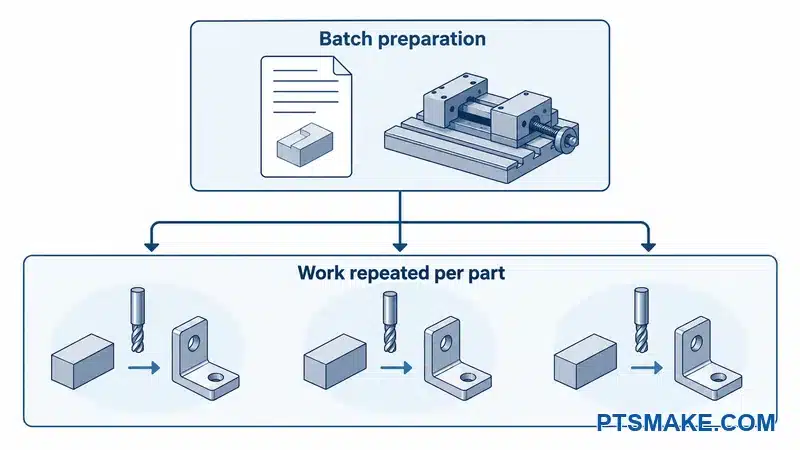
For a buyer, the important split is between batch charges and charges that repeat for each part. Programming may be an initial charge. Machine setup may return with each new batch. Inspection can include both a program preparation charge and a charge for measuring individual parts.
| Cost item | Possible pricing basis | What the buyer should confirm |
|---|---|---|
| Programming and process preparation | Initial job or revision | Whether the charge returns after a design change |
| Setup and workholding | Each batch or setup | Whether special fixtures and repeat setups are included |
| Material | Purchased stock allocated to the job | Alloy, condition, stock allowance, and documentation |
| Machining | Cycle time multiplied by the quoted rate | What the rate and chargeable time include |
| Finishing | Per part plus possible lot minimum | Treatment, masking, preparation, and acceptance scope |
| Inspection | Batch preparation and per-part checks | Features, coverage, reports, and approval stages |
Count Each Charge Once
A shop rate may already include an operator, routine tooling, overhead, and profit. Adding those items again would overstate the estimate. Another supplier may charge special cutters or inspection separately. Neither structure is automatically wrong, but the scope must be clear.
I check the included work before comparing rates. Machine-hour pricing and shop-labor pricing may cover different work. The buyer needs to know how programming, loading, tool changes, and inspection are treated.
The same care applies to material. A supplier may quote a complete per-part price that already contains stock. The buyer should not add a second material allowance simply because a budget template has a material row.
Build a Transparent Budget Example
For a simple job with one production route, the relationship can be written as follows:
Batch price = fixed batch charges + quantity × per-part charges.
Unit price = fixed batch charges ÷ quantity + per-part charges.
The following is a hypothetical budgeting example. Every amount is an assumed charge for teaching the calculation. The figures are not a PTSMAKE quote, a customer order, or a market average.
| Assumed item | Calculation | Result |
|---|---|---|
| Programming and setup | Fixed batch allowance | $240 per batch |
| Machining | 15 minutes ÷ 60 × $80/hour | $20 per part |
| Material | Assumed allowance | $8 per part |
| Finishing | Assumed allowance | $3 per part |
| Per-part inspection | Assumed allowance | $1 per part |
| Total repeating charges | $20 + $8 + $3 + $1 | $32 per part |
| Unit price at 10 parts | $240 ÷ 10 + $32 | $56 per part |
| Batch price at 10 parts | $240 + 10 × $32 | $560 per batch |
This example assumes that the hourly charge already covers its stated labor, overhead, and margin. Freight, applicable taxes or duties, and extra documents are outside the example. A real quote may also have minimum charges that change the calculation.
Keep Assumptions Separate from Quotes
A model’s volume does not reveal every operation needed to make it. Tool access, clamping, finishing passes, and inspection affect the process. A cycle-time guess therefore needs a clear label and a source.
If the drawing is incomplete, record the uncertain inputs instead of hiding them inside one confident total. The supplier can then confirm those inputs or explain a different process. That discussion makes the budget useful even when the first estimate changes.
CNC Machining Hourly Rates: Read the Scope First
Compare Process Routes, Not Just Hourly Rates
A machine’s hourly rate and the cost of a finished part answer different questions. A route with a higher hourly charge may require fewer setups or less total time. It may also need more programming. The comparison should include both effects.
| Process | Common reason to consider it | Cost question to ask |
|---|---|---|
| 3-axis milling | Accessible pockets, holes, and flat faces | How many orientations and setups are required? |
| CNC turning | Rotational features | Does the part also need milling or a separate operation? |
| 5-axis milling | Angled features and access to several faces | Do fewer setups offset the different rate and preparation? |
| Swiss-type turning | Suitable small, slender turned components | How do bar requirements, tooling, and batch size affect the quote? |
Swiss-type work is not automatically the most expensive option. The right comparison depends on the part and the production plan. A supplier should explain why the proposed route suits the geometry and quantity.

Use Published Rates as Examples
The following public US rates were checked on October 11, 2026. They are individual institutional examples, not a survey of commercial machine shops. The pages do not state a common effective date or an identical package of services.
UWM lists external shop labor2. Iowa lists prototype and machine shop services3. CMU lists 5-axis machine access4 for a UMC-750.
| Published example | Listed external rate | Scope and limit |
|---|---|---|
| University of Wisconsin–Milwaukee: external shop labor | $75/hour plus material | The page describes the labor fee as discounted against the market. It is not a separate 3-axis rate. |
| University of Iowa: prototype and machine shop services | $125/hour | The shop offers several services and allows project-based pricing. The rate is not broken down by machine type. |
| Carnegie Mellon University: 5-axis machine access | $171/hour for corporate external users | The page names a Haas UMC-750. It does not itemize every included cost. |
These examples should not be joined into a claimed $75–$171 market range. Their customer categories and charging bases differ. A commercial quote can fall outside those figures without being unreasonable.
When you request an hourly estimate, ask what time is chargeable and what work sits outside that rate. You should also confirm currency, quote validity, and the expected total hours. Those details make a rate useful for budgeting.
How Material Choice Changes the Bill
Pay for the Stock You Need to Buy
The material line covers suitable purchased stock, not just the metal left in the finished part. The supplier may need allowance for sawing, clamping, and removing the outer stock surface. A special size or documented material lot can also change the purchase.
Your RFQ should identify the alloy or polymer grade, material condition, and any required certificates. A description such as “aluminum” leaves too many choices open. The overview of aluminum CNC machining provides a service context, but the drawing still needs its exact material requirement.

Compare Cycle Time, Tooling, and Dimensional Stability
Materials also change the work needed after purchase. For example, work hardening5 and difficult chip control affect common austenitic stainless steels such as 304 and 316. Their machining behavior cannot be represented by one price multiplier for all stainless grades.
Titanium presents different challenges. Sandvik explains how its low thermal conductivity6 keeps heat near the cutting region. Tooling and cutting conditions matter, so a fixed titanium-to-steel tool-life percentage is a poor budget assumption. Buyers considering titanium CNC machining should ask about the proposed grade and process.
Plastics also need individual treatment. Delrin’s design guide discusses checking machined parts for dimensional stability7. A material that cuts easily may still need careful support or stability checks. That observation does not establish the same requirements for every polymer.
| Material decision | Potential cost effect | Useful RFQ input |
|---|---|---|
| Different alloy or grade | Different stock and machining requirements | Exact designation and substitution rules |
| Different stock form | Different purchase volume and removal work | Permitted bar, plate, tube, or other starting form |
| Additional material evidence | Added sourcing or verification work | Required records and traceability |
| Tight final dimensions | Added control or stabilization work | Critical features and inspection condition |
A cheaper material is useful only if it still meets the design requirements. The design owner should approve changes to strength, corrosion resistance, temperature limits, and other needed properties. A price comparison should keep those requirements visible.
Design Features That Raise Cost—and Changes to Review
Pockets, Corners, and Tool Reach
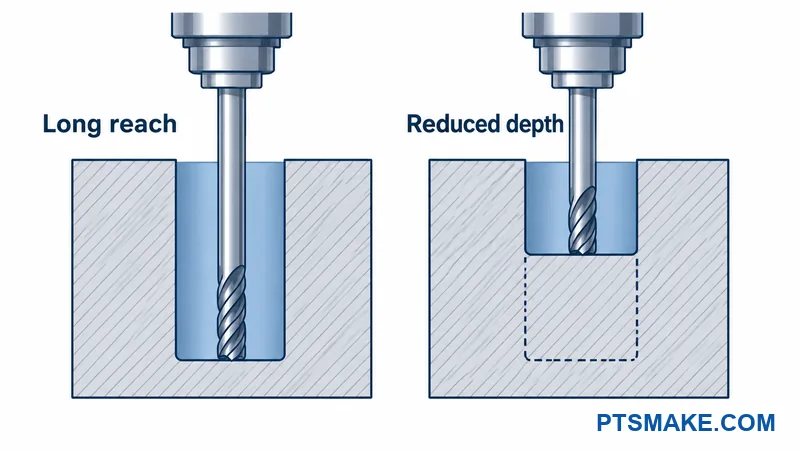
The drawing determines where the cutter and holder can reach. A deep pocket may need a longer tool even when the amount of removed material is small. Small internal corners can limit tool diameter and add detailed cutting work.
Tool deflection8 links access to machining risk. Harvey Performance explains how greater overhang reduces rigidity and can affect dimensions, finish, and tool life. From a buyer’s perspective, that may mean a different tool, slower work, or another process step.
The useful design question is whether the depth and corner shape serve a real function. A pocket floor might be raised if no component needs the extra space. An internal radius might grow if the mating component still clears it. These changes need review against the assembly.
Preserve Mating Clearance
A larger corner radius is not automatically acceptable. It may interfere with an inserted plate, connector, or moving part. The drawing should preserve the required envelope and any local clearance relief.
The finished corner also does not have to equal the cutter radius. The supplier can select a toolpath and tool that achieve the approved geometry. A buyer should describe the needed shape, then request a cost comparison for permitted alternatives.
I review the expensive feature together with its function. That approach produces a useful question for the supplier: what changes would remove work while preserving this interface? A general request to “make it cheaper” gives much less direction.
Thin Walls, Setups, Holes, and Threads
Thin features can move under cutting or clamping loads. The supplier may need support, a different operation sequence, or more careful handling. There is no single minimum wall thickness that makes every material and shape economical.
Features on several faces can create additional setups. Each setup needs location, clamping, and access. A rotary route may reduce some of that work, but fixtures still cover surfaces. A drawing should not assume that one machine can finish every feature in one clamping.
Holes and threads add their own steps. The supplier may need different drills, taps, thread mills, gauges, or access directions. Several unnecessary hole sizes can also expand the tool list. Buyers can ask whether compatible features can share a standard size.
Specify the Useful Thread Length
A blind hole’s drilled depth and its fully formed thread length are different requirements. The tool needs suitable clearance beyond the usable thread. The drawing should state what the fastener actually needs and leave the process details open for review.
Longer threads are not automatically a better design. The required engagement depends on the fastener, material, load, and assembly. The responsible engineer should confirm it before a buyer requests a shorter, cheaper feature.
| Feature | Work that may increase | Change worth comparing | Requirement to protect |
|---|---|---|---|
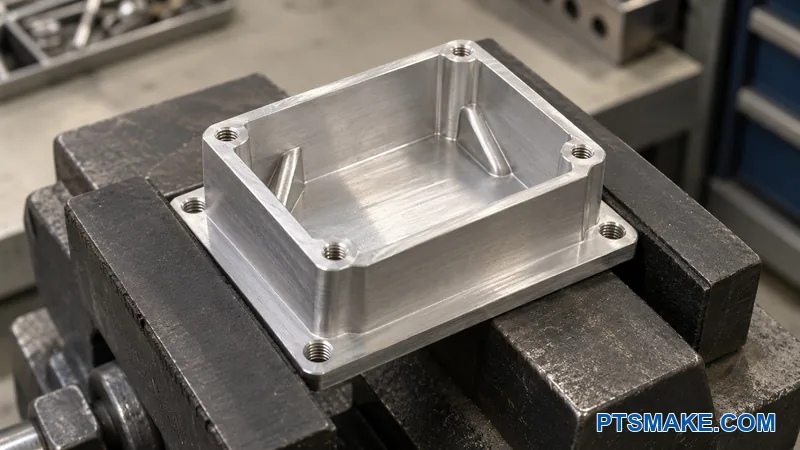
| Deep, narrow pocket | Long-reach cutting and finishing | Less depth or better access | Component space and sealing geometry |
| Small internal corner | Small-tool or cleanup work | Larger allowed radius or local relief | Mating clearance |
| Thin wall | Support and careful operation sequence | Local thickness or a support rib | Weight, flexibility, and internal space |
| Features on several faces | Reorientation and fixture work | Aligned access or another process route | Datum relationships and assembly |
| Many hole and thread variants | More tools and checks | Compatible standard sizes | Fastener fit and required strength |
Stock selection belongs in this review too. A near-net starting shape may reduce removal, but tooling, sourcing, and verification can offset that benefit. The comparison should include those added costs and the expected order volume.
Similar parts may share some preparation when material, tooling, and scheduling are compatible. Different revisions or finishes can prevent that sharing. Ask the supplier to identify the actual common work rather than assuming that a combined purchase order creates one setup.
You can send your part drawing and cost-sensitive features for discussion.
Why Quantity Changes the Unit Price
Spread Fixed Work Across a Real Batch
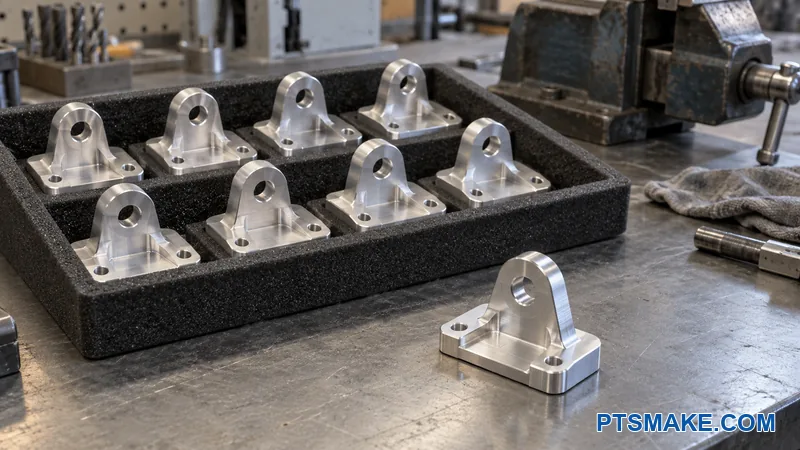
Quantity changes how much preparation each part must carry. If a batch shares a program and setup, the fixed charge is divided across that batch. The material and production work for each part still remain.
The table below reuses the hypothetical $240 preparation charge and $32 repeating charge from the earlier example. The route and per-part charges stay constant only to show the arithmetic. No supplier has offered these prices.
| Assumed quantity | Fixed charge per part | Repeating charge per part | Total per part | Total batch price |
|---|---|---|---|---|
| 1 | $240.00 | $32.00 | $272.00 | $272.00 |
| 10 | $24.00 | $32.00 | $56.00 | $560.00 |
| 100 | $2.40 | $32.00 | $34.40 | $3,440.00 |
The falling unit price does not mean that every job follows this curve. A real supplier may change the fixture, stock purchase, inspection plan, or production route at another quantity. Those changes can alter both fixed and repeating charges.
Ask for Quantity Breaks and Repeat-Order Terms
Request separate prices for the prototype, first production batch, and expected repeat quantity. State whether the forecast is firm or only a planning estimate. A supplier may price a committed release differently from an uncertain annual volume.
You should also distinguish one large batch from several smaller releases. Ten deliveries may require repeated setup, inspection, handling, and packing. A stored program does not remove those activities.
Before accepting a larger quantity to reduce unit price, check the total cash commitment and the chance of a revision. Extra parts have little value if the design changes before they are used. Storage, protective packaging, and inventory handling may also matter.
For repeat work, ask who owns special fixtures and whether storage or maintenance charges apply. The quote should state what happens when a drawing, material, or finish changes. A previous setup charge does not automatically buy every future revision.
Very large volumes may justify another starting shape or production method. That decision needs its own tooling and qualification comparison. There is no universal quantity at which CNC machining stops being the right choice.
What Tolerances, Inspection, and Finishes Add
Apply Precision to Functional Features
A tolerance has value when it controls something the product needs. A locating bore may determine fit. A flat face may support a seal. A datum relationship may keep two parts aligned.
Tighter requirements can add cutting steps, process controls, or measurement work. The effect depends on the feature, material, size, and access. A universal table that assigns one cost multiplier to every tolerance misses those differences.
Mark the critical features and identify their acceptance method. The quote should distinguish checking selected dimensions from providing a full dimensional report. It should also state whether the supplier checks every part or follows an agreed sampling plan.
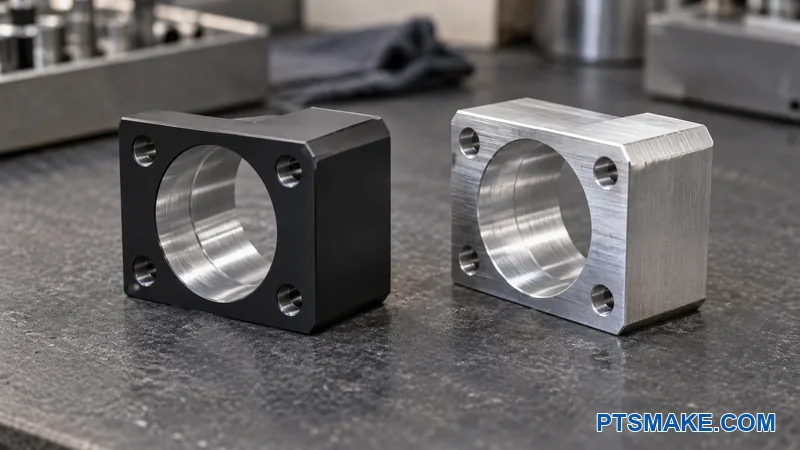
Specify Finishing Before Comparing Prices
A finish name alone leaves important work undefined. Anodizing may need masking, a color reference, or control of final fits. Polishing may require protected edges. Bead blasting needs an agreed texture and clear limits around functional surfaces.
Anodizing growth9 provides one example of the dimensional issue. NASA’s PRC-5006 Rev. D describes typical Type III outward growth as about half the coating thickness. The document also explains that geometry and process conditions affect the result. That guidance is not a universal compensation rule for every part or finish.
The useful purchasing instruction is to define which dimensions apply after treatment. The supplier and finisher can then review machining allowance, masking, and the planned inspection. A buyer should not infer the finished bore size from a coating name alone.
| Requirement | Information that makes the scope clearer |
|---|---|
| Dimensional fit | Feature, tolerance, and measurement state after finishing |
| Functional roughness | Required parameter, limit, and surface location |
| Anodizing | Applicable specification, type, thickness, color, sealing, and masking |
| Polishing | Target surface, edge protection, and appearance reference |
| Bead blasting | Media or agreed sample texture and protected features |
| Stainless steel passivation | Governing specification, cleanliness, acceptance checks, and records |
| Cosmetic acceptance | Visible zones, reference samples, and viewing conditions |
The overview of surface finishing options can help identify treatments to discuss. The RFQ should still state the selected requirements rather than relying on a general service description.
Ask about lot minimums as well as per-part charges. A small batch can carry the cost of preparation, racking, or a required report even when it contains very few parts. The supplier should identify those items before the buyer compares totals.
US vs. China: Compare the Cost to Your Door
Separate Manufacturing Price from Delivery Cost
A country label does not define a finished-part price. Suppliers can differ in labor, equipment, overhead, sourcing, and production planning. The useful comparison starts with the same drawing, material, quantity, finish, and evidence requirements.
Material prices also need a common basis. A global commodity price is not the delivered price of a specific certified billet. Stock form, condition, purchase quantity, local availability, and documentation can change that line.
A total cost of ownership10 review adds the buyer’s costs around the purchase. The Reshoring Initiative lists items such as inventory, supplier visits, warranty costs, and emergency freight. Its domestic-manufacturing advocacy does not prove that either location will be cheaper for your part.
Price the Responsibilities and Schedule
First, compare the price for the same delivered scope. Then record the extra internal costs that your business expects to carry. A shipping charge already included in the supplier’s price should not appear again as an added cost.
| Cost or responsibility | Comparison input |
|---|---|
| Manufacturing | Same material, revision, quantity, and finish |
| Inspection and qualification | Required checks, samples, records, and responsible party |
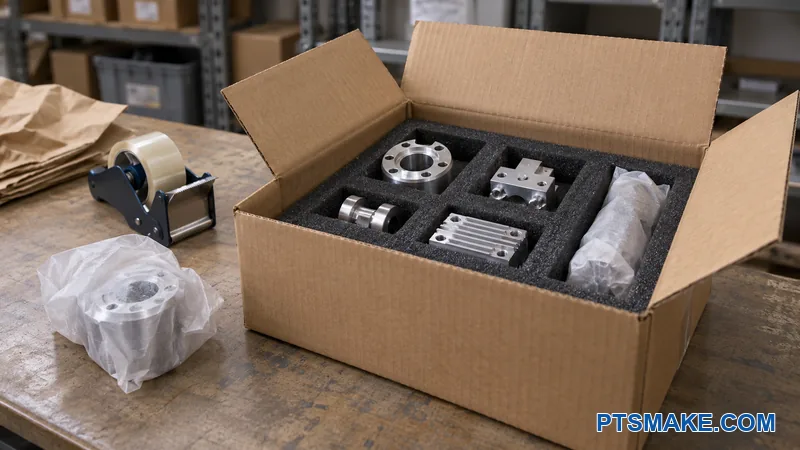
| Packing and transport | Protection method, transport mode, destination, and included charges |
| Import-related costs | Applicable classification, origin, date, and responsibility |
| Timing | Production completion, transit, receiving, and approval time |
| Buyer support | Expected communication, visits, inventory, and contingency work |
Production lead time and arrival date are separate. A quote may describe when parts leave the shop, while your project depends on when accepted parts reach the assembly line. Ask for both dates and the assumptions behind them.
The guide to sourcing CNC parts from China covers broader supplier considerations. For this cost comparison, use current project quotes rather than a general percentage-saving claim.
The buyer should confirm current freight and applicable import charges for the actual shipment. A comparison made for another destination or an earlier date may no longer fit. Keep those entries separate from the machining estimate so they can be updated without changing the part’s assumed production cost.
Compare CNC Quotes and Identify Missing Charges
Normalize the Technical and Commercial Scope
The lowest visible total is useful only when both offers cover the same work. Start with the files and requirements each supplier actually priced. A revision mismatch can make a detailed price comparison meaningless.
I use a scope table before ranking the totals. Each row should show an explicit inclusion, exclusion, assumption, or unresolved item. An empty cell is a question for the supplier, not evidence that the work is free.
| Comparison item | What both offers should identify |
|---|---|
| Part definition | Part number and matching drawing/model revision |
| Material | Grade, condition, allowed substitutions, and evidence |
| Quantity | Batch size, releases, and any minimum order |
| Machining requirements | Dimensions, datums, threads, and approved exceptions |
| Finishing | Treatment, masking, final dimensions, and appearance scope |
| Inspection | Features, coverage, first-article requirements, and reports |
| Preparation | Programming, setup, special tooling, and fixture terms |
| Commercial terms | Currency, validity, payment assumptions, and change conditions |
| Delivery | Packing, dates, named destination, and included transport charges |
For international purchases, Incoterms® 202011 provides rules for allocating transport and delivery responsibilities, costs, and risks. The quote should state the selected rule and a precise named place. Those rules do not replace the drawing, quality agreement, or the rest of the commercial terms.
Separate Included, Excluded, and Conditional Work
Separate charges are not automatically a warning sign. A supplier may clearly price programming or a special fixture outside the unit price. The problem is an unresolved scope item that appears only after acceptance.
Ask whether the price includes DFM feedback, CAM work, setup, routine tooling, deburring, finishing preparation, and inspection records. If tool wear or material surcharges can change the total, the quote should explain the basis and approval method.
An expedite charge needs a defined promise too. The buyer should know which milestone changes and whether material or finishing constraints still apply. A faster machining slot does not necessarily shorten the entire route to delivery.

Compare the Total for the Same Deliverables
The following short example is fictional. It illustrates a comparison method, not actual supplier behavior or pricing.
Suppose Offer A lists $1,000 for a batch and includes the required finish and inspection report. Offer B lists $920 but excludes that report. If B later confirms a $120 report charge, its comparable total becomes $1,040, assuming all other requirements match.
Before B confirms that charge, its comparable total is unknown. The buyer should not invent a missing allowance and present it as B’s price. The same rule applies to freight, finishing minimums, and other exclusions.
This comparison also needs to preserve value differences. An offer may include additional checks that the project does not require, or it may promise an earlier delivery. Record those differences separately and ask whether the supplier can quote the common baseline.
Resolve Open Items Before Acceptance
A useful clarification request is specific. It might ask the supplier to confirm the material condition, identify the drawing revision, or state whether the report covers every specified feature. The response should refer to the quote being revised.
The buyer should also agree how later changes affect price. A revised model, extra finish requirement, or new inspection record can create legitimate additional work. A written change process helps both sides distinguish new scope from work already included.
Missing material specifications, unexplained surcharges, and inconsistent revisions deserve attention before an order is placed. Keep the supplier’s answers with the final quotation. The purchasing decision should rest on that complete package rather than an earlier headline number.
Turn a Budget into a Quote-Ready RFQ
Send Matching Files and Quantity Tiers
A useful RFQ turns the estimate’s assumptions into controlled inputs. The model describes the shape, while the drawing can define tolerances, datums, threads, finish, and other requirements. Both files need a clear, matching revision.
If the files disagree, the buyer should resolve the conflict before production. A document-precedence rule helps, but it does not make an unintended mismatch harmless. The supplier needs an approved interpretation of the actual requirement.
| RFQ input | Information to provide |
|---|---|
| Design files | Current model, drawing, part number, revision, and relevant assembly view |
| Material | Grade, condition, stock restrictions, and required certificates |
| Order size | Prototype quantity, production tiers, and expected release pattern |
| Functional features | Critical fits, datums, threads, and approved alternatives |
| Finish | Treatment, surface zones, final dimensional state, and appearance references |
| Inspection | Required features, coverage, reports, and sample approval needs |
| Delivery | Required arrival date, destination, packing, and shipping assumptions |
| Open questions | Unresolved requirements and the person who can approve changes |

Ask the Supplier to Confirm Scope and Assumptions
The supplier’s reply should confirm the priced files, quantity, and included work. It should also identify exceptions and assumptions that affect cost or timing. A buyer can then compare that response with the original RFQ.
Ask which preparation charges recur on repeat orders and which depend on a revision. Confirm who owns any special fixture and what inspection evidence accompanies the parts. If a first article needs approval, the schedule should show that step before the next release.
The required date should distinguish production completion from transport and receiving. The supplier should confirm feasibility using the actual part, material, finishing route, and inspection scope. A general website lead-time statement is not a schedule commitment for a new drawing.
Before sending the package, check that every unresolved requirement has an owner. The buyer can ask for an alternative quote when a feature remains open, but the alternatives should be labeled separately. That keeps an early budget useful without confusing it with an approved production definition.
Request a Quote for Your CNC Parts
You can share your drawing, material, quantity tiers, finish, inspection needs, and required delivery date with PTSMAKE. Identify any cost-sensitive features or open requirements so the enquiry has a clear basis for a part-specific quotation.

A manufacturing cost breakdown separates the activities and inputs behind a part. The NIST paper supports the method, not current market rates or the hypothetical prices used here. ↩
The university lists an external labor charge plus material and describes it as discounted. Its service scope differs from a national commercial-shop rate survey. ↩
The Iowa shop lists an external hourly charge and allows project pricing. Its page does not assign separate prices to each machine type. ↩
CMU identifies the UMC-750’s five-axis capability and corporate external hourly rate. The listing does not define every included service or expense. ↩
Work hardening increases resistance to further deformation. The cited association guidance focuses on machining common austenitic stainless steels, including 304 and 316. ↩
Thermal conductivity describes heat transfer through a material. Sandvik’s webinar transcript discusses titanium’s heat-related machining challenges without establishing a universal cost ratio. ↩
Dimensional stability concerns whether a part retains its required size and shape. The Delrin guide discusses checks for machined parts; its guidance is material-specific. ↩
Tool deflection is movement under cutting load. The toolmaker explains the effects of overhang and rigidity, which support an access review rather than a fixed savings claim. ↩
Anodizing changes the surface as oxide forms. The NASA guidance discusses Type III growth and geometry-dependent limits; actual allowances need part-specific review. ↩
Total cost of ownership includes relevant costs beyond the purchase price. The cited organization’s categories are useful prompts, not proof that one country is always cheaper. ↩
Incoterms rules allocate specified delivery obligations, costs, and risks between buyers and sellers. The rule, version, and named place should be clear in the quotation. ↩