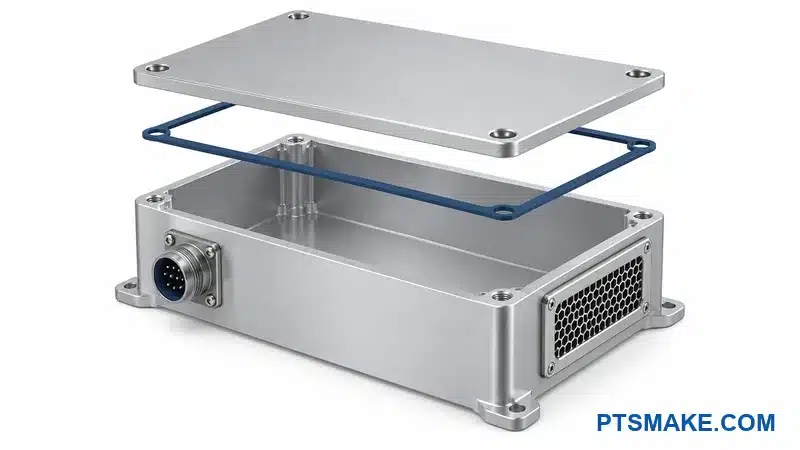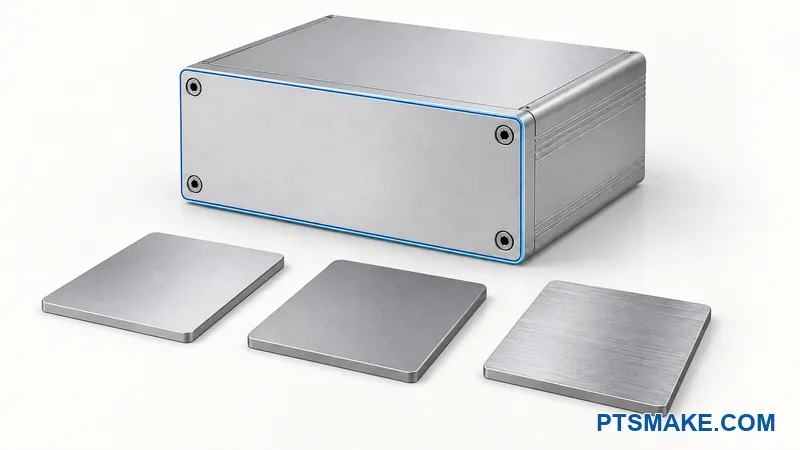

Su proyecto necesita ese aspecto premium perfecto, pero no tiene más remedio que elegir entre innumerables opciones de acabado. Los acabados estándar hacen que su producto se integre en la multitud, mientras que una mala elección de acabado puede destruir el posicionamiento de lujo de su marca y la percepción del cliente.
El acabado en oro cepillado combina la resistencia a la corrosión con una estética de primera calidad, ofreciendo una durabilidad y una ocultación de arañazos superiores a las alternativas pulidas. Este tratamiento de superficie utiliza patrones de abrasión controlada con recubrimiento de oro para crear una textura uniforme y un atractivo de lujo.
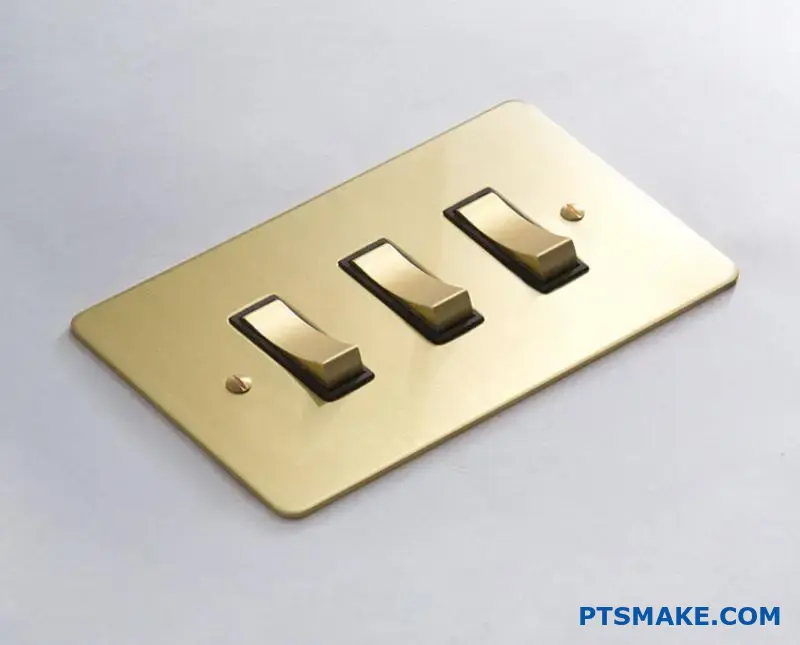
He trabajado con cientos de ingenieros que se pelean con la selección de acabados para sus productos de gama alta. Esta guía lo abarca todo, desde las especificaciones técnicas hasta los métodos de fabricación, para ayudarle a tomar decisiones con conocimiento de causa en su próximo proyecto de hardware.
Por qué los ingenieros eligen el acabado en oro cepillado: Una perspectiva técnica
Los ingenieros suelen mirar más allá de la simple estética. El acabado en oro cepillado se elige por razones sólidas y prácticas. Se ha convertido en uno de los acabados metálicos preferidos por los ingenieros.
Esta elección combina el atractivo visual con el rendimiento tangible. No se trata sólo de tener buen aspecto.
Principales ventajas técnicas
Un factor primordial es la resistencia a la corrosión. La textura cepillada también proporciona una excelente respuesta táctil. Este acabado oculta eficazmente las huellas dactilares y los pequeños arañazos. Estas son las principales ventajas técnicas del acabado dorado cepillado.
Comparación rápida
| Característica | Oro cepillado | Cromo pulido |
|---|---|---|
| Resistencia a la corrosión | Alta | Moderado |
| Enmascaramiento de huellas dactilares | Excelente | Pobre |
| Sensación táctil | Textura | Suave |
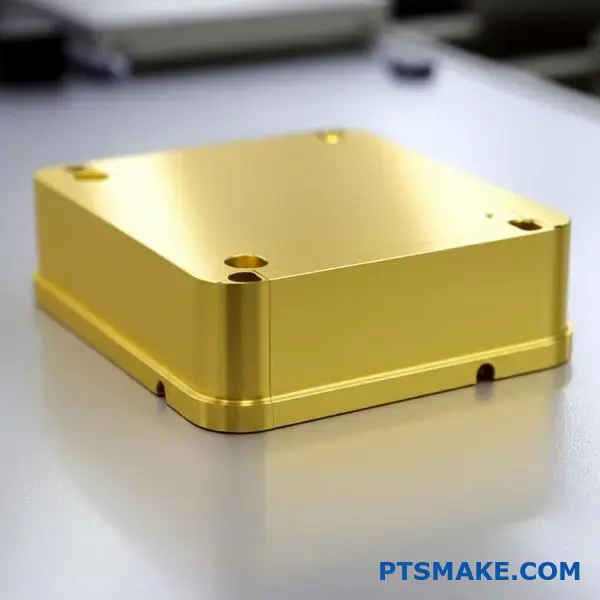
Más allá de la superficie: Una mirada más profunda
El atractivo de un acabado en oro cepillado va más allá de su apariencia. El propio proceso de fabricación añade un importante valor funcional, mejorando las propiedades superficiales del material base. Es más que un simple color.
La ciencia del acabado
La técnica del cepillado crea finos surcos paralelos en la superficie del metal. Estos surcos dispersan la luz, lo que reduce el deslumbramiento. Se trata de una característica fundamental para piezas utilizadas en expositores o entornos muy iluminados. La textura también ayuda a disimular pequeños signos de desgaste con el paso del tiempo.
En el caso de los componentes de aluminio, el proceso para conseguir este aspecto puede ser bastante avanzado. A menudo utilizamos un tratamiento de superficie como anodización1 para crear primero una capa de óxido duradera. A continuación, esta capa protectora se infunde con un tinte dorado, lo que garantiza que el color forme parte integral de la propia superficie, no solo un revestimiento.
Estética funcional
La respuesta táctil es otra ventaja técnica importante. En los mandos de control o las superficies interactivas, la sensación de textura puede guiar la mano del usuario. Confirma el tacto sin necesidad de señales visuales.
| Área de aplicación | Principales ventajas del oro cepillado |
|---|---|
| Productos sanitarios | Biocompatibilidad y durabilidad |
| Electrónica de consumo | Estética y resistencia a las huellas dactilares |
| Interiores de automóviles | Bajo deslumbramiento y tacto premium |
Desde un punto de vista técnico, el acabado en oro cepillado ofrece algo más que lujo visual. Sus propiedades de ingeniería -incluida una mayor durabilidad, resistencia a la corrosión y respuesta táctil funcional- lo convierten en una opción inteligente y fiable para muchas aplicaciones exigentes en las que el rendimiento es primordial.
La Comparación Completa: Oro cepillado frente a oro pulido en la fabricación
Al elegir un acabado dorado, el aspecto es sólo el principio. La verdadera decisión se reduce al rendimiento y la practicidad de su producto específico.
Cada acabado ofrece un conjunto distinto de propiedades. Estas diferencias repercuten directamente en la experiencia del usuario final.
Principales diferencias funcionales
El acabado en oro cepillado es conocido por su durabilidad. Su textura ayuda a ocultar pequeños arañazos y el desgaste diario.
El oro pulido, aunque deslumbrante, es más delicado. Tiende a mostrar cualquier pequeña imperfección. Esta elección es fundamental para los productos OEM.
Comparación rápida
| Característica | Oro cepillado | Oro pulido |
|---|---|---|
| Durabilidad | Oculta bien los arañazos | Muestra imperfecciones |
| Reflectividad | Bajo brillo mate | Alto, como un espejo |
| Huellas dactilares | Resistente a las manchas | Muestra las huellas fácilmente |
| Mantenimiento | Bajo | Alta |
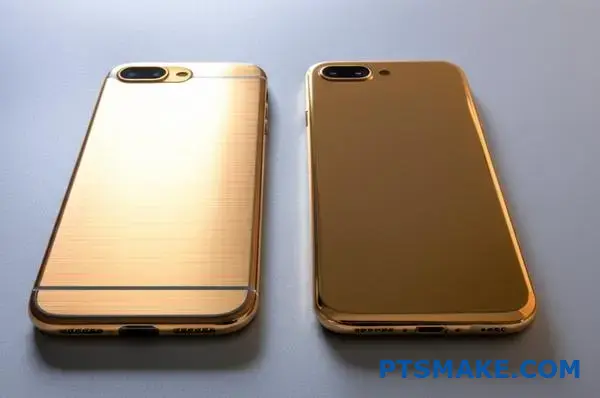
Una mirada más atenta a las métricas de rendimiento
Cuando desarrollamos piezas para nuestros clientes, sobre todo productos OEM muy delicados, la durabilidad es una preocupación primordial. Las finas líneas de un acabado dorado cepillado son excelentes para camuflar los pequeños arañazos y abrasiones que se producen con el uso diario. Esto hace que el producto parezca nuevo durante más tiempo.
En cambio, una superficie de oro pulido es menos indulgente. Su superficie lisa, similar a un espejo, resalta cada arañazo y remolino. Con el tiempo, esto puede restar calidad al producto y exigir un manejo más cuidadoso por parte del usuario.
Compromisos visuales y prácticos
El atractivo visual también es un factor importante. El oro pulido produce un brillo nítido, como el de un espejo, debido a un fenómeno denominado Reflexión especular2. Esto proporciona un aspecto clásico y de alta gama, pero a veces puede crear un intenso resplandor bajo la luz directa.
El acabado en oro cepillado, sin embargo, difunde la luz a través de su superficie texturizada. Esto crea un brillo suave y satinado que resulta moderno y sutil. Proporciona un aspecto elegante sin resultar recargado.
Desde un punto de vista práctico, las huellas dactilares son un problema importante. El oro pulido es un imán para las manchas y requiere una limpieza constante para mantener su aspecto. La superficie texturizada y antirreflectante del oro cepillado es mucho más indulgente, por lo que resulta ideal para objetos que se manipulan con frecuencia.
Comparación de rutinas de mantenimiento
| Tipo de acabado | Frecuencia de limpieza | Esfuerzo necesario | Aplicación ideal |
|---|---|---|---|
| Oro cepillado | Poco frecuente | Bajo | Superficies muy táctiles |
| Oro pulido | Frecuente | Alta | Objetos decorativos de poco contacto |
La elección entre oro cepillado y pulido va más allá de la apariencia. Define la durabilidad y el mantenimiento. El oro pulido ofrece un brillo clásico, pero requiere mucho cuidado, mientras que el acabado en oro cepillado proporciona una estética moderna con una practicidad superior para los productos de uso diario.
Cómo influye el acabado en oro cepillado en la percepción del consumidor
El auge del acabado en oro cepillado es más que una tendencia pasajera. Representa una elección estratégica para las marcas premium. Este acabado transmite lujo y calidad.
Los datos del mercado confirman su creciente popularidad. El atractivo para el consumidor de los herrajes de oro cepillado es fuerte en múltiples sectores. Ayuda a elevar el valor percibido de un producto.
Acabado y percepción del mercado
| Tipo de acabado | Valor percibido | Aplicación común |
|---|---|---|
| Cromo pulido | Estándar, Limpio | Cocina, Baño |
| Negro mate | Moderno, minimalista | Electrónica, Accesorios |
| Oro cepillado | Premium, Cálido | Artículos de lujo, Decoración |
Esta elección influye directamente en cómo ven los clientes su producto.
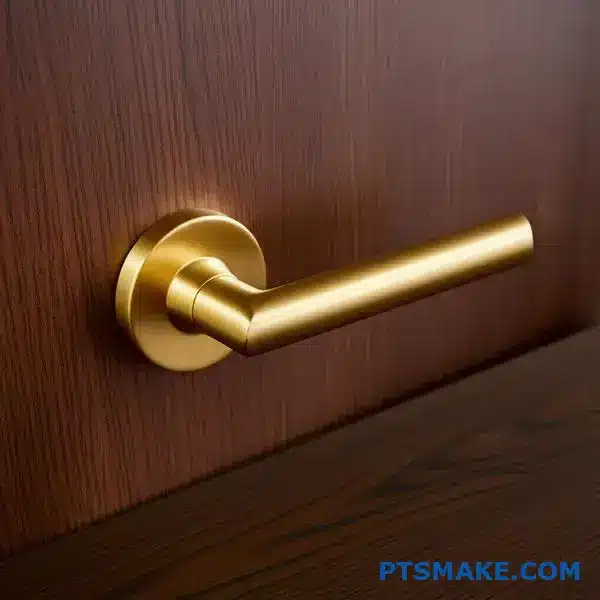
La psicología detrás del brillo
El acabado en oro cepillado evoca profundas asociaciones psicológicas. El oro siempre ha sido sinónimo de riqueza y prestigio. La textura "cepillada" añade un toque moderno y sofisticado. Además, reduce los reflejos y oculta las huellas dactilares, por lo que resulta práctico y bello.
Esta tendencia se trasladó del diseño de interiores de gama alta a la electrónica de consumo y las molduras de automóviles. Es uno de los acabados superficiales estéticos premium más eficaces. Ayuda a que un producto destaque en un mercado saturado, dándole una ventaja visual inmediata.
En PTSMAKE, a menudo orientamos a nuestros clientes sobre la selección del acabado. El acabado adecuado puede aumentar significativamente el valor de un producto. valor percibido3. Esto permite un mejor posicionamiento en el mercado y unos precios de venta al público potencialmente más elevados. La elección del acabado es una decisión fundamental en el diseño del producto que va más allá de la simple estética.
Comparación de acabados Premium
Analizamos los atributos clave para ayudar a nuestros clientes a decidir.
| Atributo | Oro cepillado | Oro rosa | Grafito |
|---|---|---|---|
| Calor | Alta | Alta | Bajo |
| Modernidad | Medio-Alto | Medio | Alta |
| Versatilidad | Alta | Medio | Alta |
| Intemporalidad | Medio-Alto | Bajo-Medio | Medio |
Estos datos ayudan a las marcas a tomar decisiones con conocimiento de causa. Alinea el aspecto del producto con las expectativas del público objetivo.
Elegir un acabado en oro cepillado es una decisión basada en datos. Es una poderosa herramienta para realzar el atractivo de un producto. Esta elección estratégica influye en la percepción del consumidor, el posicionamiento de la marca y, en última instancia, el éxito de ventas. Es más que estética: es un negocio inteligente.
Las mejores técnicas de tratamiento de superficies para conseguir un efecto dorado cepillado
Conseguir un auténtico acabado dorado cepillado implica algo más que el color. Se trata de textura y durabilidad. Los distintos procesos industriales ofrecen resultados diferentes. Comprenderlos es clave.
Debe saber cómo conseguir un acabado dorado cepillado que satisfaga las exigencias de su proyecto. Cada método tiene sus ventajas y sus inconvenientes.
Veamos las principales técnicas que utilizamos.
Procesos industriales comunes
- Cepillado mecánico
- Galvanoplastia
- Anodizado
- Deposición física de vapor (PVD)
La elección depende del material de base, el presupuesto y las prestaciones requeridas.
| Técnica | Ventaja principal | Lo mejor para |
|---|---|---|
| Cepillado | Crea una textura auténtica | Creación de texturas base |
| Revestimiento | Aspecto dorado tradicional | Piezas decorativas |
| Anodizado | Bueno para el aluminio | Piezas de aluminio coloreado |
| PVD | Durabilidad extrema | Aplicaciones de alto desgaste |
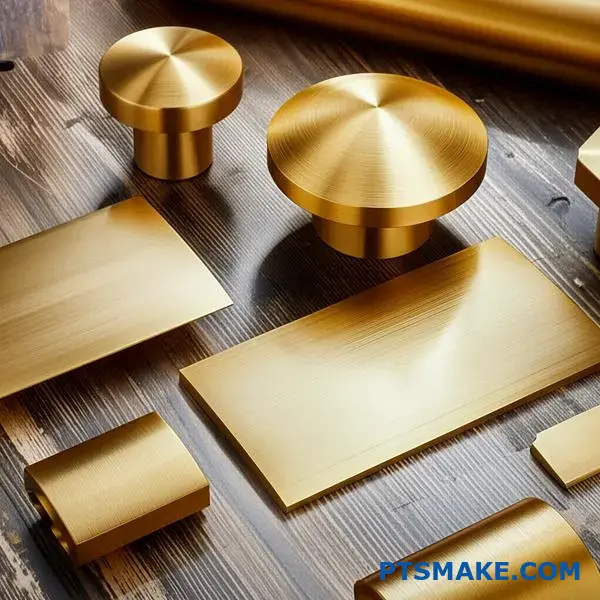
Saber cómo conseguir un acabado de oro cepillado empieza por los principales procesos industriales. Cada método ofrece un equilibrio diferente entre aspecto, durabilidad y coste. En PTSMAKE, guiamos a los clientes a través de estas opciones para encontrar la más adecuada.
Cepillado mecánico: la base
En primer lugar, el cepillado mecánico crea la textura lineal característica. Se trata de un proceso de abrasión física. Suele ser el primer paso antes de aplicar un revestimiento dorado. El grano del cepillo determina la finura de la textura final.
Métodos de recubrimiento y coloración
Tras el cepillado, se aplica una capa de color. La galvanoplastia consiste en depositar una fina capa de aleación de oro auténtico. Da un aspecto clásico, pero puede ser menos duradero para artículos de mucho desgaste. El anodizado es un proceso electroquímico específico del aluminio. Crea una capa de óxido porosa y duradera que luego se tiñe de oro.
La opción más sólida es el PVD. Los métodos de revestimiento de oro cepillado PVD depositan una capa cerámica fina y dura, como el nitruro de titanio. Esto se hace en una cámara de vacío. Este proceso suele utilizar pulverización catódica4 para transferir el material de revestimiento átomo a átomo, creando un acabado increíblemente resistente.
| Método | Durabilidad | Consistencia del color | Limitación del sustrato |
|---|---|---|---|
| Galvanoplastia | Moderado | Bien | La mayoría de los metales |
| Anodizado | Alta | Muy buena | Sólo aluminio |
| Revestimiento PVD | Muy alta | Excelente | La mayoría de los metales, algunos plásticos |
Comprender estos procesos industriales (cepillado, chapado, anodizado y PVD) es crucial. Su elección influye en el aspecto final, la durabilidad y el coste del producto. Cada técnica ofrece un camino único para lograr el acabado de oro cepillado deseado para aplicaciones específicas.
Secretos de los acabados de oro cepillado de larga duración para productos delicados
El verdadero secreto de un acabado dorado cepillado duradero reside en los detalles que no se ven. Se trata de algo más que el color.
Implica un control preciso del grosor del revestimiento y el uso estratégico de capas protectoras. Estos elementos son fundamentales.
El papel del espesor del recubrimiento
El grosor influye directamente en la resistencia al desgaste. Un revestimiento más grueso no siempre es mejor; debe optimizarse para el uso del producto.
Encontrar el equilibrio adecuado
Para los artículos muy delicados, la clave está en el equilibrio. Si es demasiado fino, se desgasta rápidamente. Si es demasiado grueso, puede astillarse o alterar las dimensiones.
| Tipo de aplicación | Espesor recomendado (micras) | Justificación |
|---|---|---|
| Decorativo (poco táctil) | 1-3 µm | Suficiente para la apariencia |
| Electrónica de consumo | 3-7 µm | Equilibra durabilidad y coste |
| Hardware táctil | 7-15 µm | Máxima resistencia al desgaste |
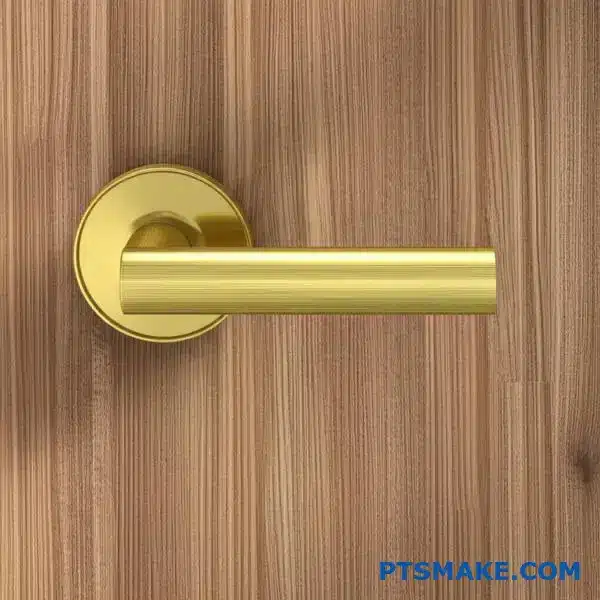
Para conseguir revestimientos de oro realmente resistentes a la abrasión, debemos mirar más allá de la propia capa de oro. La resistencia a los arañazos y las capas superiores protectoras son igualmente cruciales. Juntos protegen el acabado del desgaste diario.
Comprender la resistencia al rayado
Medimos la resistencia al rayado mediante pruebas estandarizadas. Esto nos proporciona datos objetivos sobre la durabilidad de un acabado. Tras nuestras pruebas internas, descubrimos que determinados procesos de PVD superan con creces al metalizado tradicional en este aspecto.
Una clasificación más alta significa que la superficie puede soportar más abuso físico. Esto es vital para elementos como tiradores de puertas, grifos y carcasas de dispositivos electrónicos.
Estrategias de revestimiento superior protector
Un top coat es una capa transparente que se aplica sobre el acabado dorado cepillado. Actúa como primera línea de defensa. El top coat adecuado sella el acabado, mejorando su resistencia sin alterar el aspecto cepillado.
A menudo recomendamos capas de acabado específicas en función del entorno y el uso previstos del producto.
| Tipo de Top Coat | Beneficio clave | Aplicación ideal |
|---|---|---|
| Recubrimiento E (transparente) | Excelente resistencia a la corrosión | Grifería, accesorios de baño |
| PVD Transparente | Máxima resistencia al rayado | Relojes de lujo, carcasas de teléfono |
| Laca acrílica | Protección rentable | Artículos de decoración interior |
Estas estrategias garantizan que el producto final tenga un acabado dorado cepillado duradero. El producto propiedades tribológicas5 mejoran significativamente, lo que es esencial para cualquier superficie muy sensible al tacto. La elección de la combinación adecuada de revestimiento base y revestimiento superior es una ciencia que hemos perfeccionado a lo largo de muchos proyectos en PTSMAKE.
Un acabado dorado cepillado duradero depende de un sistema: grosor óptimo del revestimiento, resistencia verificada a los arañazos y una capa superior protectora estratégica. Estos elementos trabajan juntos para garantizar que el aspecto y la función del producto perduren en el tiempo, incluso con un uso frecuente.
¿Qué tolerancias de acabado son importantes en las piezas mecanizadas por CNC de oro cepillado?
Para un acabado en oro cepillado, la textura de la superficie lo es todo. No se trata sólo del aspecto final. También influye en el tacto y el rendimiento de la pieza.
El valor Ra es un enfoque común. Este número mide la rugosidad media de una superficie. Es una métrica crítica para los requisitos Ra de acabado de superficies de oro cepillado.
Por qué Ra define el look
Un valor Ra más bajo significa una superficie más lisa. Pero el proceso de cepillado añade una textura específica. El verdadero objetivo es lograr un aspecto uniforme y consistente, no solo la máxima suavidad.
Según nuestras pruebas con clientes, los diferentes valores de Ra producen resultados estéticos distintos.
| Objetivo estético | Rango Ra típico (μm) | Resultado visual |
|---|---|---|
| Satinado estándar | 0.4 - 0.8 | Aspecto cepillado clásico y suave |
| Lujo Premium | 0.2 - 0.4 | Líneas más finas, más reflectantes |
| Industrial texturizado | 0.8 - 1.6 | Líneas más gruesas y pronunciadas |

Aunque Ra es un buen punto de partida, no lo dice todo. La dirección y la consistencia de las líneas del pincel -conocidas como "disposición"- son igual de importantes para conseguir un acabado de oro cepillado de alta calidad.
Lay: El componente direccional
El proceso de cepillado crea un grano direccional. Este control anisotropía6 es lo que define el aspecto cepillado característico. Todas las líneas deben ser paralelas, uniformes y sin defectos.
Una colocación incorrecta puede hacer que una pieza cara parezca defectuosa. Esto ocurre incluso si el valor Ra está perfectamente dentro de las especificaciones.
Combinación de medición y visualización
En PTSMAKE utilizamos un proceso en dos partes. En primer lugar, un perfilómetro nos proporciona datos Ra precisos para confirmar que cumplimos los requisitos del dibujo técnico.
En segundo lugar, nuestro equipo de calidad realiza una inspección visual con iluminación especializada. Comprueban la consistencia del color, la profundidad y la uniformidad de las líneas de pincel. Así se garantiza que la pieza tenga exactamente el aspecto deseado por el diseñador.
| Método de inspección | Objetivo principal | Beneficio clave |
|---|---|---|
| Perfilómetro de superficie | Ra (Rugosidad media) | Datos cuantitativos para el control de procesos |
| Inspección visual | Colocación, color, consistencia | Comprobación cualitativa de la intención estética |
| Evaluación de la caja de luz | Uniformidad del color | Garantiza la coherencia de un lote |
Conseguir un acabado perfecto de oro cepillado exige equilibrar las especificaciones de Ra con los estándares visuales. La dirección y la consistencia de las líneas de cepillado son tan cruciales como la rugosidad medida. Tanto la metrología como la inspección experta son esenciales para garantizar una calidad superior.
Cómo el oro cepillado aumenta el valor de marca de los productos de gama alta
El acabado en oro cepillado va más allá de los artículos de lujo tradicionales. Ahora es una poderosa herramienta para elevar la marca en sectores inesperados.
He visto este cambio de primera mano. Las empresas de robótica, IoT y electrónica de consumo lo utilizan. Este acabado es sinónimo de calidad superior.
Transforma un aparato funcional en un objeto de distinción. Esto es crucial para las marcas que se dirigen a mercados de gama alta. Se trata de crear una experiencia.
| Aspecto | Acabados técnicos estándar | Acabados de lujo (oro cepillado) |
|---|---|---|
| Percepción del usuario | Utilitario, funcional | Exclusivo, sofisticado |
| Mensaje de marca | Centrado en el rendimiento | Orientado al estilo de vida, premium |
| Mercado destinatario | Consumidores en general | Compradores exigentes y acomodados |
Este enfoque ayuda a que los productos destaquen. Crea una percepción de valor superior incluso antes de encender el dispositivo.
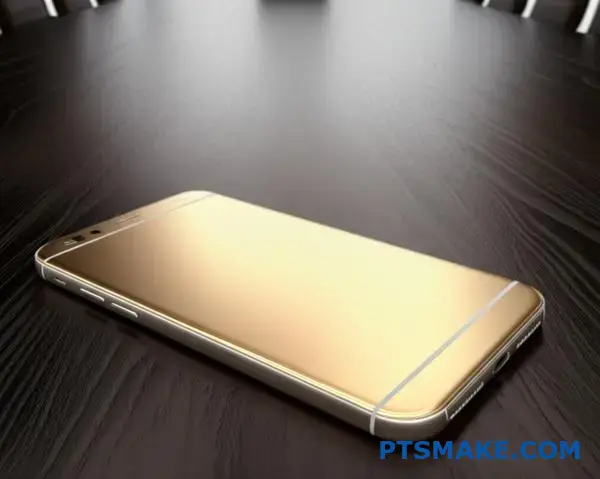
El uso estratégico de un acabado en oro cepillado es un movimiento de marca inteligente. Comunica al instante el compromiso de una marca con la calidad y la excelencia del diseño. Este acabado va más allá de una simple elección de color.
Redefinir la estética de alta tecnología
En robótica, los toques de oro cepillado en una máquina de precisión crean un contraste impresionante. Sugiere tecnología punta fusionada con maestría artesanal. Esto eleva significativamente el valor percibido del producto. Ayuda a justificar un precio más alto en un sector competitivo.
Para las carcasas IoT, el objetivo es una integración perfecta en el hogar. Un acabado en oro cepillado transforma un concentrador inteligente de un artilugio de plástico en una decoración elegante. Ya no es necesario ocultarlo.
La dimensión táctil del lujo
Los productos electrónicos de estilo de vida, como auriculares o altavoces, se benefician enormemente. La calidez visual del oro cepillado, combinada con su sutil textura, mejora la experiencia sensorial del usuario. Esta cualidad táctil, o [Percepción Háptica]()7, es la clave de la marca de lujo. Hace que el producto parezca sustancial y bien hecho.
| Sector | Enfoque estándar | Ventajas del oro cepillado |
|---|---|---|
| Robótica | Gris industrial/blanco | Señales ingeniería premium |
| Dispositivos IoT | Plástico discreto | Se convierte en un elemento de diseño |
| Electrónica | Negro/plata mate | Crea una conexión emocional |
En PTSMAKE ayudamos a las marcas a conseguir este efecto. Nos aseguramos de que el acabado sea perfecto y refleje la calidad superior del producto que contiene. Esta atención al detalle es lo que construye una marca de lujo.
La aplicación de un acabado en oro cepillado transforma los productos de alta tecnología de herramientas funcionales en lujosas declaraciones de estilo de vida. Esta elección estética contribuye directamente a elevar la marca, lo que permite a las empresas de robótica y electrónica acceder a segmentos de mercado premium y obtener un mayor valor.
Desbloqueo de la personalización: Combinación de colores y control de texturas en oro cepillado
Conseguir el look perfecto no consiste sólo en elegir el "dorado". La verdadera personalización reside en los detalles. Se trata de definir el tono y la textura exactos. Así se crea un acabado en oro cepillado realmente único.
Adaptar el espectro de oro
Podemos producir una gama de tonos dorados cepillados personalizados. Esto permite a los diseñadores combinar con precisión colores de marca específicos u objetivos estéticos. Desde un sutil champán hasta un intenso oro amarillo.
| Tono dorado | Elemento de aleación primario | Aplicación común |
|---|---|---|
| Oro champán | Paladio o níquel | Accesorios modernos y sutiles |
| Oro amarillo | Plata y cobre | Herrajes clásicos y tradicionales |
| Oro rosa | Cobre | Acentos decorativos de moda |
Definir la textura
Más allá del color, el propio patrón de cepillado es una variable clave. La dirección, profundidad y consistencia de las líneas alteran drásticamente el aspecto final y el reflejo de la luz.
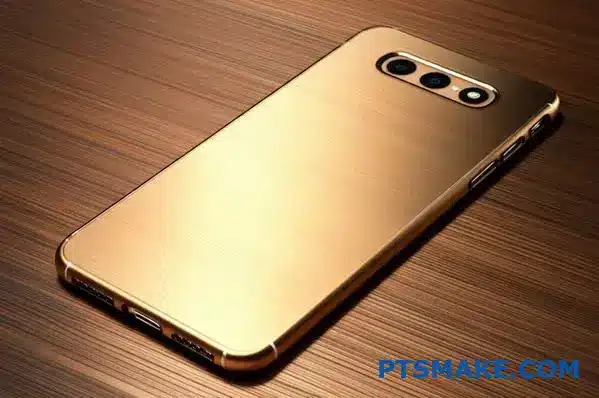
El verdadero dominio de los acabados metálicos cepillados de color a juego proviene de la comprensión de la ciencia subyacente. No se trata sólo de aplicar un color; se trata de alterar fundamentalmente las propiedades de la superficie para lograr un resultado específico y repetible. En PTSMAKE, nos centramos en el control del proceso para garantizar la uniformidad.
Conseguir tonos específicos
El color se controla principalmente mediante el proceso de acabado. Aunque las aleaciones del material base desempeñan un papel, los tratamientos superficiales ofrecen la mayor flexibilidad. A menudo utilizamos Deposición física de vapor8 (PVD) para aplicar una capa fina y duradera.
Ajustando el material objetivo y los gases dentro de la cámara de PVD, podemos crear tonos precisos. Para el oro rosa, se utiliza una mezcla de titanio y nitruro de aluminio con una proporción de gas específica. Para el champán, la composición es diferente. Esto permite un espectro casi infinito de tonos de oro cepillado personalizados.
Control de los patrones de cepillado
El control de la textura es un proceso mecánico que requiere la misma precisión. Manipulamos varios factores para crear el efecto deseado, desde acabados finos y satinados hasta patrones audaces y lineales. Nuestras pruebas demuestran que estos parámetros son fundamentales.
| Parámetro | Efecto sobre el acabado |
|---|---|
| Tamaño de grano abrasivo | Un grano más fino crea un aspecto más suave y satinado. |
| Velocidad de cepillado | Las velocidades más altas pueden producir un acabado más suave. |
| Presión aplicada | Una mayor presión crea líneas más profundas y definidas. |
| Dirección del cepillo | Puede ser lineal, circular o con rayas cruzadas. |
Este enfoque sistemático garantiza que cada pieza que producimos cumpla exactamente las especificaciones visuales y táctiles requeridas por el diseño.
Conseguir un acabado de oro cepillado preciso requiere un control experto del color y la textura. Mediante la manipulación de la composición de la aleación, los parámetros de PVD y las técnicas de cepillado mecánico, los fabricantes pueden ofrecer componentes altamente personalizados que cumplen las especificaciones exactas de diseño para cualquier proyecto.
PVD vs Galvanoplastia: ¿Qué método proporciona un oro cepillado superior?
A la hora de elegir un acabado, el tiempo es un factor crítico. También lo es la calidad final y su capacidad para ampliar la producción. La elección entre PVD y galvanoplastia a menudo se reduce a estos tres pilares.
Veamos cómo se comparan. Esta rápida comparación del oro cepillado galvánico ofrece una visión de alto nivel.
| Característica | PVD (deposición física de vapor) | Galvanoplastia |
|---|---|---|
| Velocidad del proceso | Proceso por lotes más lento | Más rápido para grandes volúmenes |
| Calidad de acabado | Altamente consistente, uniforme | Puede presentar incoherencias |
| Escalabilidad | Excelente para varios volúmenes | Lo mejor para grandes tiradas |
Un acabado de oro cepillado PVD ofrece una consistencia superior. Pero la galvanoplastia puede ser más rápida para pedidos masivos.
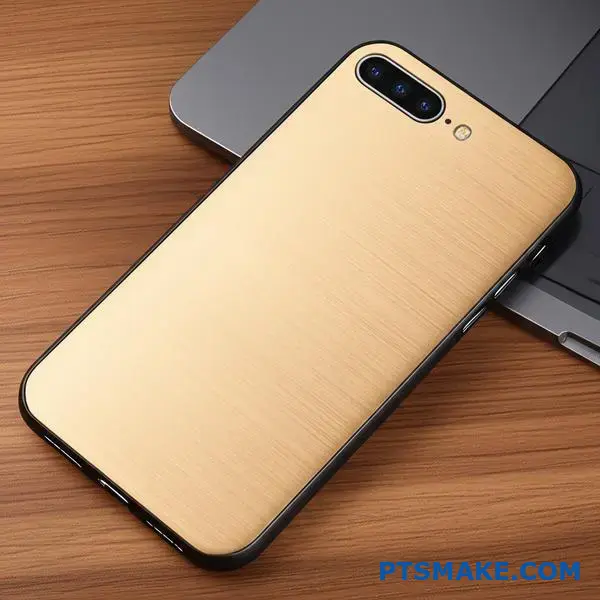
Si profundizamos más, las diferencias se hacen más evidentes. La elección correcta depende totalmente de las necesidades y prioridades específicas de su proyecto. No se trata solo de rapidez, sino de resultados predecibles.
Explicación de la duración del proceso
El PVD es un proceso por lotes. Cargar las piezas en una cámara de vacío, crear el vacío y ejecutar el ciclo de recubrimiento lleva unas horas. Esto hace que el tiempo por pieza parezca largo para tiradas pequeñas.
Sin embargo, la galvanoplastia suele ser un proceso continuo o semicontinuo. Las piezas se mueven a lo largo de una línea a través de varios baños químicos. El resultado es una producción más rápida por pieza individual, especialmente en la fabricación de grandes volúmenes.
Calidad y escalabilidad del acabado
La calidad del acabado PVD en oro cepillado es su punto fuerte. El proceso está muy controlado dentro de la cámara de vacío. El resultado es un recubrimiento excepcionalmente uniforme y repetible.
La calidad de la galvanoplastia depende de la supervisión constante de los baños químicos. Cualquier fluctuación en el equilibrio químico o en la corriente puede afectar al acabado. Esto puede provocar variaciones de color y grosor en un lote grande. El sitio estequiometría9 de la capa depositada es más difícil de controlar.
Esta tabla detalla los matices que hemos observado en nuestras pruebas.
| Aspecto | Detalles de PVD | Detalles de galvanoplastia |
|---|---|---|
| Tiempo de lote | 2-4 horas por ciclo (incluye la preparación) | Flujo continuo, más rápido pieza a pieza |
| Control de calidad | El control digital del proceso garantiza una gran uniformidad | Depende del control del baño químico, puede variar |
| Punto óptimo de volumen | De bajo a alto volumen, flexible | El más adecuado para volúmenes muy altos y continuos |
Así, el PVD se amplía de forma flexible añadiendo más ciclos de producción. La galvanoplastia se amplía ampliando toda la línea de producción para tiradas masivas y continuas.
Su elección depende de las prioridades del proyecto. El PVD proporciona una consistencia de acabado inigualable y es adaptable a distintos volúmenes. La galvanoplastia ofrece una clara ventaja de velocidad para la producción a gran escala, en la que pueden aceptarse pequeñas variaciones.
Elegir el material de sustrato adecuado para un aspecto dorado cepillado perfecto
El metal base que elija no es sólo una base. Es un ingrediente fundamental que da forma al aspecto final. El material subyacente influye enormemente en la calidez, el tono y la textura de un acabado en oro cepillado.
Pensar en el mejor sustrato para un acabado en oro cepillado es esencial. Su elección no sólo afecta al aspecto. También afecta a la durabilidad y al coste.
El papel del sustrato en la estética
Los distintos metales interactúan con los revestimientos de oro de forma única. Esta interacción cambia el color final. También afecta al modo en que la luz se refleja en la superficie. Una mala elección puede arruinar el diseño previsto.
Comparación rápida: Metales básicos
| Característica | Aluminio | Acero inoxidable |
|---|---|---|
| Tono final | Amarillo más cálido y suave | Oro más frío y más afilado |
| Textura | Líneas más suaves | Cepillos Crisper |
| Peso | Ligero | Más pesado |
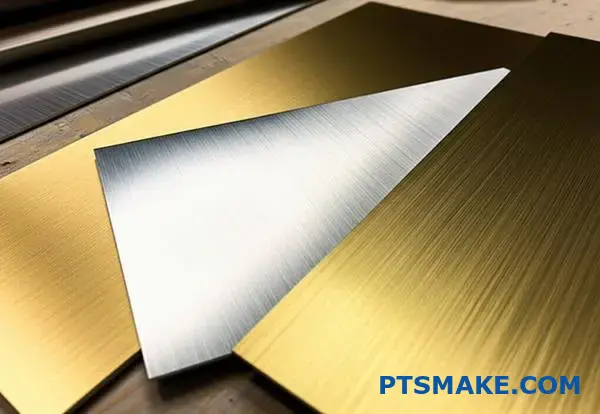
Cuando hablamos de conseguir el acabado perfecto en oro cepillado, la conversación debe empezar por el sustrato. El metal base dicta el carácter final del producto. Dos opciones comunes con las que trabajamos a menudo en PTSMAKE son el aluminio y el acero inoxidable. Cada uno aporta una personalidad distinta al acabado dorado.
Aluminio: Para un aspecto más cálido
El aluminio es naturalmente más blando y tiene una ligera calidez. Esta cualidad se traduce en el acabado final. Un acabado dorado cepillado en aluminio suele parecer más rico y profundo. Las líneas de cepillado también pueden parecer más suaves.
La singularidad de este material energía libre superficial10 afecta a la adherencia del revestimiento. El resultado es un aspecto muy uniforme y consistente. Es una opción excelente para piezas decorativas en las que se desea un tono lujoso y cálido.
Acero inoxidable: Para un acabado más fresco
El acero inoxidable, en cambio, es más duro y tiene un matiz frío, casi azulado. Esta base confiere al acabado en oro cepillado un aspecto más nítido y contemporáneo. El color puede parecer más brillante y reflectante.
La dureza del acero permite trazar líneas de pincel muy nítidas y definidas. Esto lo hace ideal para diseños modernos. Suele utilizarse en aplicaciones de alto desgaste por su durabilidad superior.
Análisis detallado del impacto en el sustrato
Basándonos en nuestras pruebas, he aquí un desglose más detallado:
| Característica | Sustrato de aluminio | Sustrato de acero inoxidable |
|---|---|---|
| Tono de color | Más cálido, ligeramente amarillo rojizo | Amarillo más fresco, brillante y moderno |
| Detalle del cepillado | Líneas más suaves y difuminadas | Líneas más nítidas y definidas |
| Reflejo de la luz | Brillo difuso y satinado | Nítido, mayor reflectividad |
| Lo mejor para | Molduras decorativas, electrónica de consumo | Instalaciones, elementos arquitectónicos |
El sustrato no es un soporte pasivo. Da forma activa al acabado final en oro cepillado. El aluminio crea una estética cálida y suave, mientras que el acero inoxidable produce un aspecto frío y nítido. Su elección define fundamentalmente el color, la textura y el carácter finales del producto.
Problemas de apilamiento de tolerancias al combinar el oro cepillado con el mecanizado CNC
Al diseñar piezas de dimensiones críticas, muchos ingenieros pasan por alto un detalle clave. El acabado superficial no es sólo una cuestión de apariencia.
El acabado en oro cepillado añade una capa tangible de material. Este grosor añadido influye directamente en las dimensiones finales.
Esto es crucial para Tolerancias de las piezas CNC. Si una pieza se mecaniza hasta su tamaño nominal, el acabado puede dejarla fuera del rango aceptable. Esto puede causar importantes problemas de montaje más adelante.
| Característica | Dimensión antes del acabado | Dimensión después del acabado |
|---|---|---|
| Diámetro exterior | 50,00 mm | 50,05 mm |
| Agujero interior | 10,00 mm | 9,95 mm |
Este cambio aparentemente pequeño es donde empiezan los problemas de tolerancia.
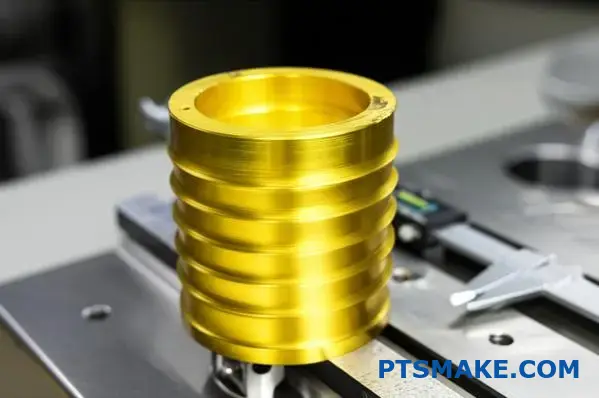
El grosor de un acabado de oro cepillado no es perfectamente uniforme. Puede variar en función de la forma de la pieza y del propio proceso de chapado. Esta variabilidad añade otra capa de complejidad a la obtención de un acabado preciso. Tolerancias de las piezas CNC.
Las esquinas y los bordes pueden acumular más chapado. Las zonas empotradas o los agujeros profundos pueden recibir menos. Esta incoherencia puede ser una fuente oculta de fallos en piezas que deben encajar perfectamente. En PTSMAKE, siempre aclaramos si las dimensiones son anteriores o posteriores al chapado.
En Geometría del sustrato11 desempeña un papel importante en la uniformidad del revestimiento. Si no se tiene en cuenta, pueden producirse ajustes de interferencia inesperados o conexiones sueltas.
| Característica | Tolerancia especificada | Variación de acabado | Desajuste potencial |
|---|---|---|---|
| Diámetro del eje | +/- 0,02 mm | +/- 0,01 mm | Hasta 0,03 mm |
| Agujero del rodamiento | +/- 0,02 mm | +/- 0,01 mm | Hasta 0,03 mm |
Esta tabla muestra cómo una pequeña variación de acabado puede consumir una parte significativa del presupuesto total de tolerancia. Se trata de un ejemplo clásico de apilamiento de tolerancias.
El grosor de un acabado de oro cepillado es una característica dimensional crítica, no sólo una capa cosmética. Debe tenerse en cuenta en Tolerancias de las piezas CNC desde la fase inicial de diseño para evitar costosos fallos de montaje y garantizar una funcionalidad adecuada.
Acabado en oro cepillado para MedTech: Estándares de sala limpia y desgaste
En MedTech, el acabado no es sólo una cuestión estética. Se trata de seguridad y rendimiento. El cumplimiento de la normativa sobre acabados médicos en oro cepillado no es negociable.
Las piezas deben cumplir normas estrictas. Esto garantiza que sean seguras para el contacto con el paciente. También garantiza su correcto funcionamiento en entornos estériles.
Marcos normativos clave
Debemos tener en cuenta varias normas clave. Cada una aborda un aspecto diferente de la seguridad y la calidad de los productos sanitarios.
| Estándar | Objetivo principal | Relevancia del acabado en oro cepillado |
|---|---|---|
| ISO 13485 | Sistemas de gestión de la calidad | Garantiza el control y la trazabilidad del proceso. |
| ISO 10993 | Biocompatibilidad | Confirma la seguridad del material para el contacto con el paciente. |
| ISO 14644 | Salas blancas | Dicta los niveles de limpieza durante la fabricación. |
Esta normativa guía cada paso. Desde la selección del material hasta el envasado final, el cumplimiento es primordial para cualquier acabado en oro cepillado.
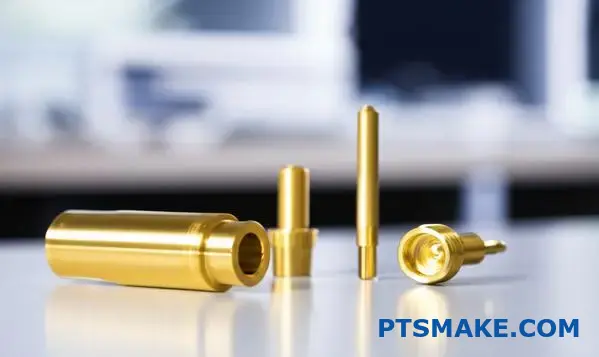
Cuando hablamos de la conformidad de los acabados médicos en oro cepillado, navegamos por un panorama complejo. No basta con que una pieza tenga buen aspecto. Debe funcionar con seguridad en condiciones clínicas exigentes. Aquí es donde las normas internacionales específicas se convierten en nuestra hoja de ruta.
Biocompatibilidad e interacción superficial
La norma más crítica es la ISO 10993. Esta serie de normas evalúa la Biocompatibilidad12 de los materiales. Garantiza que el dispositivo, incluida su superficie de oro cepillado, no provocará reacciones adversas al entrar en contacto con el cuerpo humano. Esto implica pruebas de citotoxicidad, sensibilización e irritación.
Nuestro proceso en PTSMAKE valida que los pasos de chapado y acabado no introducen residuos nocivos.
Protocolos de fabricación en sala blanca
Para los dispositivos utilizados en campos estériles, la norma ISO 14644 es clave. Esta norma rige la clasificación de la limpieza del aire en las salas blancas. Fabricar una pieza de oro cepillado destinada a una herramienta quirúrgica implica controlar las partículas en cada etapa.
| Área de conformidad | Requisito | Impacto en el acabado oro cepillado |
|---|---|---|
| Obtención de materiales | Sustratos de calidad médica | Garantiza la seguridad del material subyacente. |
| Proceso de revestimiento | Química controlada | Evita la lixiviación de elementos tóxicos. |
| Limpieza final | Procedimientos validados | Elimina todos los residuos de fabricación. |
| Embalaje | Entorno de sala limpia | Mantiene la esterilidad hasta su uso. |
Manipulamos estas piezas en salas blancas certificadas. Esto evita la contaminación que podría comprometer la seguridad del paciente. Es un nivel de detalle que define la fabricación de calidad médica.
Conseguir un acabado de oro cepillado conforme a las normas exige un estricto control del proceso. El cumplimiento de las normas ISO 10993 e ISO 14644 es esencial. Esto garantiza la seguridad de los pacientes y la integridad de los dispositivos en entornos médicos estériles, que es nuestra máxima prioridad.
Cuándo utilizar el oro cepillado en lugar del anodizado champán
Elegir entre acabados dorados puede ser difícil. Es algo más que el color. Tiene que ver con el material, el proceso y el rendimiento deseado. Los ingenieros deben sopesar estos factores cuidadosamente.
El debate del oro cepillado frente al acabado anodizado es habitual. Cada uno tiene su lugar.
Principales diferencias visuales
El acabado en oro cepillado proporciona un aspecto metálico clásico y rico. El anodizado champán ofrece un brillo más moderno y sutil. La elección influye en el tacto del producto final.
| Característica | Oro cepillado | Champán anodizado |
|---|---|---|
| Estética | Cálido y tradicional | Fresco, contemporáneo |
| Textura | Líneas direccionales finas | Suave, mate |
| Sensación del material | Tacto metálico chapado | Aluminio integral |
Entender estas distinciones es el primer paso para tomar la decisión correcta para su proyecto. Establece el tono de todo el diseño.
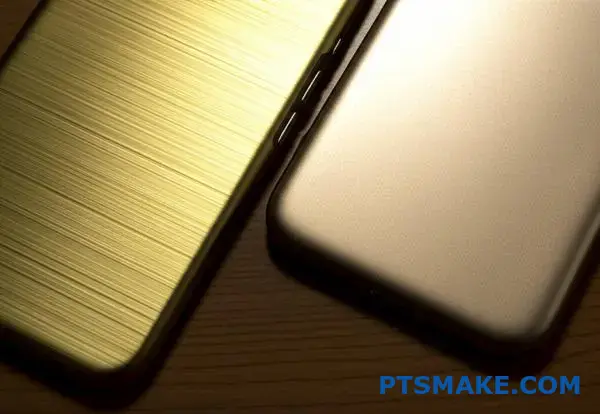
La decisión va más allá de la apariencia. Tiene que ver fundamentalmente con el proceso de fabricación y la compatibilidad de materiales. Aquí es donde más orientamos a nuestros clientes.
El acabado en oro cepillado es un proceso secundario. Suele aplicarse sobre materiales como acero inoxidable o latón. Se utilizan procesos como el recubrimiento PVD o la galvanoplastia.
El anodizado, sin embargo, es un proceso electroquímico. Es exclusivo del aluminio. Convierte la superficie metálica en un acabado de óxido anódico duradero y resistente a la corrosión. El acabado forma parte integrante del aluminio [sustrato](código de error: 500)13, no sólo un revestimiento.
Comparación técnica
En PTSMAKE ayudamos a nuestros clientes a evaluar las ventajas y desventajas técnicas. La mejor opción depende totalmente de los requisitos específicos de la aplicación.
| Especificación | Oro cepillado (PVD/plateado) | Champán anodizado |
|---|---|---|
| Durabilidad | Alta (varía según el proceso) | Excelente (más duro que el aluminio base) |
| Material | Acero, latón, zinc, etc. | Sólo aluminio |
| Coste | Generalmente superior | Más rentable para el aluminio |
| Coherencia | Puede presentar ligeras variaciones | Altamente repetible y uniforme |
La decisión sobre el acabado en oro cepillado o anodizado depende de estos puntos. Si no utiliza aluminio, el anodizado no es una opción. Si la durabilidad del aluminio es un factor clave, el anodizado es una buena opción.
La elección entre un acabado dorado cepillado y champán anodizado depende del material de base, el presupuesto y la durabilidad deseada. El oro cepillado ofrece un atractivo clásico en diversos metales, mientras que el anodizado proporciona un acabado integrado y resistente específico para piezas de aluminio.
Eleve sus proyectos con los expertos en acabado en oro cepillado de PTSMAKE
¿Está listo para conseguir un acabado en oro cepillado impecable para su próximo proyecto de ferretería o de OEM? Póngase en contacto con PTSMAKE para obtener un presupuesto rápido, preciso y fiable. Deje que nuestros más de 20 años de experiencia en mecanizado y acabado CNC le proporcionen la calidad superior que su marca merece.

Más información sobre el proceso electroquímico de anodización y cómo mejora las superficies metálicas. ↩
Comprenda cómo los diferentes reflejos de la luz pueden influir en la calidad percibida y en la experiencia del usuario de su producto final. ↩
Aprenda cómo influye este concepto psicológico en las decisiones de compra y en las estrategias de fijación de precios de los productos. ↩
Explore esta avanzada técnica de revestimiento para comprender su impacto en la durabilidad y el rendimiento de las superficies. ↩
Descubra cómo influyen estas propiedades en la resistencia al desgaste y a la fricción del acabado superficial de su producto. ↩
Descubra cómo afecta esta propiedad direccional al atractivo visual y la reflectividad de las superficies metálicas cepilladas. ↩
Descubra cómo la textura y el tacto de un producto influyen en la percepción que tiene el cliente de su calidad y valor generales. ↩
Conozca los detalles técnicos de cómo este proceso de revestimiento consigue colores uniformes y duraderos en piezas metálicas. ↩
Aprenda cómo las proporciones precisas de los materiales en los revestimientos afectan a la durabilidad y a la consistencia del color en su producto final. ↩
Descubra cómo influye esta propiedad en la adherencia del revestimiento y en la calidad del acabado final. ↩
Descubra cómo la forma inicial de la pieza influye en la uniformidad del revestimiento final y en la precisión dimensional. ↩
Conozca las pruebas esenciales que garantizan que los materiales son seguros para el contacto humano. ↩
Aprenda cómo las propiedades del material base influyen en la selección y el rendimiento de los acabados superficiales. ↩