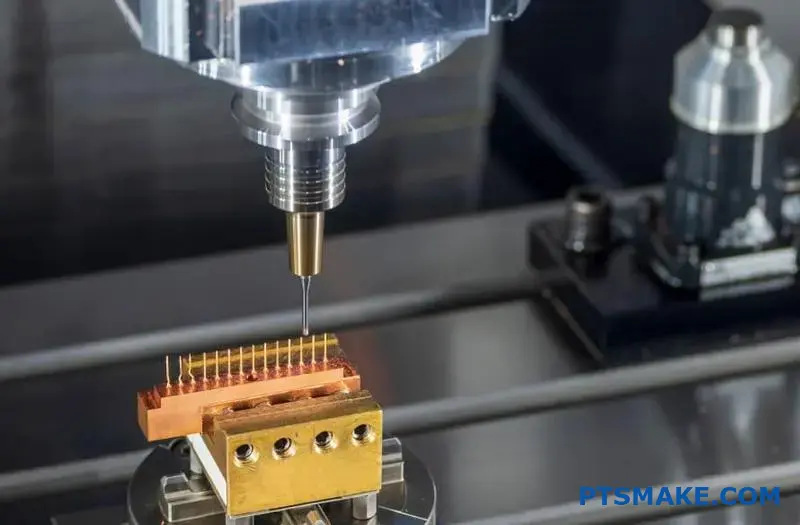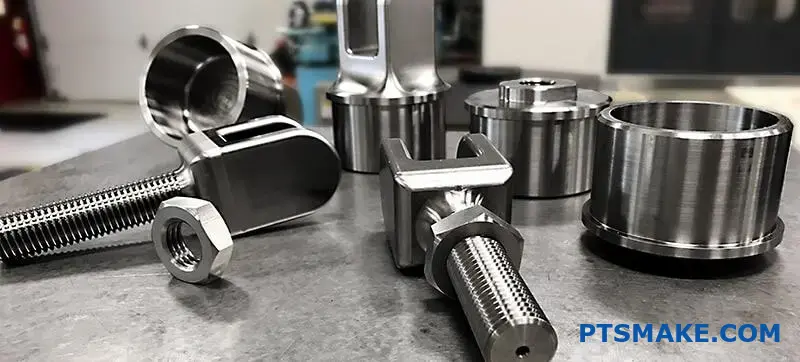

Your CNC machined parts perform flawlessly in testing, but fail prematurely in real-world conditions due to corrosion. Standard zinc plating leaves you dealing with costly warranty claims and frustrated customers who expected better durability.
Zinc nickel plating delivers 5-10x better corrosion resistance than standard zinc coatings, making it the preferred choice for automotive, aerospace, and marine applications where parts must withstand harsh environments for extended periods.
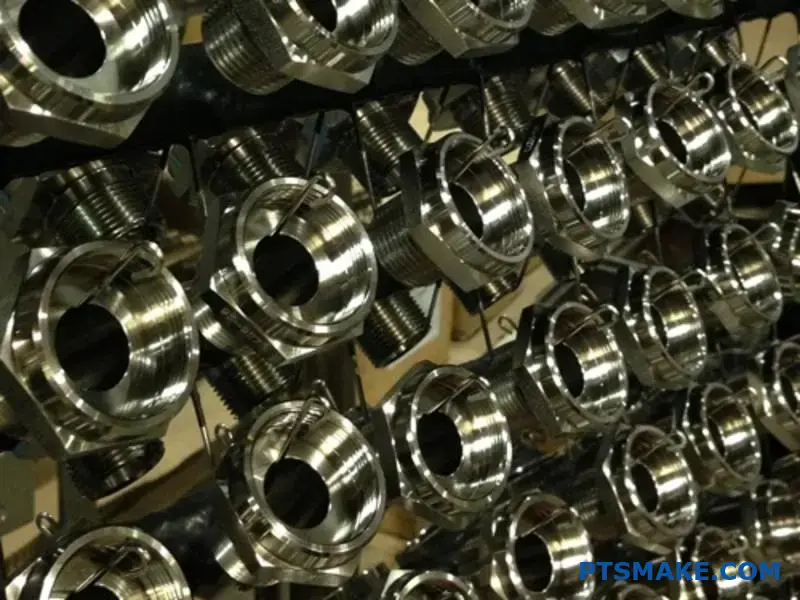
I’ve worked with manufacturers who switched to zinc nickel plating and saw dramatic improvements in field performance. This guide covers everything from technical comparisons to practical implementation steps, helping you make an informed decision about upgrading your coating specification.
Why Zinc Nickel Plating Outperforms Traditional Coatings
When choosing a protective finish, the options can seem endless. But for high-performance applications, the choice becomes critical. Standard zinc plating often isn’t enough.
This is where zinc nickel plating stands out. It provides far superior corrosion resistance and durability.
The Clear Advantage
In our tests, the difference is stark. Zinc nickel consistently outperforms traditional zinc. This makes it ideal for harsh environments.
Here’s a quick comparison based on salt spray testing.
| Coating Type | Hours to Red Rust |
|---|---|
| Standard Zinc | 96 – 200 hours |
| Zinc Nickel | 1000+ hours |
This level of protection is essential for critical components.
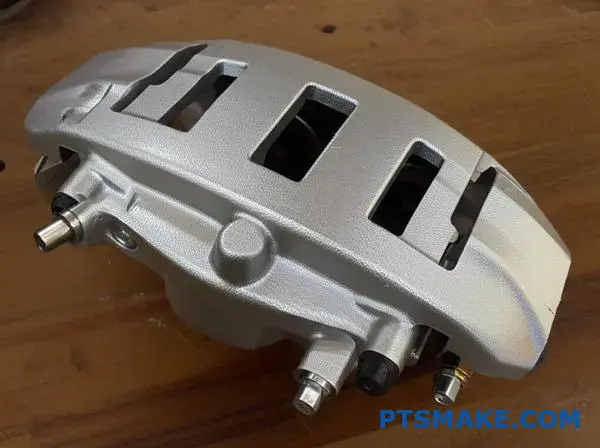
When we compare zinc nickel plating vs zinc, the core difference lies in the alloy itself. The addition of 12-15% nickel creates a much more robust and stable barrier against corrosion. This isn’t just a minor improvement; it’s a fundamental shift in performance.
The Protective Mechanism
The coating acts as a sacrificial anode1, corroding preferentially to the steel substrate underneath. But the nickel content significantly slows this process down, extending the part’s service life dramatically. This enhanced zinc nickel corrosion resistance is vital.
For industries like automotive and aerospace, this is non-negotiable. Components are exposed to extreme temperatures, road salt, and harsh chemicals. Cadmium was once the standard, but it’s highly toxic. Zinc nickel provides comparable or better performance without the environmental hazards.
A Head-to-Head Comparison
| Feature | Zinc Nickel Plating | Zinc Plating | Cadmium Plating |
|---|---|---|---|
| Corrosion Resistance | Excellent (1000+ hrs) | Fair (96-200 hrs) | Very Good (500+ hrs) |
| Hardness | High | Low | Moderate |
| Temperature Tolerance | Up to 250°C | Up to 60°C | Up to 230°C |
| Environmental Impact | Low (RoHS compliant) | Low | High (Toxic) |
This makes zinc nickel the premier choice for high performance plating. At PTSMAKE, we frequently recommend it for components that simply cannot fail.
In short, zinc nickel plating offers vastly superior corrosion resistance and durability compared to traditional coatings. Its performance in demanding environments makes it the ideal choice for high-stakes industries like automotive and aerospace, replacing older, less effective, or hazardous options.
Top Questions Engineers Ask Before Committing To Zinc Nickel
Engineers often ask about the real-world performance of zinc nickel plating. It’s not just about specs on a data sheet. Key design concerns for plating revolve around durability.
How does it handle heat? Is it compatible with both steel and aluminum? We’ll address these common zinc nickel FAQ engineers ask. This plating offers excellent protection, but knowing its limits is crucial for success.
Here’s a quick look at its heat resistance.
| Plating Type | Max Temp (Continuous) |
|---|---|
| Zinc Nickel | 120°C – 150°C |
| Standard Zinc | ~60°C |
This simple comparison shows a clear advantage for high-temperature applications.
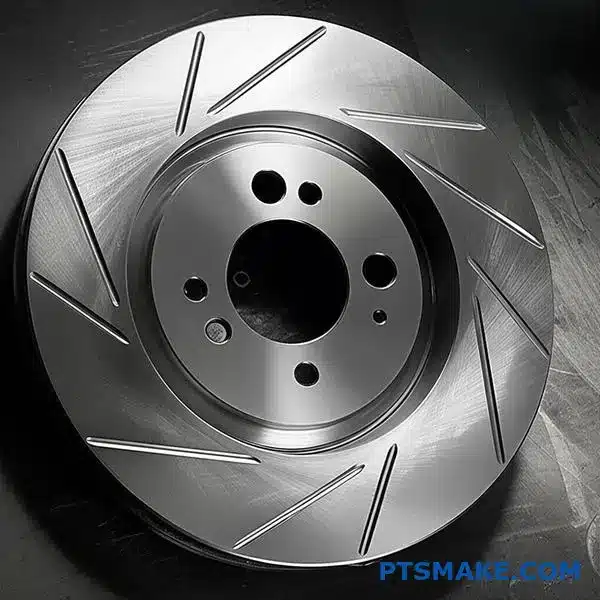
A major advantage of zinc nickel plating is its versatility. It works exceptionally well on steel, providing robust corrosion resistance. But many engineers ask about plating for steel and aluminum assemblies. This is where it truly shines.
Compatibility: Steel vs. Aluminum
The key is managing galvanic corrosion. When dissimilar metals touch, one corrodes faster. Zinc nickel creates a barrier that is less reactive with aluminum than other coatings. This minimizes the electropotential difference2 between the plated steel fastener and the aluminum body.
Our internal tests at PTSMAKE show this significantly extends component life. It prevents the aluminum from becoming a sacrificial anode to the fastener, which is a common failure point.
Understanding Wear and Durability
Beyond corrosion, what about wear? Zinc nickel is a hard, durable coating. It resists abrasion and mechanical damage far better than standard zinc. This makes it ideal for parts that see frequent handling or operate in harsh environments. It maintains its protective integrity even after repeated thermal cycling.
Zinc nickel plating provides superior thermal stability and wear resistance. Its key benefit lies in minimizing galvanic corrosion, making it an excellent choice for protecting steel components in contact with aluminum—a vital solution for mixed-metal assemblies in modern design.
Zinc Nickel vs. Cadmium: The Definitive Health And Safety Comparison
When choosing a protective coating, performance is key. Cadmium was once the standard for corrosion resistance. However, modern zinc nickel plating often outperforms it.
This is especially true in harsh environments. Let’s look at the direct comparison.
Durability and Environmental Factors
We must consider the full lifecycle. This includes application safety and end-of-life disposal. Zinc nickel emerges as a clear leader. It’s a modern, effective cadmium replacement plating solution that meets today’s standards.
| Feature | Zinc Nickel Plating | Cadmium Plating |
|---|---|---|
| Corrosion Resistance | Superior | Excellent |
| Hardness | Higher | Lower |
| RoHS Compliance | Yes | No |
| Toxicity | Low | High (Carcinogen) |
The data clearly supports zinc nickel as a safer alternative.
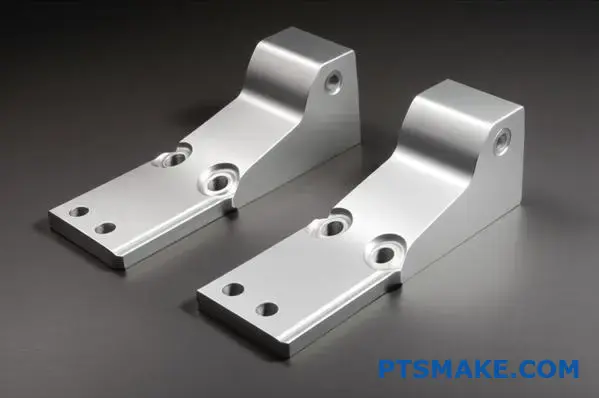
The Regulatory Landscape: RoHS and Beyond
The biggest driver for change is regulation. RoHS (Restriction of Hazardous Substances) effectively bans cadmium in most electronics. This makes cadmium unusable for many modern applications. Choosing RoHS compliant coatings is not optional; it is a legal requirement in many markets.
Cadmium is a known carcinogen. Its use requires strict, expensive controls. These are needed for worker safety and environmental protection. The risks associated with handling and disposal are substantial. At PTSMAKE, we prioritize solutions that minimize these hazards for everyone.
A Deeper Look at Performance and Cost
Zinc nickel plating provides exceptional protection. It functions as a sacrificial anode3 to protect the steel substrate. In our tests, it consistently shows better corrosion resistance in salt spray tests compared to cadmium.
The cost isn’t just about the plating process. It includes compliance, waste treatment, and potential liability.
| Cost Factor | Zinc Nickel | Cadmium |
|---|---|---|
| Application | Moderate | Moderate |
| Waste Disposal | Lower | Very High |
| Regulatory Burden | Minimal | High |
| Long-Term Liability | Low | High |
When you factor in these hidden costs, zinc nickel is the more economical and responsible choice for long-term projects.
Choosing between these coatings goes beyond performance. It’s about safety, environmental responsibility, and regulatory compliance. Zinc nickel plating offers superior durability and hardness while being a RoHS compliant, safer alternative to toxic cadmium. The long-term cost benefits are clear.
How To Interpret Salt Spray Test Results For Zinc Nickel Parts
Understanding salt spray hours is key. For zinc nickel plating, benchmarks range from 240 to over 1000 hours. This wide range isn’t random. It directly relates to the specific plating system used.
A standard finish might meet a 240-hour requirement. But high-performance systems can push past 1000 hours without red rust. This difference is crucial for part longevity. The table below outlines typical performance tiers in a salt spray test plating environment.
| Performance Tier | Hours to White Rust | Hours to Red Rust |
|---|---|---|
| Standard | ~120 hours | 240 – 500 hours |
| High-Performance | ~240 hours | 720 – 1200+ hours |
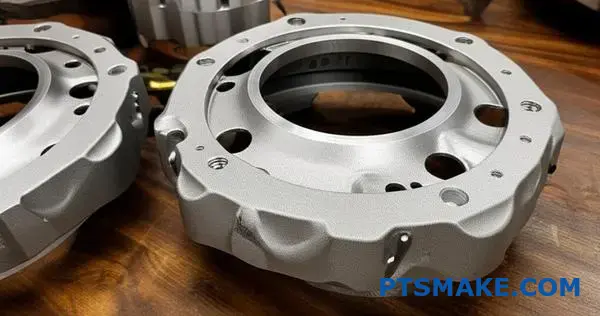
So, what creates this vast performance gap? It’s not just one thing. It’s a combination of the zinc-nickel alloy itself, the plating thickness, and most importantly, the subsequent conversion coating and sealer.
Typical zinc nickel plating provides solid protection. However, high-performance systems take it further. They often use a specific alloy composition, typically with 12-15% nickel content. We find this ratio offers an optimal balance of sacrificial protection and barrier resistance.
The real game-changer is the post-treatment. A high-performance passivate4 and a topcoat sealer can double or even triple the corrosion resistance. These layers seal the porous plating, preventing corrosive agents from reaching the steel. We work closely with clients to specify the right combination. This ensures their zinc nickel test results from an ASTM B117 corrosion test meet expectations.
Here’s a breakdown of the key differences.
| Feature | Typical Zinc Nickel | High-Performance Zinc Nickel |
|---|---|---|
| Nickel Content | 8-12% | 12-15% |
| Passivate | Standard Trivalent | High-Purity/Engineered |
| Topcoat/Sealer | Often Optional | Standard/Required |
| Target Use | General Industrial | Automotive, Aerospace, Marine |
Salt spray test benchmarks are not one-size-fits-all. Performance, from 240 to over 1000 hours, depends heavily on the zinc nickel plating system’s alloy composition, passivate, and whether a topcoat sealer is applied for maximum protection.
Optimizing CNC Parts For Zinc Nickel Plating Success
Success in zinc nickel plating starts long before the part enters the plating bath. It begins with design and material choices. Proper CNC parts plating prep is essential.
Your material selection forms the foundation. The surface finish directly impacts adhesion and uniformity. Even small design details, like corner radii, can make or break the outcome.
Key Pre-Plating Factors
| Factor | Impact on Plating Quality |
|---|---|
| Material Choice | Affects adhesion and corrosion resistance. |
| Surface Finish | Determines plating uniformity and bond strength. |
| Corner Radii | Prevents buildup on edges and voids in corners. |
Paying attention to these details ensures a flawless, durable finish.
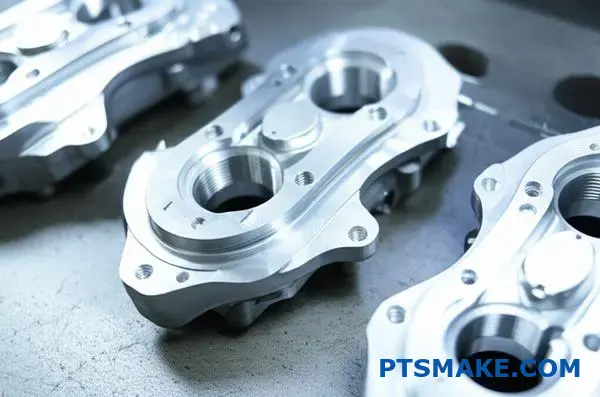
Perfecting zinc nickel plating requires a deep dive into part design. It’s more than just a surface treatment; it’s an integrated engineering process.
Material and Plating Compatibility
The choice of base material is critical. Most steel and copper alloys are excellent candidates for zinc nickel plating. However, high-carbon steels require special attention to prevent issues. This is a key aspect of surface plating compatibility. At PTSMAKE, we always verify material specs against plating requirements first.
The Importance of Surface Finish
A pristine surface is non-negotiable. Any contaminants, like oils or oxides, will prevent proper adhesion. We follow a strict cleaning protocol. This includes degreasing and acid pickling to create an active surface ready for plating. A smoother finish generally yields better results.
| Surface Defect | Plating Result |
|---|---|
| Scratches | Visible through the plating |
| Porosity | Can trap solutions, causing blisters |
| Oil/Grease | Prevents plating adhesion |
Designing for Electroplating
Sharp corners are a plater’s enemy. They create high-current-density areas5, causing the plating to build up excessively on outer edges. Conversely, sharp internal corners receive very little coating. For optimal electroplating CNC designs, I recommend a minimum radius of 0.8mm on all corners. This simple change promotes a much more uniform coating thickness.
In short, successful zinc nickel plating hinges on careful planning. Your choice of material, surface preparation, and design details like corner radii are foundational. Overlooking these steps in your CNC parts plating prep can lead to costly failures and delays.
When To Use Rack vs. Barrel Plating For Zinc Nickel
Choosing between rack and barrel plating is a critical decision. This choice directly affects the quality and cost of your zinc nickel plating. It is not about which is better overall. It’s about which is right for your specific part.
Rack plating offers precision. We mount parts individually on a rack. This is ideal for large, complex, or delicate components. It prevents damage and ensures a uniform finish.
Barrel plating is for volume. Small, durable parts are placed in a barrel and gently tumbled during the zinc nickel electroplating process. This method is highly efficient and cost-effective for large quantities.
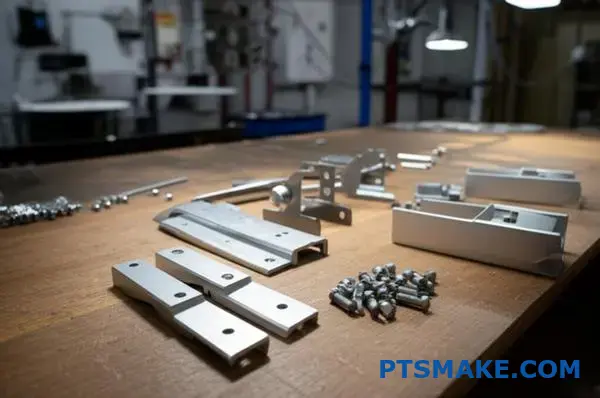
The core difference lies in the process mechanics. In rack plating, each part is fixed. This allows for precise control over its position relative to the anodes. The consistent distance ensures a more predictable application of the zinc nickel electroplating process principles.
This controlled part orientation plating is crucial for parts with complex geometries or specific functional surfaces. It guarantees an even coating thickness across the entire part. This is a common requirement for the high-precision components we handle at PTSMAKE.
Barrel plating, however, relies on tumbling. Parts make random contact with electrical conductors inside the barrel. This is efficient for simple shapes like screws or small brackets. The tumbling action can cause minor cosmetic marks. This makes it unsuitable for delicate or Class-A surfaces. The process is less controlled but highly economical for the right application. The consistent tumbling ensures a fairly uniform, though not perfectly even, deposit of zinc-nickel alloy6 over the bulk batch.
Key Differences at a Glance
| Feature | Rack Plating | Barrel Plating |
|---|---|---|
| Part Handling | Individual, fixed | Bulk, tumbling |
| Finish Quality | Superior, uniform | Good, can have contact marks |
| Part Size | Large, complex, delicate | Small, simple, durable |
| Cost | Higher per piece | Lower per piece |
| Risk of Damage | Very low | Higher for fragile parts |
Deciding between rack vs barrel plating comes down to your part’s specific needs. Rack plating provides superior control and finish quality for delicate parts. Barrel plating offers an efficient, cost-effective solution for high volumes of small, durable components.
Zinc Nickel In Electric Vehicle Applications: What’s Changing
Electric vehicles operate in harsh environments. Their most critical components, like battery packs, busbars, and structural parts, face constant threats. Corrosion is a major enemy here.
Effective battery corrosion protection is not just about longevity. It is about safety and performance. A small amount of corrosion can lead to big problems.
Critical Areas for Corrosion Control
We must focus on protecting several key zinc nickel EV components. Each has unique challenges.
Battery Packs and Busbars
These parts are the heart of an EV. They handle high currents and are often exposed to moisture and temperature swings.
| Component | Primary Corrosion Risk | Consequence of Failure |
|---|---|---|
| Battery Pack Casing | Environmental exposure (road salt, moisture) | Loss of structural integrity, internal damage |
| Busbars | High voltage, dissimilar metal contact | Increased resistance, power loss, fire hazard |
| Terminals/Connectors | Electrical current, electrolyte leakage | Poor connection, system failure |
Proper electric vehicle plating is essential to prevent these issues.
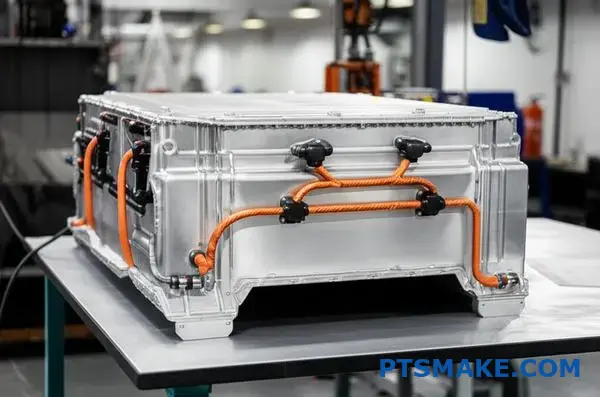
The need for superior corrosion protection in EVs goes beyond surface rust. It’s about maintaining electrical integrity and structural safety for the vehicle’s entire lifespan. This is especially true inside the battery enclosure.
The Dangers of Internal Corrosion
Inside a battery pack, conditions can be demanding. Any moisture or potential for electrolyte leakage creates a highly corrosive environment. This is where standard coatings often fail.
The close proximity of different metals, like copper busbars and steel fasteners, creates a perfect setup for Galvanic corrosion7. This electrochemical reaction accelerates metal degradation far faster than simple rust.
At PTSMAKE, we’ve seen how this can compromise safety systems and lead to catastrophic failures. Zinc nickel plating acts as a crucial barrier. It provides a sacrificial layer that protects the base metal, even when scratched.
Performance of Zinc Nickel in Battery Environments
Our tests with clients show zinc nickel’s resilience. It stands up to salt spray and chemical exposure far better than traditional zinc plating.
| Coating Type | Salt Spray Resistance (Hours) | Key Advantage for EVs |
|---|---|---|
| Standard Zinc | 96-120 | Low cost |
| Zinc-Cobalt | 240-400 | Moderate improvement |
| Zinc Nickel | 720-1000+ | Superior protection, high-temperature stability |
This makes zinc nickel EV components more reliable and safer over the long term.
Corrosion control in EV battery packs and structural parts is critical for safety, reliability, and lifespan. Zinc nickel plating offers a superior defense against harsh conditions and electrical risks, making it a key technology for modern electric vehicles.
Step-By-Step Guide To Transitioning From Zinc To Zinc Nickel Plating
Making the final move to zinc nickel plating is crucial. This last phase is where you formalize the change.
It involves validating parts with the new finish. You must also update all official engineering drawings.
Finally, you need to assess your supplier’s readiness. Then, you present a clear justification for the change. This process ensures the transition is technically sound and has full organizational support when you convert to zinc nickel.
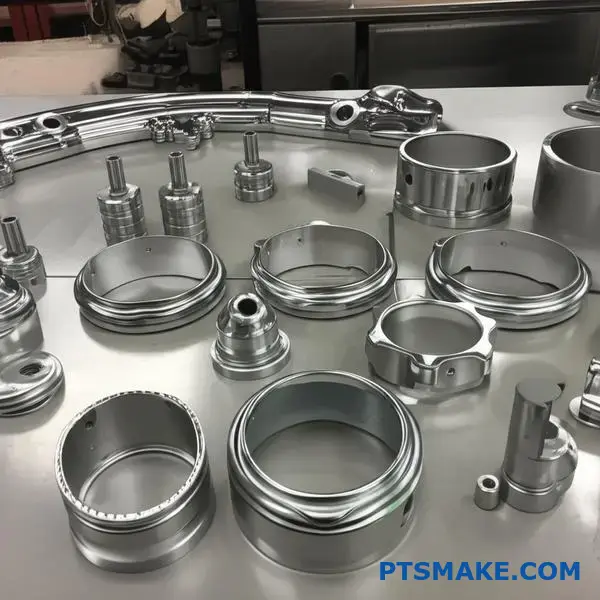
Requalifying Your Parts
First, you must validate the newly plated parts. This means running them through a full requalification process.
This process should include dimensional checks and key performance tests. Salt spray testing is essential here for confirming the upgraded corrosion protection. We often see clients formalize this with a report.
| Validation Test | Objective | Success Metric |
|---|---|---|
| Salt Spray (ASTM B117) | Confirm corrosion resistance | No red rust after 720+ hours |
| Plating Thickness | Ensure uniform coverage | Within specified tolerance (e.g., 8-12 µm) |
| Adhesion Test | Verify plating bond strength | No peeling or flaking under stress |
Updating Engineering Documentation
Your technical drawings are the source of truth. They must be updated to reflect the new plating requirement.
Change the plating specification callout on all relevant drawings. This action prevents manufacturing errors. A First Article Inspection8 is vital to confirm the first production run matches the updated drawing perfectly. This is a critical step in the transition plating specification.
Evaluating Supplier Capabilities
Next, evaluate your supplier. Can they consistently produce high-quality zinc nickel plating? It requires different controls than standard zinc.
Look at their process control, quality systems, and experience. At PTSMAKE, we thoroughly vet our finishing partners. We ensure they can meet the demanding standards of aerospace and automotive clients.
Justifying the Change
Finally, build your business case. This helps get approval from management and finance.
Present performance data showing longer part life. Calculate the total cost of ownership. The higher initial cost is often offset by fewer warranty claims and field failures.
Finalizing your move to zinc nickel involves four key actions. Requalify the parts, update technical drawings, confirm your supplier is capable, and build a solid business case. This structured approach ensures a smooth upgrade to superior corrosion protection.
Unlock Superior Zinc Nickel Plating Solutions With PTSMAKE
Ready to take your CNC-machined parts to the next level? Contact PTSMAKE for expert advice or a quick quote on zinc nickel plating. Ensure maximum corrosion resistance and reliable performance—partner with a team that delivers precision, trust, and long-term manufacturing value. Send your RFQ today!

Understand the electrochemical process that makes this coating highly effective. ↩
Learn how this electrical property between metals is the root cause of galvanic corrosion in our detailed guide. ↩
Understand how this electrochemical process protects your parts from corrosion. ↩
Discover how this thin chemical conversion coating acts as a critical barrier against corrosion. ↩
Learn how current flow impacts plating uniformity and how to avoid common coating defects in your designs. ↩
Learn more about this high-performance coating to understand its superior corrosion resistance and application benefits. ↩
Understand how this electrochemical process can degrade critical EV components and how to prevent it effectively. ↩
Learn how this check ensures new parts meet all specs before starting full production. ↩