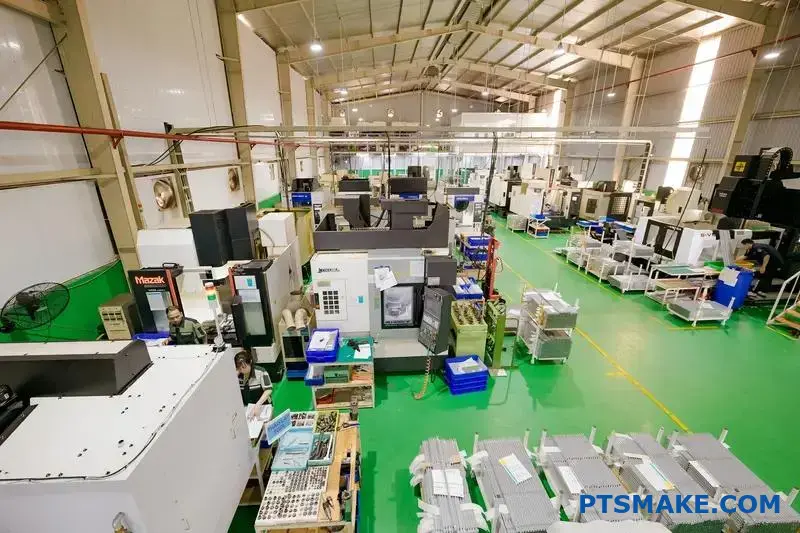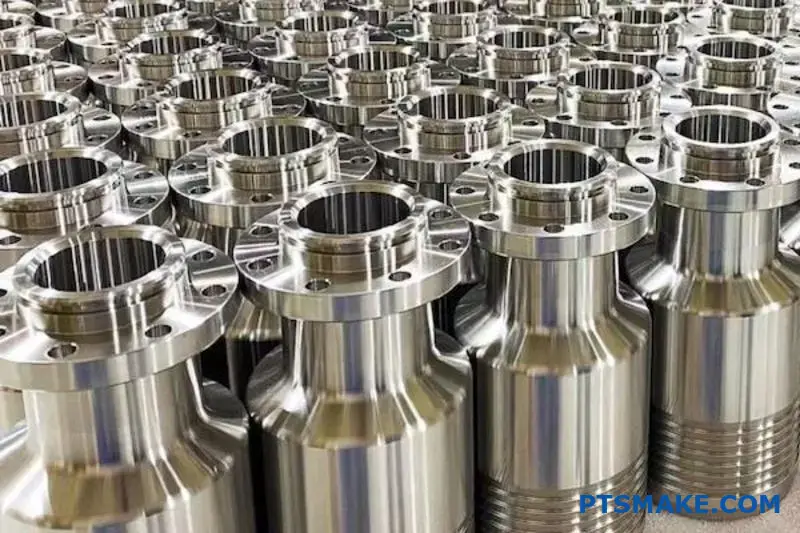

Chrome plating aluminum parts seems straightforward, but most manufacturers discover too late that poor preparation leads to coating failures, dimensional issues, and expensive rework cycles.
Chrome plating aluminum requires specialized surface preparation, precise process control, and careful consideration of thermal expansion differences between the base material and coating to achieve durable, dimensionally accurate results.
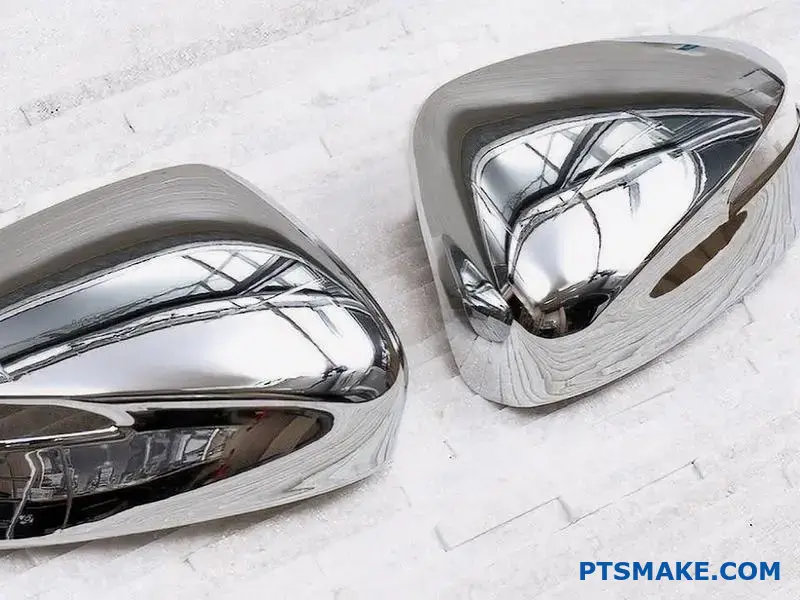
I’ve helped engineers navigate these complexities across automotive, aerospace, and consumer electronics projects. The key differences between plating aluminum versus steel create unique challenges that standard plating shops often overlook. This guide covers the technical considerations, cost analysis, and process decisions you need to specify chrome-plated aluminum parts correctly the first time.
Critical Tolerances: How Chrome Plating Impacts Aluminum Precision
Chrome plating offers aluminum parts superior hardness and corrosion resistance. However, it also adds a layer of material. This directly alters the part’s final dimensions.
Understanding Dimensional Shift
For high-precision applications, this is not a minor detail. Even a few microns of added thickness can push a component out of its specified tolerance. This is a common challenge in precision finishing.
Pre-Engineering for Success
The key is proactive dimensional control. We machine the aluminum part slightly undersized to accommodate the exact plating thickness. This ensures the final, plated part meets the design’s critical tolerances.
| Plating Type | Typical Added Thickness (per side) | Impact on Tolerance |
|---|---|---|
| Hard Chrome | 25-100 µm | High |
| Thin Dense Chrome | 2-10 µm | Medium |
| Decorative Chrome | <1 µm | Low |
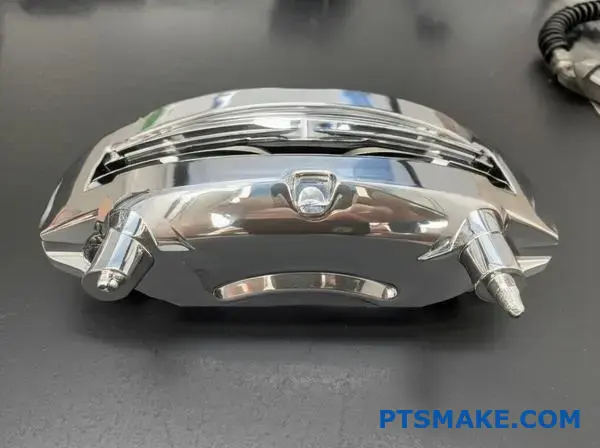
Achieving perfect chrome plating aluminum tolerances goes beyond a simple subtraction. The plating process itself, known as electrochemical deposition1, is not perfectly uniform across a part’s surface.
The Challenge of Part Geometry
Sharp corners, edges, and holes naturally attract a thicker chrome deposit. This is a well-known phenomenon in plating. Flat surfaces, conversely, receive a thinner layer. For complex geometries, this variation must be anticipated.
At PTSMAKE, we analyze the part design to predict these high-deposit areas. This might involve adjusting the initial machining strategy for specific features. It’s a critical step for dimensional control.
Surface Preparation is Key
The initial surface finish of the aluminum part is also vital. Any microscopic flaws can be magnified after plating, affecting both dimensional accuracy and performance. A flawless base is non-negotiable for precision finishing.
| Feature Type | Expected Plating Buildup | Mitigation Strategy |
|---|---|---|
| External Corners | High | Radius corner, use conforming anodes |
| Internal Corners | Low | Auxiliary anodes |
| Flat Surfaces | Nominal | Standard undersizing |
| Holes/Bores | Variable | Plating shields, internal anodes |
Managing chrome plating on aluminum requires proactive engineering. We must account for plating thickness and non-uniform deposition around complex geometries. Precise initial machining and surface preparation are crucial for meeting final tolerance specifications and ensuring successful precision finishing.
Ultimate Cost Breakdown: Chrome Plating Aluminum Vs Steel
Choosing between chrome-plated aluminum and steel is a common dilemma. The decision hinges on cost, weight, and performance. Each material has distinct advantages.
Steel is strong and its plating process is straightforward. Aluminum is lightweight but requires more prep work before plating.
This comparison helps you decide.
Quick Comparison: Aluminum vs. Steel
| Feature | Chrome-Plated Aluminum | Chrome-Plated Steel |
|---|---|---|
| Weight | Lightweight | Heavy |
| Initial Cost | Higher | Lower |
| Strength | Lower | Higher |
| Corrosion | Excellent | Good |
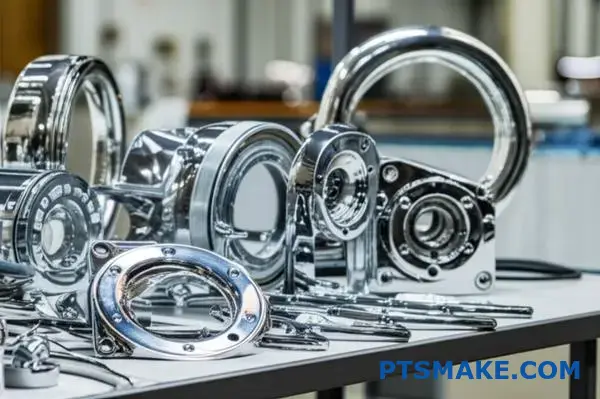
The choice isn’t just about the base metal. The process of chrome plating aluminum is more complex and, therefore, more expensive than plating steel. Steel’s surface readily accepts chrome. It’s a direct and efficient process.
Aluminum, however, presents a challenge. It naturally forms an oxide layer. This layer prevents chrome from adhering properly. To overcome this, aluminum parts must undergo a multi-step pre-treatment. This often includes a zincate process and a layer of electroless nickel plating2.
This extra step is crucial for a durable finish. It adds significant time and material costs. So, the aluminum chrome plating cost comparison is not just about metal prices. It’s about the entire manufacturing chain.
Plating Process Breakdown
| Step | Aluminum Plating | Steel Plating |
|---|---|---|
| Cleaning | Degreasing & Etching | Degreasing & Acid Pickling |
| Pre-treatment | Zincate & Nickel Strike | None |
| Plating | Copper, Nickel, Chrome | Nickel, Chrome |
| Complexity | High | Standard |
At PTSMAKE, we guide clients through this choice. We focus on the end-use application to balance performance with budget effectively. The steel vs aluminum plating debate is always decided by the project’s specific requirements for strength, weight, and corrosion resistance.
The choice between chrome-plated aluminum and steel depends on your specific needs. Aluminum offers a lightweight solution with superior corrosion resistance but at a higher process cost. Steel provides strength and lower plating costs, making it ideal for high-stress applications where weight is not a primary concern.
Can Chrome Plating Fix Porous Aluminum Castings? A Technical Guide
You cannot plate over porous aluminum and expect good results. The key is addressing the porosity before the chrome plating process begins. The original quality of the aluminum casting is the most critical factor.
A high-quality casting simplifies everything. At PTSMAKE, we always inspect raw castings first. If the part is full of holes, no sealing method will guarantee a flawless finish. Effective porosity sealing for aluminum is a prerequisite.
Pre-Plating Sealing Options
We rely on specific techniques to prepare parts. Here is a quick comparison.
| Sealing Method | Best For | Plating Outcome |
|---|---|---|
| Resin Impregnation | Micro-porosity | Excellent |
| Epoxy Fillers | Surface voids | Fair to Poor |
| Welding | Large defects | Not for fine porosity |
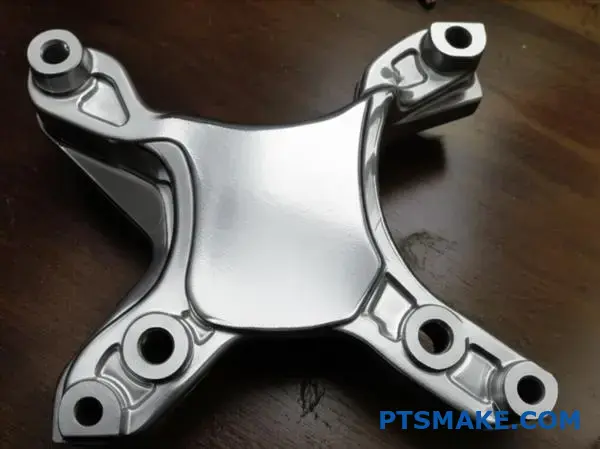
The quality of the initial die-cast aluminum part dictates the final outcome. A poor casting with excessive porosity will cause major issues during the plating process. Trapped gases expand in the hot plating baths, creating blisters and pinholes in the chrome layer.
This is why we always emphasize starting with the best possible component. No surface treatment can truly salvage a fundamentally flawed part. It is far more cost-effective to invest in quality casting from the beginning.
How Casting Quality Impacts Plating
The casting method directly influences the part’s density and potential for porosity. A better casting process leads to a better plating surface.
| Casting Method | Common Porosity Type | Suitability for Plating |
|---|---|---|
| High-Pressure Die Cast | Gas & Shrinkage | Good, with sealing |
| Gravity Die Cast | Gas & Shrinkage | Moderate |
| Sand Cast | Intergranular | Poor, requires extensive prep |
Sealing Techniques in Detail
For successful chrome plating die cast aluminum, sealing microscopic voids is essential. The industry standard is resin impregnation. The process, known as impregnation3, forces a liquid sealant deep into the material’s sub-surface pores. This is done under a vacuum, followed by a pressure cycle to ensure full penetration. The resin then cures, creating a permanently sealed, non-porous substrate ready for plating. This method is highly effective for the fine porosity common in die castings.
Successful chrome plating on porous aluminum depends on the casting’s initial quality and the right sealing technique. Resin impregnation is a critical pre-treatment step, not a fix for poor manufacturing. Both elements are essential for a durable, high-quality finish.
The Engineer’s Guide To Chrome Thickness And Wear Tolerance
Plating thickness is not just a final number on a spec sheet. It is a critical design choice. It directly impacts a part’s lifespan and performance.
Engineers often ask for the "right" thickness. The answer depends entirely on the application.
The Direct Link Between Thickness and Durability
A thicker chrome layer generally offers better wear resistance. This extends the part’s operational life. However, there is a point of diminishing returns.
Finding the Sweet Spot
Excessive thickness can lead to cracking or adhesion issues. This is especially true for chrome plating thickness aluminum parts. The key is balance.
Here is a simplified guide based on our tests:
| Application Type | Recommended Thickness (mils) | Key Benefit |
|---|---|---|
| Light-Duty (Decorative) | 0.05 – 0.2 | Corrosion Resistance |
| Medium-Duty (Wear) | 0.5 – 2.0 | Balanced Wear/Cost |
| Heavy-Duty (Salvage) | 2.0 – 10.0+ | Maximum Durability |
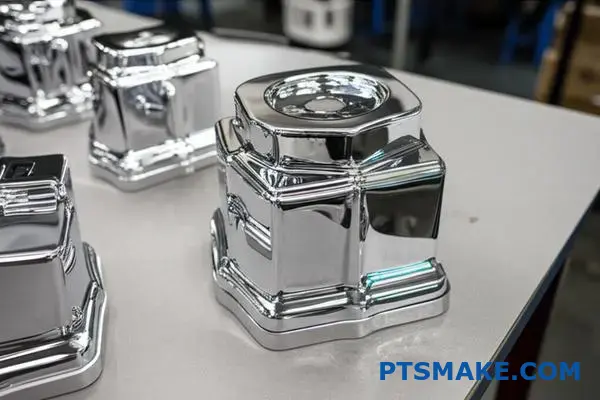
The coating thickness impact goes far beyond simple wear and tear. It fundamentally alters a part’s final specifications. This is a detail that can make or break a project.
Beyond Wear: How Thickness Influences Part Specifications
Every layer of plating adds material. This changes the part’s final dimensions. We must account for this during the initial CNC machining phase at PTSMAKE.
Dimensional Accuracy
If a part requires tight tolerances, the plating thickness must be incredibly precise. A variation of even a few microns can push a part out of spec. Uniformity is just as important as the thickness itself.
Uneven plating creates high and low spots. This can lead to premature failure in dynamic applications.
Substrate Considerations
The base material also matters. The ideal chrome plating thickness aluminum is different from steel. Aluminum is softer and expands more with heat.
This affects how the chrome adheres and performs under stress. Poor Substrate compatibility4 can cause the plating to flake off, regardless of how thick it is.
Our research with clients shows clear differences:
| Substrate | Typical Max Thickness (mils) | Primary Challenge |
|---|---|---|
| Steel | 15.0+ | Rust Prevention (pre-plate) |
| Aluminum | ~5.0 | Adhesion & Thermal Expansion |
| Copper/Brass | ~2.0 | Preventing Diffusion |
Choosing the right plating thickness is a critical balance. It influences part durability, final dimensions, and material performance. This decision ensures the component meets all specifications without compromising its integrity, especially when working with sensitive materials like aluminum.
Advanced Alternative Coatings: When To Skip Chrome On Aluminum
While chrome plating aluminum offers a hard, brilliant finish, it’s not always the best choice. Exploring chrome plating alternatives is key for optimizing performance and cost.
Each option has unique strengths. Let’s look at three popular methods we frequently use for our clients’ projects at PTSMAKE.
Key Alternatives to Consider
Powder coating, anodizing, and electroless nickel plating are excellent substitutes. They cater to different needs, from aesthetics to corrosion resistance. Understanding them helps in making informed decisions.
| Coating Type | Primary Benefit |
|---|---|
| Powder Coating | Durability & Color Options |
| Anodizing | Integral Corrosion Resistance |
| Electroless Nickel | Uniformity & Hardness |
This table provides a quick overview. We will explore each one in more detail.
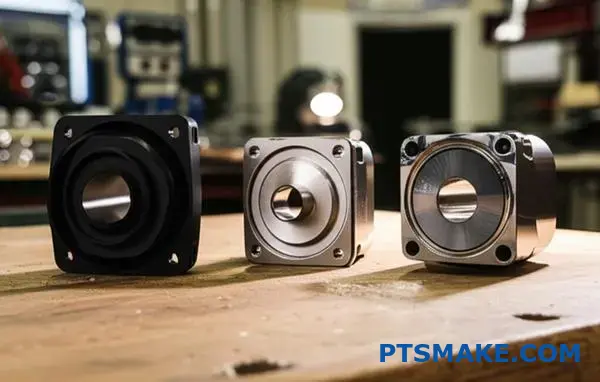
Deciding on the right finish requires a deeper look. These alternatives solve specific engineering challenges where traditional chrome might fall short. It’s about matching the process to the part’s end-use.
Powder Coating: The Tough and Colorful Choice
Powder coating provides a thick, durable finish. It’s more resistant to chipping and scratching than many liquid paints. It is also available in a vast range of colors and textures, offering great design flexibility.
Anodizing vs Chrome for Aluminum
Anodizing is an electrochemical process. It converts the metal surface into a durable, corrosion-resistant, anodic oxide finish. Unlike chrome, it’s integral to the aluminum. This means it can’t chip or peel away. For many aluminum parts, this is a superior choice for longevity, especially in harsh environments. The risk of galvanic corrosion5 is also managed differently with this process.
Electroless Nickel Plating (ENP)
ENP offers incredible uniformity. The coating deposits evenly across all surfaces, including inside holes and complex geometries. This is something electroplating struggles with. It provides excellent corrosion and wear resistance.
| Feature | Powder Coating | Anodizing (Type II/III) | Electroless Nickel |
|---|---|---|---|
| Uniformity | Good | Excellent | Superior |
| Hardness | Moderate | Good to Excellent | Excellent |
| Corrosion Resistance | Good | Excellent | Excellent |
| Aesthetics | Wide Color Range | Metallic Sheen | Metallic Sheen |
| Conductivity | Insulator | Insulator | Conductive |
Exploring these chrome plating alternatives opens up new possibilities. The right choice depends entirely on your application’s specific mechanical, environmental, and aesthetic requirements.
Powder coating, anodizing, and electroless nickel offer distinct advantages over chrome for aluminum parts. They provide superior flexibility in durability, corrosion resistance, and uniform coverage, making them powerful tools for any engineer’s toolkit.
Chrome Plating For CNC-Machined Aluminum: Design Considerations
After machining, a few design details are key for great results. These factors directly impact the final quality.
Proper preparation of the machined aluminum surface is critical. It ensures the chrome layer adheres perfectly and looks flawless.
Surface Roughness Impact
A smooth surface is essential for a mirror finish. Any imperfections on the raw part will show through the plating. We always advise clients to specify the required finish before plating begins.
Corner Radii Guidelines
Sharp internal corners are a problem for chrome plating aluminum. They can trap plating solutions and cause uneven coating.
| Feature | Poor Design | Recommended Design |
|---|---|---|
| Internal Corners | Sharp, < 0.4mm | Rounded, > 0.8mm |
| Surface Finish | Rough (> Ra 1.6) | Smooth (< Ra 0.8) |
Adding a small radius to inside corners ensures a uniform plating thickness.
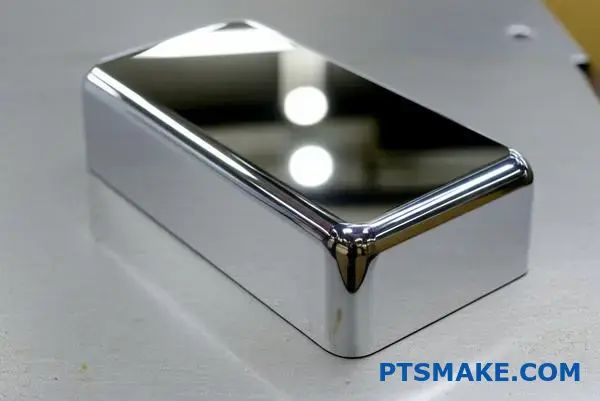
Successful CNC aluminum chrome plating isn’t just about the process. It begins with smart design choices right after machining. Overlooking these details can lead to defects, increased costs, and project delays.
Post-Machining Surface Preparation
The final surface roughness, or Ra value, of your machined aluminum part is crucial. A lower Ra value (smoother surface) yields a brighter, more reflective chrome finish. A rougher surface will result in a duller, more satin-like appearance.
At PTSMAKE, we collaborate with clients to define the exact surface finish needed. This avoids surprises and ensures the final part matches their aesthetic and functional requirements. Every detail of the machined aluminum surface plating matters.
Managing Corner and Edge Geometry
Sharp internal corners are difficult to plate evenly. This is because the electrochemical process struggles to deposit metal uniformly in tight areas. This can lead to thin spots or cracks. You should always design internal corners with a generous radius.
Conversely, sharp external edges can attract too much plating. This results in a thick, brittle buildup that can chip easily. A slight radius or chamfer on external edges solves this. This ensures consistent adhesion and durability. The distribution of current density6 is more uniform on rounded surfaces.
| Surface Feature | Pre-Plating Ra (μm) | Expected Chrome Finish |
|---|---|---|
| Critical Visuals | < 0.4 | Bright, Mirror-like |
| Standard Parts | 0.8 – 1.6 | Semi-bright / Satin |
| Non-Cosmetic | > 1.6 | Matte / Functional |
Paying attention to post-machining details like surface roughness and corner radii is essential. It ensures high-quality chrome plating on CNC-machined aluminum parts. These factors directly affect plating adhesion, uniformity, and the final appearance, preventing costly rework.
Surface Finish Secrets: Achieving Mirror-Like Chrome On Aluminum
Achieving a true mirror chrome aluminum finish is all about preparation. The final shine depends entirely on the work you do beforehand. It’s a game of progressive refinement.
The Foundation of Gloss
Proper surface prep is not optional. Any flaw will be magnified by the chrome. Polishing and buffing are the critical final steps. They create that deep, liquid-metal look.
Polishing vs. Buffing
Polishing uses an abrasive to smooth the surface. Buffing uses a finer compound to create a high-gloss shine. They are not interchangeable.
| Process | Purpose | Abrasiveness |
|---|---|---|
| Polishing | Remove minor surface defects | Medium to High |
| Buffing | Create high luster and shine | Very Low |
Getting this sequence right is essential for a high polish chrome finish.
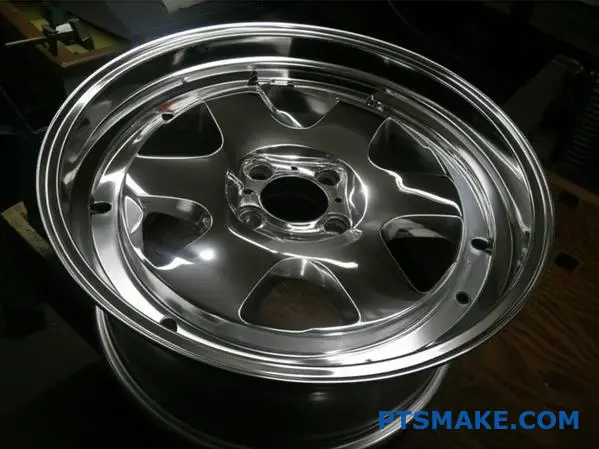
The journey to a flawless mirror finish is methodical. It’s less about one magic step and more about a disciplined process. Skipping stages or using the wrong compound is a common mistake. It leads to a hazy or cloudy appearance instead of a sharp reflection.
Achieving a Perfect Substrate
The goal is to create a perfectly smooth, uniform surface before plating. We begin with fine-grit sanding to remove any machine marks. Then, we move to a multi-stage polishing process. Each stage uses a progressively finer abrasive compound.
At PTSMAKE, we have found that this systematic approach is vital for consistent results in chrome plating aluminum parts for our clients. The Substrate topography7 must be flawless.
From Matte to Mirror: The Steps
This progression is key. Moving too quickly or skipping a grit will leave behind scratches that are impossible to buff out later. Each step prepares the surface for the next, ensuring a deeper, clearer shine. This meticulous process delivers that coveted mirror chrome aluminum look.
| Step | Grit/Compound Type | Recommended Tool | Target Result |
|---|---|---|---|
| 1. Leveling | 400-600 Grit Sandpaper | Orbital Sander | Remove machine marks |
| 2. Initial Cut | Tripoli Compound | Sisal Buffing Wheel | Smooth, semi-bright surface |
| 3. Color Buff | White Rouge Compound | Cotton Buffing Wheel | High gloss, sharp reflection |
| 4. Final Polish | Jeweler’s Rouge | Soft Flannel Wheel | Flawless mirror finish |
Achieving a mirror chrome finish on aluminum is a meticulous process. It demands a systematic approach to sanding, polishing, and buffing. Each step refines the surface, creating the perfect foundation for a flawless high polish chrome finish.
The Ultimate Comparison: Hard Chrome Vs Decorative Chrome On Aluminum
Choosing the right chrome plating for aluminum comes down to one question: what is the part’s job? Is it for performance or for appearance? This is the fundamental difference.
Hard chrome on aluminum is all about function. It creates a tough, durable surface. Decorative chrome plating, however, is purely for aesthetics. It delivers that brilliant, mirror-like finish.
Function vs. Aesthetics
Understanding this core distinction is critical for your project’s success. The choice impacts cost, performance, and longevity.
| Plating Type | Primary Goal |
|---|---|
| Hard Chrome | Mechanical Performance |
| Decorative Chrome | Visual Appeal |
Selecting the wrong type of chrome plating for aluminum can lead to part failure or unnecessary costs. It’s a choice between a workhorse and a showpiece.
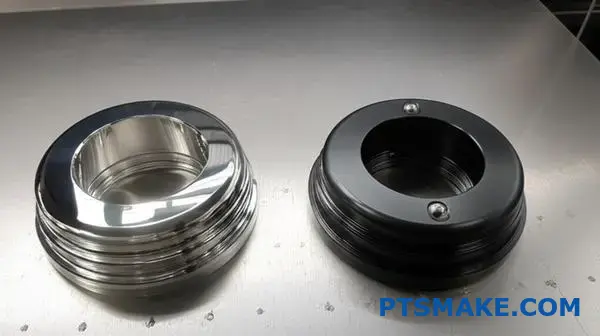
Let’s break down the applications. The decision between mechanical and aesthetic finishes is driven entirely by the component’s role in the final assembly. At PTSMAKE, we guide clients through this choice daily.
Hard Chrome: The Functional Powerhouse
When a part needs to resist wear, friction, or corrosion, hard chrome aluminum is the answer. It’s an engineering solution, not a cosmetic one. Think of industrial and high-performance parts.
This is because hard chrome significantly improves the tribological properties8 of the aluminum surface. It builds a thick, hard layer that can withstand intense operational stress. Our tests show it dramatically extends the service life of critical components.
Decorative Chrome: The Aesthetic Choice
Conversely, decorative chrome plating is used when the primary goal is a flawless look. It provides a thin, shiny layer over a nickel base. This finish protects against minor scratches and tarnishing but offers minimal mechanical benefit.
| Application Focus | Hard Chrome Aluminum | Decorative Chrome Plating |
|---|---|---|
| Industry | Aerospace, Automotive, Industrial | Consumer Goods, Automotive Trim |
| Example Parts | Hydraulic Pistons, Molds, Shafts | Faucets, Emblems, Rims |
| Key Benefit | Durability, Wear Resistance | Mirror Finish, Visual Appeal |
Ultimately, your application’s demands dictate the right process for chrome plating aluminum parts.
Your choice boils down to a simple trade-off. Hard chrome on aluminum prioritizes durability and mechanical performance. Decorative chrome plating is selected for its superior aesthetic finish, providing that classic bright, reflective look. Your part’s function is the deciding factor.
Long-Term Durability: How Chrome Plating Protects Outdoor Aluminum Parts
Outdoor aluminum parts face a constant battle. They are exposed to rain, UV radiation, and temperature swings. Chrome plating provides a critical weatherproof shield.
This process creates a durable, non-porous barrier. It effectively seals the aluminum substrate from the elements.
Superior Corrosion Resistance
The key benefit is improved corrosion resistance for aluminum. This protection is vital in harsh outdoor settings. It prevents degradation and extends the part’s service life.
Performance Comparison
Our tests show a stark difference in outdoor performance.
| Feature | Unprotected Aluminum | Chrome Plated Aluminum |
|---|---|---|
| Corrosion | Prone to pitting/oxidation | Excellent Resistance |
| UV Degradation | Can discolor/weaken | Highly Resistant |
| Abrasion | Scratches easily | Very Hard Surface |
| Appearance | Dull, requires polishing | Bright, long-lasting finish |
Chrome plating aluminum is not just for looks. It is a functional coating for extreme durability.
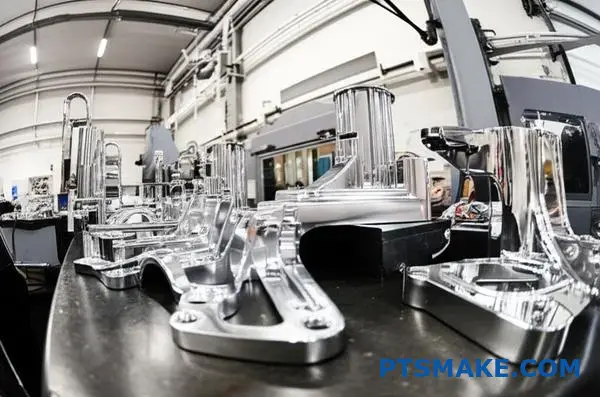
A Deeper Dive into Outdoor Plating Performance
Effective weatherproofing goes beyond just the top layer. The success of chrome plating aluminum depends heavily on the entire plating system. A proper underlayer, typically nickel, is essential for adhesion and added corrosion protection.
This multi-layer approach is the standard at PTSMAKE. We know it creates a much more resilient finish for outdoor applications.
The Importance of Process Control
The pre-treatment of the aluminum part is also critical. Without a perfectly clean and prepared surface, the plating will eventually fail. Blistering or peeling are common signs of poor preparation.
This is why we control every step so carefully.
Mitigating Specific Environmental Threats
Different environments pose unique challenges. Coastal areas have salt spray, while industrial zones have acidic pollutants. The plating specification must account for these factors. For instance, a thicker nickel undercoat provides better protection against salt.
This is a key consideration when discussing projects with our clients. We need to understand the part’s final operating environment. The process must address potential issues like galvanic corrosion9 if the surface is ever deeply scratched, exposing different metal layers.
| Environment | Primary Threat | Recommended Plating Feature |
|---|---|---|
| Coastal | Salt Spray | Thicker Nickel Underlayer |
| Industrial | Acid Rain | Pinhole-free Chrome Layer |
| Urban | General Pollutants | Standard Decorative Chrome |
Chrome plating provides a powerful defense against weather and corrosion for outdoor aluminum parts. Its effectiveness relies on a complete system, including proper surface preparation and essential underlayers like nickel, ensuring robust, long-term outdoor plating performance and durability in harsh conditions.
When To Use Alodine, Anodize, Or Chrome Plate For Aluminum
Choosing the right finish for aluminum isn’t just about looks. It’s a critical engineering decision. The best choice depends entirely on your product’s specific application and environment.
Thinking about the end-use is the first step. Will the part need to be conductive? Will it face heavy wear? Or is aesthetics the top priority?
Matching Finish to Function
Your application dictates the ideal coating. Each finish offers a unique set of properties that makes it suitable for different scenarios.
Scenario-Based Selection
A quick way to narrow down options is to match the primary requirement with the best-suited finish. The choice between an alodine vs chrome finish often comes down to conductivity versus durability.
| Primary Requirement | Best Choice | Why? |
|---|---|---|
| Electrical Conductivity | Alodine | Minimal impact on conductivity |
| Wear Resistance | Chrome Plate | Extremely hard surface |
| Corrosion Resistance | Anodize/Chrome | Both are excellent; choice depends on severity |
| Decorative Finish | Anodize/Chrome | Anodize for color; Chrome for high shine |
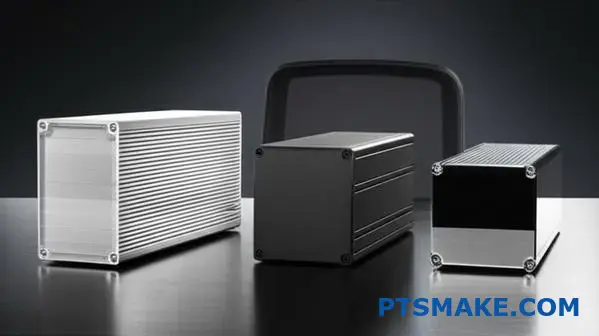
Deciding between these coatings involves balancing performance, cost, and manufacturing complexity. I guide clients by focusing on the non-negotiable requirements of their part first.
Deeper Dive into Trade-offs
Consider a part that needs extreme durability. The chrome vs anodize aluminum debate becomes central. Chrome plating aluminum offers a much harder surface than Type III hardcoat anodizing. However, this process is more complex and adds more weight.
Anodizing, on the other hand, is an integral part of the aluminum. It won’t chip or peel. But it cannot match the sheer hardness of chrome. This is a crucial trade-off for high-wear mechanical components.
Another factor is component assembly. If your aluminum part will be in contact with a different metal, like steel, you must consider the risk of galvanic corrosion10. Alodine offers good protection while maintaining conductivity, making it ideal for electronic chassis and internal components.
Performance Comparison
Here at PTSMAKE, we often help clients evaluate these specifics. After running tests, we’ve compiled data that highlights the key differences in performance.
| Feature | Alodine | Anodize (Type II) | Chrome Plate |
|---|---|---|---|
| Hardness (Rockwell C) | N/A (soft) | 20-40 HRC | 68-72 HRC |
| Thickness | Very thin (<1 µm) | 5-25 µm | 25-100 µm |
| Cost Factor | Low | Medium | High |
| Electrical Conductivity | Good | Poor (Insulator) | Excellent |
Ultimately, chrome plating aluminum is reserved for the most demanding jobs where hardness and a mirror finish are essential. For most other cases, anodizing or alodine provides a more cost-effective solution.
Making the right choice means balancing performance needs with budget and manufacturing realities. Each finish serves a distinct purpose, from simple corrosion prevention with Alodine to creating an incredibly durable surface with chrome plating.
The Engineering Risks Of Uneven Chrome Distribution On Aluminum
Uneven chrome distribution on aluminum is a critical issue. It directly affects how parts fit and function. Even small variations in coating thickness can cause major problems.
This lack of chrome plating uniformity creates dimensional inaccuracies. A part designed for a precise fit can suddenly become too tight or too loose.
Impact on Assembly and Function
This coating variation aluminum causes serious assembly issues. Parts may not connect as intended. This can lead to equipment failure or performance degradation. It’s a risk we can’t afford.
| Feature | Ideal Plating | Uneven Plating |
|---|---|---|
| Thickness | Uniform | Varies across surface |
| Fit | Meets tolerance | Out of tolerance |
| Function | Reliable | Unpredictable |
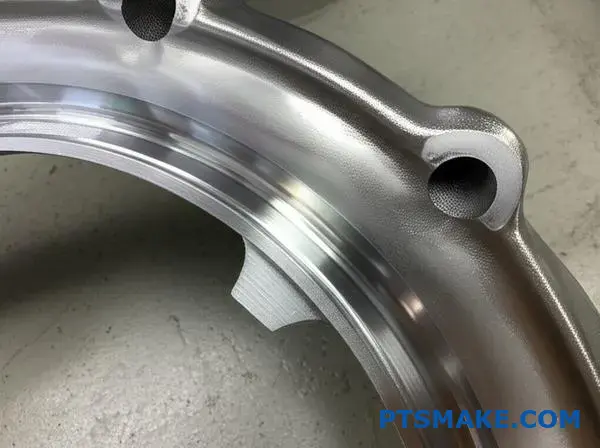
The problems with uneven plating go beyond simple fitment. It’s about reliability. In applications with moving parts, inconsistent thickness can create high and low spots. This leads to premature wear.
Clearance and Interference Fits
For clearance fits, thick spots reduce the necessary gap. This can cause components to bind or seize. For interference fits, thin spots weaken the connection, leading to part slippage under load. Both scenarios are failures waiting to happen.
The issue often stems from challenges in the electroplating process itself. Factors like current density and anode placement are crucial. Without tight control, you can get a result similar to anisotropic deposition11, where the coating builds up faster in some areas than others.
At PTSMAKE, we manage these variables carefully. We know that consistent chrome plating aluminum is key to performance.
Functional Consequences of Poor Uniformity
| Issue | Description | Consequence |
|---|---|---|
| Galling | Surfaces adhere and tear | Component failure |
| Binding | Parts seize during motion | Equipment stops working |
| Poor Sealing | Gaps in sealing surfaces | Leaks and contamination |
This attention to detail ensures every part we deliver meets the exact specifications. It prevents these functional failures before they can happen. The goal is always perfect chrome plating uniformity.
Uneven chrome plating on aluminum compromises engineering intent. The coating variation distorts part dimensions, leading to failed assemblies and unreliable function. It’s a critical factor in manufacturing precision components.
How PTSMAKE Delivers Zero-Defect Chrome Plated Aluminum At Scale
Achieving a zero-defect chrome finish on aluminum is tough. Scaling this for high-volume production presents an even greater challenge. At PTSMAKE, it’s not about luck. It’s about a systematic, in-house quality control process.
This system ensures every single part meets specifications. It combines technology with hands-on inspection at critical stages. We built this framework to handle the demands of high volume chrome plating aluminum.
Key QC Checkpoints
Our process integrates multiple checks to guarantee quality.
| Stage | Inspection Focus | Goal |
|---|---|---|
| Pre-Plating | Surface preparation, material integrity | Eliminate substrate flaws |
| In-Process | Plating thickness, solution chemistry | Ensure uniform coating |
| Post-Plating | Adhesion, appearance, dimensions | Verify final specifications |
This structure is fundamental to our success.
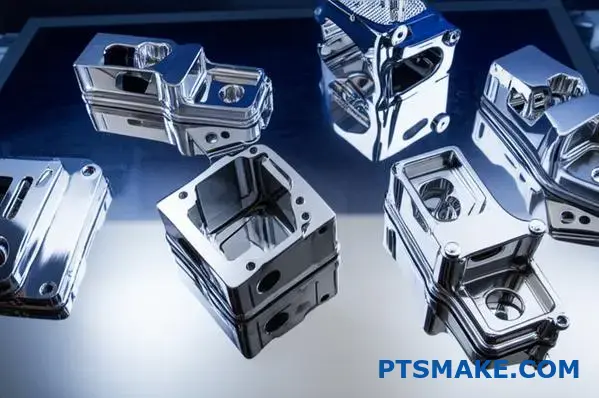
Delivering a flawless finish at scale requires more than just a final check. Our quality control is embedded throughout the entire chrome plating aluminum process. It starts the moment we receive the raw aluminum parts.
Pre-Treatment Verification
First, we inspect every part for surface imperfections. Scratches or porosity can ruin the final finish. Any non-conforming part is flagged before it enters the plating line. This proactive step saves significant time and resources.
In-Process Monitoring and Case Study
During plating, we constantly monitor bath chemistry and electrical parameters. This ensures consistent layer deposition. For a recent automotive client, we managed a batch of 50,000 units. Early in the run, our system detected a minor variance in bath temperature.
We performed a cross-hatch adhesion testing12 on a sample batch immediately. The test confirmed a potential bonding issue. We adjusted the process parameters in real-time.
| Problem Identified | Action Taken | Outcome |
|---|---|---|
| Minor temperature variance | Real-time process adjustment | Maintained perfect adhesion |
| Potential adhesion flaw | Immediate sample testing | Prevented batch-wide failure |
This quick intervention prevented any defects. The entire order was delivered with a zero defect chrome finish, meeting the client’s stringent automotive standards. This is how we manage high volume chrome plating aluminum effectively.
Our multi-stage QC system, combining proactive checks and real-time monitoring, is essential. It allows us to manage large-scale projects and consistently deliver a zero-defect chrome finish on aluminum parts, as proven in demanding applications.
Get a Custom Chrome Plating Aluminum Quote with PTSMAKE
Looking for flawless chrome plating on aluminum parts—delivered on time, every time? Partner with PTSMAKE for unmatched precision, consistency, and reliability. Contact us today for a fast, tailored quote on your next project and experience zero-defect results at any scale!

Learn more about the science behind how metal coatings are applied to conductive surfaces. ↩
Learn why this underlayer is critical for adhesion and longevity on aluminum parts. ↩
Explore how this vacuum-pressure process seals internal voids, making parts pressure-tight and ready for finishing. ↩
Understand how different base materials interact with chrome plating for optimal adhesion and performance. ↩
Learn about the electrochemical process that can occur when dissimilar metals are in contact. ↩
Learn how this electrical principle affects plating thickness and quality distribution on complex part geometries. ↩
Learn how the microscopic texture of the surface directly impacts the final reflectivity and gloss. ↩
Understand how surface friction and wear can impact your component’s lifespan. ↩
Learn how this electrochemical process can impact plated parts and why underlayers are so critical. ↩
Learn how to prevent premature part failure caused by electrochemical reactions between dissimilar metals. ↩
Learn the technical reasons for non-uniform coating growth and how to control it. ↩
Learn more about this crucial ASTM standard test method for measuring coating adhesion. ↩