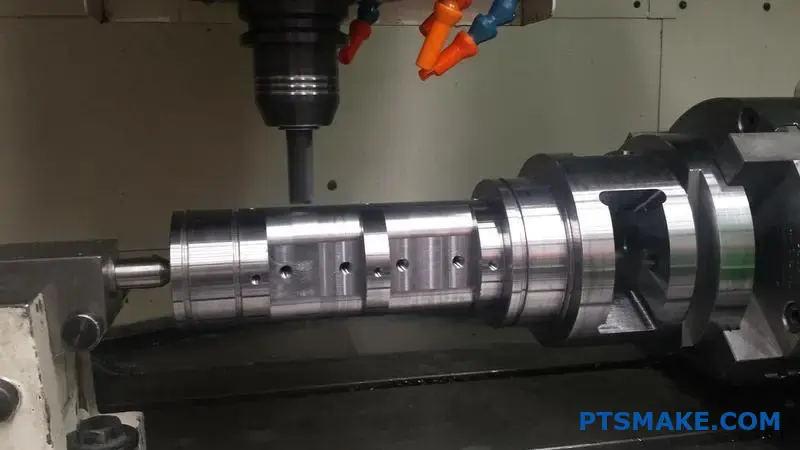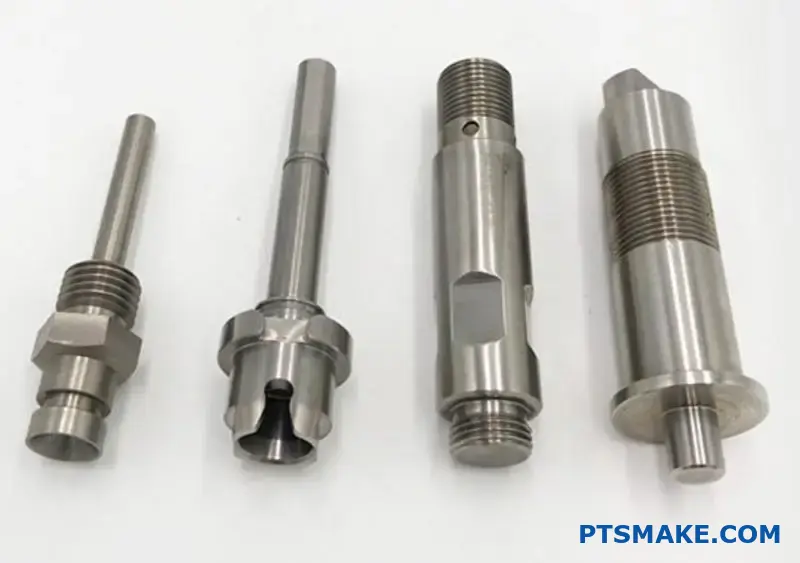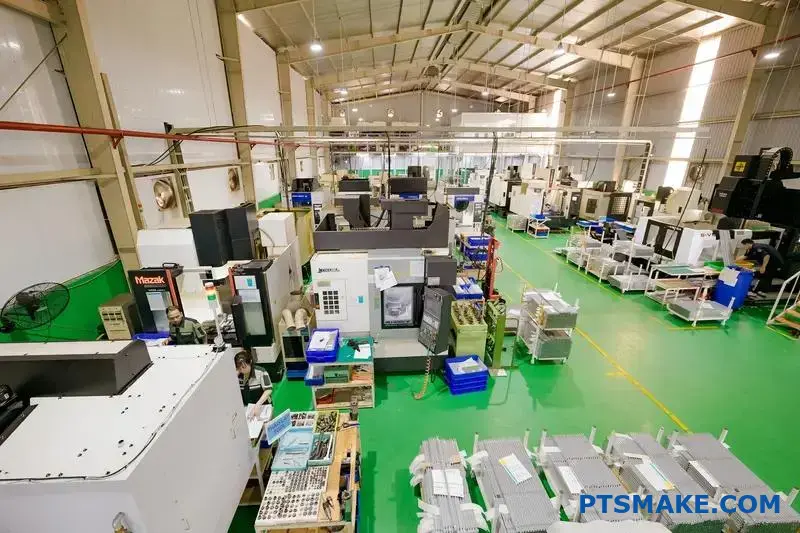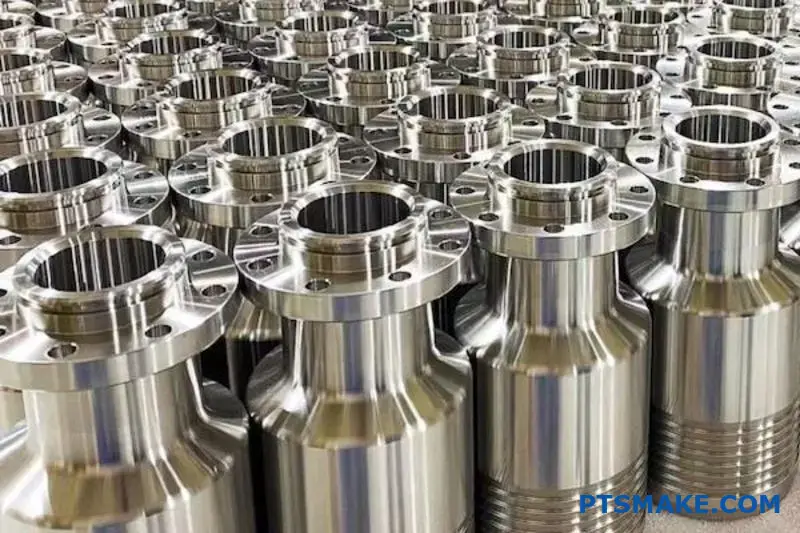

Choosing the wrong surface finish for your CNC parts can turn into a costly nightmare. You’ve invested in precision machining, but without the right coating, your parts face premature corrosion, dimensional issues, or aesthetic failures that disappoint your customers.
Black oxide and zinc plating are two leading surface finishing options for CNC parts, each offering distinct advantages: black oxide provides dimensional stability and wear resistance as a conversion coating, while zinc plating delivers superior corrosion protection through a deposited metal layer.
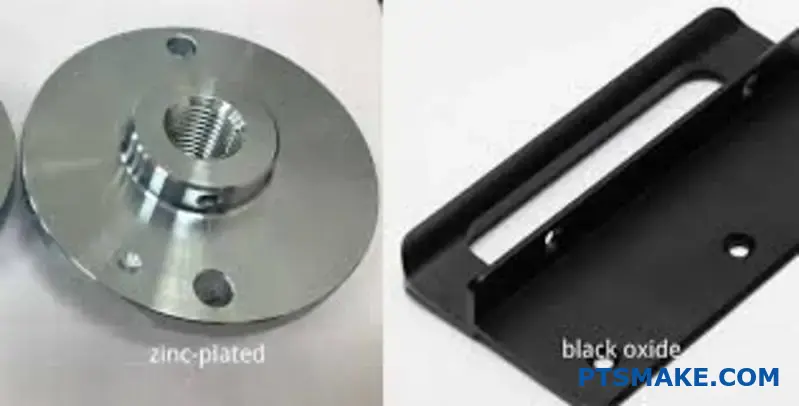
This comparison breaks down the technical specifications, performance data, and real-world applications to help you make the right choice for your specific requirements. I’ll walk you through corrosion resistance testing, material compatibility, and cost considerations that impact your bottom line.
The Ultimate Guide To Choosing Between Black Oxide And Zinc Plating
Choosing the right surface finishing for CNC parts is a critical decision. It impacts performance, lifespan, and cost. Two popular options are black oxide and zinc plating.
This guide helps you navigate the black oxide vs zinc plating choice. We will break down this metal coating comparison. This ensures you select the best option for your project’s needs.
A quick overview can set the stage.
| Feature | Black Oxide | Zinc Plating |
|---|---|---|
| Primary Benefit | Dimensional Stability | Corrosion Resistance |
| Appearance | Matte Black | Varies (Clear, Yellow, Black) |
| Process Type | Conversion Coating | Sacrificial Plating |
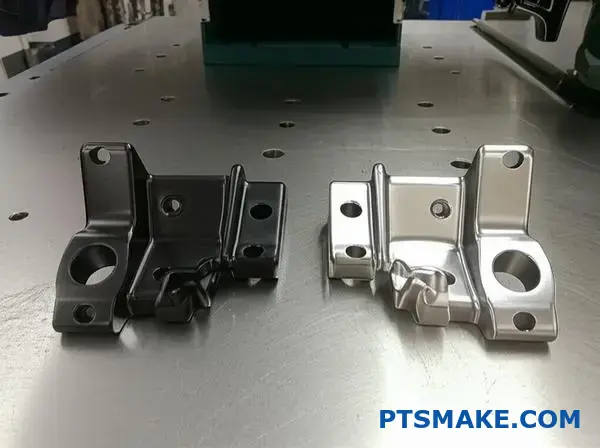
To make an informed decision, you must understand the fundamental differences between these processes. It’s not just about looks; it’s about how each finish protects the underlying metal.
The Core Difference: Conversion vs. Sacrificial Coating
Black oxide is a conversion coating. This process doesn’t add a new layer of material. Instead, it chemically converts the top layer of the iron-based material into magnetite (Fe₃O₄). This creates an integral protective surface.
Zinc plating, on the other hand, is a sacrificial coating. It involves electroplating a thin layer of zinc onto the part’s surface. This zinc layer corrodes first, protecting the steel underneath from galvanic corrosion1. This is a key factor in its superior rust prevention capabilities.
Key Factors for Decision-Making
When we guide clients at PTSMAKE, we focus on a few key questions to determine the best surface finishing for CNC parts.
| Decision Factor | Black Oxide Considerations | Zinc Plating Considerations |
|---|---|---|
| Corrosion | Mild resistance; requires oil for best results. | Excellent resistance, especially with chromate conversion. |
| Dimensions | No significant dimensional change. Ideal for tight tolerances. | Adds a thin layer (typically 5-25 µm), must be factored in. |
| Application | Moving parts, fasteners where tolerance is key. | Outdoor use, high-humidity environments. |
| Appearance | Deep, non-reflective black finish. | Can be clear, yellow, blue, or black depending on post-treatment. |
Understanding these trade-offs is the first step in a proper metal coating comparison.
In short, your choice between black oxide vs zinc plating hinges on a key trade-off. Choose black oxide for minimal dimensional change and aesthetics. Opt for zinc plating when superior corrosion resistance is your primary goal.
Black Oxide Coating: Key Features And Engineering Benefits
Black oxide offers a unique set of technical specifications. Its primary appeal is its minimal impact on part dimensions. This makes it ideal for high-precision components.
Appearance and Properties
The finish is a deep, uniform black. It’s not a paint or plating. Instead, it’s a chemical conversion of the metal’s surface.
Here are some key black oxide properties:
| Property | Specification |
|---|---|
| Coating Thickness | ~1 micrometer (0.00004 inches) |
| Corrosion Resistance | Moderate (improved with oil) |
| Abrasion Resistance | Good |
| Appearance | Matte to glossy black |
This thin layer provides protection without altering tolerances.
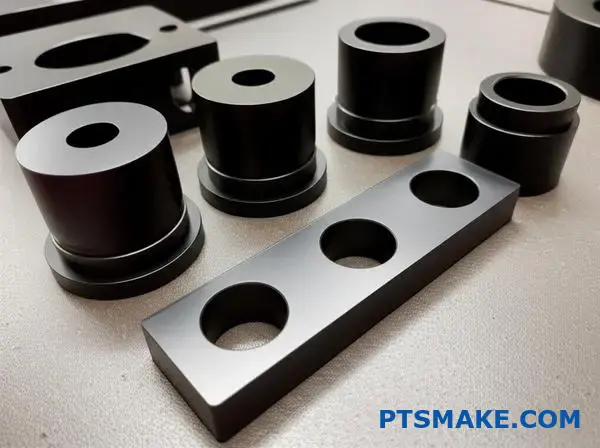
Why Dimensional Stability Matters
One of the greatest black oxide advantages is its dimensional stability. Unlike electroplating processes such as zinc plating, black oxide is a conversion coating. It doesn’t deposit an additional layer of material onto the part.
The process converts the existing iron on the surface into magnetite (Fe3O4)2. This adds virtually no thickness. For parts with tight tolerances, like those we machine at PTSMAKE, this is a critical feature. A few micrometers from plating can ruin a precision fit.
Common Use Cases for Steel Parts
Because of these properties, black oxide is a go-to finish for many applications. It’s widely used on steel parts where precision is key and aesthetics are important.
You’ll commonly find it on:
- Fasteners and hardware
- Tooling and machine components
- Firearm parts
- Automotive components
The choice between black oxide vs zinc plating often comes down to this dimensional requirement. If tolerances are paramount, black oxide is usually the better choice. We often recommend it for threaded parts and mating surfaces.
| Industry | Typical Application | Key Benefit |
|---|---|---|
| Automotive | Powertrain components, fasteners | Corrosion resistance |
| Tooling | Jigs, fixtures, cutting tools | Anti-galling, looks |
| Aerospace | Interior components, latches | Dimensional stability |
| Firearms | Barrels, receivers, magazines | Reduced light glare |
Black oxide provides a true black finish with almost no dimensional change. This makes it a superior choice for precision-engineered steel parts where maintaining tight tolerances is non-negotiable, unlike some plating alternatives.
Zinc Plating Explained: Strengths, Variants And Limitations
The zinc plating process is straightforward but requires precision. It’s an electrochemical method at its core. We use it to deposit a thin layer of zinc onto a metal part.
This protects the base metal from corrosion. The result is a durable, functional finish.
The Core Mechanism: Electroplating
The process always starts with intense cleaning. Any oil or rust must be removed. The part then goes into a zinc salt solution. An electric current is applied, depositing zinc onto the part’s surface.
Here are the basic steps involved:
| Step | Purpose |
|---|---|
| 1. Cleaning | Removes contaminants for proper adhesion. |
| 2. Rinsing | Washes away cleaning agents. |
| 3. Plating | Zinc is electrochemically deposited. |
| 4. Post-Treatment | Chromate or passivate is applied. |
This final step is crucial. It seals the zinc layer and significantly boosts its protective properties.
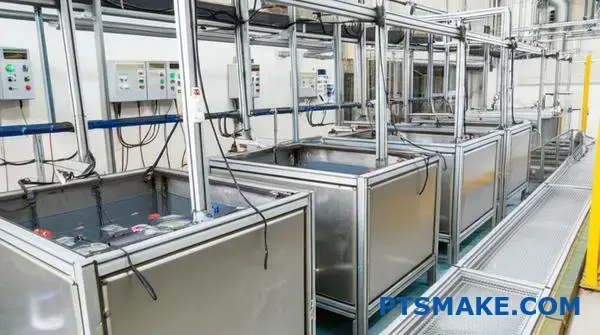
After the initial zinc layer is applied, we add a post-treatment. This is usually a chromate conversion coating. This step is what defines the final properties and appearance of the part. It’s key for creating a durable zinc finish for corrosion resistance.
Beyond the Basics: Chromate Conversion Coatings
These coatings create a protective film over the zinc. They prevent the zinc from oxidizing too quickly. This extends the part’s service life. Different chromate types offer various levels of protection and color.
The zinc layer acts as a sacrificial anode3, corroding first to protect the underlying steel. The chromate finish protects the zinc itself.
Here’s a quick look at common zinc plating types based on their finish:
| Chromate Type | Color | Corrosion Resistance | Notes |
|---|---|---|---|
| Clear (Blue) | Bluish-silver | Moderate | Good for a clean, metallic look. |
| Yellow | Iridescent yellow | High | Very common, excellent protection. |
| Black | Black | High | Offers good protection and a decorative finish. Often compared to black oxide but with superior corrosion resistance. |
However, you must be aware of the limitations of zinc coating. It is not ideal for high-temperature applications above 250°C (482°F). The coating can become brittle. Also, the process can introduce hydrogen embrittlement in very hard steels if not managed carefully.
The zinc plating process involves electroplating a zinc layer onto a part. This is followed by a chromate conversion coating. This second step enhances corrosion resistance and determines the final color, but the coating has temperature and material limitations.
Corrosion Resistance: Which Finish Performs Better In Harsh Environments?
When choosing between black oxide and zinc plating, the environment is key. It’s a classic black oxide vs zinc plating debate for engineers. One is not always better.
Your part’s final destination determines the right choice.
Indoor and Controlled Settings
Black oxide offers sufficient black oxide corrosion resistance for indoor use. Especially when paired with a rust-preventative oil. It’s ideal for tools and machine components.
Outdoor and Harsh Environments
For outdoor exposure, zinc plating rust prevention is superior. It withstands moisture and humidity far better than black oxide.
| Environment | Black Oxide | Zinc Plating |
|---|---|---|
| Indoor/Dry | Good | Excellent |
| High Humidity | Poor | Good |
| Salt Spray | Very Poor | Excellent |
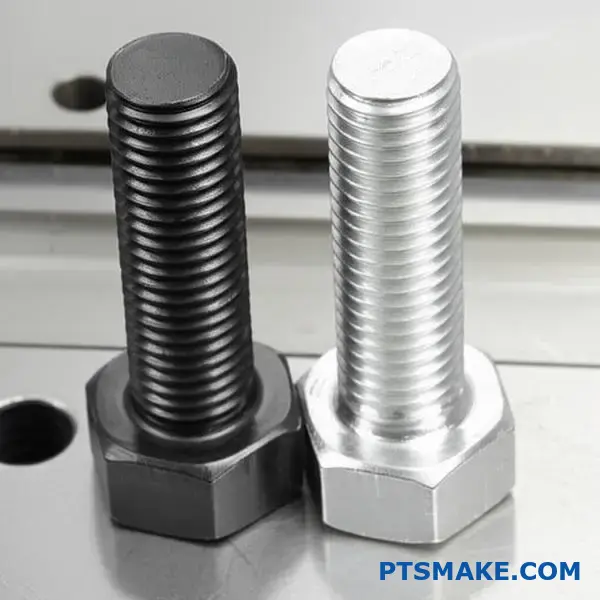
The core difference in performance lies in how each finish protects the metal. The choice between them depends entirely on the application’s demands. At PTSMAKE, we guide clients through this decision daily.
Understanding the Protection Mechanisms
Zinc Plating’s Sacrificial Role
Zinc plating provides excellent rust prevention because it acts as a protective layer. The zinc coating corrodes first, sacrificing itself to protect the steel underneath.
This electrochemical process makes it a robust choice. It is a true barrier against environmental elements like rain and salt. The zinc layer essentially becomes a sacrificial anode4 for the base metal.
Black Oxide’s Conversion Coating
In contrast, black oxide is a conversion coating. It doesn’t add a new layer of metal. Instead, it converts the top layer of the steel into magnetite.
This finish offers minimal black oxide corrosion resistance on its own. Its effectiveness depends heavily on a post-treatment oil or wax. If that oil wears off, rust can form quickly.
Here’s a breakdown for specific industrial settings.
| Industrial Environment | Recommended Finish | Reason |
|---|---|---|
| Automotive (Interior) | Black Oxide | Low moisture, aesthetic needs. |
| Marine Hardware | Zinc Plating | High salt and moisture exposure. |
| Industrial Machinery | Both (Depends on part) | Internal parts: Black Oxide. External: Zinc. |
| Electronic Enclosures | Zinc Plating | Better conductivity and protection. |
The choice between black oxide vs zinc plating is a critical design decision. It directly impacts your product’s lifespan and reliability.
Zinc plating’s sacrificial nature provides superior zinc plating rust prevention in harsh, humid, or corrosive environments. Black oxide is a cost-effective option for controlled, indoor applications where aesthetics and minimal dimensional change are important.
Visual Appearance And Aesthetic Considerations That Influence Buyers
The look of a part matters. It is the first thing your customer interacts with. This visual cue silently communicates quality and your brand’s identity.
When we look at black oxide vs zinc plating, their appearances are very different. This choice directly influences how a user perceives your product.
The Black Oxide Surface Look
Black oxide creates a deep, uniform black finish. It is typically non-reflective or has a low sheen. This look often suggests precision and high performance.
Zinc Plating Appearance
Zinc plating offers more variety. It can be clear, blue, yellow, or even black. Its brightness can signal cleanliness and robust corrosion resistance.
| Feature | Black Oxide | Zinc Plating |
|---|---|---|
| Color | Uniform Black | Clear, Blue, Yellow, Black |
| Gloss | Matte to Low Sheen | Matte to Bright/Shiny |
| Impression | Sleek, Technical | Clean, Durable, Versatile |
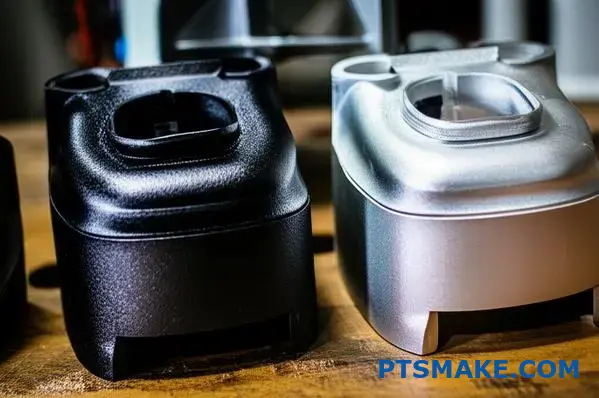
Deeper Into Industrial Finish Aesthetics
Aesthetics are more than just color. Uniformity is critical. An inconsistent finish can make a well-machined part appear low-quality. This can create doubt about the overall manufacturing standard.
The black oxide surface look is often chosen for its consistency. As a conversion coating, it creates an even finish that does not materially change part dimensions. This makes it very predictable.
The zinc plating appearance, however, relies heavily on post-treatment. The final look is often achieved through a chromate conversion coating5. This secondary process adds color and improves corrosion protection.
This variability is both a strength and a challenge. It gives you more branding options. But it also demands strict process control to ensure consistency from one batch to the next. At PTSMAKE, we guide clients through this trade-off to match their brand aesthetic.
Comparing Key Visual Factors
| Aesthetic Factor | Black Oxide | Zinc Plating |
|---|---|---|
| Color Uniformity | Very High | Moderate to High (process dependent) |
| Surface Texture | Follows substrate | Can smooth minor imperfections |
| Reflectivity | Low (Matte) | Variable (Low to High) |
| Branding Impact | Understated, professional | Can be customized (color) |
This choice is a central part of the industrial finish aesthetics conversation we have with our partners.
The visual choice between black oxide and zinc plating impacts brand perception. Black oxide provides a consistent matte black look. Zinc plating offers more color variety but needs tight process control to maintain uniformity. Each finish communicates a different message about product quality.
Material Compatibility: Which Metals Work Best With Each Coating?
Choosing a finish isn’t just about the coating itself. It’s about the partnership between the coating and the base metal. The substrate material dictates which finish will work.
A great finish on the wrong metal can fail. This is a common issue I see.
Black Oxide Compatibility
Black oxide is a conversion coating. It chemically reacts with ferrous materials. This makes it an excellent choice for steel, stainless steel, and cast iron. It offers mild corrosion resistance.
Zinc Plating Compatibility
Zinc plating is more versatile. It is commonly applied to steel and iron for great corrosion protection. Applying zinc on aluminum is possible but more complex. It requires special pre-treatment steps.
| Coating | Primary Compatible Metals | Notes |
|---|---|---|
| Black Oxide | Steel, Stainless Steel, Iron | Conversion coating; minimal dimension change |
| Zinc Plating | Steel, Iron, Copper Alloys | Sacrificial coating; good for corrosion resistance |
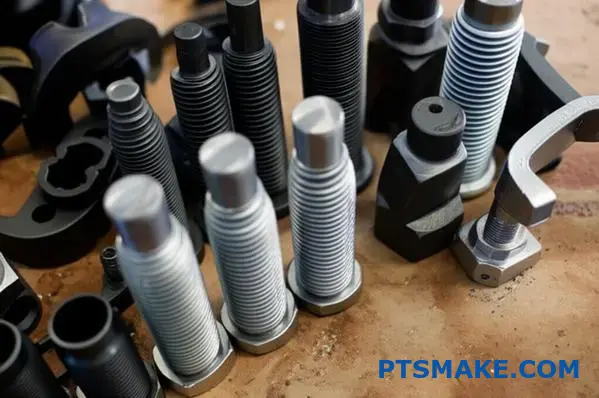
Let’s look deeper into this material relationship. A good surface finish material guide always starts with the substrate. The effectiveness of any coating hinges on this pairing.
Finding the Best Finish for Steel
When comparing black oxide vs zinc plating for steel, the application is key. For parts needing tight tolerances and a sleek black look, black oxide is often the best finish for steel. It barely changes the part’s dimensions.
For parts exposed to harsh environments, zinc plating is superior. It provides a sacrificial layer that protects the steel underneath.
The Challenge of Zinc on Aluminum
Applying zinc directly to aluminum is tricky. These two metals can create an electrochemical reaction, leading to poor adhesion and potential galvanic corrosion6.
At PTSMAKE, we handle this by first applying an underplate. A layer of copper or nickel acts as a barrier. This ensures the zinc plating adheres properly and provides lasting protection. It’s a multi-step process that guarantees performance.
| Substrate | Recommended Finish | Key Consideration |
|---|---|---|
| Carbon Steel | Black Oxide or Zinc Plating | Environment and tolerance needs |
| Stainless Steel | Black Oxide (Passivation also common) | Preserves stainless properties |
| Aluminum | Zinc Plating (with underplate) | Requires barrier layer to prevent reaction |
| Copper/Brass | Zinc Plating | Good adhesion and conductivity |
Selecting the right coating for your metal is crucial for part performance and longevity. Black oxide is ideal for ferrous metals where tolerances are tight. Zinc plating offers broader protection but needs careful preparation for substrates like aluminum to prevent issues.
Salt Spray Test Results: A Real Benchmark For Coating Comparison
When choosing between finishes, corrosion resistance is critical. The salt spray test offers a standardized way to compare options.
We frequently use the ASTM B117 standard. This test helps us guide clients on finish selection for their CNC machined parts.
Black Oxide: A Baseline
The salt spray black oxide test often shows its limitations. This finish provides minimal corrosion resistance on its own. It relies heavily on a post-treatment oil or wax.
Zinc Plating: The Protector
A zinc plating corrosion test, however, tells a different story. Zinc acts as a protective barrier, sacrificing itself to protect the steel underneath.
Here’s a quick comparison of their primary roles:
| Feature | Black Oxide | Zinc Plating |
|---|---|---|
| Primary Role | Mild corrosion resistance (with oil), anti-galling | Sacrificial corrosion protection |
| Appearance | Black, non-reflective | Varies (clear, yellow, black) |
| Thickness | Negligible dimensional change | Adds a few microns |
This data helps frame the black oxide vs zinc plating debate clearly.
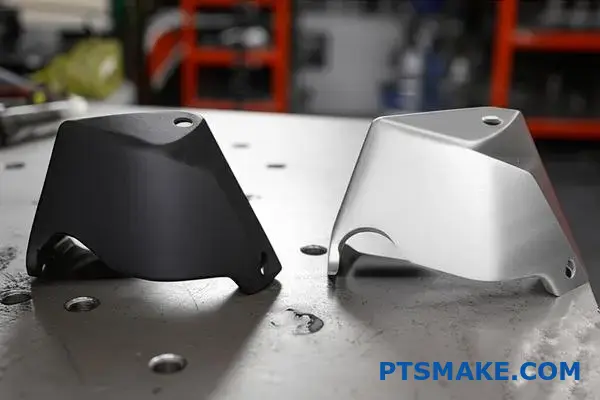
The ASTM B117 test is an accelerated corrosion test. We place coated parts in a sealed chamber. A saltwater solution is atomized into a dense fog at a specific temperature. This simulates harsh marine or industrial environments.
Observing Failure Points
We monitor the parts for two types of failure. First is "white rust," which is the corrosion of the zinc plating itself. The more critical failure is "red rust," indicating the base steel is now corroding. This is the ultimate failure point.
Interpreting Black Oxide Results
Our tests consistently show that standard black oxide, without a heavy protective oil, can show red rust in as little as 2 to 24 hours. Its real value lies in maintaining tight tolerances and providing a base for oil absorption. It’s not a barrier coating.
Understanding Zinc Plating Performance
Zinc plating is designed for this fight. It acts as a sacrificial anode7, corroding before the steel does. The performance varies greatly based on the chromate conversion coat applied after plating. This is a key factor in the black oxide vs zinc plating decision.
Based on our internal testing, here are some typical performance expectations:
| Zinc Plating with Passivate | Hours to White Rust | Hours to Red Rust |
|---|---|---|
| Clear (Trivalent) | 12-24 hours | 72-100 hours |
| Yellow (Trivalent) | 72-96 hours | 120-150 hours |
| High-Performance Sealer | 150+ hours | 300+ hours |
These results make it clear why we often recommend zinc plating for parts requiring robust, long-term corrosion resistance.
Salt spray testing provides clear, objective data. The ASTM B117 standard reveals that zinc plating offers significantly better corrosion protection than black oxide. Zinc’s sacrificial nature makes it a superior choice for parts exposed to corrosive elements, a key takeaway in any black oxide vs zinc plating comparison.
How Black Oxide Improves Wear Resistance Without Added Thickness
When parts move against each other, friction is the enemy. It leads to galling and abrasion, which can cause components to fail. Black oxide offers a unique solution.
The Problem of Galling
Galling happens when metal surfaces weld together under pressure. This can seize up moving parts. A proper finish is crucial to prevent this.
Preventing Abrasive Wear
Abrasion is the scratching and wearing down of a surface. Black oxide creates a porous layer that holds lubricants, reducing direct metal-to-metal contact. This makes it an excellent wear resistant metal finish.
| Failure Mode | Description |
|---|---|
| Galling | Material transfer and adhesion between sliding surfaces. |
| Abrasion | Surface damage from hard particles or rough surfaces. |
This process provides protection without changing part dimensions.
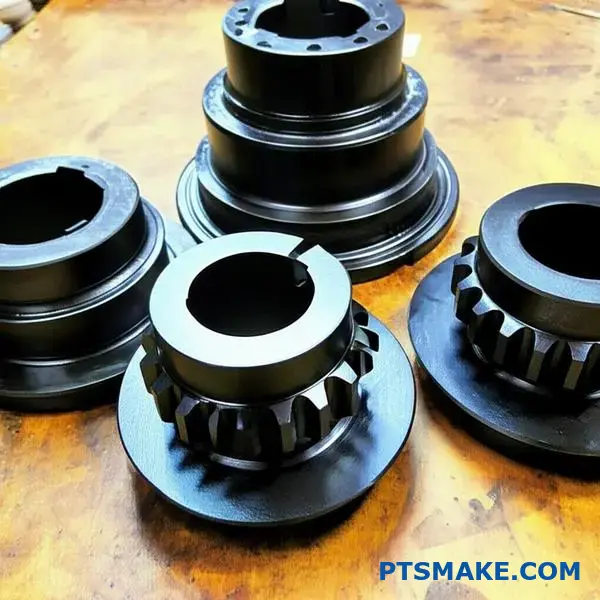
Black oxide is a conversion coating. It doesn’t add a new layer on top of the metal. Instead, it chemically converts the existing iron on the surface into magnetite. This is a key advantage.
Why No Dimensional Change Matters
For precision parts like those we produce at PTSMAKE, tolerances are critical. A few microns can make a difference. Finishes that add thickness can disrupt this precision. This is a key point in the black oxide vs zinc plating debate. Zinc plating adds a definite layer, while black oxide does not.
This makes black oxide an ideal anti-galling coating for threaded parts, gears, and other close-fitting components. The process ensures that the part’s final dimensions remain exactly as designed. It also lowers the coefficient of friction8, which further reduces wear.
| Feature | Black Oxide | Zinc Plating |
|---|---|---|
| Added Thickness | Negligible | Yes (5-25 µm) |
| Dimensional Impact | None | Alters Dimensions |
| Anti-Galling | Good | Fair |
| Lubricant Retention | Excellent | Poor |
This minimal impact is why engineers often specify it for high-precision applications.
Black oxide provides an effective anti-galling and wear-resistant finish. Its main benefit is achieving this protection without altering the critical dimensions of precision-engineered parts, ensuring a perfect fit and function.
The Secret To Preventing Rust Long-Term With Either Finish
A finish is not always the final step. To truly prevent rust, post-treatments are critical. They enhance the protective layer of your chosen finish.
This is especially true when comparing black oxide vs zinc plating. Each benefits differently from post-treatment.
Oiling and Sealing
For a rust-inhibiting black oxide finish, a supplementary coating is not optional; it’s required. Oiling, waxing, or lacquering fills the pores of the oxide layer. This creates the primary barrier against moisture and corrosion. Without it, black oxide offers very little rust protection.
| Treatment Status | Corrosion Resistance |
|---|---|
| No Post-Treatment | Very Low |
| Oil/Wax Applied | Significantly Increased |
Specialized Anti-Corrosion Coatings
For zinc plating, chromate conversion coatings are a common secondary step. They provide an additional layer of powerful anti-corrosion protection.
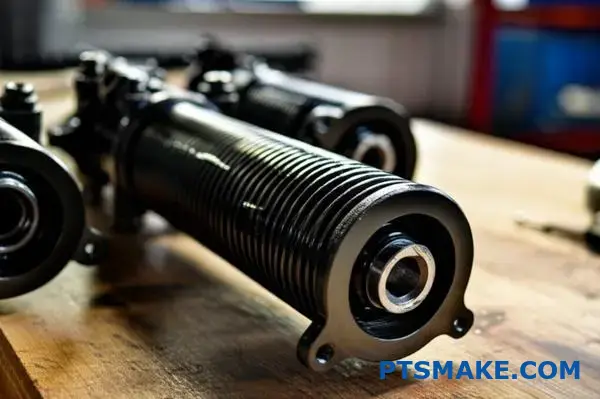
The environment where a part operates dictates the best post-treatment. A part used indoors needs a different level of protection than one exposed to salt spray. This is where the choice between finishes and their supplements becomes crucial.
Zinc Plating with Chromate
Zinc plating with a chromate conversion coat is a robust solution. The chromate layer acts as a primer, improving paint adhesion if needed. It also self-heals minor scratches, offering active corrosion protection that zinc alone cannot provide. Different chromates (clear, yellow, black) offer varying levels of resistance.
Enhancing Black Oxide
A rust-inhibiting black oxide finish relies entirely on its sealant. We often recommend specific oils or waxes at PTSMAKE. This choice depends on the part’s handling requirements and exposure level. A heavy wax offers more protection but can alter the part’s feel.
The concept of creating a non-reactive surface is key here. This is similar to passivation9 in stainless steel, where a passive film is formed. For black oxide and zinc, we add this layer externally.
| Post-Treatment | Best For | Key Benefit |
|---|---|---|
| Oiling/Waxing | Black Oxide | Fills porosity, blocks moisture |
| Chromate Conversion | Zinc Plating | Active corrosion protection |
| Lacquering | Either Finish | Hard, clear topcoat |
These anti-corrosion coatings are not just an afterthought. They are an integral part of the design specification, ensuring the part performs as intended for its entire service life.
Choosing a finish is just the start. Post-treatments like oiling, sealing, and chromate conversion are essential for maximizing long-term rust prevention. They ensure parts meet performance needs in their specific environments, whether you chose black oxide or zinc plating.
Precision Part Manufacturers Reveal Common Coating Fail Points
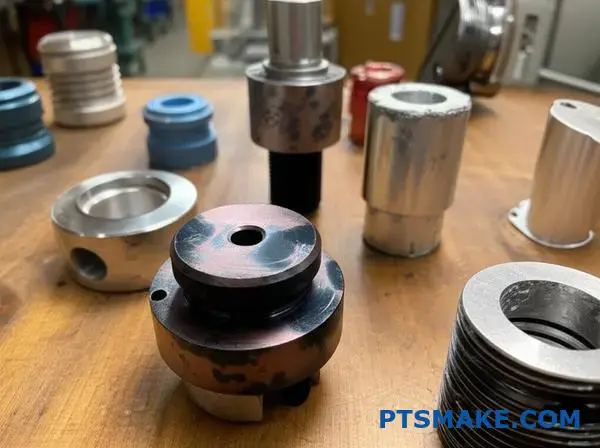
Even a perfectly machined part can be ruined by a poor coating. At PTSMAKE, we’ve seen this happen. The most frustrating issues often come from inconsistent application or variations between batches.
This can lead to significant problems. Think of parts that don’t fit or wear out too quickly.
Common Application Errors
Poor application is a primary source of failure. This is true for many finishes, from black oxide to zinc plating.
Below are some frequent mistakes we see.
| Coating Type | Common Application Mistake | Resulting Defect |
|---|---|---|
| Black Oxide | Incorrect bath temperature | Uneven color, poor corrosion resistance |
| Zinc Plating | Improper current density | Blistering, poor adhesion, flaking |
| Anodizing | Contaminated sealing bath | Reduced corrosion and wear resistance |
These coating defects in plating and finishing processes cause costly rework. They also delay your entire production schedule.
Why Batch Variation Happens
Batch-to-batch inconsistency is a serious challenge. A part from Monday’s batch might be perfect. But a part from Wednesday’s batch fails inspection. This undermines trust in the supply chain. The root causes are often hidden in the process itself.
The Human and Chemical Factor
Most variations trace back to process control. This includes operator skill, solution chemistry, and temperature regulation. For example, black oxide finish failures are often due to a depleted or contaminated chemical bath that wasn’t properly monitored and adjusted between runs.
Similarly, when evaluating black oxide vs zinc plating, zinc plating requires strict control over electrical current and bath purity. Minor deviations can cause major adhesion problems.
Effective process control requires more than just following steps. It demands a deep understanding of the chemistry and mechanics involved. Without it, you get unpredictable results. We’ve seen how minor Substrate Contamination10 can ruin an entire batch, regardless of the coating used.
Root Causes of Inconsistency
| Root Cause | Impact on Black Oxide | Impact on Zinc Plating |
|---|---|---|
| Inconsistent Pre-Treatment | Splotchy, uneven finish | Poor adhesion, flaking |
| Bath Depletion | Lighter color, low protection | Thin or non-uniform coating |
| Temperature Fluctuation | Powdery or red-tinged finish | Brittle or stressed deposits |
| Operator Error | Parts handled improperly | Uneven thickness, burn marks |
At PTSMAKE, we emphasize rigorous process documentation. This helps our partners achieve the consistency B2B manufacturing demands.
Ultimately, coating success depends heavily on consistent application and strict process control. Batch-to-batch variation is a key sign that a supplier’s quality management is lacking, leading to unreliable parts and project delays.
Conversion Coatings Vs Coating Layers: Practical Differences Explained
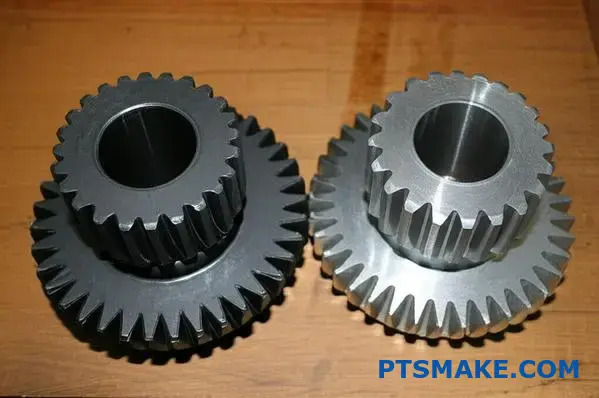
Let’s look at two common finishes: black oxide and zinc plating. They seem similar but are fundamentally different. One is a conversion coating, the other a deposited metal layer.
Understanding this is key for engineers. Black oxide changes the steel’s surface itself. Zinc plating adds a new layer on top. This basic difference impacts everything.
Key Distinctions
| Feature | Black Oxide (Conversion) | Zinc Plating (Deposition) |
|---|---|---|
| Process | Chemical reaction with base metal | Adds a new layer of zinc |
| Thickness | Negligible dimensional change | Adds measurable thickness |
| Purpose | Mild corrosion resistance, aesthetics | Superior corrosion resistance |
This choice affects tolerances, durability, and cost.
Engineering Implications: Black Oxide
Black oxide is a true conversion coating. It converts the iron on the part’s surface to magnetite (Fe₃O₄). It doesn’t add a new layer.
This means there is virtually no dimensional change. For the high-precision CNC parts we produce at PTSMAKE, this is critical. If a part has tight tolerances, we can apply black oxide without affecting its fit.
However, its corrosion resistance is mild. It primarily works by holding a layer of oil or wax. Without this supplementary coating, it offers limited protection.
Engineering Implications: Zinc Plating
Zinc plating is a deposited metal layer. We use electroplating to add a layer of zinc onto the part. This layer provides excellent corrosion protection.
Zinc acts as a sacrificial anode11 for the steel underneath. It corrodes first, protecting the base metal. This makes it ideal for parts exposed to moisture or outdoor elements.
The main engineering consideration is the added thickness. Zinc plating can add 0.0002" to 0.001" (5 to 25 microns) per surface. Designers must account for this thickness, especially on threaded features or mating surfaces.
Practical Trade-Offs
| Consideration | Black Oxide | Zinc Plating |
|---|---|---|
| Dimensional Impact | Very Low | High |
| Corrosion Protection | Low (needs oil) | High |
| Best Use Case | Precision components, indoor use | General hardware, outdoor use |
The debate of black oxide vs zinc plating depends entirely on the application’s needs for precision versus protection.
Black oxide is a conversion coating that alters the surface with no dimensional change, ideal for precision parts. Zinc plating is a deposited metal layer, adding thickness but providing superior sacrificial corrosion protection for harsher environments. The choice depends on engineering priorities.
Black Oxide On Stainless Steel: Does It Work?
Applying black oxide to stainless steel is a precise chemical process. It is not a paint or a plating. Instead, it is a conversion coating.
The process changes the surface of the steel itself. This creates a thin, black layer.
The Hot Black Oxide Process
The most common method uses a hot bath. This bath contains an alkaline salt solution. The parts are submerged in this solution at high temperatures. The specific temperature depends on the steel alloy.
Key Process Parameters
Achieving a consistent finish requires strict control. We monitor temperature, immersion time, and solution concentration closely at PTSMAKE.
| Steel Series | Typical Temperature | Immersion Time |
|---|---|---|
| 300 Series | 255-265 °F (124-129 °C) | 10-20 minutes |
| 400 Series | 285-295 °F (141-146 °C) | 5-15 minutes |
| Precip. Hard. | 255-265 °F (124-129 °C) | 10-20 minutes |
This specialized process for finishing stainless is distinct from electroplating methods like zinc plating.
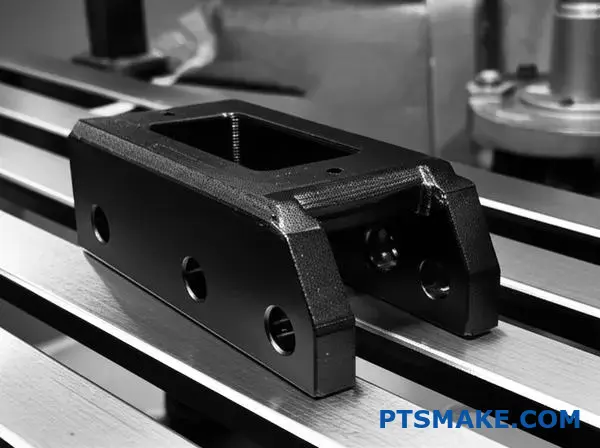
The technical goal of black oxide stainless steel is to create a specific iron oxide on the surface. This process differs greatly when we compare black oxide vs zinc plating, as the latter adds a layer of material.
Chemical Conversion Explained
The hot alkaline solution reacts with the iron in the stainless steel. This reaction converts the surface layer into a stable black oxide. The resulting finish is primarily composed of magnetite12 (Fe3O4).
This is a true conversion coating. It means the finish is integrated into the part itself. It won’t chip, flake, or peel off like a paint or plating might. This is a key advantage.
Expected Finish Characteristics
The result is a visually appealing, non-reflective black finish. It is also very thin, typically adding less than a micron to the surface dimension. This is crucial for high-precision parts where tolerances are tight. Our testing shows minimal impact on part dimensions.
| Characteristic | Result | Notes |
|---|---|---|
| Color | Satin to matte black | Varies with alloy |
| Dimensional Change | < 1 micron | Ideal for tight tolerances |
| Corrosion Resistance | Moderate | Improved with post-treatment oils |
| Reflectivity | Low | Good for optical applications |
The corrosion resistance is moderate on its own. It is significantly enhanced when a supplementary sealant or oil is applied. This post-treatment step is standard practice.
The black oxide process creates a thin, durable conversion coating on stainless steel. It maintains critical part dimensions while providing a non-reflective black finish and moderate corrosion resistance, which can be improved with supplementary treatments.
Zinc Plating Color Codes: Clear, Yellow, Black—What They Mean
The color of a zinc-plated part isn’t just for looks. It’s a visual cue indicating the type of post-treatment chromate conversion coating applied.
This coating is what provides the real corrosion resistance. Each color signifies a different level of protection and chemical composition.
A Quick Zinc Finish Color Guide
Understanding these colors helps you specify the right finish for your application’s needs, balancing performance and cost.
Here’s a basic breakdown:
| Finish Color | Common Chromate Type | Primary Benefit |
|---|---|---|
| Clear / Blue | Trivalent Chromate | Basic corrosion protection, decorative |
| Yellow | Trivalent or Hexavalent | Good corrosion resistance |
| Black | Trivalent Chromate | Aesthetic appeal, good protection |
This guide helps in selecting the right zinc finish.
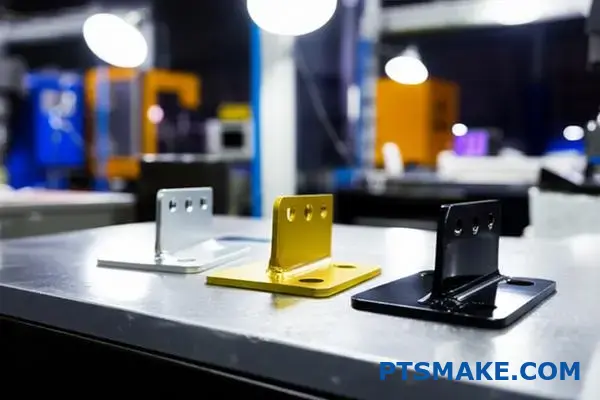
The choice of chromate is critical. It defines the final properties of the zinc-plated surface far more than the zinc layer itself. The process creates a protective film that prevents the zinc from corroding.
Trivalent vs. Hexavalent Chromates
Historically, hexavalent chromates were the standard. They offered excellent corrosion resistance, especially the yellow and olive drab finishes. However, due to environmental and health concerns (RoHS regulations), their use is now highly restricted.
Today, trivalent chromates are the industry standard. They are much safer and environmentally friendly. While early versions didn’t perform as well, modern trivalent coatings have improved significantly. This chemical film creation is a form of passivation13.
Understanding Black Zinc Plating
Black zinc plating offers a sleek, durable finish. It’s a popular choice for automotive and electronic components where appearance matters.
Clients often ask about black oxide vs zinc plating. It’s a key distinction. Black zinc is a chromate conversion coating over a layer of zinc plating. This provides sacrificial corrosion protection. Black oxide, however, is a conversion of the steel surface itself and offers minimal corrosion resistance without a secondary oil or wax coating.
| Feature | Trivalent Chromate | Hexavalent Chromate |
|---|---|---|
| Compliance | RoHS Compliant | Not RoHS Compliant |
| Protection | Good | Excellent |
| Self-Healing | No | Yes |
| Availability | Standard | Restricted / Specialized |
Zinc plating colors indicate the type of chromate conversion coating applied. This coating dictates the part’s corrosion resistance, with yellow and black chromates generally offering superior protection over clear/blue finishes, which are primarily for appearance.
Zinc Flaking And Chipping: Root Causes And Fixes
Zinc coatings are excellent for corrosion resistance. However, they can fail mechanically over time. This leads to zinc flaking and chipping.
Understanding why this happens is key. It helps in preventing coating failure. The main culprits are often mechanical stress and impact.
Common Stress Factors
Even small forces can cause issues. Repetitive stress is particularly damaging to the coating’s bond with the base metal.
| Stress Type | Description |
|---|---|
| Flexing | Bending or twisting the part |
| Impact | Sudden shocks or drops |
| Abrasion | Scraping or rubbing against surfaces |
| Thermal Cycling | Rapid temperature changes |
These factors weaken the bond over time. Eventually, the coating lifts and flakes off.
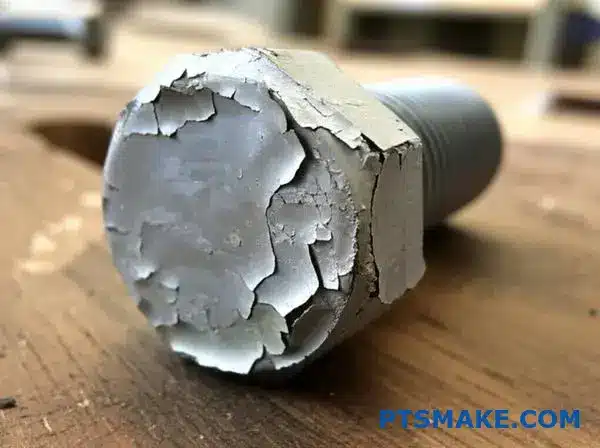
Over time, mechanical stresses are the primary enemy of a zinc coating’s integrity. Unlike a black oxide finish, which is a conversion coating integral to the steel, zinc plating is a distinct layer. This layer is vulnerable to delamination.
Why Mechanical Failure Occurs
The bond between the zinc layer and the substrate is purely mechanical and electrochemical. It doesn’t have the same fused connection as other finishes. This makes it susceptible to Interfacial stress14 when the part is bent, impacted, or exposed to significant temperature shifts. The different expansion rates between the zinc and the steel can cause tiny cracks that grow over time.
Post-Processing Tips for Longevity
Proper handling after plating is crucial. Avoid dropping or aggressively handling plated parts. If secondary machining is needed, use sharp tools and low feed rates to minimize stress on the coating edge. This helps prevent the start of zinc flaking.
For existing issues, there are some coating debonding fixes.
| Issue | Recommended Fix |
|---|---|
| Minor Flakes | Carefully remove loose flakes; apply a zinc-rich paint for touch-ups. |
| Widespread Debonding | Strip the entire coating and re-plate with proper surface prep. |
| Edge Chipping | Chamfer or radius edges before plating to reduce stress concentration. |
At PTSMAKE, we advise clients on design considerations that improve coating adhesion from the start.
Mechanical stress and improper post-processing are the leading causes of zinc flaking. By understanding these factors and implementing careful handling and specific coating debonding fixes, you can significantly extend the life of zinc-plated components.
Choosing The Right Finish For Indoor Vs Outdoor Applications
The environment is the single most critical factor in selecting a finish. A part destined for indoor use faces a completely different set of challenges than one exposed to the elements.
Controlled vs. Exposed Environments
Indoor applications are predictable. Outdoor conditions are not. This difference dictates the level of durability your coating needs. For indoor part finishing, aesthetics might be a priority. For outdoor parts, survival is key.
This table breaks down the core differences:
| Feature | Indoor Environment | Outdoor Environment |
|---|---|---|
| Temperature | Stable, controlled | Fluctuating, extreme |
| Moisture | Low, controlled humidity | Rain, snow, high humidity |
| UV Exposure | Minimal to none | Constant, direct |
| Contaminants | Dust | Salt, pollutants, chemicals |
This contrast directly impacts the need for robust outdoor corrosion resistance.
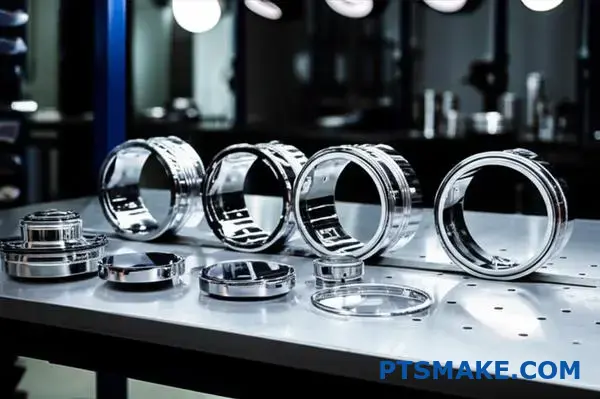
Matching the Finish to the Fight
Let’s compare two common choices: black oxide vs zinc plating. The right choice depends entirely on the part’s future home.
Black Oxide for Indoor Use
Black oxide offers mild corrosion resistance. It’s primarily a conversion coating that adds minimal thickness and a nice black finish. It’s an excellent choice for indoor part finishing where the part won’t face significant moisture. It also holds oil well, which adds to its protection.
Zinc Plating for Outdoor Durability
For outdoor applications, zinc plating is a far superior choice. It provides excellent outdoor corrosion resistance through a sacrificial action. The zinc coating corrodes before the underlying steel, protecting the part’s integrity. This electrochemical process is a key example of Galvanic Corrosion15.
This makes zinc plating ideal for components exposed to rain, humidity, and even saline environments. Its durability is a direct result of this chemical property. Our tests confirm its superior performance in harsh conditions.
Here’s a quick comparison:
| Finishing | Primary Use | Corrosion Resistance | Cost Factor |
|---|---|---|---|
| Black Oxide | Indoor | Low | Low |
| Zinc Plating | Outdoor/Harsh Indoor | High | Moderate |
Choosing correctly from the start prevents costly failures and replacements. It’s a fundamental decision in part design.
Choosing the right finish is simple when you focus on the environment. Controlled indoor settings allow for aesthetic-focused finishes. However, parts exposed to the elements demand superior durability and outdoor corrosion resistance, making coatings like zinc plating essential for long-term performance.
Final Decision Matrix: Choosing The Optimal Coating For Your CNC Parts
Making the final call on a coating can be tough. I have developed a simple framework to help. It balances four key areas.
This method helps you select the best surface finish for CNC parts. It removes guesswork. Let’s build your decision matrix.
Key Decision Factors
| Factor | Description | Importance |
|---|---|---|
| Performance | Corrosion, wear, hardness | High |
| Cost | Per-part and batch cost | Medium-High |
| Availability | Lead time, supplier access | Medium |
| Application | Aesthetics, environment | High |
This matrix simplifies the process significantly. It ensures no critical factor is missed.
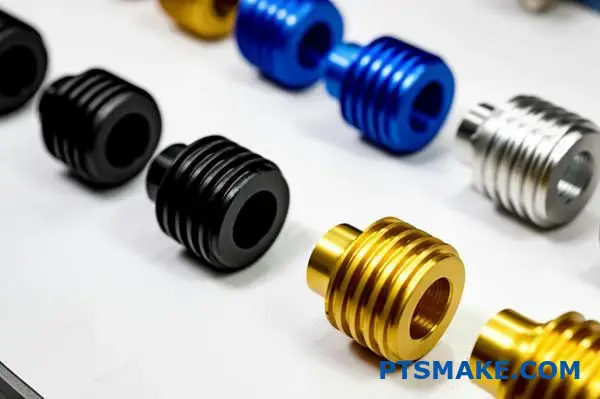
To make an optimal choice, we must go deeper. Your decision framework needs to weigh these factors against each other. It’s not just a checklist; it’s a balancing act.
Performance vs. Cost Analysis
The classic engineering trade-off is performance versus cost. A highly protective finish like electroless nickel costs more than black oxide. You must define your "must-haves" versus "nice-to-haves."
The black oxide or zinc plating decision is a perfect example. Our tests show zinc plating offers better corrosion resistance. But black oxide is often cheaper and preserves dimensional tolerance better.
Application-Specific Considerations
Think about where the part will be used. A part inside a sealed machine has different needs than one exposed to saltwater. Also, consider mating parts. Using dissimilar metals can lead to issues like galvanic corrosion16 if not properly coated.
Here’s a quick guide:
| Application Environment | Primary Concern | Suggested Finish |
|---|---|---|
| Indoor, Controlled | Cost, Aesthetics | Black Oxide, Anodizing |
| Outdoor, Mild | Corrosion Resistance | Zinc Plating, Passivation |
| Harsh, Marine | Max Corrosion Resistance | Electroless Nickel, Hardcoat |
| High Wear | Hardness, Lubricity | Hardcoat Anodizing, Nitriding |
This framework helps you justify your choice. It connects the part’s function directly to the finish selection. At PTSMAKE, we use this logic to guide clients to the most effective solution.
Your final choice requires balancing performance needs, budget limits, and specific application demands. This matrix provides a structured way to select the best surface finish for your CNC parts, ensuring your project’s success.
Request Your Black Oxide vs Zinc Plating Quote with PTSMAKE Today!
Ready to optimize your CNC or injection molded parts with the ideal surface finish? Contact PTSMAKE now for a fast, expert consultation and detailed quote on black oxide vs zinc plating. Let our precision manufacturing solutions exceed your expectations—submit your inquiry today!

Discover how sacrificial coatings like zinc protect your metal components. ↩
Explore the science behind this iron oxide and how it protects steel surfaces. ↩
Understand the electrochemical principle that makes zinc an excellent protective coating for steel. ↩
Learn how this electrochemical process actively protects the base metal from corrosion. ↩
Learn how this chemical process dictates the color and durability of zinc-plated parts. ↩
Understand how dissimilar metals can cause accelerated corrosion and how to avoid this issue in your designs. ↩
Learn how this electrochemical process actively protects the base metal from corrosion. ↩
Understand how this value influences material selection for moving parts and overall product durability. ↩
Learn the specifics of this chemical process and how it creates a non-reactive surface layer. ↩
Learn how microscopic surface residues can cause catastrophic coating failures and how to prevent them. ↩
Discover how this electrochemical principle actively prevents rust on the underlying steel. ↩
Learn more about the chemical composition and properties of this protective layer. ↩
Understand how this chemical process enhances corrosion resistance on metal surfaces. ↩
Learn about the forces at the coating-substrate boundary that lead to failure. ↩
Understand the electrochemical process that makes sacrificial coatings like zinc plating so effective for outdoor protection. ↩
Understand how to prevent part failure when dissimilar metals are used in an assembly. ↩