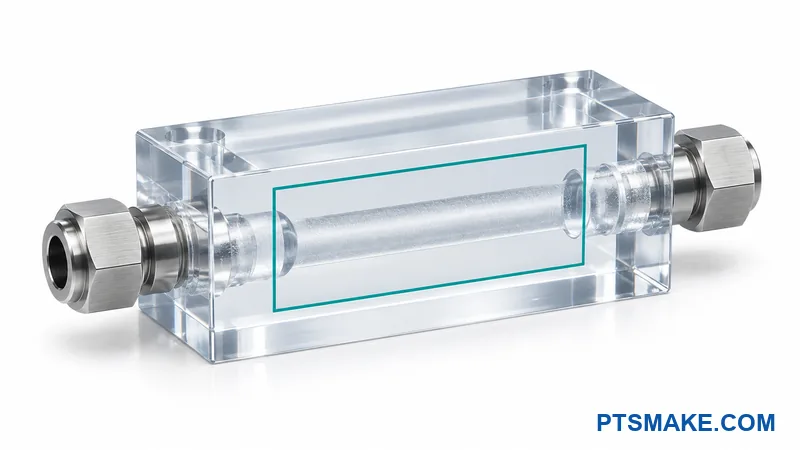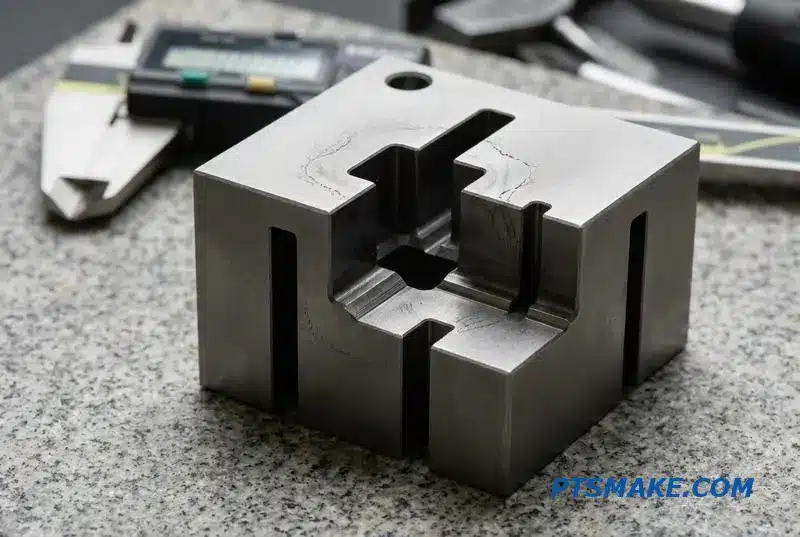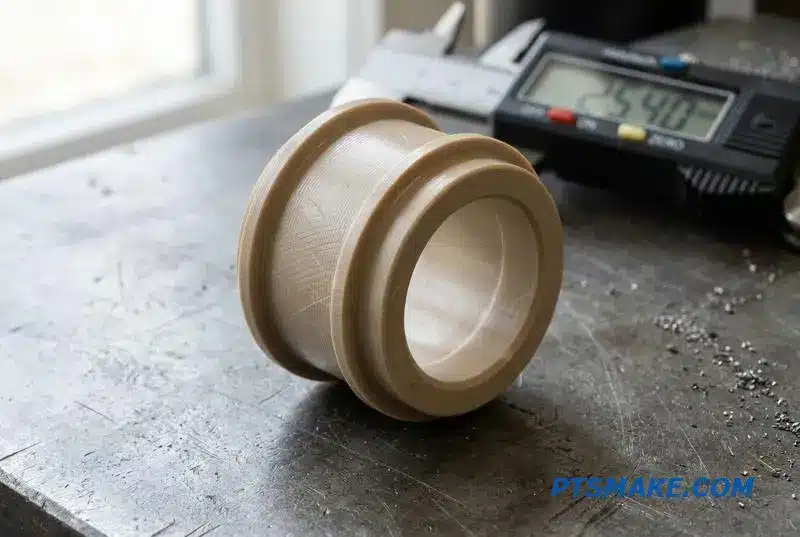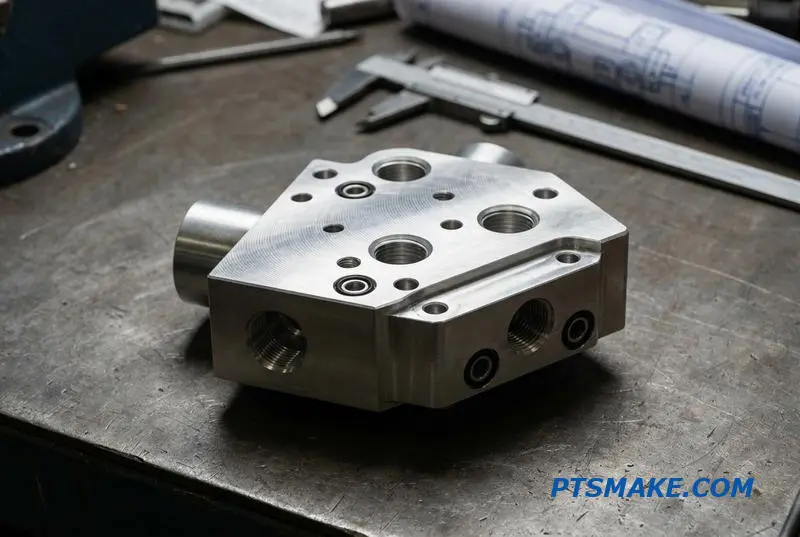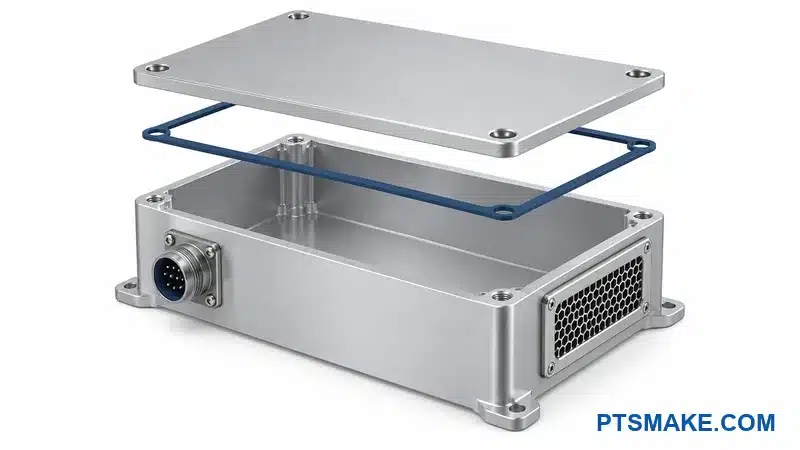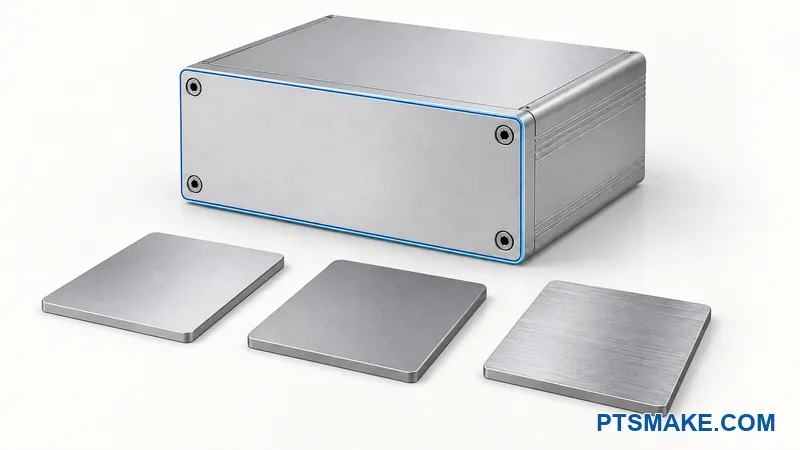

Looking at your manufacturing challenges, you’ve likely faced the frustrating choice between aesthetic appeal and functional performance when selecting surface finishes. Many procurement managers discover too late that their chosen finish creates cleaning nightmares, corrosion issues, or fails to meet industry standards.
Brushed stainless steel finish combines durability, cleanability, and professional aesthetics while meeting strict tolerance requirements for precision manufacturing applications across aerospace, medical, and robotics industries.
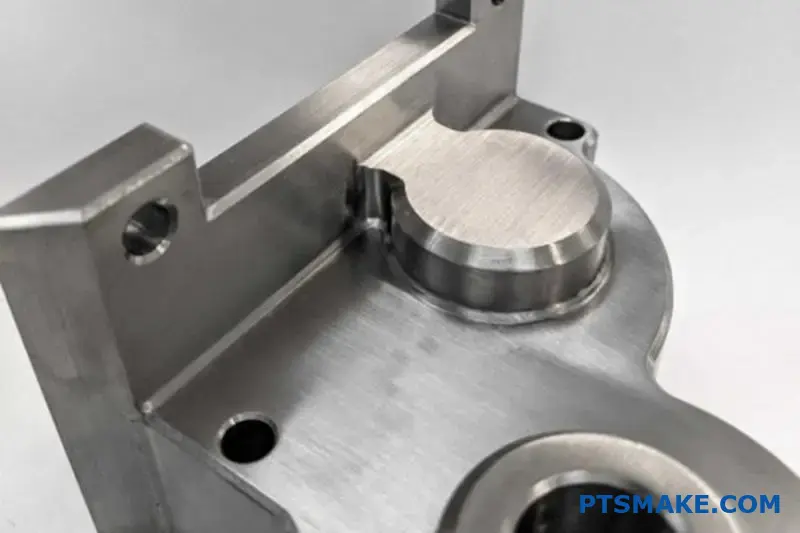
The real challenge starts when you need to balance multiple performance factors – surface roughness standards, corrosion resistance, welding compatibility, and long-term maintenance costs. I’ll walk you through the technical considerations and industry-specific requirements that determine when brushed finishes outperform alternatives like mirror or satin treatments.
Top Industries Where Brushed Stainless Steel Outperforms Other Finishes
When selecting a material finish, functionality often outweighs aesthetics. This is especially true in high-stakes industries. The brushed stainless steel finish is a prime example.
It provides a durable, non-reflective surface that hides minor scratches well. This makes it a top choice where reliability is critical.
Key Sectors of Application
This finish excels in several demanding fields. We see it in aerospace, medical devices, and food processing equipment. Robotics and architectural applications also benefit from its properties. Each industry leverages its unique advantages.
| Feature | Brushed Finish | Polished Finish |
|---|---|---|
| Visibility | Low Glare | High Reflectivity |
| Wear | Hides Scratches | Shows Blemishes |
| Maintenance | Easy to Clean | Requires Polishing |
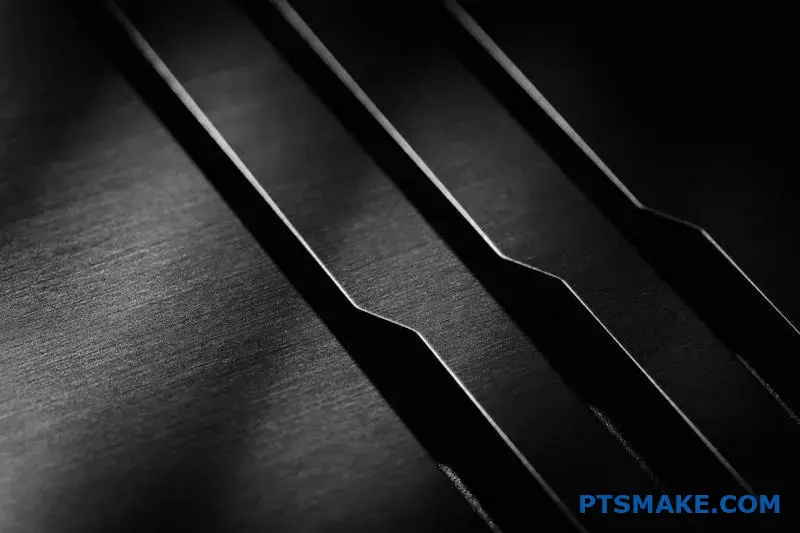
The choice of a brushed stainless steel finish is rarely accidental. It’s a calculated decision based on performance needs. In industries using brushed stainless steel, the focus is on longevity and safety.
The Science Behind the Surface
Stainless steel’s inherent corrosion resistance comes from its chromium content. It forms a thin, invisible protective layer upon contact with oxygen. The brushing process enhances this practicality. It creates a uniform texture that diffuses light, reducing glare.
This is critical for surgeons in operating rooms. It’s also vital for pilots in a cockpit. The non-reflective nature prevents visual distractions. Furthermore, the surface is less prone to showing fingerprints and smudges. This maintains a clean appearance in sterile environments. The process of Passivation1 is often applied to further enhance its protective qualities, especially for medical and food-grade applications. At PTSMAKE, we guide clients on when this extra step is crucial for part performance.
Brushed Finish Benefits by Industry
| Industry | Primary Benefit | Application Example |
|---|---|---|
| Aerospace | Durability & Low Glare | Cockpit instrumentation panels |
| Medical | Hygiene & Sterilizability | Surgical instruments, trays |
| Food Equipment | Corrosion Resistance | Mixing vats, countertops |
| Robotics | Wear Hiding | Robotic arms, chassis |
The brushed stainless steel finish is selected for its superior functional properties in critical industries. Its durability, low reflectivity, and ease of maintenance make it a reliable choice where performance cannot be compromised.
How Brushed Finishing Affects CNC Machining Tolerances And Fit
Brushing is not just cosmetic. It’s an abrasive process. This means it physically removes material from your part’s surface.
While the amount is tiny, it directly impacts dimensions. For high-precision components, this can be the difference between a perfect fit and a failed assembly.
The Abrasive Nature of Brushing
Every pass of an abrasive belt or wheel grinds away material. This is a key machining consideration for a brushed finish. The amount removed depends on several factors.
| Factor | Typical Material Removal (per side) |
|---|---|
| Grit Coarseness | 0.005mm – 0.015mm |
| Pressure | 0.002mm – 0.010mm |
| Material Hardness | Varies Significantly |
This small change can push a critical dimension out of spec.
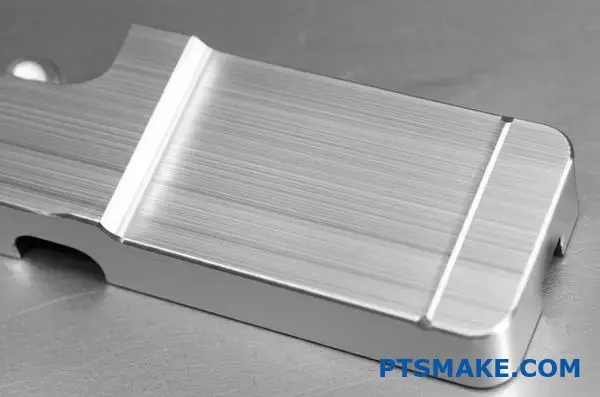
At PTSMAKE, we always account for this material removal. We adjust the initial machining dimensions. This ensures the final part is within tolerance after the brushed finish is applied.
Impact on Mating Surfaces and Fits
The tolerance impact on brushed stainless parts becomes critical for mating components. The removal of even a few microns can alter the designed fit.
A tight interference fit might become a loose transition fit. A precise clearance fit could become sloppy. This affects performance and longevity.
Accounting for the Shift
Understanding how the final finish alters dimensions is crucial. We must communicate this during the design phase. It’s a key part of our process.
The directional grooves from brushing can also affect how parts slide together. This relates to the science of tribology2, which studies friction and wear between surfaces.
Below is how brushing can alter standard fits.
| Fit Type | Designed Clearance | Post-Brushing Effect |
|---|---|---|
| Clearance | Positive | Increased clearance, looser fit |
| Transition | Near Zero | May become a loose clearance fit |
| Interference | Negative | Reduced interference, weaker joint |
We work with clients to define tolerances on a post-finish basis. This prevents costly surprises during assembly. Proper machining considerations for a brushed finish are non-negotiable for us.
Brushed finishing is an abrasive process that removes material, directly affecting final dimensions. For tight tolerances and mating parts, this material removal must be factored into the initial machining plan to ensure the desired fit and function are achieved.
Brushed Stainless Steel Cleaning Protocols For High Performance Environments
In sterile or industrial settings, cleaning brushed stainless steel is not just about appearance. It is about safety and operational integrity. Standard methods often fall short here.
Why Standard Cleaning Fails
The stakes are higher in production environments. Contamination can ruin entire batches or compromise safety standards. This demands a structured, scientific approach.
Goals for High-Performance Environments
A proper protocol for a brushed stainless steel finish ensures microbial control. It also prevents chemical residue buildup and protects the material itself from corrosion.
| Aspect | General Cleaning | High-Performance Cleaning |
|---|---|---|
| Goal | Visual cleanliness | Sterility, no residue |
| Method | Wiping with soap/water | Validated chemical protocols |
| Frequency | As needed | Scheduled, documented |
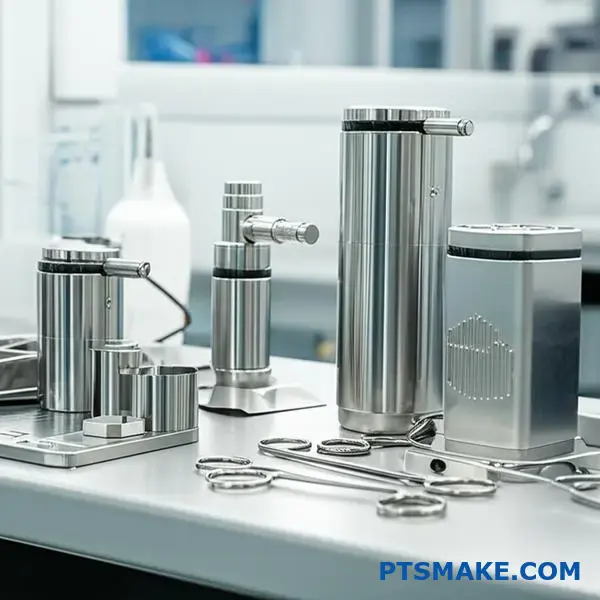
Recommended Cleaning Agents and Techniques
When cleaning brushed stainless steel, your choice of agent is critical. The wrong chemical can damage the finish or leave a residue that compromises sterility.
Always use agents approved for your specific industry, such as food processing or medical device manufacturing. These are formulated to be effective without harming the steel.
The Sanitization Process
A key technique is to always wipe parallel to the grain of the brushed stainless steel finish. This removes contaminants from the microscopic grooves instead of pushing them deeper.
Use a non-abrasive, lint-free cloth. Apply the sanitizer and allow for the recommended contact time to ensure it works properly. This step is crucial for sanitizing brushed finishes in production effectively. After sanitizing, a final rinse with deionized water is often necessary to remove any residue, protecting the steel’s surface passivation3 and ensuring a truly clean surface.
| Cleaning Agent | Best For | Important Note |
|---|---|---|
| 70% Isopropyl Alcohol | Disinfecting surfaces | Highly effective, evaporates quickly |
| Quaternary Ammonium | General sanitizing | Follow dilution rates carefully |
| Peracetic Acid | High-level sterilization | Requires proper PPE and handling |
| Deionized Water | Final Rinsing | Prevents mineral deposits and spotting |
Here at PTSMAKE, we guide our partners on maintaining the integrity of the components we manufacture. Proper care ensures longevity and performance.
Effective cleaning of brushed stainless steel in sterile settings goes beyond simple wiping. It requires specific agents, correct techniques like following the grain, and adherence to validated protocols. This ensures safety, prevents contamination, and preserves the material’s integrity.
Breaking Down Surface Roughness Standards For Brushed Stainless Components
Quantifying a surface is key. We can’t just rely on looks. This is where surface roughness parameters come into play. They give us objective numbers.
Key Roughness Metrics: Ra and Rz
The two most common metrics you’ll encounter are Ra and Rz. They measure different aspects of a surface profile.
Ra, or Roughness Average, is the arithmetic mean of the profile’s peaks and valleys. It’s a great general indicator.
Rz, on the other hand, measures the average distance between the five highest peaks and five lowest valleys. It’s more sensitive to scratches.
| Metric | Description | Best For |
|---|---|---|
| Ra | Arithmetic mean of profile deviations | General quality control |
| Rz | Average of 5 highest peaks and 5 lowest valleys | Detecting isolated defects |
Understanding these helps in clear communication about any surface roughness brushed finish.
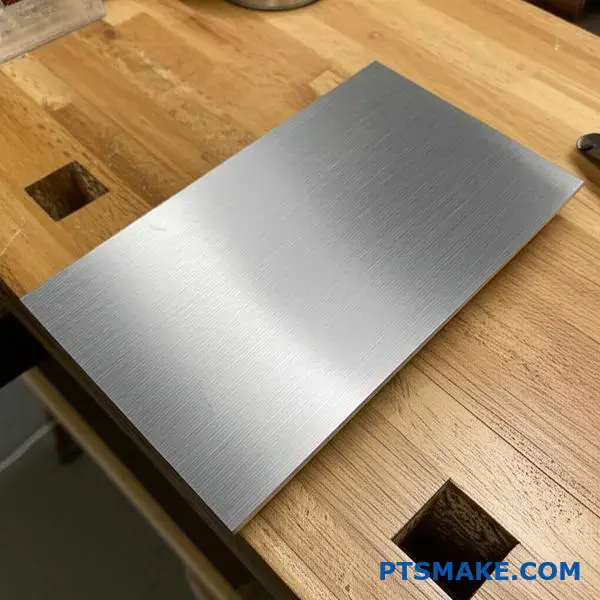
How We Measure Surface Roughness
To get Ra and Rz values, we use specialized tools. The most common is a stylus profilometer. It drags a fine-tipped stylus across the surface, recording the vertical movement. This data creates a 2D profile.
More advanced methods include optical profilometers. They use light to map the surface. This is non-contact and can be faster. However, the stylus method is still the industry standard for most brushed stainless Ra measurement.
Finish Classes and What They Mean
Engineers often specify finishes using "N" grades (from ISO 1302). Each grade corresponds to a specific Ra value range. This simplifies drawing callouts.
A brushed stainless steel finish has unique properties. Because the brushing lines are all in one direction, the surface has anisotropy4. This means roughness readings change depending on whether you measure with or against the grain.
We always clarify the measurement direction with clients. Measuring perpendicular to the brush lines gives the truest roughness value.
Here’s a quick reference for common finishes:
| Finish Callout | Typical Ra (µm) | Appearance |
|---|---|---|
| N7 | 1.6 | Visible machine lines |
| N6 | 0.8 | Smooth, fine machined |
| N5 | 0.4 | Ground, semi-reflective |
At PTSMAKE, we ensure our quality control process accounts for this directional dependency. It prevents discrepancies between our measurements and our client’s.
Understanding metrics like Ra and Rz is crucial for specifying and verifying surface finishes. Using the correct tools and acknowledging the directional nature of a brushed finish ensures parts consistently meet design requirements and functional needs.
When To Consider Mirror, Satin Or Brushed Finish: Decision Matrix
Choosing the right stainless steel finish is more than an aesthetic decision. It directly impacts performance and longevity. The choice involves a trade-off.
You must balance function, appearance, and the operational environment. A mirror finish is perfect for sanitary uses.
But a brushed stainless steel finish excels in high-traffic areas. This matrix simplifies the brushed vs satin vs mirror finish debate, helping you make a practical choice.
| Factor | Mirror | Satin | Brushed |
|---|---|---|---|
| Function | Reflective, easy to clean | Moderate hiding power | Hides wear, non-reflective |
| Aesthetics | Luxurious, high-end | Soft, low-sheen | Modern, industrial |
| Environment | Controlled, clean | General purpose | High-traffic, industrial |
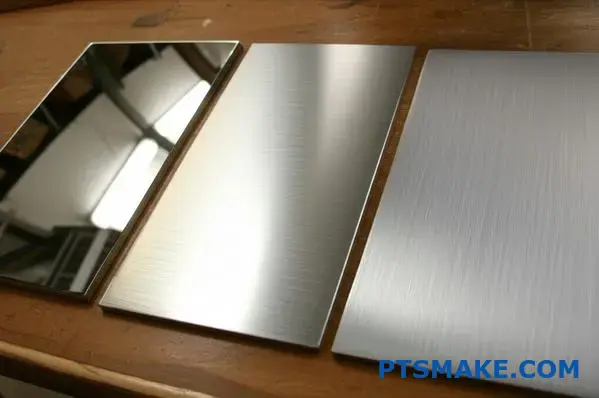
Breaking Down the Decision Logic
Deeper analysis is crucial when choosing the right stainless finish. Each finish has unique properties that extend beyond its initial look. We guide our partners at PTSMAKE through these specific considerations daily.
Functional Purpose
Function should always come first. A mirror finish is non-porous and incredibly smooth. This makes it ideal for medical or food-grade applications where hygiene is critical. It’s easy to sterilize.
A brushed stainless steel finish, however, is a workhorse. Its fine parallel lines are excellent at hiding minor scratches, fingerprints, and daily wear. This makes it perfect for appliance panels, kick plates, and architectural elements. Satin offers a compromise, providing a smooth surface with better imperfection-hiding than a mirror finish. The grain directionality contributes to its visual anisotropy5, a key factor in its appearance.
Form and Aesthetics
Your product’s visual identity matters. A mirror finish communicates luxury and precision. It’s often used for decorative trim and high-end fixtures.
A brushed finish provides a modern, technical, or industrial aesthetic. It diffuses light, reducing glare. Satin is the versatile choice, offering a soft, elegant sheen that complements many designs without being overly reflective.
Environmental Exposure
Consider where the part will live. A mirror finish in a busy public space is a maintenance headache. It shows every smudge and scratch.
Conversely, a brushed stainless steel finish is built for such environments. It withstands contact and maintains its look over time. For outdoor or coastal applications, a smoother finish like satin or mirror may resist corrosion slightly better because there are fewer grooves to trap contaminants.
| Consideration | Best Choice | Why? |
|---|---|---|
| Hiding Scratches | Brushed | Parallel lines mask minor damage effectively. |
| Ease of Cleaning | Mirror | Non-porous surface prevents bacterial growth. |
| Reducing Glare | Brushed / Satin | Diffuse reflections are easy on the eyes. |
| High-End Look | Mirror | Its pure reflectivity signals premium quality. |
Your final choice is a strategic balance. The decision between a mirror, satin, or brushed stainless steel finish should be driven by the part’s intended use, aesthetic goals, and environmental conditions to ensure optimal performance and durability.
Understanding The Role Of Grit Size In Final Brushed Surface Quality
Choosing the right abrasive grit is fundamental. It directly defines the final brushed surface quality. Each grade creates a distinct look and feel.
This decision impacts everything from aesthetics to function. Let’s look at the most common options.
Common Grit Grades and Their Effects
Different grit sizes produce different line depths and textures. Selecting the correct abrasive grit for a brushed stainless finish is a key step.
| Grit Size | Finish Type | Key Characteristics | Typical Use Case |
|---|---|---|---|
| 120 | Coarse | Deep, visible, long grain lines | Initial surface preparation, heavy-duty appliances |
| 180 | Medium | Defined but less aggressive lines | Architectural elements, general-purpose finishes |
| 320 | Fine | Soft, subtle, satin-like finish | Decorative items, consumer electronics |
A lower number means a coarser grit. A higher number indicates a finer grit, which results in a smoother surface.
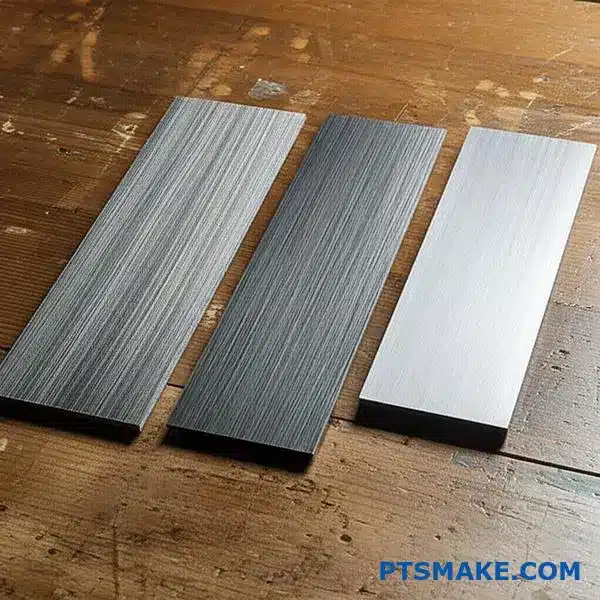
A Practical Grit Size Brushed Finish Guide
The choice of grit goes beyond appearance. It affects how a part resists fingerprints, reflects light, and feels to the touch. It’s a critical part of product design.
For a classic brushed stainless steel finish, 180 grit is often the starting point. It offers a great balance between texture and smoothness. It is widely used for kitchen appliances and architectural panels.
Matching Grit to Your Application
For parts that need to hide wear and tear, a coarser 120 grit is effective. The deep lines can mask minor scratches from daily use.
Conversely, for high-end electronics or decorative trim, a 320 grit provides a more refined, luxurious feel. The final surface roughness6 is much lower, creating a smooth and clean appearance.
At PTSMAKE, we often develop custom finish samples. This helps our clients visualize the result before committing to full production.
Consistency is Key
Achieving a consistent brushed finish requires more than just the right grit. We also carefully control application pressure, speed, and the direction of the brushing. This ensures uniformity across every single part.
Selecting the right grit—coarse (120), medium (180), or fine (320)—is crucial. This choice directly determines the final texture, reflectivity, and overall aesthetic of your brushed metal part, especially for a brushed stainless steel finish.
Is Brushed Stainless Steel Suitable For Medical Device Applications?
When selecting a finish for medical devices, three factors are critical: biocompatibility, cleanability, and aesthetics. The brushed stainless steel finish offers a mix of benefits and challenges.
Biocompatibility is Key
The base material, often 316L stainless steel, is biocompatible. The brushing process does not alter this inherent property. So, brushed stainless for medical devices is generally safe for patient contact.
The Question of Cleanability
Cleanability is the main point of discussion. The fine grooves of a brushed finish can potentially trap contaminants. This makes sterilization more complex compared to smoother surfaces.
Professional Aesthetics
Aesthetically, the brushed finish provides a professional, non-reflective look. This is often preferred in surgical environments to reduce glare.
| Feature | Brushed Stainless Steel | Considerations |
|---|---|---|
| Biocompatibility | Excellent (Material-dependent) | The underlying alloy is the key factor. |
| Cleanability | Moderate | Grooves may harbor microbes. |
| Aesthetics | Professional, low-glare | Ideal for many clinical settings. |
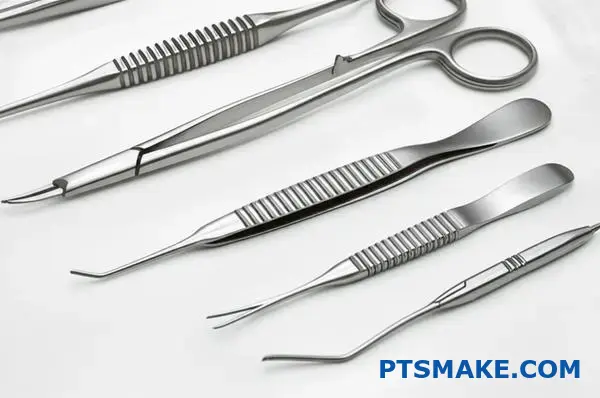
While the biocompatibility of the underlying stainless steel is not in question, the surface texture created by brushing introduces important considerations for medical applications. The primary concern revolves around sterilization and the potential for microbial growth.
Surface Texture and Sterilization
The microscopic valleys in a brushed finish can create sites where bacteria might attach and form a protective layer. This layer, a biofilm7, can be resistant to standard cleaning and sterilization methods. The risk is higher in devices with direct, long-term contact with bodily fluids.
For many surgical brushed finish applications, this risk is managed. Instruments like handles or external casings are less critical than implants. Here, the aesthetic and tactile benefits often outweigh the slight cleaning challenge. At PTSMAKE, we guide clients on choosing the right finish based on the device’s specific use case.
Comparing with Other Finishes
It’s helpful to compare the brushed stainless steel finish with other common options in the medical field.
| Finish Type | Cleanability | Biocompatibility | Primary Use Case |
|---|---|---|---|
| Brushed | Moderate | Excellent | External housings, instrument handles |
| Polished (Mirror) | Excellent | Excellent | Reusable surgical tools, implants |
| Electropolished | Superior | Excellent | Implants, fluid-path components |
| Passivated | Good | Superior | Most stainless steel medical devices |
Our testing confirms that for non-critical components, a properly maintained brushed finish performs well. However, for internal or high-contact devices, an electropolished or mirror finish is often the safer and more reliable choice.
A brushed stainless steel finish is biocompatible and offers a professional aesthetic. However, its textured surface presents cleaning challenges, making it better suited for external components or non-critical instruments rather than implants where sterility is paramount.
Does Brushed Stainless Corrode More Easily Than Polished Surfaces?
Surface texture is not just about looks. It directly affects how a part resists corrosion. A brushed finish has tiny grooves and valleys. These are invisible to the naked eye.
These features increase the total surface area. They also create places where contaminants can hide. This is a critical factor for long-term durability. Let’s compare the surface characteristics.
| Feature | Brushed Finish | Polished Finish |
|---|---|---|
| Texture | Unidirectional Grooves | Smooth, Non-Porous |
| Surface Area | Higher | Lower |
| Contaminant Traps | Many | Few to None |
A polished surface is much smoother. It offers fewer hiding spots for corrosive agents.
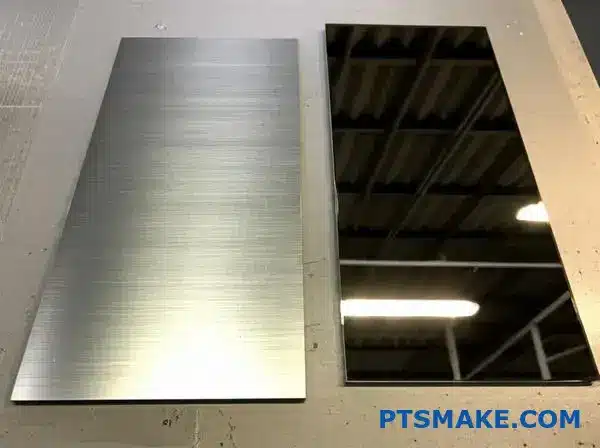
The microscopic grooves in a brushed stainless steel finish act as "corrosion traps." These tiny valleys can hold moisture, chlorides, dust, and other particles. This is where the problem starts.
When these contaminants are trapped, they stay in contact with the steel. This prolonged contact creates an ideal environment for localized corrosion, such as pitting. The passive layer can break down in these small spots.
At PTSMAKE, we often explain this using a simple analogy. Imagine trying to clean a smooth countertop versus a rough, textured one. The smooth surface is easy to wipe clean. The textured one requires more effort to remove dirt from its crevices. The same principle applies to stainless steel surfaces.
The surface topology8 of a brushed finish makes it harder for cleaning agents to reach and remove all contaminants. To properly compare polished and brushed corrosion, you must consider the operating environment.
| Finish Type | Cleaning Ease | Corrosion Trap Risk |
|---|---|---|
| Brushed | More Difficult | High |
| Polished | Easy | Low |
For parts in harsh or coastal environments, this difference in brushed stainless corrosion resistance becomes very important. A polished finish often provides a longer service life with less maintenance.
The texture of a brushed finish creates microscopic traps. These traps hold moisture and contaminants, increasing corrosion risk compared to a smooth, polished surface. This makes the environment a key factor in choosing the right finish for durability.
Automated Vs Hand-Brushed Stainless Surfaces: Which Performs Better?
When choosing a brushed stainless steel finish, the method matters. It’s a classic case of artisan skill versus machine precision. The decision impacts consistency, speed, and cost.
Consistency and Scalability
Automated brushing delivers a uniform finish every time. This is a key advantage for large production runs where consistency is critical. Hand brushing, while artistic, can vary from part to part.
Cost Trade-offs
Manual work avoids high initial machinery costs. However, for volume production, automation significantly lowers the per-unit cost, making it more economical in the long run.
| Factor | Hand-Brushed | Machine-Brushed |
|---|---|---|
| Consistency | Variable | High |
| Scalability | Low | High |
| Cost (at scale) | High | Low |
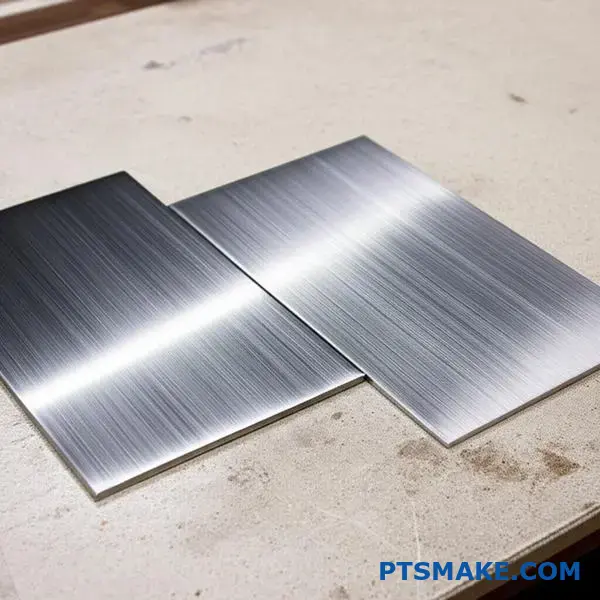
Deciding between a hand brushed vs machine brushed stainless finish requires a close look at your project’s specific needs. Each method offers distinct advantages and presents different trade-offs.
Deep Dive into Finishing Trade-offs
Automated systems maintain constant pressure and speed. This removes human error, ensuring every single piece has an identical brushed stainless steel finish. This level of precision is something we value greatly at PTSMAKE for our clients’ production parts.
For one-off prototypes or custom architectural pieces, the uniqueness of a hand-brushed finish can be a desirable feature. It adds a human touch that a machine cannot replicate.
However, when scaling from a prototype to a thousand units, the automated brushing advantages are undeniable. The process is faster, more reliable, and ultimately more cost-effective. The uniform grain direction from automation creates a predictable anisotropy9, affecting how light reflects off the surface consistently across all parts.
Evaluating the Cost Structure
The financial calculation is straightforward. You either invest in machinery upfront or pay for ongoing labor.
| Cost Aspect | Hand-Brushed Finish | Machine-Brushed Finish |
|---|---|---|
| Initial Investment | Low | High |
| Per-Unit Labor | High and Fixed | Low and Decreasing |
| Best Use Case | Prototypes, Custom Jobs | High-Volume Production |
Automated finishing excels in consistency and scalability, making it the superior choice for production runs where cost-per-unit and uniformity are paramount. Hand brushing retains its value for custom, low-volume projects where upfront investment is a primary constraint.
Why Brushed Stainless Is A Favorite In Robotics And Automation Design
In robotics and automation, every detail matters. The surface finish of a component is more than just cosmetic. It impacts performance, durability, and even safety.
A brushed stainless steel finish is often my go-to recommendation. It offers a practical balance that is hard to beat for demanding industrial environments.
Performance and Aesthetic Gains
This finish provides a clean, modern look. But more importantly, it delivers tangible operational benefits. Let’s look at a quick comparison.
| Feature | Polished Finish | Brushed Finish |
|---|---|---|
| Glare | High | Low / Diffused |
| Scratches | Highly Visible | Camouflaged |
| Aesthetics | Reflective | Subtly Textured |
The reduced glare alone makes the brushed finish for automation parts a superior choice, especially around optical sensors.
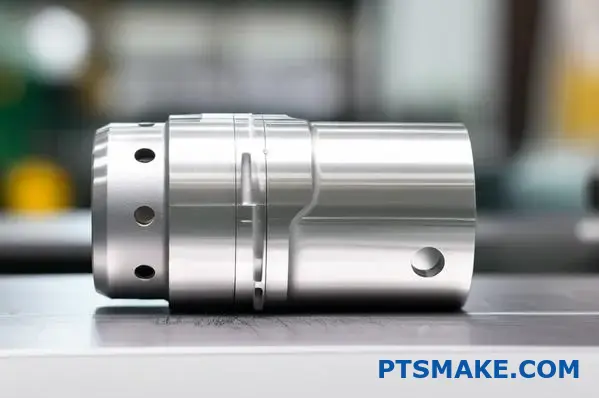
The choice of finish directly influences how a machine interacts with its environment and operators. A highly reflective part can interfere with vision systems. This can cause errors in detection and movement.
Performance Under Pressure
The non-reflective surface of a brushed finish is a key performance advantage. The fine parallel lines diffuse light rather than reflecting it directly. This minimizes glare, which is critical for robots that rely on cameras and optical sensors for navigation and task execution. The directional grain creates an effect known as anisotropy10, scattering light predictably.
Design and Maintenance Synergy
Beyond performance, the aesthetic is professional and clean. The robots brushed stainless finish conceals fingerprints, smudges, and minor scratches that are inevitable in an industrial setting. This makes maintenance easier and keeps equipment looking good over its service life. At PTSMAKE, we often recommend this finish for parts that are both functional and visible.
The following table highlights the maintenance advantages we’ve observed in our client projects.
| Maintenance Aspect | Impact of Brushed Finish |
|---|---|
| Cleaning | Less frequent need to polish |
| Wear & Tear | Minor abrasions are less noticeable |
| Longevity | Maintains a consistent look for longer |
This combination of utility and appearance makes the brushed stainless steel finish an intelligent choice for modern automation design.
The brushed stainless steel finish offers a trifecta of benefits. It enhances operational performance by reducing glare, provides a clean aesthetic appeal, and simplifies maintenance by effectively hiding minor wear and tear, making it a highly practical and reliable choice.
Can Brushed Stainless Steel Be Welded Without Affecting Aesthetics?
Welding brushed stainless steel will always leave a mark. This is an unavoidable reality of the fabrication process.
The key is not preventing marks, but knowing how to properly remove them. It’s the post-weld finishing that truly matters.
With the right techniques, you can effectively restore the original brushed stainless steel finish. This ensures the final product’s visual integrity is not compromised. Welding brushed stainless is all about the finish.
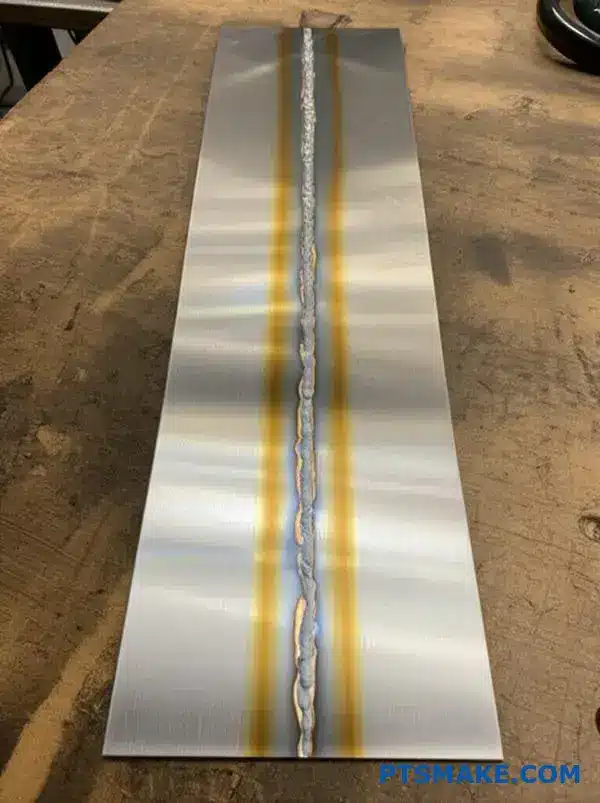
The primary challenge is making the welded area blend seamlessly with the surrounding brushed pattern. Heat from welding creates discoloration and disrupts the material’s surface texture. This area requires careful and precise restoration.
Examining the Weld Area
Weld marks are more than just a surface issue. They include the raised weld bead and the discolored metal around it. This surrounding area, the heat-affected zone11, changes the steel’s appearance. Both parts must be treated to maintain the brush finish after the weld.
The Post-Weld Finishing Process
Restoring the brushed look is a multi-step procedure. It begins with removing the bulk of the weld material. It concludes with carefully re-establishing the brushed grain.
| Finishing Step | Primary Action | Desired Outcome |
|---|---|---|
| 1. Grinding | Remove the excess weld bead. | A flat and level surface. |
| 2. Sanding | Use progressively finer grit abrasives. | Smooth out the ground area. |
| 3. Blending | Feather the edges of the sanded section. | Create a gradual, invisible transition. |
| 4. Re-brushing | Apply the final grain with an abrasive pad. | Match the original brushed direction and depth. |
The final re-brushing step is critical. It requires skill to match the direction and coarseness of the original finish. From our experience at PTSMAKE, consistent pressure and speed are essential for an undetectable repair on the brushed stainless steel finish.
Weld marks are a normal part of welding brushed stainless steel. A meticulous post-weld process involving grinding, sanding, and re-brushing is crucial. This is how you restore the part’s original aesthetic and maintain a seamless brushed stainless steel finish.
Brushed Stainless Steel In The Age Of Sustainable Manufacturing
Sustainability is more than a trend. It’s a core manufacturing principle. The brushed stainless steel finish fits perfectly within this modern approach. It’s not just about looks.
The Full Lifecycle View
We must consider the entire journey. This includes raw material, production energy, and end-of-life recycling. It’s a complete picture.
Recycling and Longevity
Stainless steel is highly recyclable. This reduces waste and demand for new resources. This makes it a top choice for eco-friendly metal surface treatment. Its durability means less frequent replacement.
| Feature | Sustainability Impact |
|---|---|
| Recyclability | High (Over 80%) |
| Durability | Excellent (Decades) |
| Maintenance | Low |
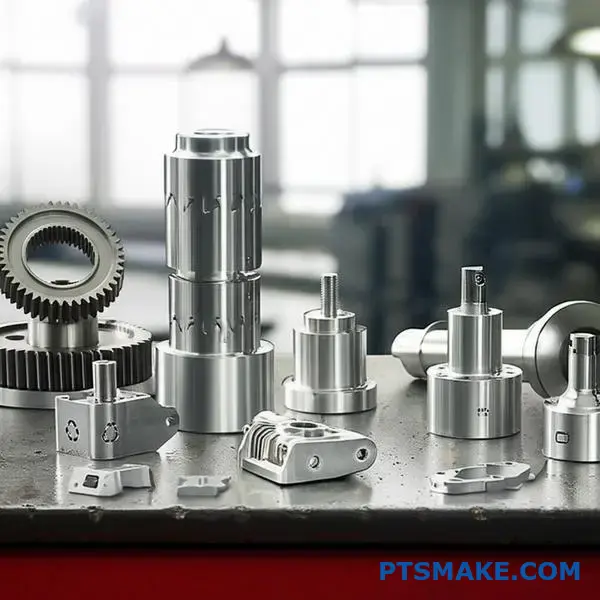
When we discuss a ‘green brushed steel finish’, we must look beyond the initial process. The true environmental value emerges over the product’s entire lifespan. It’s a common oversight.
The Energy Equation
The brushing process itself consumes energy. There is no denying this fact. At PTSMAKE, we focus on optimizing this stage. We use efficient machinery and streamlined workflows to minimize our energy footprint per part. This is a critical step.
However, this initial energy input is small compared to the savings gained over time. The material’s durability is key. Because stainless steel resists corrosion and wear, it rarely needs replacement. Its inherent austenitic structure12 contributes to this remarkable longevity.
Lifecycle Value Over Initial Cost
Thinking long-term is essential. A product that lasts for decades avoids the environmental cost of remanufacturing, shipping, and disposal multiple times. This is the core of its value.
| Factor | Brushed Stainless Steel | Alternative Finishes |
|---|---|---|
| Initial Energy | Moderate | Low to Moderate |
| Replacement Frequency | Very Low | High |
| End-of-Life | Recyclable | Often Landfill |
| Total Impact | Low | High |
The brushed stainless steel finish offers a sustainable solution. Its recyclability and long lifecycle provide significant environmental benefits, offsetting the initial energy used in production. It represents a smart, long-term choice.
Brushed Stainless: The Go-To Finish For Mission-Critical Enclosures
In certain industries, an enclosure isn’t just a box. It’s a critical component that protects sensitive electronics. These mission-critical applications demand more than just strength.
Environments in medical, aerospace, and marine fields are unforgiving. They require materials that resist corrosion, are easy to sterilize, and endure extreme conditions. A brushed stainless steel finish on enclosures meets these challenges. It’s a choice driven by performance, not just looks.
Here’s how these environments differ.
| Environment | Primary Challenge | Key Requirement |
|---|---|---|
| Medical | Sterility & Contamination | Non-porous, easy to clean surface |
| Aerospace | Extreme Temperatures | Material stability & durability |
| Marine | Saltwater & Humidity | High corrosion resistance |
These critical brushed finish applications demand uncompromising quality.
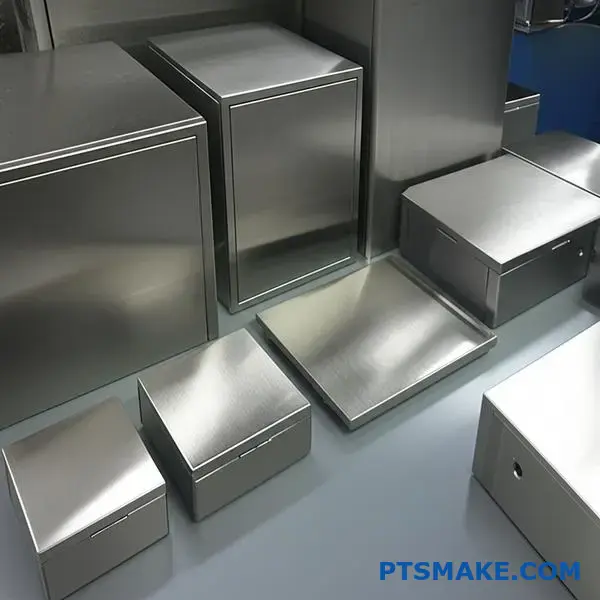
Choosing the right material and finish is a fundamental engineering decision. Brushed stainless enclosures are a standard in demanding fields for clear, practical reasons. It’s about ensuring reliability where failure is not an option.
Medical and Laboratory Settings
In medical environments, hygiene is paramount. A brushed stainless steel finish provides a non-porous surface. This makes it incredibly easy to clean and sanitize, preventing bacterial growth. The finish also hides minor scratches from constant wipe-downs.
Aerospace and Defense Applications
Aerospace components face extreme temperature shifts and vibrations. The integrity of the enclosure is vital. The finish must not flake or degrade. A properly applied brushed stainless steel finish is stable and durable, protecting the internal components reliably. The natural toughness of the material is key.
Marine Environments
For marine applications, the biggest enemy is saltwater corrosion. Grade 316 stainless steel is often my recommendation here. Its molybdenum content offers superior resistance to chlorides. The material’s natural protective layer is enhanced through a process called passivation13. This makes it ideal for marine settings.
Here’s a quick comparison of common stainless grades.
| Stainless Grade | Primary Use | Corrosion Resistance |
|---|---|---|
| 304 | General Purpose | Good |
| 316 | Marine / Chemical | Excellent |
At PTSMAKE, we guide clients through these choices. Selecting the right grade is crucial for the longevity of brushed stainless enclosures.
In mission-critical sectors like medical, aerospace, and marine, the brushed stainless steel finish is not an aesthetic afterthought. It’s an essential feature that ensures durability, sterility, and corrosion resistance, protecting vital components in the harshest environments.
How PTSMAKE Delivers Repeatable Brushed Stainless Quality At Scale
Achieving a consistent brushed stainless steel finish is a known challenge. The final look depends heavily on many small variables. Without tight control, quality can vary from part to part.
At PTSMAKE, we solve this problem. We have developed a systematic approach. This ensures every piece meets the exact same high standard, every time. We are a reliable repeatable brushed steel finish supplier.
The Foundation of Consistency
Our process isn’t about luck. It’s about control. We manage key parameters to ensure the outcome is predictable. This is central to the PTSMAKE brushed stainless process.
| Parameter | Control Method | Impact on Finish |
|---|---|---|
| Abrasive Grit | Standardized Grit Selection | Defines line depth and coarseness |
| Tool Speed | Calibrated Machine Settings | Ensures uniform line pattern |
| Pressure | Automated Force Feedback | Prevents uneven wear and marks |
| Feed Rate | Programmed CNC Control | Guarantees consistent line spacing |
This level of detail is how we deliver scalable quality.
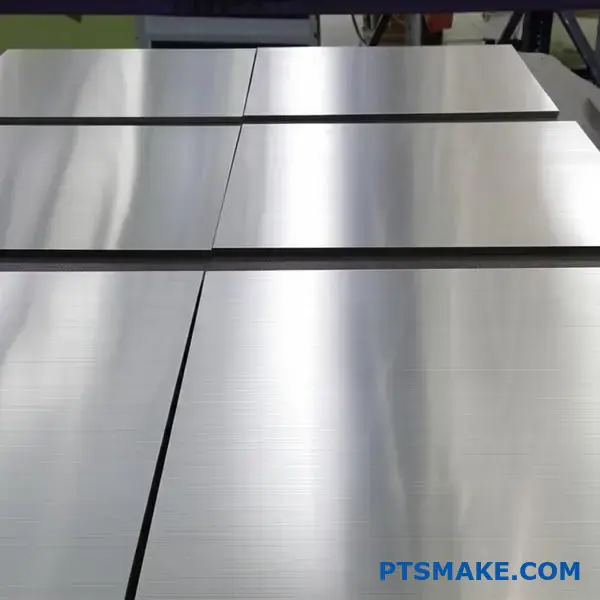
Many suppliers rely only on the skill of individual technicians. This approach is not scalable. It often leads to inconsistencies across a large production run. One operator’s "feel" for the process differs from another’s. This introduces variables that are hard to control.
At PTSMAKE, we focus on engineering the process itself. This minimizes human error and guarantees repeatability.
Our Systematic Finishing Protocol
We built a multi-stage system. It begins with dedicated fixtures. These hold each part in the exact same orientation. This removes positioning errors before the process even starts. We then use pre-programmed paths for our tools. This ensures every surface receives identical treatment.
Our quality checks are just as systematic. We don’t just rely on visual inspection. We use specialized tools to measure the surface finish. After extensive testing with our clients, we found this combination of automation and Metrology14 is critical. It allows us to objectively verify that the finish meets precise specifications.
Quality Verification Checklist
| Checkpoint | Method | Acceptance Criteria |
|---|---|---|
| Visual Uniformity | Comparison to Master Sample | No visible blotches or swirls |
| Line Direction | Visual Inspection | Follows specified grain direction |
| Surface Roughness (Ra) | Profilometer Reading | Within the specified micron range |
This data-driven method makes our brushed stainless steel finish truly repeatable. It’s a core part of the PTSMAKE brushed stainless process.
At PTSMAKE, consistent brushed stainless steel quality is no accident. It is the result of a meticulously engineered process, from custom fixtures to data-driven quality verification. This system ensures scalable and repeatable results for every client.
Unlock Precision Brushed Stainless Steel Results with PTSMAKE
Looking for a reliable partner for high-quality brushed stainless steel finish in precision manufacturing? Contact PTSMAKE now for a fast, tailored quote—experience world-class consistency, engineering support, and on-time delivery from prototype to production. Let’s achieve your project’s exacting standards together.

Discover how this chemical process enhances the corrosion resistance of stainless steel parts. ↩
Learn how surface interaction affects component performance and lifespan. ↩
Learn how this chemical process protects stainless steel from corrosion and contamination. ↩
Learn how directional properties can impact measurement accuracy and component performance. ↩
Understand how this optical property impacts the look and feel of directionally finished metals. ↩
Learn how technical Ra and Rz values are used to precisely measure and control surface texture. ↩
Learn how these microbial communities can impact device sterilization and safety. ↩
Learn how microscopic surface features can impact a material’s real-world performance. ↩
Understand how this directional property impacts the visual appeal and performance of your brushed stainless steel parts. ↩
Learn how this directional property affects light reflection and material performance. ↩
Learn how the welding heat structurally and visually alters the metal around the weld zone. ↩
Understand the microstructural properties that give stainless steel its superior durability and corrosion resistance. ↩
Discover the science behind how this invisible layer protects stainless steel from rust. ↩
Discover how the science of measurement ensures your parts meet exact surface finish requirements. ↩