
Are you tired of dealing with surface finishes that look great initially but quickly deteriorate under real-world conditions? Many manufacturers face the challenge of finding a finish that delivers both premium aesthetics and industrial-grade durability for their hardware components.
Brushed nickel finish combines superior corrosion resistance, scratch tolerance, and professional appearance, making it an ideal choice for OEM hardware, precision CNC parts, and industrial components that require both form and function.
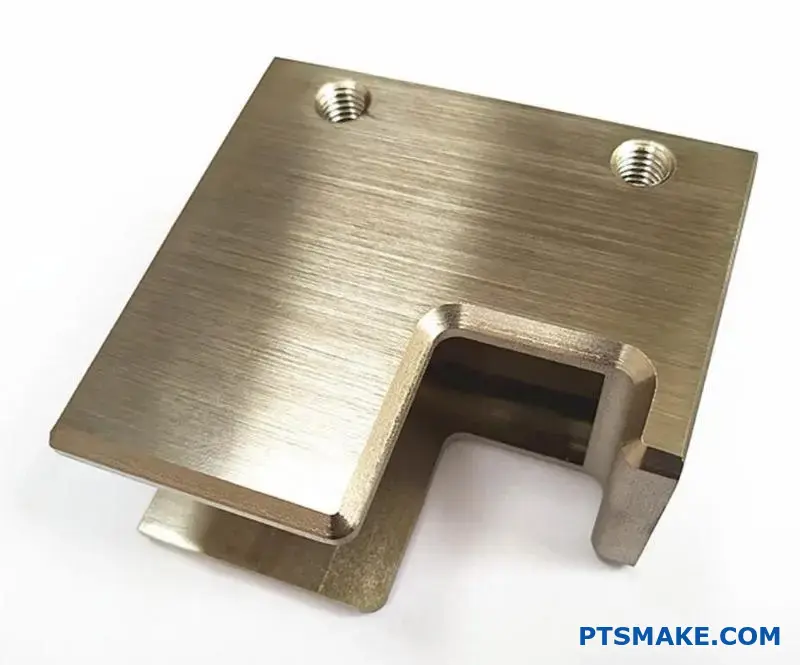
This guide covers everything you need to evaluate brushed nickel for your next project. I’ll walk you through the technical advantages, application methods, and industry-specific considerations that will help you make the right finishing decision for your components.
Why Brushed Nickel Finish Is a Game Changer for OEM Hardware
Choosing the right finish for OEM components is crucial. It directly affects durability, aesthetics, and long-term performance. The brushed nickel finish consistently emerges as a superior option.
It provides a perfect balance of toughness and style. This makes it an ideal choice for high-quality hardware. It’s a truly durable finish for commercial parts.
Key Advantages at a Glance
| Feature | Brushed Nickel Finish | Polished Chrome |
|---|---|---|
| Scratch Resistance | High | Moderate |
| Hides Fingerprints | Excellent | Poor |
| Maintenance Level | Low | High |
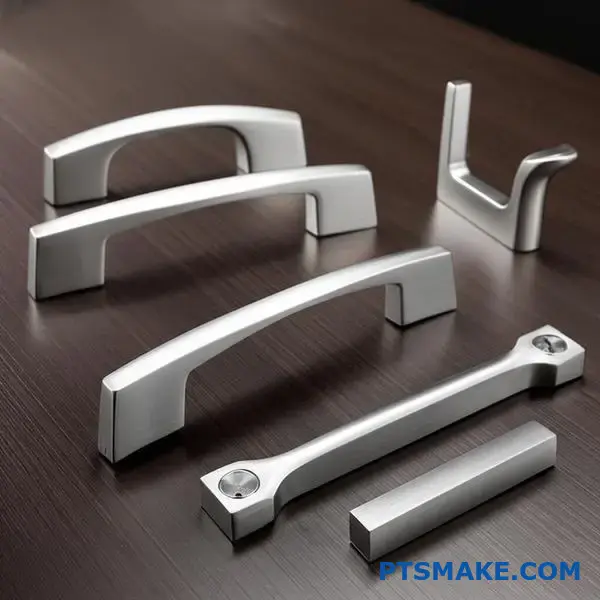
Beyond the Surface: A Technical Breakdown
The subtle, textured appearance of a brushed nickel finish is highly practical. The fine, parallel lines effectively conceal minor scratches, scuffs, and everyday wear. This makes it an excellent choice for high-contact surfaces.
This inherent durability is essential for parts in demanding commercial or industrial settings. It ensures the hardware maintains its look and function over time, which is key for brushed nickel hardware for OEM projects.
Enhanced Corrosion and Wear Resistance
The impressive durability stems from the electroplating1 process. During this stage, a layer of nickel is metallurgically bonded to the substrate. This creates a hard, non-porous protective barrier.
This protective layer is vital for preventing corrosion. It shields the base metal from moisture, humidity, and common corrosive agents. This protection significantly extends the service life of the component.
The Practicality of Its Aesthetic
From a design perspective, the matte surface is a major advantage. It diffuses light rather than reflecting it. This quality makes it exceptionally good at hiding fingerprints, smudges, and water spots. It keeps a clean, premium look with very little maintenance.
| Ideal Application | Key Benefit of Brushed Nickel |
|---|---|
| Medical Equipment | Non-reflective, easy to sanitize |
| Automotive Trim | Resists fingerprints, durable |
| Commercial Fixtures | Low maintenance, withstands wear |
| Electronic Casings | Professional look, protects internals |
The brushed nickel finish offers a powerful mix of benefits. Its superior scratch resistance, anti-corrosion properties, and low-maintenance aesthetic make it an intelligent choice for high-performance OEM hardware that needs to look good and last long.
How Brushed Nickel Coating Enhances Resilience in Harsh Environments
The brushed nickel finish is more than just a stylish choice. It provides a robust protective layer. This is crucial in harsh operational settings.
I’ve seen its effectiveness across various demanding industries. Its performance is consistently reliable. Let’s look at a few examples.
In marine environments, it stands up to saltwater. For aerospace, it handles temperature shifts. Automotive parts resist chemicals, and medical tools endure sterilization. This versatility is key.
Here is a quick overview of its resistance properties:
| Environment | Key Challenge | Brushed Nickel’s Role |
|---|---|---|
| Marine | Salt spray, humidity | Excellent corrosion barrier |
| Aerospace | Temp fluctuations, friction | Stable, wear-resistant surface |
| Automotive | Road salt, chemicals | Prevents chemical degradation |
| Medical | Sterilization, biocides | Inert, easy-to-clean surface |
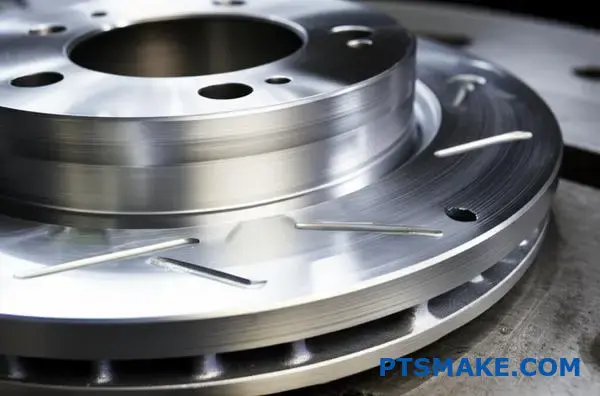
A part’s environment dictates its required durability. The brushed nickel finish consistently proves its worth. Its performance stems from a multi-layered plating process.
Marine and Aerospace Applications
In marine settings, constant exposure to saltwater is a major threat. Brushed nickel provides excellent corrosion resistance against chlorides.
This prevents premature failure of critical components. It also helps avoid issues like galvanic corrosion2 when different metals are used together.
For aerospace, the challenges are different. Parts face extreme temperature changes and atmospheric pressure variations. The environmental durability brushed nickel offers is critical here. The finish remains stable, preventing cracks or peeling. It ensures components function reliably under stress.
Automotive and Medical Sector Durability
The automotive industry relies on materials that can withstand road salt and harsh cleaning chemicals. A brushed nickel finish protects underlying metals from these corrosive agents.
At PTSMAKE, we often suggest it for components that need both a clean look and long-term protection.
In the medical field, hygiene is paramount. Equipment undergoes repeated, aggressive sterilization cycles. Brushed nickel’s non-porous and chemically inert surface is ideal. It resists degradation from autoclaving and harsh disinfectants.
| Sector | Primary Challenge | How Brushed Nickel Helps |
|---|---|---|
| Automotive | Road Salt & Grime | Acts as a barrier against corrosive agents. |
| Medical | Frequent Sterilization | Remains stable and intact after many cycles. |
Brushed nickel coating delivers exceptional protection across diverse, harsh environments. Its resistance to corrosion, chemicals, and temperature extremes makes it a functional, reliable choice for critical applications in marine, aerospace, automotive, and medical industries.
Choosing Brushed Nickel for Tight Tolerance CNC Machined Parts
When working with tight tolerance CNC machined parts, every micron counts. Applying a finish isn’t just an aesthetic choice; it’s a manufacturing step.
The brushed nickel finish adds a physical layer to the part’s surface. This added thickness must be carefully planned. Overlooking this detail can cause parts to fail inspection.
Understanding Finish Thickness
We must account for the material added during plating. A typical brushed nickel finish CNC machining process adds a specific amount of thickness.
| Finish Type | Typical Added Thickness (Microns) |
|---|---|
| Brushed Nickel | 5 – 25 µm |
| Anodizing (Type II) | 2 – 25 µm |
| Powder Coating | 25 – 125 µm |
This table shows why planning is essential when considering tight tolerance finishing options.
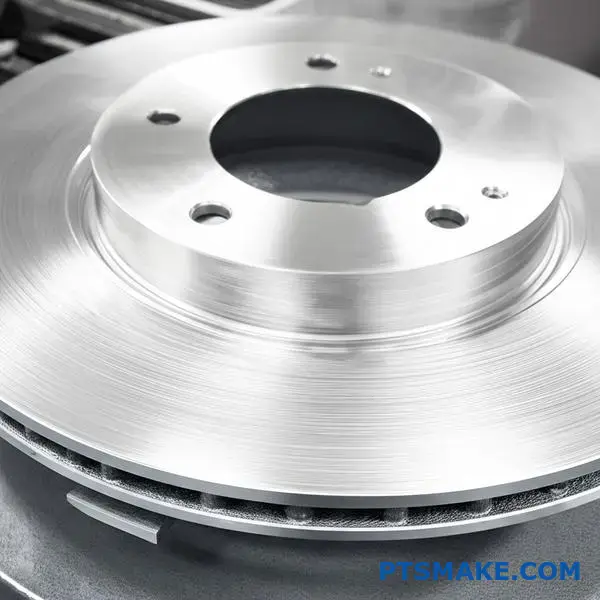
How Brushed Nickel Interacts with Tolerances
The key challenge is achieving a perfectly uniform coating. This is especially true for parts with complex geometries.
Plating can build up on sharp external corners. Conversely, it might be thinner in deep holes or recessed areas. This variation can easily push a part out of its specified tolerance band.
Pre-Machining Compensation
At PTSMAKE, our solution is proactive. We engineer the compensation directly into the CNC machining program. We machine the part slightly undersized to account for the plating thickness.
This requires deep collaboration between our machining and finishing teams. For parts requiring extreme precision, another viable method is electroless nickel plating3. This process provides a more consistent coating thickness across the entire surface, reducing variability.
Key Factors for Tolerance Control
We always discuss these critical factors with our clients before production. Clear communication prevents costly errors down the line.
| Challenge | Solution |
|---|---|
| Non-uniform Plating | Pre-machining compensation |
| Corner Buildup | Adjusting plating parameters & part orientation |
| Internal Feature Gaps | Advanced masking techniques |
| Tolerance Stacking | Integrated design and finish planning |
Properly managing the brushed nickel finish ensures both functional performance and the desired aesthetic are achieved without compromising precision.
Applying a brushed nickel finish adds material that affects final dimensions. To maintain tight tolerances, this added thickness must be calculated and compensated for during the initial CNC machining stage. Proactive planning is essential for success.
What Product Designers Need to Know About Brushed Nickel Aesthetics
The brushed nickel finish offers a unique aesthetic. Its character comes from three key elements. These are texture, tone, and uniformity.
Unlike polished nickel, its surface has fine lines. This texture creates a soft, matte look.
It effectively hides fingerprints and water spots. This makes it ideal for high-touch products. The tone is warmer than chrome but cooler than gold. It provides a versatile, contemporary feel.
Texture and Tone: The Core Appeal
A quality brushed nickel product surface finish feels as good as it looks. The fine abrasions give it a distinct tactile quality. This is something designers can leverage for user experience.
Appearance: Brushed vs Polished Nickel
| Feature | Brushed Nickel | Polished Nickel |
|---|---|---|
| Reflectivity | Low, diffused sheen | High, mirror-like |
| Visibility of Prints | Low | High |
| Visual Tone | Soft, warm silver | Bright, cool silver |
| Style | Modern, understated | Classic, bold |
Achieving the right tone is critical. It should be consistent across every component of the final product.
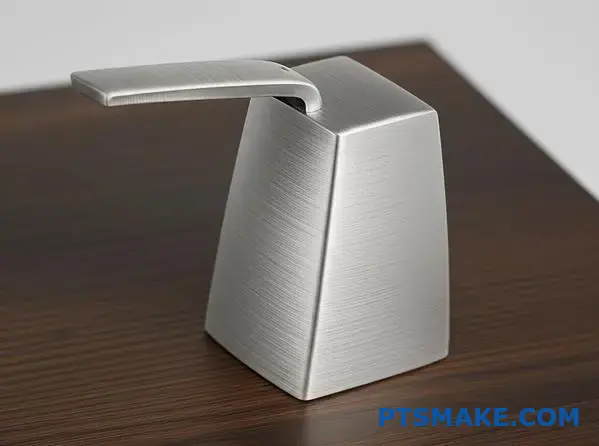
When specifying a brushed nickel finish, designers must look beyond the surface color. The manufacturing process itself defines the final aesthetic. The direction, depth, and consistency of the brush lines are paramount.
The Nuances of Finish Uniformity
Achieving a uniform appearance is the biggest challenge. Inconsistent brushing can create a patchy or uneven look. This immediately cheapens a product’s perceived value.
The brush strokes create a specific light-scattering effect. This gives the material its signature soft glow. This effect is a form of anisotropic reflectance4. The light reflects differently depending on the viewing angle and the direction of the grain.
At PTSMAKE, we control this process tightly. We use automated systems to ensure every part matches the master sample perfectly.
Key Factors for a Consistent Finish
We’ve found that three main factors influence the final look. Controlling them is key to a successful brushed nickel product surface finish.
| Factor | Importance | Control Method |
|---|---|---|
| Abrasive Material | High | Strict sourcing & testing |
| Brushing Pressure | High | Calibrated machinery |
| Substrate Preparation | Medium | Multi-stage cleaning |
Slight variations in any of these can alter the final appearance. For high-end consumer electronics or fixtures, this level of detail is non-negotiable. It’s what separates a premium product from an average one.
A successful brushed nickel finish depends on controlling its texture, tone, and uniformity. The subtle, directional sheen hides imperfections well but requires precise manufacturing to ensure consistency across all product components for a premium feel.
Brushed Nickel vs Powder Coating: Which Is Better for Your Industrial Parts?
Choosing the right surface treatment is critical. It impacts both aesthetics and performance. The debate of brushed nickel vs powder coating comes up often in my work.
Each has clear advantages for industrial parts.
Application and Appearance
A brushed nickel finish is an electroplating process. It deposits a layer of nickel onto the part.
Powder coating is a dry finishing process. It uses electrostatically charged powder, which is then cured with heat.
Here’s a quick comparison of their looks.
| Feature | Brushed Nickel Finish | Powder Coating |
|---|---|---|
| Look | Metallic, textured sheen | Smooth, uniform color |
| Feel | Slightly textured | Varies (smooth to rough) |
| Colors | Limited to metal tones | Wide range of colors |
This initial choice often depends on the product’s design goals.
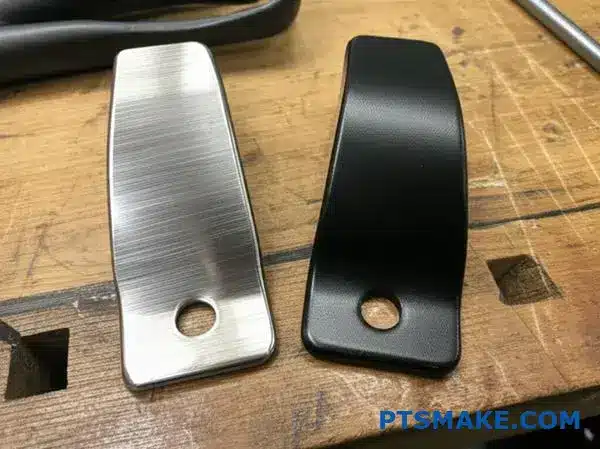
Now, let’s go beyond aesthetics. Performance is what truly matters for industrial components, especially in demanding environments. This is where we look at a surface treatment for rugged use.
Durability and Resistance
Powder coating creates a thick, plastic-like layer. This makes it highly resistant to chipping, scratching, and impacts. It’s a very practical choice for parts that get handled roughly.
The brushed nickel finish offers a harder surface. The process of electrolytic deposition5 creates a very strong bond with the base metal. This results in excellent wear and abrasion resistance.
Corrosion and Environmental Factors
When it comes to corrosion, both are effective. However, from our testing, brushed nickel generally provides superior protection against moisture and many chemicals.
Powder coating forms a solid barrier. But if that barrier is breached by a deep scratch, the underlying metal can be exposed. This can allow corrosion to creep under the coating.
Head-to-Head Performance
| Metric | Brushed Nickel | Powder Coating |
|---|---|---|
| Hardness (Mohs) | ~6 | 2-3 |
| Impact Resistance | Good | Excellent |
| Chemical Resistance | Excellent | Good |
| UV Resistance | Excellent | Varies by powder |
Ultimately, the best finish depends on the specific stresses your parts will endure.
Powder coating excels in impact resistance and offers many color choices. A brushed nickel finish provides superior hardness, chemical resistance, and a premium metallic look. Your decision hinges on the specific performance needs of your industrial part.
The Impact of Brushed Nickel Surface Finish on Functional Fit
A brushed nickel finish provides more than just aesthetics. It directly impacts the functional fit of components. This finish adds a physical layer to the part’s surface.
This added material changes the final dimensions. For tight-tolerance assemblies, this is a critical factor. It determines the final part fit after finishing.
How Plating Affects Dimensions
The nickel layer, though thin, is significant. It must be accounted for in the initial design phase to ensure proper brushed nickel dimensional accuracy.
The Added Layer
We must subtract the plating thickness from the part’s dimensions before manufacturing.
Here’s a look at typical plating thicknesses:
| Plating Type | Typical Thickness (microns) | Typical Thickness (inches) |
|---|---|---|
| Decorative Nickel | 5 – 15 µm | 0.0002" – 0.0006" |
| Engineering Nickel | 25 – 125 µm | 0.0010" – 0.0050" |
This small change can make or break an assembly.
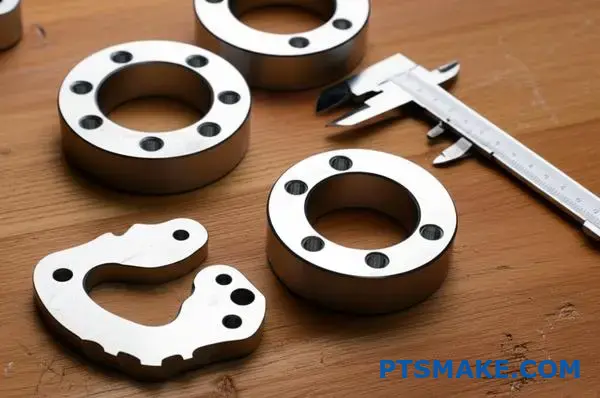
The impact on dimensions is not always straightforward. The plating thickness is rarely perfectly uniform across the entire surface of a part.
Beyond Simple Thickness: The Nuances of Fit
Understanding these variations is key to achieving a perfect functional fit. At PTSMAKE, we manage these variables during the pre-production engineering stage.
Edge Buildup and Its Consequences
Electrochemical plating processes often cause more material to deposit on sharp corners and edges. This phenomenon is known as edge buildup.
This can prevent parts from seating correctly. It can also create stress concentrations, potentially leading to premature failure in dynamic applications.
Thermal Expansion Mismatch
Another critical factor is the difference in the Coefficient of Thermal Expansion6 between the base material and the nickel layer.
When a part heats up or cools down, the substrate and the coating expand or contract at different rates. This can introduce internal stress, which may affect the part’s stability over time.
This table compares common material values:
| Material | CTE (µm/m·°C) |
|---|---|
| Nickel | 13.4 |
| Aluminum (6061) | 23.6 |
| Steel (Carbon) | 12.0 |
| Stainless Steel (304) | 17.2 |
The mismatch with aluminum is particularly significant. We consider these properties to prevent issues like delamination or distortion in demanding environments.
Brushed nickel finish affects functional fit by adding material. This alters dimensional accuracy and tolerances. Factors like non-uniform plating and thermal expansion must be managed in the design phase to ensure reliable part mating after finishing.
When to Use Brushed Nickel Finish in Medical Device Components
In the medical field, every detail matters. The finish on a component is not just for looks. It’s about safety and function.
Regulatory and Safety Standards
FDA compliance is non-negotiable. A brushed nickel finish must be applied correctly. This ensures it is safe for its intended medical use. The process and base material are key.
We must consider how devices are cleaned. The finish has to withstand repeated sterilization.
| Sterilization Method | Compatibility with Brushed Nickel | Key Considerations |
|---|---|---|
| Autoclave (Steam) | Generally Good | May cause slight discoloration over many cycles |
| Gamma Irradiation | Excellent | No significant impact on the finish integrity |
| Ethylene Oxide (ETO) | Excellent | No adverse effects on the surface |
This is a critical part of the finishing standards for healthcare parts.
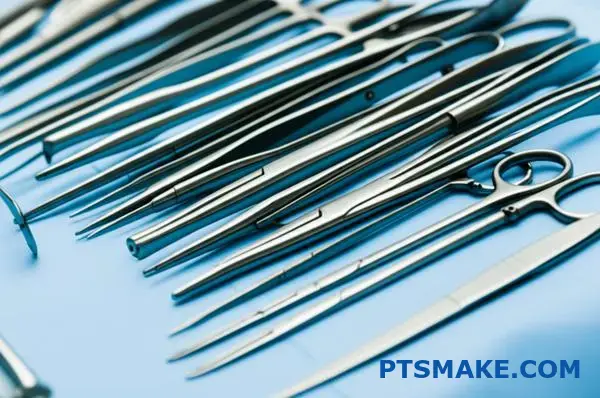
Ensuring Biocompatibility and Sterilizability
The term ‘brushed nickel in medical devices’ requires careful evaluation. The finish is often used for external housings, knobs, and connectors. These parts usually have minimal patient contact. Direct, long-term tissue contact is not a typical application.
The primary concern is ensuring the nickel plating is stable. It must not leach into the patient’s system. This is a core aspect of material biocompatibility7. Proper plating processes are essential to create a non-reactive and durable barrier.
Durability Under Sterilization
Medical components undergo harsh sterilization cycles. Repeated exposure to high heat, steam, or radiation can degrade poor-quality finishes. At PTSMAKE, we focus on process control. We ensure the finish adheres perfectly and maintains its integrity through many cycles.
Non-Reactivity: A Critical Factor
A key requirement is that the surface must be non-reactive. It should not corrode or react when exposed to bodily fluids or harsh cleaning agents. The quality of the brushed nickel finish is crucial.
| Factor | Brushed Nickel Performance | Consideration |
|---|---|---|
| Chemical Resistance | Good | Depends on the specific chemicals and concentration |
| Corrosion Resistance | Very Good | The plating process must eliminate any porosity |
| Patient Contact | Limited | Best for external or non-contact components |
This ensures the device remains safe and functional throughout its life.
Choosing the right finish for medical parts is crucial for FDA compliance and patient safety. Brushed nickel’s performance depends on its application, its ability to withstand sterilization, and its non-reactive properties. Proper process control is the key to success.
Brushed Nickel on Prototypes vs Production: What’s the Difference?
When applying a brushed nickel finish, the goal for a prototype is very different from production. It’s a classic case of speed versus scalability.
For a prototype, we need a finish that looks right, and we need it fast. The focus is on visual validation and quick iteration.
Cost and speed are the key drivers. The exact process doesn’t have to be perfectly repeatable for a one-off part.
Here’s a quick comparison:
| Aspect | Prototyping Finish | Production Finish |
|---|---|---|
| Primary Goal | Visual Approval | Consistency & Durability |
| Key Driver | Speed & Low Cost | Repeatability & Quality |
| Process | Often manual, flexible | Automated, standardized |
A brushed nickel prototype finish serves its purpose perfectly. It confirms the aesthetic design choice before committing to larger investments.
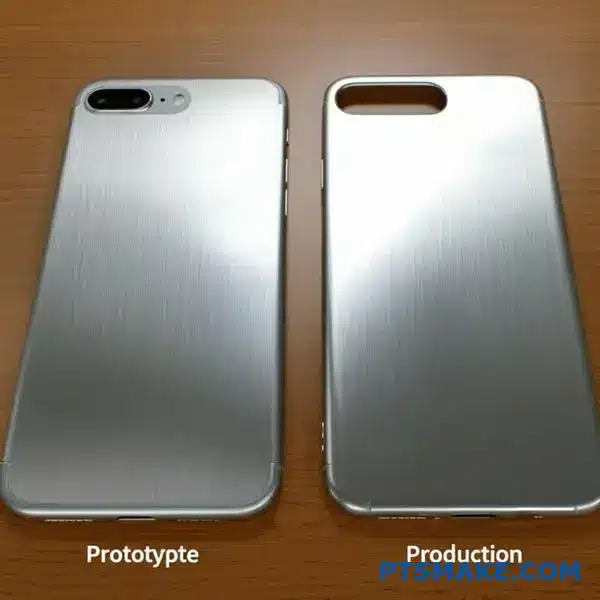
The transition from a prototype finish to a production-scale process requires a significant shift in mindset and methodology. It’s not just about doing the same thing more times; it’s about engineering a completely new, robust process.
The Prototyping Mindset
During prototyping, we often use manual techniques. An operator might use a handheld abrasive pad to achieve the desired look. This approach is fast, flexible, and perfect for a single part. It allows for quick adjustments based on feedback. The goal is simply to create a representative surface.
Scaling for Mass Production
For mass production, manual methods are not viable. They introduce too much variation. Instead, we establish strict mass production brushed finish guidelines. This involves automated or semi-automated systems with controlled parameters like tool speed, pressure, and abrasive grit.
We rely on tools from Surface metrology8 to quantify the finish, ensuring every part meets the exact specification. This data-driven approach removes guesswork and guarantees consistency across thousands of units. At PTSMAKE, we develop these guidelines with our clients to ensure the final product matches their approved prototype.
The table below shows the core differences in approach:
| Process Factor | Prototype | Mass Production |
|---|---|---|
| Method | Manual or simple fixture | Automated lines, CNC |
| Tooling | General-purpose abrasives | Custom tooling & fixtures |
| Quality Control | Visual inspection | Instrumental measurement |
| Cost Focus | Per-piece setup cost | Cost-per-part at volume |
This structured approach is crucial for maintaining brand quality and product performance in the final assembly.
In short, prototyping prioritizes speed and visual representation for a brushed nickel finish. Production demands a shift to controlled, repeatable, and scalable processes to ensure every single part is identical and meets strict quality standards.
Advanced Applications of Brushed Nickel in Robotics Hardware
Robotic enclosures do more than just protect internal components. They are a key part of the product’s identity. The finish must be both durable and visually appealing.
This is where the brushed nickel finish truly shines. It provides a sophisticated, modern look that signals quality and high performance.
Function Meets Form
We find it’s the perfect choice for robotics brushed nickel components. It resists fingerprints and hides minor scratches well. This is critical for robots in high-traffic environments.
Achieving a Premium Feel
The uniform, textured appearance elevates the hardware’s perceived value. It moves robotics from industrial tools to high-end automation hardware.
| Benefit Category | Specific Advantage |
|---|---|
| Aesthetic | High-end, clean appearance |
| Functional | Hides smudges and scratches |
| Durability | Corrosion and wear resistance |
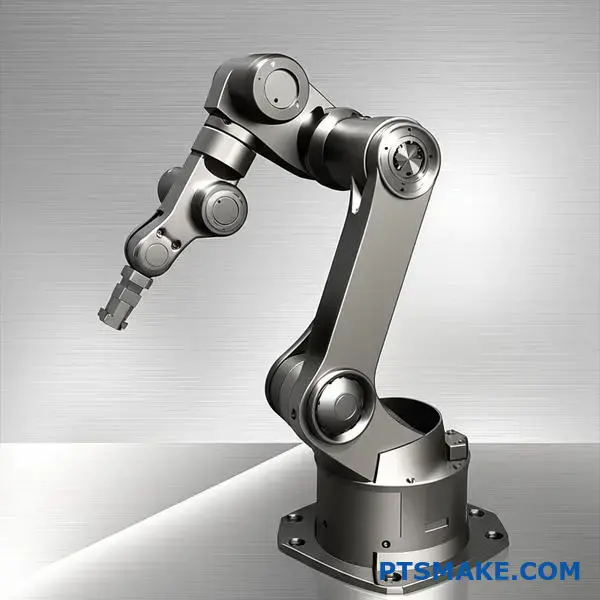
A high-end appearance cannot compromise function. The challenge is applying a consistent brushed nickel finish, especially on complex geometries or large enclosure parts. Any inconsistency can ruin the look.
This requires strict control over the entire process. From the raw material to the final plating bath, every step matters.
Key Application Challenges
Achieving a perfect finish on automation hardware is not simple. Warping from heat during plating or uneven texture can be major issues. We focus on these areas meticulously.
Material Preparation
The surface must be perfectly clean and prepared. Any imperfection on the base material will be magnified by the brushed nickel finish. This initial step is non-negotiable for quality.
Plating Process Control
Achieving a flawless finish depends heavily on excellent Substrate adhesion9 between the nickel and the base material. After years of refinement, we’ve dialed in our bath chemistry and electrical parameters. This ensures consistent thickness and texture across every single part, no matter the size or shape. This is crucial for robotics brushed nickel components.
| Challenge | Our Solution at PTSMAKE |
|---|---|
| Inconsistent Texture | Strict control of brushing technique |
| Poor Adhesion | Advanced multi-stage surface cleaning |
| Color Variation | Precise chemical bath monitoring |
Brushed nickel provides an ideal blend of robust functionality and premium aesthetics for robotic shells. Achieving this balance requires expert process control, from initial surface preparation to the final finishing touches, ensuring a high-quality outcome for demanding automation hardware.
Is Brushed Nickel Right for High-Friction or Moving Parts?
A brushed nickel finish offers a superb look. But is it tough enough for moving parts? This is a critical question for engineers.
While it is durable for static items, its performance changes under friction. The brushed nickel finish is primarily a decorative layer. It is not engineered for constant mechanical wear.
This can lead to the finish degrading quickly. The finish wear properties are simply not suitable for dynamic, high-contact applications. Let’s look at why and explore better options.
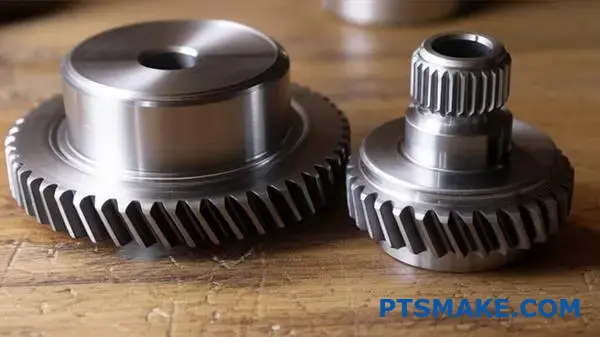
When we analyze brushed nickel friction, the main problem is the material’s relative softness. This makes the surface susceptible to scratches and wear. In more severe cases, it can lead to galling. This is where two sliding metal surfaces adhere and then tear apart, causing significant damage.
For any component involving motion, we must consider its tribological10 characteristics. You need a finish designed specifically for wear resistance. We often steer clients at PTSMAKE towards more functional coatings for these demanding roles. Options like hard chrome or electroless nickel provide much better hardness and lubricity. For the most demanding jobs, PVD coatings are a top-tier choice.
Here is a simple breakdown from our experience:
| Finishing Option | Hardness (Vickers) | Wear Resistance | Primary Use |
|---|---|---|---|
| Brushed Nickel | Low-Moderate | Low | Decorative, Static |
| Hard Chrome | High | Excellent | Sliding Components |
| Electroless Nickel | High | Very Good | Uniform Coverage, Wear |
| PVD Coatings | Very High | Exceptional | Extreme Wear, Low Friction |
Selecting the correct finish is not just about looks. It’s about ensuring the part functions reliably over its entire lifespan.
While a brushed nickel finish is excellent for static parts, it falls short in high-friction roles. For moving components, superior alternatives like hard chrome or electroless nickel are necessary to ensure durability and prevent premature failure.
How to Balance Form and Function with a Brushed Nickel Exterior
Industrial designers often face a challenge. How do you make a product look great without sacrificing performance? This is where functional aesthetics come into play. A brushed nickel finish is a perfect example.
It provides a sophisticated, modern look. But its value goes beyond appearance. When applied correctly, this industrial exterior finish enhances durability and corrosion resistance. It ensures the final product meets all technical specifications. It’s about achieving both beauty and strength.
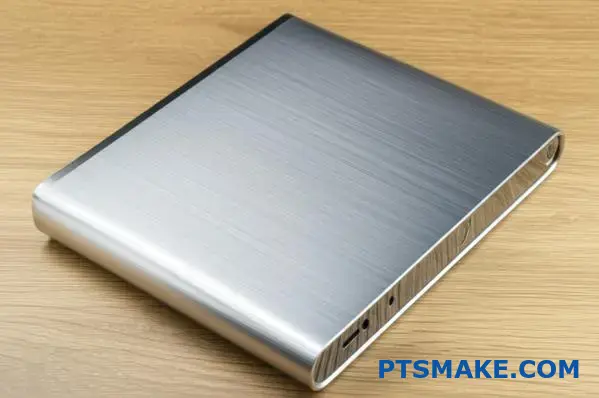
The key to success is in the details. Achieving a perfect brushed nickel finish isn’t just about the final coating. It starts much earlier with the selection of the base material. Different metals react differently to the finishing process. This impacts both the final look and its functional properties.
For instance, the application technique is critical. An improperly applied finish can lead to peeling or inconsistent protection. This compromises the product’s longevity. It’s a classic case where appearance would compromise specs. The substrate preparation11 must be flawless to ensure proper adhesion and a uniform look.
We always consider the product’s end-use environment. A part for an indoor medical device has different needs than an exterior automotive component. We adjust the process to meet these specific demands. This ensures the functional aesthetics of brushed nickel truly serve their purpose.
| Factor | Impact on Form (Aesthetics) | Impact on Function (Specs) |
|---|---|---|
| Base Material | Affects final hue and texture | Determines corrosion resistance, strength |
| Surface Prep | Ensures a smooth, even appearance | Critical for adhesion and durability |
| Plating Thickness | Influences depth and richness of color | Impacts wear resistance and lifespan |
| Sealing Coat | Provides a consistent matte or satin look | Adds a final layer of protection |
This careful planning ensures the brushed nickel industrial exterior finish is more than just a pretty surface. It becomes an integral part of the component’s performance.
Achieving a superior brushed nickel finish involves more than just aesthetics. It demands a detailed approach, from base material selection to the final sealing. This ensures the industrial exterior finish enhances both form and function without compromising performance specifications.
Common Questions on Brushed Nickel Finishes
Does a brushed nickel finish affect a part’s dimensional tolerances?
Yes, any coating adds thickness. For high-precision parts, we account for the plating thickness, typically a few micrometers, in the initial CNC machining phase. This ensures the final dimensions are within spec.
How does this industrial exterior finish hold up in harsh environments?
Very well, if processed correctly. A properly applied brushed nickel finish with a suitable topcoat provides excellent resistance to corrosion and wear, making it suitable for many industrial and outdoor applications.
Can you achieve different textures with a brushed nickel finish?
Absolutely. The "brushed" effect can be adjusted from fine to coarse by modifying the surface preparation technique. This allows for a range of aesthetic effects to match specific design requirements.
Achieve Your Design Intent with PTSMAKE
Balancing aesthetics and engineering specs can be complex. At PTSMAKE, we specialize in precision manufacturing and finishing. We work with you to select and apply the ideal finish for your components, ensuring your design vision is realized without compromise. Let’s discuss your next project.
Ultimately, the balance between form and function is not a compromise but a goal. A brushed nickel finish is an excellent tool for achieving it. By focusing on the entire process, from material science to application technique, we can create products that are both beautiful and built to last.
Behind the Scenes: How Brushed Nickel Is Applied on CNC Parts
Ever wonder how that classic brushed nickel finish gets onto a CNC part? It’s not one simple action. It’s a combination of precise chemical and mechanical steps. The process ensures both beauty and durability.
Understanding how brushed nickel is applied is key. It helps in selecting the right CNC part surface finishing for your project. The most common method involves two main stages.
Core Application Processes
First, a layer of nickel is applied, usually through electroplating. Then, a mechanical brushing technique creates the final textured look. Let’s look at the main methods.
| Method | Primary Use | Key Feature |
|---|---|---|
| Electroplating | Base nickel layer | Chemical deposition |
| Mechanical Brushing | Creates texture | Physical abrasion |
| Vapor Deposition | High-end finish | Atomic bonding |
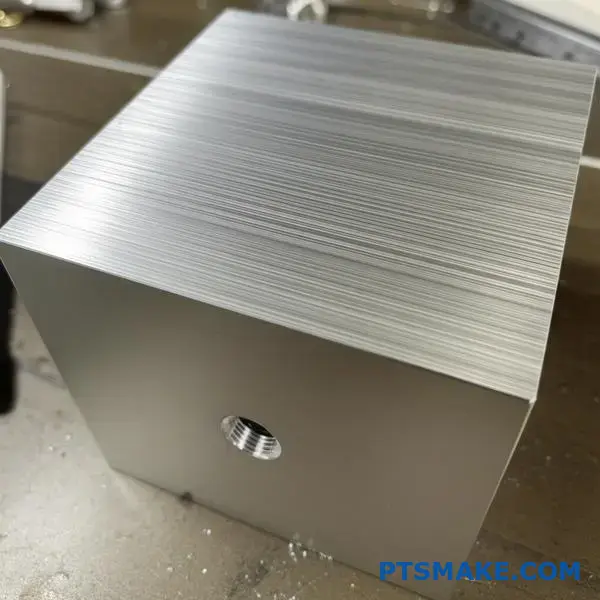
The journey to a perfect brushed nickel finish is meticulous. At PTSMAKE, we manage this process carefully to ensure every part meets strict quality standards. It starts long before the brushing itself.
The Electroplating Foundation
The most common path begins with electroplating. This process deposits a solid, uniform layer of nickel onto the CNC part’s surface. It provides the corrosion resistance and base color we need.
Part Preparation
Before plating, the part must be perfectly clean. Any oils, dirt, or oxides are removed through a multi-step cleaning and degreasing process. A pristine surface is non-negotiable for proper adhesion.
The Plating Bath
The clean part is then submerged in an electrolyte solution containing dissolved nickel salts. An electric current is passed through this bath. This triggers the cathodic deposition12, where nickel ions from the solution plate onto the part.
Achieving the "Brushed" Effect
After plating, the part has a smooth, shiny nickel surface. To get the brushed look, we use mechanical abrasion. Abrasive belts or special brushes are moved in a single direction across the surface. This creates the fine, parallel lines that define the brushed nickel finish.
| Feature | Electroplating + Brushing | PVD (Vapor Deposition) |
|---|---|---|
| Cost | More cost-effective | Higher initial cost |
| Durability | Good | Excellent |
| Appearance | Classic, warm tone | Can offer various tones |
| Complexity | Moderate | High |
The process begins with electroplating for a nickel layer, followed by mechanical brushing for texture. For applications demanding extreme durability, Physical Vapor Deposition (PVD) offers a high-performance alternative, though at a higher cost. The choice depends entirely on the part’s end-use.
Unlock Brushed Nickel Excellence with PTSMAKE Solutions
Ready to boost your industrial products with the durability, aesthetics, and precision of a brushed nickel finish? Contact PTSMAKE now for a fast, tailored quote—our expert team delivers flawless CNC machining and finishing from prototype to mass production. Send your inquiry and upgrade your hardware today!

Explore how this electrochemical process enhances the durability and corrosion resistance of metal hardware. ↩
Understand this electrochemical process and how to prevent it in your designs. ↩
Learn how this plating method achieves superior coating uniformity, vital for parts with complex geometries. ↩
Understand how this optical property creates the signature look of brushed metal finishes. ↩
Understand the science of this plating method and how it forms a strong metallic bond. ↩
Learn how material expansion with temperature changes can impact your design’s long-term performance and stability. ↩
Learn more about the material properties required for safe use within the human body. ↩
Learn how precise surface measurement ensures your product’s quality and consistency. ↩
Understand how the bond between a coating and base metal affects component durability and performance. ↩
Click to understand how surface interactions affect friction, wear, and overall component life. ↩
Learn how proper surface treatment is critical for the finish’s adhesion, durability, and overall quality. ↩
Explore the science behind how metal ions are deposited onto a surface to create a thin, protective film. ↩