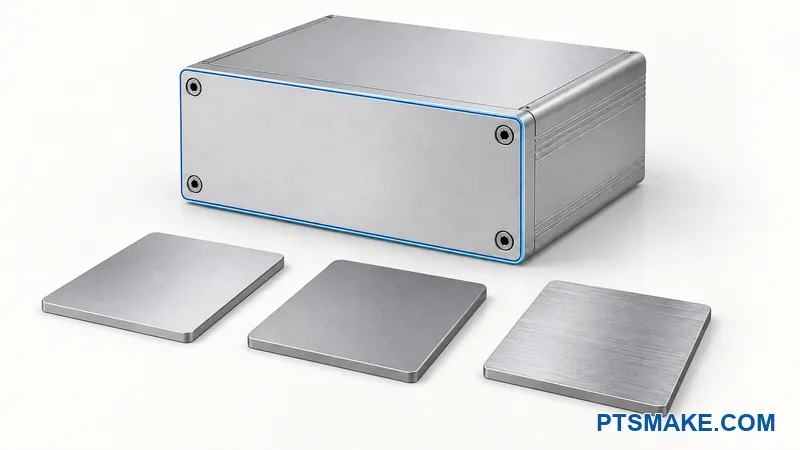

Many engineers face a critical decision when specifying surface treatments for precision parts: chrome or nickel plating? The wrong choice can lead to premature part failure, costly rework, and production delays that impact your entire project timeline.
Chrome plating offers superior hardness and wear resistance with a mirror-bright finish, while nickel plating provides better corrosion protection and easier application across various substrates. The choice depends on your specific application requirements, environmental conditions, and cost constraints.
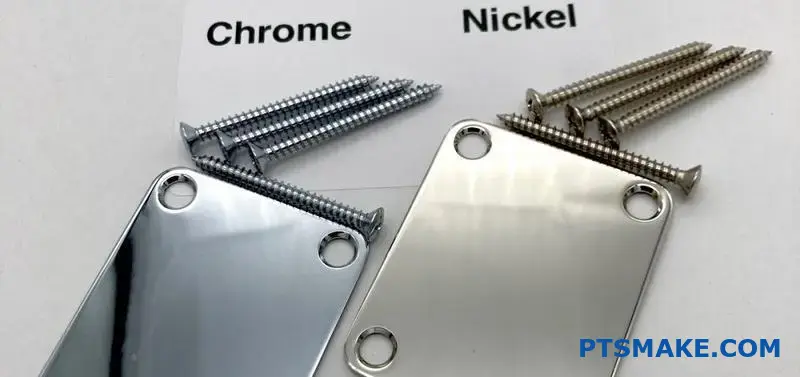
I’ve worked with both plating options extensively at PTSMAKE, helping clients optimize their surface treatment choices for everything from aerospace components to consumer electronics. This guide breaks down the key differences between chrome and nickel plating, covering corrosion resistance, cost factors, aesthetic properties, and practical application considerations that will help you make the right decision for your next project.
Chrome Vs Nickel Plating, Which Plating Offers Superior Corrosion Resistance?
When choosing a finish, the battle often comes down to chrome vs nickel plating. Which one offers better protection? The answer isn’t simple. It depends entirely on the part’s final application and environment.
Understanding the Basics
Chrome offers a hard, durable surface with a classic bright finish. Nickel provides excellent protection and comes in various sheens. Both are great, but for different reasons.
Key Differences at a Glance
A quick comparison shows their distinct advantages.
| Feature | Chrome Plating | Nickel Plating |
|---|---|---|
| Hardness | Very High | Moderate to High |
| Appearance | Bright, Blue-Tinged | Varies (Bright to Dull) |
| Primary Goal | Wear & Corrosion | Corrosion Resistance |
This choice is crucial for long-term product performance.
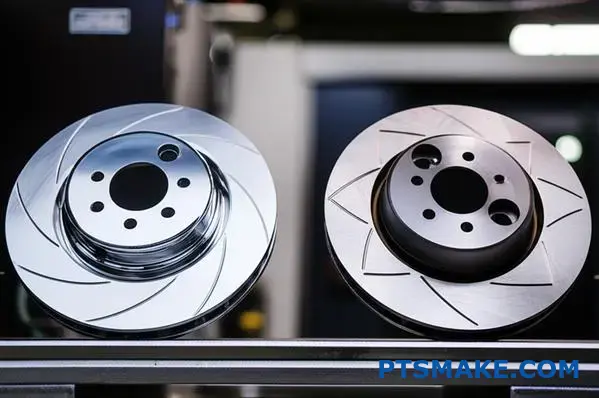
To truly understand chrome vs nickel plating, we need to look at performance in specific conditions. The environment plays a huge role in determining which coating will last longer.
Performance in Harsh Environments
Marine and industrial settings are brutal on metal parts. Salt spray, chemicals, and constant moisture accelerate corrosion. Here, the plating system matters more than just the final layer.
Often, a nickel underlayer is used beneath the chrome. This combination leverages nickel’s excellent adhesion and corrosion protection. The chrome top layer adds hardness and a final barrier.
In our experience at PTSMAKE, this multi-layer approach provides superior chrome durability.
Standardized Testing Results
Industry standards, like ASTM B117 salt spray testing, give us objective data. These tests simulate accelerated corrosion in a controlled environment.
Results consistently show that a proper nickel-chrome system outperforms a single layer. The thickness and type of nickel plating are critical factors. For instance, duplex nickel systems offer much better resistance to pitting than a single bright nickel layer. This is because layering different types of nickel can stop corrosion from reaching the base metal, preventing issues like galvanic corrosion1 between layers.
| Environment | Recommended Plating System | Rationale |
|---|---|---|
| Marine (High Salt) | Duplex Nickel + Chrome | Superior pitting resistance |
| Industrial (Chemicals) | Electroless Nickel | Uniform thickness, high purity |
| Consumer (Indoor) | Bright Nickel or Chrome | Aesthetics and moderate protection |
This data helps us guide clients to the most cost-effective and reliable solution.
Choosing between chrome and nickel plating for corrosion resistance depends on the environment. While both are effective, multi-layer systems, such as a nickel base with a chrome topcoat, often provide the best durability in harsh marine or industrial applications.
Cost Comparison Secrets: Chrome Vs Nickel Plating
When clients ask, "Is chrome plating expensive?" the answer isn’t simple. The initial price tag is just the start of the story.
The Upfront Investment
To make a true plating cost comparison, we must look at several key factors. Both processes have unique demands that influence the initial quote.
Material and Process Complexity
Chrome plating generally involves more expensive materials. The process itself is also more complex and requires very tight control.
| Cost Factor | Chrome Plating | Nickel Plating |
|---|---|---|
| Material Cost | Higher | Lower |
| Labor Intensity | Higher | Moderate |
| Rework Rate | Potentially Higher | Generally Lower |
This table shows a quick overview. The complexity of chrome plating often leads to higher labor costs and specialized equipment needs.
Beyond the Initial Quote: Lifecycle Costs
A lower upfront cost doesn’t always mean better long-term value. I always advise clients to consider the total cost of ownership over the part’s entire lifecycle. This is where the chrome vs nickel plating debate gets interesting.
Durability and Maintenance
Chrome is exceptionally hard and corrosion-resistant. This superior durability can mean fewer replacements. It also reduces long-term maintenance costs, which is a crucial factor for many industrial applications. Nickel is softer and might require more care over time.
The Hidden Cost of Rework
Process complexity directly impacts rework rates. Chrome plating is less forgiving than nickel. Any errors often require the part to be stripped and re-plated, adding significant cost and time. Nickel plating, particularly methods like electroless deposition2, can provide more uniform coverage. This consistency often results in a lower rework rate from the start.
At PTSMAKE, we help clients analyze these variables. We compare not just the initial quote, but also the potential long-term expenses.
| Lifecycle Factor | Chrome Plating | Nickel Plating |
|---|---|---|
| Durability | Very High | High |
| Maintenance Need | Low | Moderate |
| Replacement Freq. | Lower | Potentially Higher |
| Rework Risk | Higher | Lower |
Choosing the right finish means balancing these initial and long-term financial factors carefully.
The initial nickel plating cost is often lower. However, chrome’s superior durability can lead to reduced lifecycle expenses. A thorough plating cost comparison must weigh both the upfront investment and the long-term performance to determine the true value.
Chrome Vs. Nickel: A Head-to-Head Comparison
Choosing between chrome and nickel is a frequent decision in decorative plating. The differences are subtle but significant. They primarily come down to color and reflectivity.
Chrome offers a very bright, cool finish. It has a distinct, slightly blueish tint. This creates a modern, sharp appearance.
Nickel, on the other hand, presents a warmer tone. It can have a yellowish or silvery hue, giving it a classic, softer look. Your final aesthetic goal dictates the best choice.
| Feature | Chrome Plating | Nickel Plating |
|---|---|---|
| Color Tone | Cool, slightly blue | Warm, slightly yellow/silver |
| Reflectivity | High, mirror-like | Softer, more diffuse |
| Brightness | Very bright | Subtly bright |
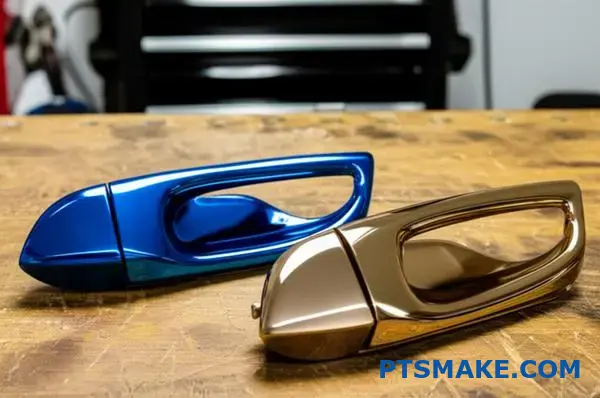
Beyond the initial look, tactile characteristics also play a role. The feel of the surface contributes to the overall perception of quality.
Tactile Feel and Finish Variations
Chrome generally feels very hard and slick to the touch. This is due to its inherent hardness, which also contributes to its durability.
Nickel can feel slightly softer. Polished nickel, in particular, has a smooth, almost buttery feel that many associate with high-end, traditional hardware.
The comparison of polished nickel vs chrome is especially important. Polished chrome has a stark, brilliant shine. Its high level of specular reflection3 creates a true mirror effect. Polished nickel provides a deeper, richer glow that is less intense. The final smoothness of either finish, however, heavily depends on the preparation of the underlying material. A poorly prepared surface will result in a flawed finish, no matter the plating.
| Characteristic | Polished Chrome | Polished Nickel |
|---|---|---|
| Visual Look | Bright, cool, sharp reflection | Deep, warm, rich glow |
| Tactile Feel | Hard, slick | Smooth, slightly softer |
| Common Use | Modern fixtures, automotive | Classic or vintage designs |
Chrome delivers a cool, bright, and modern aesthetic with a hard feel. Nickel offers a warm, subtle, and classic appearance that feels slightly softer. The difference in reflectivity and color tone is the most critical factor in your design decision.
Ultimate Wear Resistance: Which Plating Lasts Longer Under Friction?
When choosing a wear-resistant plating, the debate often comes down to chrome vs nickel plating. Both are excellent choices, but they excel in different areas.
Hard chrome is known for its extreme hardness. This makes it a top choice for high-friction parts.
Electroless nickel, on the other hand, offers great uniformity. It also provides strong corrosion protection.
So, which one has better plating abrasion resistance? The answer depends entirely on your application’s specific needs. Let’s compare them directly.
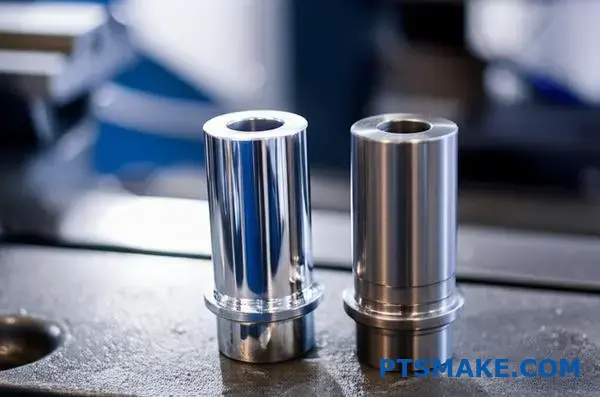
Hardness: A Tale of Two Metals
Hardness is a crucial factor in wear resistance. When comparing chrome hardness vs nickel, chrome usually comes out on top. Hard chrome plating is exceptionally hard.
Based on industry data we use, the difference is clear.
| Plating Type | Vickers Hardness (HV) | Rockwell C (HRC) |
|---|---|---|
| Hard Chrome | 800 – 1100 | 65 – 70 |
| Electroless Nickel (High-Phos) | 450 – 600 | 45 – 55 |
| Electroless Nickel (Heat-Treated) | 800 – 1000 | 65 – 68 |
As you can see, heat-treated electroless nickel can rival hard chrome’s hardness. However, standard hard chrome is inherently harder without extra steps.
Applications in Motion
For sliding and pivoting parts, this hardness data is key. At PTSMAKE, we often specify hard chrome for hydraulic cylinders and piston rods. These parts face constant abrasive wear.
Electroless nickel is better for complex shapes. Its uniform coating prevents weak spots. It’s great for gears and molds where both wear and corrosion are concerns. It is important to consider all the tribological properties4 of the surface, not just hardness.
Hard chrome offers superior hardness, making it ideal for high-friction applications. Electroless nickel provides a versatile balance of wear and corrosion resistance, with its hardness significantly boosted by heat treatment. The best choice depends on the part’s function and operating environment.
Chrome Vs. Nickel Plating: A Precision Perspective
Choosing between chrome and nickel plating for CNC parts is a common challenge. It’s more than just looks. It directly impacts performance and durability. Chrome offers superior hardness and a bright finish.
Nickel provides excellent corrosion resistance. For high-precision parts, we must consider how plating adds material. This affects the final dimensions and tolerances. Careful planning is essential before machining.
| Feature | Hard Chrome Plating | Electroless Nickel Plating |
|---|---|---|
| Hardness | Very High (68-72 HRC) | Medium (45-55 HRC) |
| Corrosion Resistance | Good | Excellent |
| Plating Uniformity | Less Uniform | Very Uniform |
| Primary Use | Wear Resistance | Corrosion Protection |
This choice dictates the part’s final properties. We always plan the machining to account for the plating thickness.
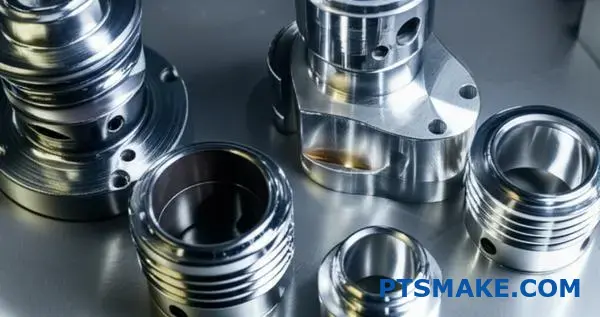
Key Considerations for CNC Parts
The decision between chrome and nickel often depends on the base material and the part’s final application. Each combination has unique benefits and challenges that we have to manage carefully. This is especially true when working with tight tolerances.
Substrate and Application Pairing
For steel CNC parts requiring extreme surface hardness and wear resistance, hard chrome is the standard choice. Think of hydraulic cylinders or molds. Chrome over steel CNC components delivers a durable, low-friction surface.
In contrast, nickel over aluminum is a common pairing. Aluminum is lightweight but prone to corrosion. Electroless nickel plating provides a uniform, protective barrier. It is ideal for electronics housings or aerospace components where corrosion is a major concern.
Tolerances and Dimensional Stability
Plating adds thickness, typically from a few microns to over 100 microns. For precision parts, this is a significant change. We machine the part undersized to compensate for the plating build-up. A successful plating job relies on strong adhesion5 between the plating layer and the substrate. Based on our internal tests, precise control is key.
| Stage | Action Required | Example (Target Ø10.00 mm) |
|---|---|---|
| Pre-Machining | Calculate required undersize | Machine part to Ø9.95 mm |
| Plating | Apply a controlled plating layer | Plate with 0.025 mm thickness |
| Final Part | Part meets final dimension | Final dimension is Ø10.00 mm |
This meticulous process ensures the final plated part meets the exact specifications required by the design.
The choice between chrome vs nickel plating for CNC parts hinges on hardness and corrosion needs. Careful pre-machining is essential to accommodate plating thickness and maintain dimensional accuracy, especially for specific pairings like chrome over steel or nickel over aluminum.
How Plating Affects Tolerances And Dimensional Accuracy
When choosing a finish, the debate often comes down to chrome vs nickel plating. Both are excellent choices. But they directly impact your part’s final dimensions.
Plating is not just a coating. It is an added layer of material. This layer changes the size and fit of components.
Chrome Dimensional Change
Hard chrome is often applied thicker than nickel. This results in a more significant chrome dimensional change. This must be accounted for during the initial machining stage.
Nickel Plating Buildup
Electroless nickel provides a very uniform coating. However, the nickel plating buildup still adds to every surface. Factoring this in is crucial.
Here is a quick look at common thicknesses.
| Plating Type | Typical Thickness (microns) |
|---|---|
| Decorative Chrome | 0.25 – 0.5 |
| Hard Chrome | 25 – 250 |
| Electroless Nickel | 5 – 75 |
This table shows why DFM is critical for precision parts.
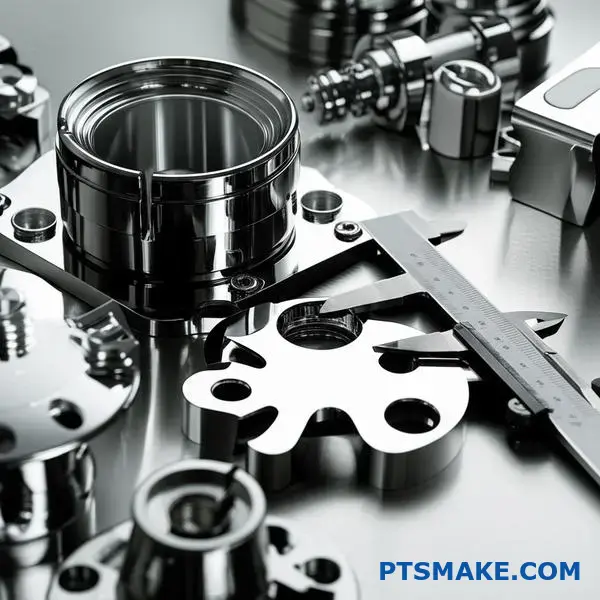
Factoring Plating into DFM
The plating thickness effect is a core DFM consideration. At PTSMAKE, we always work from the final, post-plating dimensions. We then machine the part undersized to compensate.
This approach prevents tolerance stacking issues later. For parts in tight-fitting assemblies, this step is non-negotiable. It avoids costly rework or scrap. Clear communication on drawings is key.
Chrome vs. Nickel: A Deeper Look
The choice between chrome and nickel often depends on the application. Hard chrome offers superior hardness and wear resistance. This makes it ideal for components like hydraulic cylinders or piston rings.
Electroless nickel excels in corrosion resistance and provides a more uniform buildup. The process’s throwing power6 influences how evenly the metal deposits across the part’s surface. This is a key advantage for complex internal geometries.
This table breaks down the differences further.
| Feature | Hard Chrome | Electroless Nickel |
|---|---|---|
| Hardness | 66-70 HRC | 45-55 HRC (as plated) |
| Corrosion Resistance | Good | Excellent |
| Uniformity | Less Uniform | Highly Uniform |
| Application | Wear Resistance | Corrosion Protection |
Understanding these trade-offs is essential. It helps you select the right finish for your component’s function, ensuring performance and reliability in its intended environment.
Both chrome and nickel plating add material, altering final part dimensions. Proper DFM planning is essential. It requires adjusting pre-plate machining dimensions to meet final tolerances. Your choice depends on specific wear and corrosion resistance requirements.
Fire-Rated? Heat-Resistant? What You Must Know About Thermal Performance
When choosing a finish for parts in high-heat environments, the debate often comes down to chrome vs nickel plating. Both offer protection, but their thermal behaviors differ significantly. Understanding these differences is key.
Chrome generally has better heat resistance. Nickel has a lower melting point and can discolor more easily. Your choice impacts both performance and aesthetics.
Chrome vs. Nickel: A Quick Thermal Look
Let’s start with the most basic thermal limit: the melting point. This is a critical factor for components that might see extreme temperatures.
| Plating Type | Melting Point (Approx.) |
|---|---|
| Chrome | 1907°C (3465°F) |
| Nickel | 1455°C (2651°F) |
This initial data shows chrome’s significant advantage at extreme temperatures.
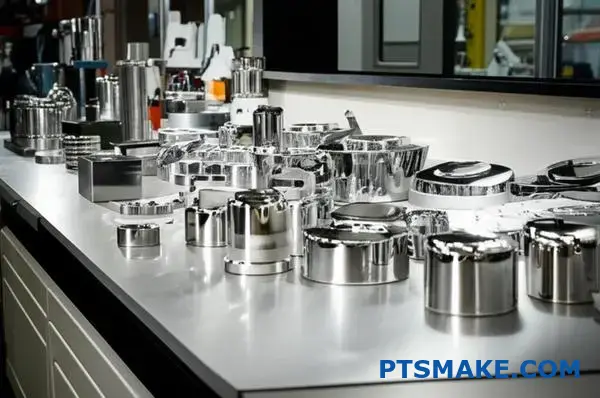
While melting points are important, parts rarely reach them. The real test is performance in sustained high-temperature environments. Here, we look at factors beyond simple melting.
High-Temperature Performance Deep Dive
Both chrome and nickel platings are used for heat-treated parts. But their reactions to prolonged heat exposure vary. The best choice depends on the specific operating conditions.
Discoloration and Oxidation
Chrome plating, especially hard chrome, is known for its excellent stability. It resists oxidation and maintains its appearance at higher temperatures.
Nickel, particularly electroless nickel, can yellow or tarnish when exposed to temperatures above 400°C (750°F). This is a crucial consideration for cosmetic parts. The surface emissivity7 also plays a role in how it radiates heat.
Plating for Heat-Treated Parts
For components that undergo heat treatment, the plating must adhere well and not compromise the substrate.
| Feature | Hard Chrome | Electroless Nickel |
|---|---|---|
| Max Operating Temp. | Up to 650°C (1200°F) | Up to 400°C (750°F) before discoloration |
| Heat Stability | Excellent, maintains hardness and color. | Good, but can soften and discolor. |
| Adhesion | Strong mechanical bond. | Excellent molecular bond. |
At PTSMAKE, we often recommend hard chrome for exhaust components and industrial machinery parts due to its superior chrome heat resistance. Nickel is a solid choice for less extreme thermal limits.
Chrome excels in high-heat applications, maintaining its integrity and appearance. Nickel is a versatile, cost-effective option for moderate temperatures but can discolor. The right choice depends entirely on the specific demands of your part’s operating environment.
Can Chrome Or Nickel Plating Be Repaired Or Reapplied?
Yes, you can replate both chrome and nickel. But it’s not a simple paint-over job. The old plating must be completely stripped off first.
This stripping process is the most delicate part. If not done correctly, it can ruin the component beyond repair.
The Replating Process Overview
The entire replating journey has distinct steps. Each requires careful execution to achieve a perfect final finish.
| Step | Key Action |
|---|---|
| 1. Stripping | Chemically remove all old plating layers. |
| 2. Surface Prep | Polish and clean the raw base material. |
| 3. Replating | Apply fresh layers of nickel and chrome. |
This chrome teardown repair process has inherent risks.
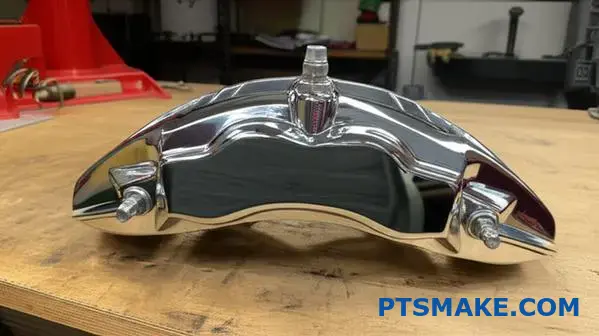
The Critical Stripping Stage
Success in replating starts with perfect stripping. This step removes the failed coating. It also prepares the substrate for the new finish. We rely on specialized chemical baths for this work.
Nickel stripping typically uses an acid-based solution. The chrome teardown repair process is more complex. It requires removing the thin chrome layer first, then the thicker nickel layer underneath.
Understanding Rework Limitations
The biggest risk is dimensional loss. Stripping chemicals can remove a small amount of the base metal. This is a major issue for high-precision components. At PTSMAKE, we always measure critical dimensions before deciding on a replating process.
The chemical bath method is common. However, a process like Electrolytic Stripping8 can sometimes provide better control over material removal.
| Risk Factor | Potential Consequence | Mitigation at PTSMAKE |
|---|---|---|
| Dimensional Change | Part no longer meets specifications. | Pre-strip and post-strip inspection. |
| Surface Pitting | Uneven or rough base material. | Controlled immersion time and chemistry. |
| Material Weakness | Risk of hydrogen embrittlement. | Post-stripping heat treatment (baking). |
When considering chrome vs nickel plating for rework, nickel is often simpler. Its single layer is easier to strip. The multi-layer nature of chrome makes the replating process riskier.
Replating is a viable repair method, but it’s not a simple task. It requires stripping the old coating, which poses risks like dimensional loss and substrate damage. A thorough evaluation is essential before proceeding, especially for high-precision parts.
Master The Art Of Selecting Plating Based On Substrate Material
Choosing between chrome and nickel plating is a common challenge. Both offer excellent protection and a decorative finish. The final decision often depends on your base material.
Chrome Plating: The Basics
Chrome is known for its extreme hardness and mirror-like shine. It provides superior wear resistance. This makes it ideal for high-friction parts.
Nickel Plating: The Basics
Nickel offers a slightly warmer, yellowish tint. It provides excellent corrosion resistance and is more ductile than chrome. It is often used as an underlayer for other platings.
Quick Comparison
| Feature | Chrome Plating | Nickel Plating |
|---|---|---|
| Appearance | Bright, bluish-white | Slightly yellowish |
| Hardness | Very High (65-70 HRC) | Moderate (40-60 HRC) |
| Corrosion | Excellent | Very Good |
| Cost | Generally Higher | Generally Lower |
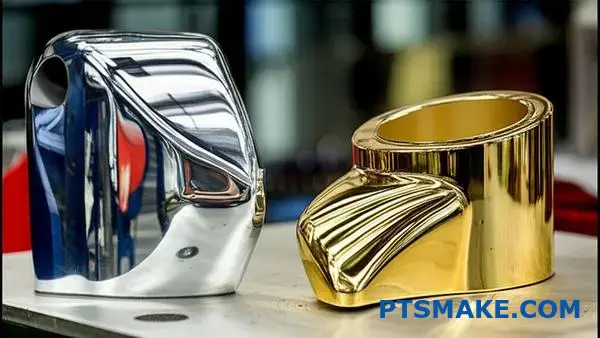
The debate of chrome vs nickel plating isn’t just about the finish. Substrate compatibility is the most important factor for success. A mismatch can lead to peeling, blistering, or poor performance.
Substrate Compatibility Matrix
Here at PTSMAKE, we’ve refined our processes for various combinations. The right preparation is key to a durable bond. Good adhesion9 is critical for the lifespan of the plated part.
| Substrate | Nickel Plating | Chrome Plating | Recommendation |
|---|---|---|---|
| Steel | Excellent | Good (Requires Nickel Undercoat) | For durability, nickel plating steel is the best plating combo. |
| Aluminum | Good (Requires Zincate) | Challenging (Requires Undercoats) | Plating chrome on aluminum needs careful pre-treatment. |
| Brass | Excellent | Excellent | Both are excellent choices, depending on desired color. |
| Copper | Excellent | Excellent | Similar to brass, the choice is often aesthetic. |
| Stainless Steel | Good (Requires Activation) | Good (Requires Activation) | Both require a special activation step to ensure a proper bond. |
For steel parts needing wear resistance and corrosion protection, a layer of nickel followed by chrome is a robust solution. This layering combines the best of both worlds.
The best plating combo is not universal. It’s a specific solution tailored to the substrate material and the application’s demands. Considering both factors is crucial for a successful and lasting finish.
Lifetime Value Showdown: TCO Analysis Of Chrome Vs Nickel Plating
Thinking only about the initial price is a common mistake. True cost-efficiency in plating comes from a full analysis. This requires a Total Cost of Ownership (TCO) model.
This model looks beyond the quote. It includes wear, labor, rework, and even environmental costs. Let’s build a plating TCO model.
| Cost Factor | Initial Price Focus | TCO Focus |
|---|---|---|
| Decision Basis | Lowest quote per part | Lowest cost over part lifetime |
| Key Metrics | Plating price | Durability, labor, compliance |
| Outcome | Potential hidden costs | Predictable long-term value |
This approach helps you understand the full financial impact.
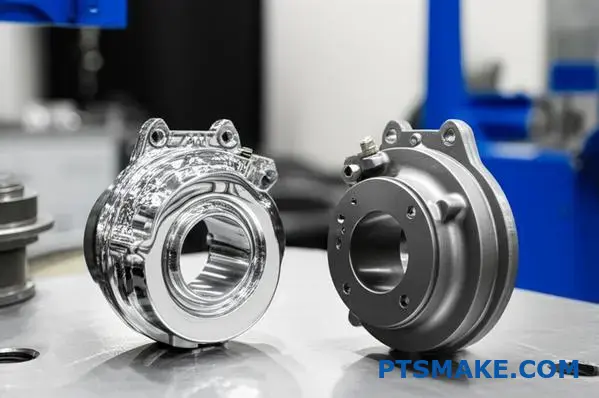
Deconstructing the Plating TCO Model
A robust chrome vs nickel total cost of ownership analysis must break down several hidden expenses. These factors often have a greater financial impact than the initial plating cost.
Wear and Replacement Cycles
Hard chrome is extremely durable. This extends the part’s life, reducing replacement frequency. Electroless nickel offers excellent corrosion resistance, which also impacts lifespan, but in different applications. The improved tribological properties10 of a coating directly lower long-term costs.
Labor and Rework
Electroless nickel provides a highly uniform coating. This can eliminate the need for post-machining. Chrome can build up on edges, sometimes requiring extra labor to fix. Rework is a significant, often unbudgeted, cost.
Environmental and Compliance Costs
This is a major factor. Hexavalent chromium processes involve high environmental compliance and waste disposal costs. These costs are rising. Nickel plating, especially electroless nickel, generally has a lower environmental cost profile.
Here is a simplified comparison of these hidden costs.
| TCO Factor | Hard Chrome | Electroless Nickel |
|---|---|---|
| Lifespan (Wear) | Excellent | Very Good |
| Rework Risk | Moderate (unevenness) | Low (uniformity) |
| Environmental Cost | High | Moderate |
| Reusability | More complex to strip | Easier to strip |
Considering these factors gives a much clearer picture of lifetime value.
A true plating TCO model looks past the invoice. It accounts for wear, labor, environmental compliance, and reusability. This provides a complete view of which coating offers better long-term value for your specific application.
Unlock Superior Surface Solutions with PTSMAKE Today!
Have questions about chrome vs nickel plating for your next CNC or injection molding project? Connect with PTSMAKE’s experts for fast, accurate quotations and tailored plating solutions that guarantee precision, durability, and long-term value. Send your RFQ now and elevate your project performance!

Discover how different metals interact and can cause accelerated failure in your components. ↩
Understand this chemical process for uniform coating without electrical current. ↩
Learn how this property creates mirror-like surfaces and affects perceived brightness in finishes. ↩
Learn how material surfaces interact in motion, affecting friction, wear, and overall component life. ↩
Learn how substrate preparation impacts the bond strength and durability of your plated parts. ↩
Learn how this property impacts coating uniformity on complex parts and affects your final tolerances. ↩
Learn how this property affects how a surface radiates heat and influences component temperature. ↩
Learn how this controlled electrochemical process removes plating with minimal risk to the base material. ↩
Discover why proper surface treatment is essential for a strong, long-lasting plated finish. ↩
Understand the science of friction and wear to better evaluate surface performance. ↩