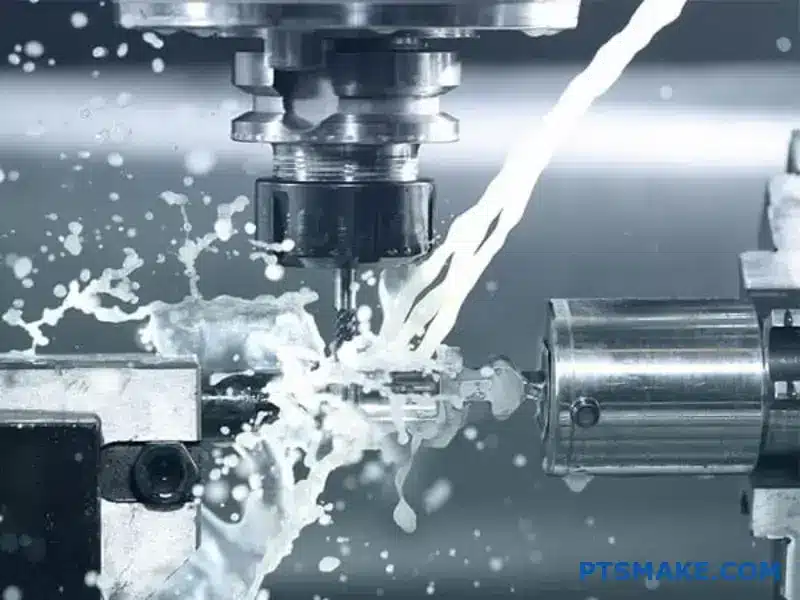

Finding the right CNC machining partner for railroad components in Texas feels impossible when every supplier claims precision expertise. Most manufacturers lack the specialized knowledge for rail-grade tolerances and compliance requirements, leaving you with delayed projects and parts that fail critical safety standards.
PTSMAKE stands out as Texas’s leading railroad CNC machining manufacturer, delivering precision components that meet AAR standards and withstand the demanding conditions of rail applications through advanced 5-axis machining capabilities and rail-specific material expertise.
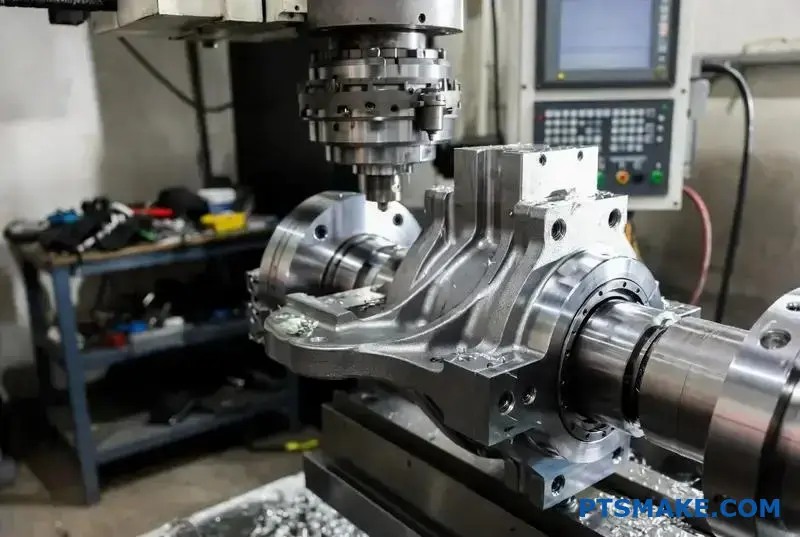
I’ve worked with rail industry clients who struggled with suppliers that promised everything but delivered substandard parts. The difference becomes clear when you understand what separates a true railroad CNC specialist from general machine shops. This guide reveals the exact criteria successful rail companies use to select their manufacturing partners.
Ultimate Guide To Choosing A Reliable CNC Partner For Railroad Projects
Choosing a CNC partner for railroad projects is critical. Safety and durability are non-negotiable. Your decision impacts everything from track integrity to passenger safety. Finding a reliable CNC supplier for railroads means looking beyond a simple quote.
Key Evaluation Pillars
You must focus on a supplier’s proven reliability. Also, check their adherence to industry standards and precision capabilities. A long-term partnership should be the goal.
| Evaluatiegebied | Belangrijkste focus |
|---|---|
| Supplier Reliability | On-time delivery, consistent quality |
| Industriestandaarden | AAR, ISO certifications |
| Precisie | Tight tolerance capabilities |
| Partnership Goals | Communication, scalability |
This evaluation ensures your components perform flawlessly under extreme conditions.
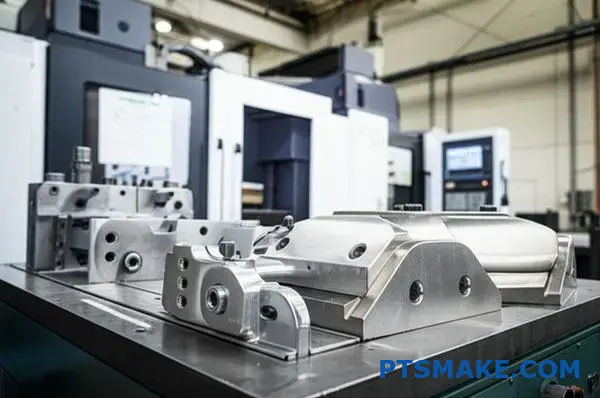
Beyond the Spec Sheet: What Truly Matters
Evaluating a supplier for railroad components goes deep. You need to verify their understanding of the unique material and stress requirements. For example, do they have experience with high-strength steel alloys commonly used in rail applications?
Certifications are your first checkpoint. ISO 9001 is a baseline, but specific railroad credentials like AAR (Association of American Railroads) approval are far more telling. These certifications show a commitment to the industry’s stringent safety and quality demands.
Precision is another major factor. The complex interplay of rail components requires extremely tight tolerances. A supplier’s mastery of Geometrische dimensionering en toleranties1 is essential for ensuring parts fit and function correctly every time. When searching for a railroad CNC machining manufacturer in Texas, for instance, ask potential partners to provide case studies or part samples.
Supplier Vetting Checklist
| Attribuut | Good Supplier | Rode vlag |
|---|---|---|
| Certificeringen | ISO 9001, AAR | No industry-specific certs |
| Ervaring | Proven railroad projects | General machining only |
| Communicatie | Proactive updates | Slow, unclear responses |
| Technologie | 5-axis CNC, CMM | Outdated equipment |
Ultimately, you are looking for a partner who understands the immense responsibility of manufacturing CNC machining for rail components.
Evaluating a supplier for railroad CNC machining involves more than surface-level checks. It requires a deep dive into their certifications, precision capabilities, and specific industry experience to ensure they can meet the sector’s uncompromising standards for safety and reliability.
Secrets To Achieving Tight Tolerances In Rail-Grade CNC Parts
In the rail industry, there is zero room for error. Tight tolerances are not just about quality. They are about operational safety and long-term reliability.
Even a deviation of a few microns can impact performance. This precision ensures that every component fits and functions perfectly under extreme stress.
The Critical Role of Tolerances
For parts like braking systems or couplings, precision is non-negotiable. It’s the foundation of a safe and efficient rail network. That’s why we focus on flawless execution for all precision cnc machining rail parts.
| Rail Component | Why Tolerance is Critical |
|---|---|
| Axles & Bearings | Ensures smooth rotation and prevents overheating. |
| Remsystemen | Guarantees consistent and reliable stopping power. |
| Track Switches | Allows for seamless and safe train routing. |
| Couplers | Secures connections between cars, preventing detachment. |
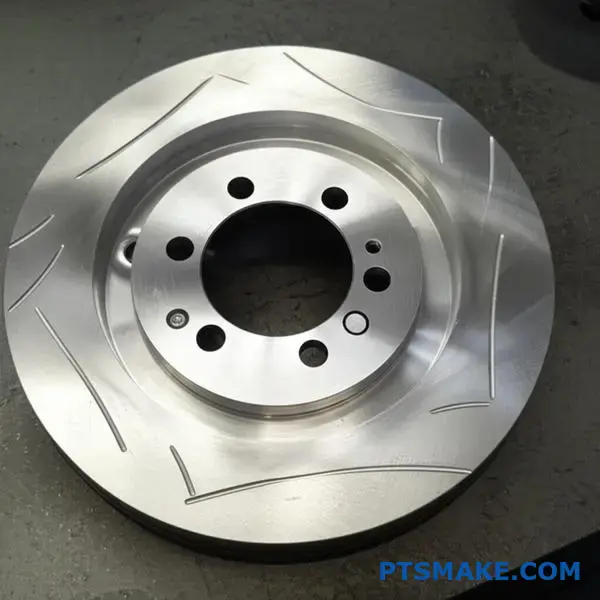
Choosing Materials for Rail Applications
The materials we use must withstand incredible forces and harsh environments. We often machine high-strength steel alloys, stainless steel, and cast iron. Each has unique properties that demand specific machining approaches.
Our experience as a railroads cnc machining manufacturer texas has shown that material selection is the first step toward achieving precision. Poor material quality can ruin the best designs.
| Materiaal | Essentiële eigenschappen | Gemeenschappelijke toepassing |
|---|---|---|
| Carbon Steel (e.g., AAR M-101) | Hoge sterkte, duurzaamheid | Wheels, Axles |
| Stainless Steel (e.g., 304/316) | Corrosiebestendigheid | Fasteners, Fittings |
| Nodulair gietijzer | Wear resistance, vibration damping | Brake components, Housings |
How We Maintain Tight Tolerances
Achieving tolerances as tight as ±0.005 mm requires a controlled process. Our facility is climate-controlled to prevent thermal expansion from affecting part dimensions. This is a crucial step that some overlook.
We rely on advanced CNC machines and rigorous quality checks. This includes in-process probing and post-machining CMM inspection. Proper documentation and full Traceerbaarheid van materiaal2 are standard for every project we handle. These protocols are central to our high-accuracy cnc services.
Tight tolerances in the rail industry are essential for safety and performance. This is achieved through careful material selection, such as high-strength steels, and maintained by experienced manufacturers using advanced machinery, climate control, and rigorous inspection protocols.
Cost-Saving Strategies For High-Volume CNC Rail Parts Production
Reducing cost-per-part is a primary goal. This is especially true for high-volume rail components like brackets and housings. But quality must remain the top priority.
The key is smart, strategic adjustments. These methods improve efficiency without sacrificing integrity. It often begins long before a machine is turned on.
Optimizing Material and Design
Choosing the right material is foundational. A less expensive alloy might offer the needed performance. It could also machine faster, directly saving money.
We also focus on design optimization. Fine-tuning toolpaths and leveraging multi-axis machines reduces cycle times. This is how you achieve affordable cnc rail parts.
| Strategie | Potentiële kostenbesparingen | Kwaliteitsimpact |
|---|---|---|
| Materiaalvervanging | 5-15% | None (with proper validation) |
| Gereedschapsbaanoptimalisatie | 10-20% | Verbeterde oppervlakteafwerking |
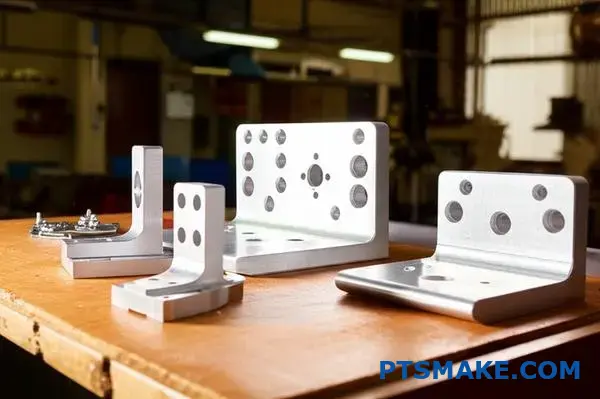
True cost savings come from early collaboration. When we engage in the design phase, we can guide crucial decisions. This is the essence of Design for Manufacturability (DFM).
Ontwerp voor maakbaarheid (DFM)
We meticulously review every design. We look for ways to simplify geometries. We also standardize features to avoid custom tooling. This is vital for volume cnc production rail projects.
Small changes can yield big results. For example, slightly increasing an internal corner radius allows for a more robust tool. This leads to faster, more stable machining operations.
A knowledgeable partner, like a railroads cnc machining manufacturer texas companies rely on, adds immense value here. We find that proper Geometric Dimensioning and Tolerancing (GD&T) is also essential. Overly tight tolerances are a common source of unnecessary expense.
Advanced Tooling and Fixturing
For high-volume production, custom fixtures are a wise investment. The initial cost is quickly offset by reduced setup times for each part. Our data shows this can cut overall cycle times significantly, making for more cost-effective cnc machining texas.
| DFM Adjustment | Impactgebied | Resultaat |
|---|---|---|
| Increase Corner Radii | Tool Selection & Speed | Faster Machining, Better Finish |
| Functies standaardiseren | Toolingkosten | Reduced Need for Custom Tools |
| Optimize Tolerances | Cycle Time & Scrap Rate | Lower Rejection Rate, Faster Runs |
Effective cost reduction in high-volume rail part manufacturing is about strategic optimization. Smart planning in design, material selection, and process engineering is crucial. Early supplier collaboration unlocks these savings without compromising the quality or safety the rail industry demands.
Insider Tips On Material Selection For Railroad CNC Components
Selecting the right material for railroad CNC components is a critical first step. It’s a careful balance between strength, corrosion resistance, and manufacturability. Each material presents unique challenges.
This directly impacts the final part’s performance and cost.
Common Rail-Grade Materials
Steel and aluminum alloys are common choices. Carbon steels offer incredible strength for structural parts. Stainless steel provides superior corrosion resistance. Aluminum is a lightweight alternative for non-critical applications.
Overwegingen bij machinale bewerking
The material’s properties dictate the machining approach. Harder metals require slower speeds and more robust tooling. This ensures precision and prevents premature tool wear. It’s a key factor we always plan for.
| Materiaal | Primair voordeel | Gemeenschappelijke toepassing |
|---|---|---|
| Koolstofstaal | Hoge sterkte | Wheels, Axles, Tracks |
| Roestvrij staal | Corrosiebestendigheid | Fasteners, Hydraulic Fittings |
| Aluminiumlegeringen | Lichtgewicht | Housings, Signage |
Understanding these rail-grade materials for CNC is fundamental to success.
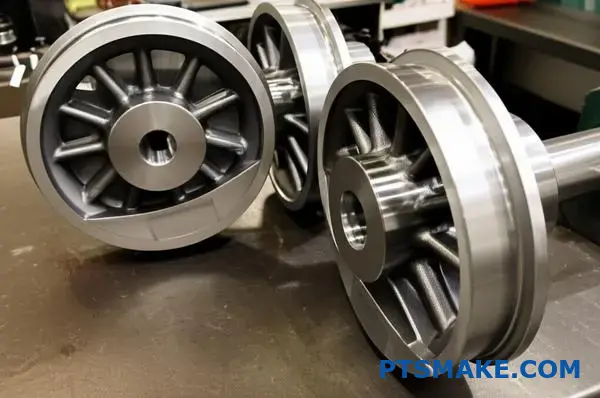
The choice of suitable metals for rail CNCs extends beyond a simple datasheet. It requires practical machining experience. A material might seem perfect on paper but prove difficult or costly to machine accurately. This is where expertise becomes invaluable.
CNC Machining Stainless Steel in Railroad Applications
Stainless steel grades like 304 and 316 are popular for their anti-rust properties. However, their toughness makes them challenging. They are prone to werkharding3 if not machined correctly. We use specific cutting speeds and high-pressure coolant to manage this. This is a common challenge for any railroads cnc machining manufacturer texas.
Working with Carbon Steel Alloys
Carbon steel offers excellent strength-to-cost value. But its machinability can vary greatly with its carbon content and heat treatment. We often perform tests to define the optimal machining parameters. This ensures consistent quality across production runs.
The Opportunity with Aluminum
Aluminum is much easier and faster to machine. This can lead to lower cycle times and reduced costs. The main challenge is managing its thermal expansion to maintain tight tolerances. At PTSMAKE, we use specialized fixtures to control this.
| Material Attribute | Roestvrij staal | Koolstofstaal | Aluminium |
|---|---|---|---|
| Bewerkbaarheid | Matig | Good to Difficult | Uitstekend |
| Uitdaging | Slijtage gereedschap | Hardness Variation | Dimensionale stabiliteit |
| Primair voordeel | Duurzaamheid | Strength/Cost Ratio | Bewerkingssnelheid |
Each material offers a distinct balance of properties, costs, and machining opportunities.
Material choice for railroad components is not just about performance specs. It’s about manufacturability. Balancing material properties with machining challenges is essential for producing safe, reliable, and cost-effective parts that meet the rigorous demands of the rail industry.
Machine Shop vs Precision CNC Manufacturer For Railroad Needs
Choosing a manufacturing partner for railroad components is a critical decision. It directly impacts safety, reliability, and operational efficiency. The choice often comes down to a local machine shop versus a specialized precision CNC manufacturer.
This decision involves more than just location. It’s about capability, precision, and scale. Let’s compare them.
| Functie | Local Machine Shop | Precision CNC Manufacturer |
|---|---|---|
| Focus | General repairs, simple parts | Complexe onderdelen met hoge tolerantie |
| Schaal | Low-volume, prototypes | Prototype to mass production |
| Technologie | Basic lathes, 3-axis mills | Advanced 5-axis CNC, automation |
| Beste voor | Quick fixes, non-critical parts | Safety-critical rail components |
For simple brackets or one-off repairs, a local shop can be a good choice. But for critical rail parts, the comparison requires a deeper look.
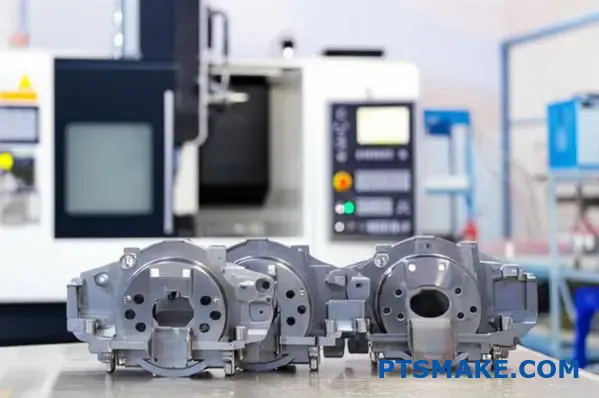
When we get into the details of the cnc vs machine shop railroad debate, the differences become much clearer. The right choice protects your investment and ensures public safety.
Technology and Equipment
A local machine shop often uses reliable, but older, equipment. They are perfect for general fabrication. However, a specialized railroads cnc machining manufacturer texas facility, like ours at PTSMAKE, invests heavily in advanced technology. This includes multi-axis CNC machines that produce complex geometries with high repeatability.
Quality and Certification
This is where the distinction is most important for the rail industry. Precision CNC manufacturers operate under strict quality management systems, often with ISO 9001 certification. They use advanced metrology tools to inspect every part. The application of Geometrische dimensionering en toleranties (GD&T)4 is standard practice, ensuring every feature on a part matches the design intent perfectly. A local shop may not have these rigorous processes.
Material Expertise and Scalability
Manufacturing rail parts requires experience with specific alloys designed for high wear and stress. A specialist has this knowledge. They can also scale production from a single prototype to thousands of units without sacrificing quality. This is something most local shops are not equipped to handle.
Hier is een meer gedetailleerd overzicht:
| Aspect | Local Machine Shop | Precision CNC Manufacturer |
|---|---|---|
| Toleranties | Typically looser | Extremely tight (e.g., ±0.005mm) |
| Inspectie | Basic calipers, visual checks | CMM, laser scanning, full reports |
| Certificeringen | Often uncertified | ISO 9001, AS9100, etc. |
| Volume | Low to very low | Low to high volume runs |
| Materialen | Common metals (steel, aluminum) | Specialized alloys, exotic metals |
The right partner understands the demands of the rail industry.
The choice is clear. For simple, non-critical tasks, a local shop works. For complex, safety-critical railroad components requiring high precision and reliability, a specialized CNC manufacturer is the only responsible option. This ensures parts meet exact specifications every time.
How To Evaluate CNC Parts For Fatigue Resistance In Railway Applications
Theory and simulation are crucial. But physical testing provides the ultimate proof of performance. It validates our designs.
Ensuring machined parts withstand rail application stress is non-negotiable. This involves rigorous verification.
Vibration and Stress Validation
We must simulate real-world conditions. This includes constant vibration and long-term stress. Proper testing ensures durability.
Core Testing Methods
We focus on several key tests. Each provides unique data on component resilience. This ensures our fatigue-resistant CNC parts meet standards.
| Type test | Primair doel | Focus op toepassingen |
|---|---|---|
| Vibration Testing | Simulate track-induced oscillations | Structurele integriteit |
| Cyclic Load Testing | Mimic start-stop stress cycles | Fatigue Life Prediction |
| Milieutesten | Assess corrosion & temperature effects | Material Durability |
These tests confirm that rail CNC performance meets strict safety requirements.
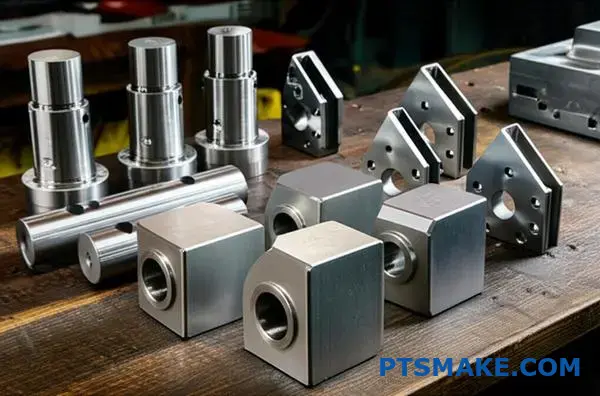
Proper durability testing for CNC rail components involves multiple stages. It goes beyond simple fit and function checks. We must push the part to its limits to understand its failure points. This builds a complete performance profile.
Niet-destructief onderzoek (NDT)
Before subjecting a part to destructive forces, NDT methods are essential. They help us identify hidden flaws from the machining process. These could become crack initiation points under stress. Think of it as a quality check before the main event.
After collaborating with our clients, we’ve found that combining these methods provides the most comprehensive view of a part’s initial quality.
| NDO-methode | Detecteert | Beste voor |
|---|---|---|
| Ultrasoon testen | Internal voids, cracks | Dikke secties |
| Magnetic Particle | Surface/near-surface flaws | Ferromagnetic metals |
| Kleurstof Penetrant | Surface-breaking cracks | Niet-poreuze materialen |
Destructive Testing for Life Prediction
This is where we confirm a part’s fatigue life. Cyclic loading tests apply repeated stress until failure. The data gathered helps generate an S-N kromme5, which is fundamental for predicting how long a part will last in service. As a specialized railroads cnc machining manufacturer texas, we see these tests as vital for guaranteeing safety and reliability in every component we deliver.
Rigorous testing is not an option; it’s a requirement. This verification process ensures CNC parts can safely handle the immense stresses of railway applications, validating both design and manufacturing quality for long-term reliability.
Engineering Tips for CNC Rail Component Design
As engineers, our goal is to design functional parts. But a truly great design is also easy to make. This is where Design for Manufacturability (DFM) comes in.
Applying DFM principles to CNC rail parts is critical. It helps minimize setup time and cost. It also improves the part’s overall quality.
Smart Geometry for Machining
Optimizing geometry is key. Simple changes can drastically reduce machining hours. This makes the production process much smoother for any components in the railroad industry.
Consider these basic adjustments:
| Slechte praktijk | Goede Praktijken | Impact |
|---|---|---|
| Multiple unique radii | Standardized radii | Reduces tool changes |
| Diepe, smalle zakken | Wider, shallower pockets | Improves tool access |
| Complex, organic curves | Simplified, linear features | Speeds up machining |
These small engineering tips for CNC rail components make a huge difference. They lead to faster and more affordable production.
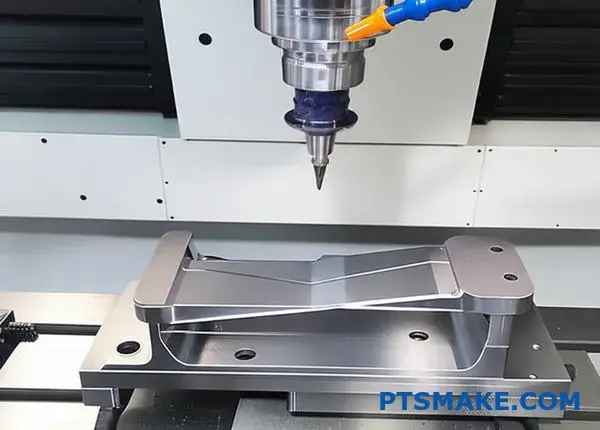
Designing for the machine is as important as designing for the function. For railroad parts, where durability and precision are non-negotiable, DFM is not just a suggestion—it’s a requirement. A smart design anticipates the manufacturing process from the start.
Reducing Setup Complexity
Every time a part is repositioned, it adds time and introduces potential errors. The best designs require the fewest possible setups. Think about how the part will be held in the machine.
Aim to machine all critical features from one or two primary directions. This simplifies fixturing and ensures better accuracy between features. It’s a core principle for efficient design for machining railroad parts.
The Role of Tolerancing
Tight tolerances are expensive. It’s crucial to only specify them where absolutely necessary. Over-tolerancing a non-critical feature adds unnecessary machining time and inspection costs. Clear communication about feature importance using methods like Geometrische dimensionering en toleranties6 is van vitaal belang.
Here at PTSMAKE, we often collaborate with clients on their DFA DFM rail components. A small tweak can often yield significant savings without compromising performance. We have seen how a strategic partnership with a railroads cnc machining manufacturer in texas can refine designs for optimal production.
| Ontwerp Keuze | Machining Implication | Aanbeveling |
|---|---|---|
| Non-standard hole sizes | Requires custom tooling | Use standard drill sizes |
| Scherpe interne hoeken | Requires slower EDM process | Add corner radii |
| Dunne wanden | Prone to vibration/warping | Increase wall thickness |
Applying these principles leads to more robust and cost-effective parts.
Effective design for machining reduces complexity and cost. By optimizing geometry, minimizing setups, and using appropriate tolerances, engineers can create high-quality CNC rail parts that are both functional and manufacturable, saving time and resources.
Compliance Requirements For Railroad CNC Machining In The U.S.
Navigating railroad industry compliance is critical. It’s not just about making a part; it’s about proving it’s safe and reliable for decades. This involves strict adherence to certifications, traceability, and documentation.
Key Industry Certifications
ISO 9001 is a baseline for quality management. However, the Association of American Railroads (AAR) certification is specific to the rail sector. It ensures components meet unique operational demands. A capable railroads cnc machining manufacturer in Texas must understand both.
| Certificering | Focusgebied | Industry Scope |
|---|---|---|
| ISO 9001 | Kwaliteitsmanagementsystemen | Algemeen |
| AAR M-1003 | Railroad-Specific Quality | Rail |
Traceability and Documentation
Every part must be traceable to its origin. This includes material certs and production records. Safety documentation proves a part meets all regulatory requirements for cnc railroad toepassingen.
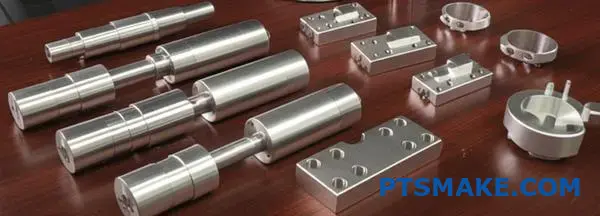
The Pillars of Railroad Compliance
Meeting railroad industry compliance machining standards goes beyond a final inspection. It’s a comprehensive process. It begins with raw material sourcing and continues through every machining step. Every detail must be documented meticulously.
This is where true partnership shows. A reliable supplier doesn’t just deliver a part. They deliver a complete package of verifiable data, ensuring your components are fully compliant. This proactive approach prevents costly delays and failures down the line.
Traceability and Safety Documentation
Traceerbaarheid van materiaal7 is non-negotiable. It means we can track a component from its final installation back to the specific batch of metal it was made from. This is vital for investigations and quality control.
Safety documentation is equally important. It provides objective evidence that the part meets all specified safety and performance criteria. The level of detail required is significant.
| Documenttype | Doel |
|---|---|
| Materiaalcertificaten | Verifies alloy composition and mechanical properties. |
| Inspectierapporten | Confirms dimensional accuracy and tolerance adherence. |
| Proceslogboeken | Documents machining parameters and operator information. |
| Certificaten van overeenstemming | States the part meets all customer and regulatory specs. |
At PTSMAKE, we build these requirements into our production workflow from day one. This ensures that the cnc machining certification for rail is an integral part of the manufacturing process, not an afterthought.
Certifications, full traceability, and complete safety documentation are essential for railroad CNC machining. These elements are non-negotiable, ensuring every component is safe, reliable, and fully compliant with industry standards.
Why Surface Finish Matters For Rail Equipment CNC Parts
Als we het hebben over surface finish cnc railroad parts, it’s about much more than just a shiny appearance. The right finish is critical. It directly impacts a component’s durability and performance.
This is especially true in the demanding railroad environment. A part’s surface dictates its resistance to corrosion, friction levels, and even how well a protective coating will adhere. Choosing the right post-machining process is a crucial engineering decision.
| Aspect | Importance in Rail Equipment |
|---|---|
| Functioneel | Longevity, Safety, Efficiency |
| Esthetisch | Professionalism, Brand Image |
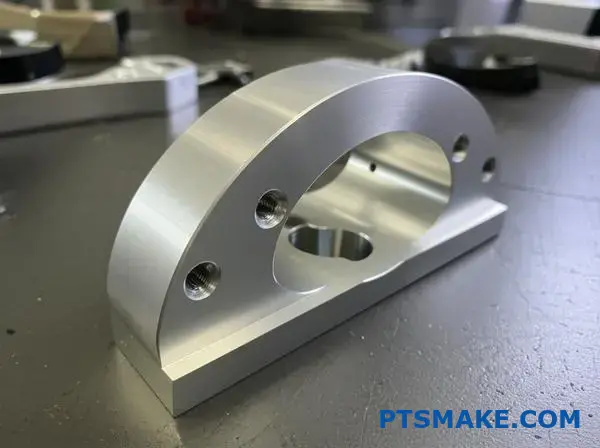
The Dual Role of Surface Finish
In the rail industry, a component’s surface serves both functional and aesthetic purposes. But function always comes first. The correct finish protects the part from harsh weather and constant vibration. This ensures long-term reliability.
Maximizing Corrosion Resistance
Rail equipment is constantly exposed to moisture and environmental contaminants. A smoother surface finish leaves fewer microscopic pits. This reduces the areas where corrosion can begin. Proper finishing acts as the first line of defense against rust and degradation.
Reducing Friction and Wear
For moving components, surface finish is paramount. The study of how surfaces interact, known as Tribologie8, is critical here. A precisely finished surface on a bearing or piston reduces friction. This minimizes wear, lowers operating temperatures, and extends the part’s service life significantly. This is a key focus for any quality railroads cnc machining manufacturer texas.
Ensuring Coating Compatibility
Protective coatings like paint or powder coating need a properly prepared surface to bond effectively. The right surface texture, or "profile," creates a strong mechanical anchor for the coating. This prevents chipping and peeling, which would expose the base metal.
| Afwerkingsproces | Primary Benefit for Rail Parts |
|---|---|
| Anodiseren | Corrosion resistance, wear resistance |
| Passiveren | Verbeterde weerstand tegen corrosie |
| Slijpen | Reduced friction, tight tolerances |
| Shot Peening | Verhoogde vermoeiingssterkte |
Proper surface finish on CNC parts is a critical consideration for rail equipment. It directly enhances corrosion resistance, reduces friction, and ensures coating adhesion, ultimately improving the part’s performance, safety, and lifespan.
Upgrade Your Railroad CNC Projects with PTSMAKE Expertise
Ready to achieve exceptional results for your railway CNC components? Contact PTSMAKE now for a free personalized quote and discover how our precision, reliability, and long-term partnership approach can take your railroad projects in Texas to the next level!

Learn how this system ensures your parts meet exact design specifications for critical applications. ↩
Learn why tracking a material’s history is vital for safety-critical industries. ↩
Learn how this material property affects tool wear and the strategies used to machine it effectively. ↩
Learn how this system ensures parts meet precise design specifications for critical applications. ↩
Learn how this curve predicts component failure and ensures long-term rail safety. ↩
Understand how this system defines and communicates engineering tolerances for better manufacturing outcomes. ↩
Learn how lot tracking ensures component safety and simplifies regulatory audits. ↩
Learn more about the science of friction, wear, and lubrication in mechanical systems. ↩