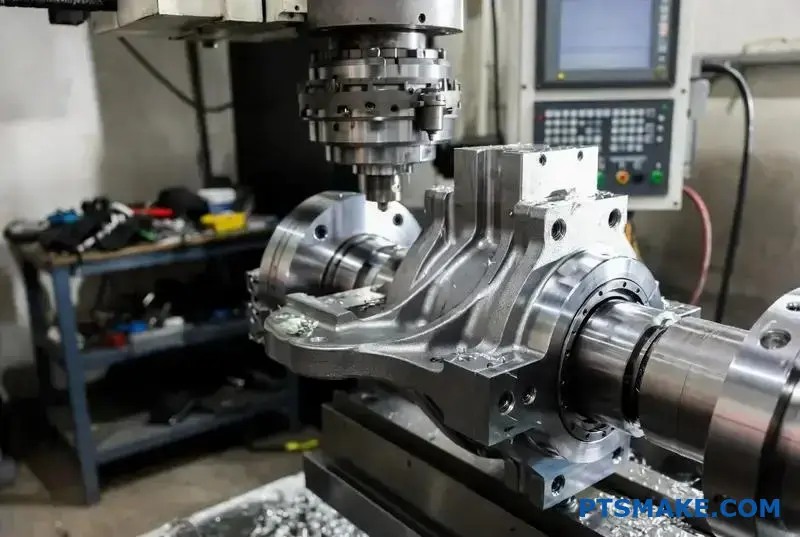

You’re scaling production but worried about quality consistency, delivery delays, and spiraling costs. High volume CNC projects can make or break your business timeline and budget.
High volume CNC machining is automated precision manufacturing that produces thousands of identical parts with consistent quality, reduced per-unit costs, and faster delivery times compared to traditional manufacturing methods.
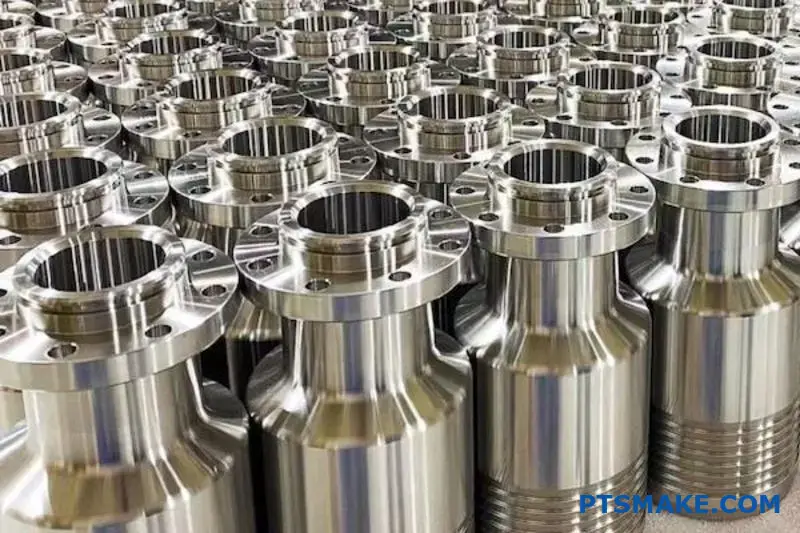
I’ve helped manufacturing managers transform their production challenges into competitive advantages through strategic high volume CNC implementation. This guide covers everything from selecting the right partner to maintaining tight tolerances at scale.
The Ultimate Guide To Scaling With High Volume CNC Machining
Thinking about growing your production? High volume CNC machining is the solution. It’s not just about making more parts. It’s about making them consistently and affordably.
Czym jest wysokonakładowa obróbka CNC?
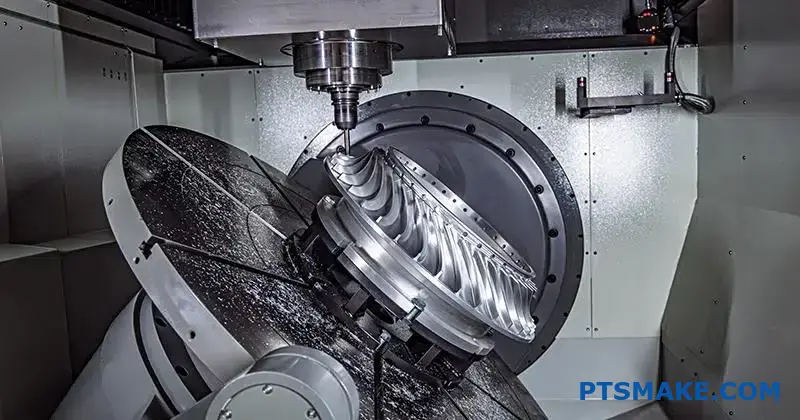
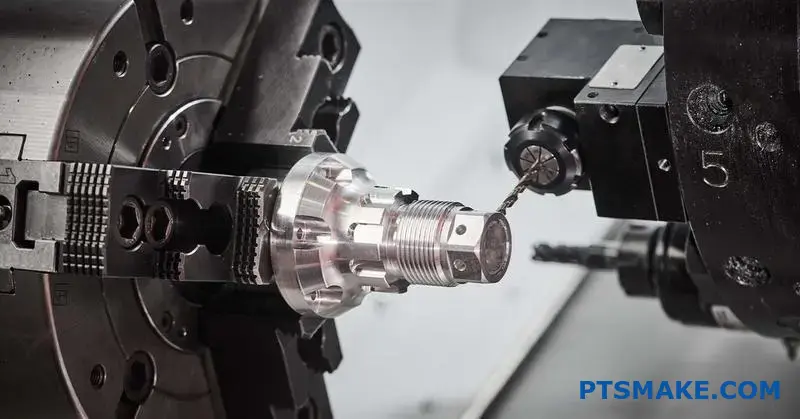
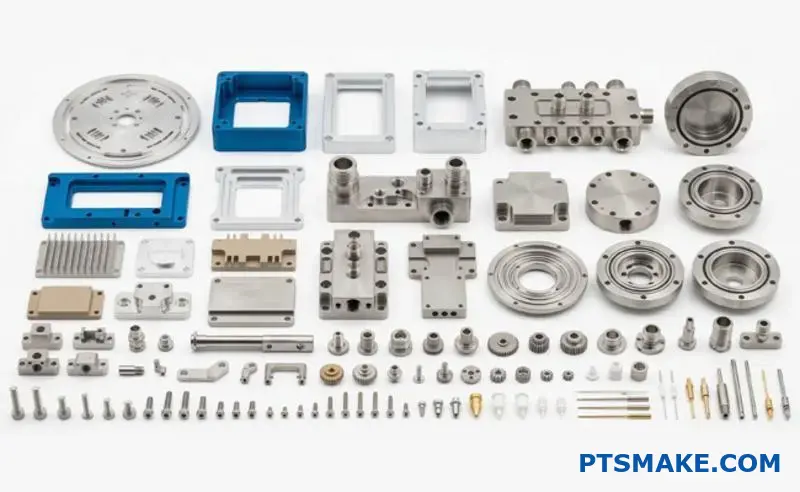
This is an automated process. It is designed for producing thousands, or even millions, of identical parts. This method ensures precision at a massive scale, every single time.
Supporting Scalable Manufacturing
This process is fundamental for scalable manufacturing with CNC. It smoothly bridges the gap from a single prototype to full mass production.
| Cecha | Prototypowanie | Produkcja na dużą skalę |
|---|---|---|
| Ilość | 1-100 | 1,000+ |
| Koszt jednostkowy | Wysoki | Niski |
| Prędkość | Slower setup | Krótkie czasy cyklu |
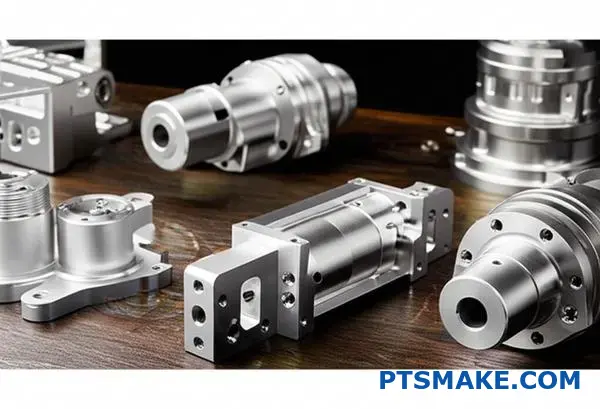
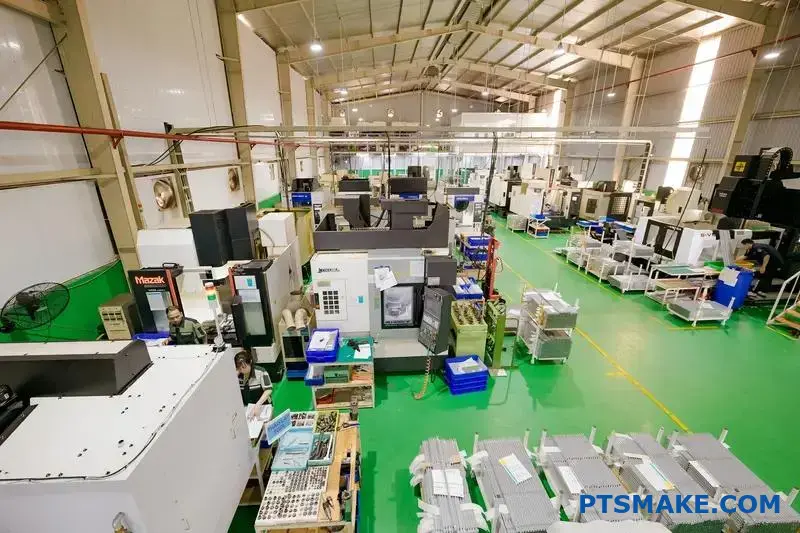
Transitioning to large-scale CNC production requires careful planning. It’s more than just running more machines. At PTSMAKE, we focus on optimizing the entire process. This includes fixture design, toolpath optimization, and incorporating automation.
The primary advantage is cost reduction. As production volume increases, the cost per part drops significantly. This is a direct result of achieving ekonomia skali1 in the manufacturing process. The initial setup costs are spread across a larger number of units.
Key High-Volume CNC Manufacturing Benefits
Consistency is crucial in high-volume runs. Automated CNC processes eliminate human error. This ensures every part meets exact specifications. This is vital for sectors like automotive, aerospace, and medical devices where failure is not an option. Large-scale CNC production provides the reliability you need.
| Korzyści | Opis | Impact on Your Business |
|---|---|---|
| Efektywność kosztowa | Lower unit costs due to automation and bulk material purchasing. | Improved profit margins and competitive pricing. |
| Spójność | Identical parts produced with tight tolerances every single time. | Higher product quality and brand reliability. |
| Prędkość | Rapid production cycles meet the most demanding schedules. | Faster time-to-market for your products. |
| Skalowalność | Easily adjust production volume up or down as needed. | Flexible and agile response to market demand. |
High volume CNC machining is essential for scalable manufacturing. It delivers cost-effective, consistent, and rapid production. Understanding its benefits allows you to transition from prototype to large-scale production with confidence, meeting market demands efficiently and reliably.
Top 10 Production Bottlenecks Solved By High Volume CNC
Production lines shouldn’t grind to a halt. Yet, bottlenecks are a common frustration. They delay delivery and inflate costs.
High volume CNC machining directly tackles these issues. It enhances CNC machining efficiency. This technology is designed for speed and repetition. It turns potential delays into streamlined output.
Common Bottlenecks vs. CNC Solutions
| Bottleneck | High Volume CNC Solution |
|---|---|
| Slow Manual Setups | Automated Pallet Changers |
| Inconsistent Quality | Programmed Repeatability |
| Long Part Cycles | Optimized Toolpaths & Speed |
This is about solving mass production issues with CNC.
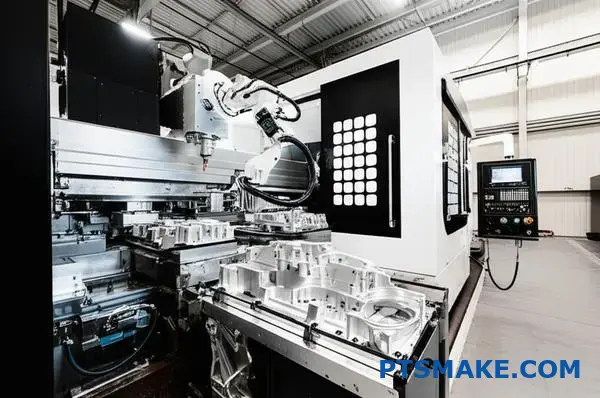
The core problem is often reliance on manual steps. These steps introduce variability and eat up valuable time. This is where automation in high volume CNC machining changes the game entirely.
Boosting Throughput with Automation
Automated systems don’t need breaks. They can run 24/7 with minimal supervision. This drastically reduces lead times for large orders. At PTSMAKE, we’ve seen projects go from weeks to days.
The Power of Consistency
Machines follow code perfectly every time. This eliminates human error, ensuring every part meets exact specifications. It’s a key factor in solving mass production issues with CNC. You get reliable quality from the first part to the ten-thousandth.
This precision also minimizes material waste. It contributes to overall cost savings. The entire process becomes more predictable and efficient. Reducing the Czas cyklu2 for each component is fundamental.
From Problem to High-Efficiency Production
| Production Problem | High Volume CNC Advantage |
|---|---|
| Operator Skill Dependency | Standardized G-Code Programs |
| Slow Tool Changes | Automatic Tool Changers (ATC) |
| Inefficient Material Use | Nesting & Path Optimization |
| Unpredictable Lead Times | Consistent, 24/7 Operation |
CNC machining efficiency isn’t just about speed. It’s a comprehensive approach to streamlining the entire manufacturing workflow, from programming to the final part.
High volume CNC machining provides a direct solution to production bottlenecks. By leveraging automation, precision, and continuous operation, it dramatically increases efficiency. This approach ensures faster lead times and consistent quality for mass production.
How To Choose The Right CNC Machining Partner For Mass Production
Selecting the right CNC supplier for mass production involves more than comparing quotes. A truly reliable CNC machining partner requires careful evaluation.
Your focus should be on their capacity, quality systems, and proven experience. These factors directly impact your project’s success. Neglecting them can lead to costly delays and quality issues. A methodical approach is always best.
Key Evaluation Areas
| Kryteria | Importance for Mass Production |
|---|---|
| Zdolność produkcyjna | Ensures on-time delivery for large orders. |
| Kontrola jakości | Guarantees parts meet specifications consistently. |
| Wiedza techniczna | Handles complex designs and materials effectively. |
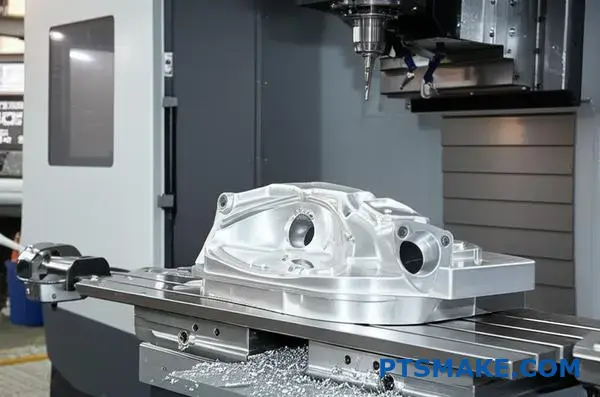
When evaluating a potential high-volume CNC service provider, you need to dig deeper than their sales pitch. A robust evaluation framework is critical. It protects your supply chain and ensures product quality.
Assessing Production Capabilities
Start by examining their equipment list. Do they have modern, well-maintained CNC machines? Ask about their production shifts. A facility running multiple shifts is better prepared for high volume cnc machining demands. At PTSMAKE, we ensure our capacity can scale with our clients’ needs.
Verifying Quality Management Systems
A supplier’s quality system is the backbone of reliability. Look for certifications like ISO 9001. This shows a commitment to standardized processes. Also, ask about their inspection procedures. Do they use Statystyczna kontrola procesu3? This method is vital for maintaining consistency across thousands of parts. A reliable partner will have transparent and rigorous quality checks.
Here are some quality checks to ask about:
| Kontrola jakości | Cel |
|---|---|
| Kontrola pierwszego artykułu (FAI) | Verifies the first part produced meets all specs. |
| Kontrola w trakcie procesu | Monitors quality throughout the production run. |
| CMM Reports | Provides precise dimensional verification of complex parts. |
| Certyfikaty materiałowe | Confirms raw materials meet required standards. |
A structured evaluation of a supplier’s capacity and quality systems is crucial. This approach ensures you find a reliable partner capable of handling the demands of mass production, protecting your project from delays and defects.
The Complete Cost Breakdown Of High Volume CNC Projects
Understanding the true cost of high volume CNC machining is key. It’s more than just the price per part. A full CNC machining price analysis looks deeper.
We break it down into several core areas. These include initial setup, materials, machine time, and finishing. Each plays a distinct role.
Kluczowe składniki kosztów
| Czynnik kosztowy | Opis | Impact on High Volume |
|---|---|---|
| Oprzyrządowanie i konfiguracja | Custom jigs, fixtures, programming. | High initial cost, but low per-unit cost. |
| Materiał | Raw material stock. | Price per unit decreases with bulk buys. |
| Czas obróbki | Time the machine is running. | Optimized for speed in high volumes. |
| Wykończenie | Post-processing steps. | Can be a significant variable cost. |
This structure helps in budgeting large production runs effectively.
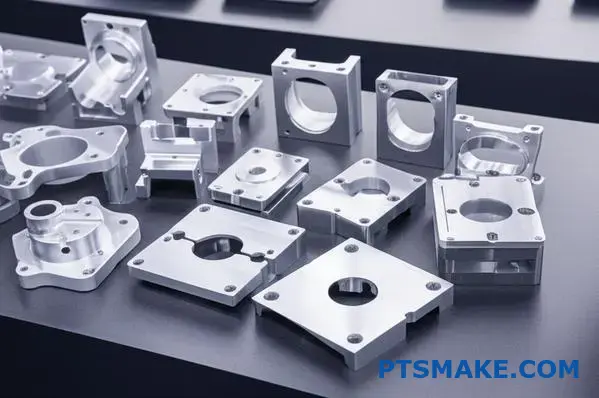
Many focus only on the per-piece price. This is a common mistake when budgeting large production runs. The real story is in how costs are distributed.
One-Time vs. Recurring Costs
Initial costs, like custom tooling and programming, feel high. But these are Non-Recurring Engineering (NRE) costs. They don’t repeat for each part.
In high volume CNC machining, these NRE costs are spread across thousands of units. This process, known as Amortyzacja4, drastically lowers the effective cost per piece.
Here’s a simplified comparison we often show clients:
| Rodzaj kosztu | Low-Volume (100 units) | High-Volume (10,000 units) |
|---|---|---|
| NRE Costs (per unit) | High (e.g., 25% of total) | Very Low (e.g., <1% of total) |
| Material (per unit) | Umiarkowany | Lower (bulk discount) |
| Machining (per unit) | Stabilny | Optimized & Lower |
| Finishing (per unit) | Stabilny | Potentially lower via automation |
This shift is fundamental. At PTSMAKE, we guide our partners through this analysis. It ensures their budget aligns with the realities of large-scale production. Effective CNC machining price analysis considers this full scope. It moves beyond a simple quote to a strategic financial plan.
A full cost breakdown involves analyzing one-time expenses like tooling and recurring costs like materials and machine time. For high-volume projects, spreading initial costs across the entire run is essential for accurate budgeting and achieving a lower per-unit price.
Secrets To Achieving Tight Tolerances In High Volume CNC Runs
Maintaining precision during high volume CNC machining is a different game. A single perfect part is one thing. Ten thousand perfect parts are another.
The main challenge is consistency. Small variations add up over long runs. Success requires a system, not just a skilled operator.
The Foundation of Scalable Precision
Effective dimensional control in CNC manufacturing starts early. It involves robust process planning and automation. This ensures every part is identical.
| Czynnik | Low-Volume Impact | High-Volume Impact |
|---|---|---|
| Zużycie narzędzia | Minimalny | Significant & requires monitoring |
| Thermal Drift | Zarządzalny | Critical to control |
| Partia materiału | Single batch | Multiple batches, potential variance |
At PTSMAKE, we build our processes for scale from day one. This proactive approach is key for tight tolerance CNC machining.
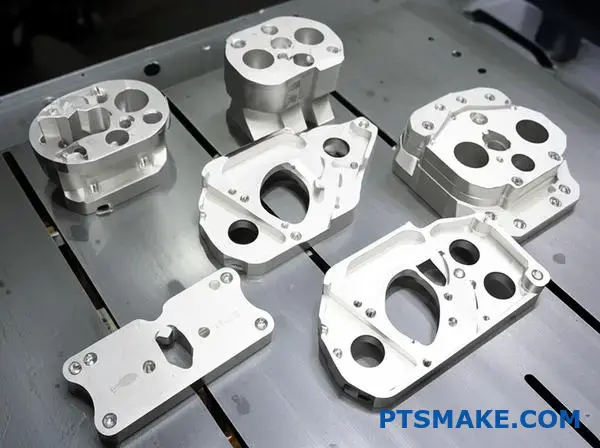
Achieving precision in mass production isn’t about working harder. It’s about working smarter with robust systems. You must move beyond simple post-production inspection.
Advanced Dimensional Control Systems
True consistency comes from real-time monitoring and automated adjustments. We integrate systems that track performance throughout the entire run. This is essential for any serious high volume cnc machining operation.
One powerful tool is Statistical Process Control (SPC). It uses data to predict and prevent defects before they happen. This method monitors key process variables.
Another critical element is in-process probing. Probes directly on the CNC machine measure features during the cycle. This allows for immediate compensation for tool wear or thermal changes. The entire field of Metrologia5 is vital here, ensuring measurement accuracy.
Key Control Methods in Production
| Metoda kontroli | Zastosowanie | Korzyści |
|---|---|---|
| Sondowanie w trakcie procesu | Measures part features on the machine | Immediate feedback and adjustment |
| SPC | Monitors process data over time | Predicts and prevents deviations |
| Skanowanie laserowe | Verifies complex surface geometry | High-speed, non-contact inspection |
| Zautomatyzowana współrzędnościowa maszyna pomiarowa | Final quality assurance checks | Unbiased, repeatable measurements |
These integrated systems provide the dimensional control in CNC manufacturing needed to hold tight tolerances across thousands of parts, ensuring reliability from the first piece to the last.
Achieving precision in high-volume CNC runs requires systematic control, not just operator skill. Integrating real-time monitoring, automated feedback loops, and robust quality systems is essential for maintaining tight tolerances consistently at scale.
How High Volume CNC Machining Lowers Per-Part Cost
Scaling production from a few prototypes to thousands of units is where you see dramatic cost savings. High volume CNC machining changes the entire economic equation.
Initial fixed costs, like programming and tooling, are significant. When these one-time expenses are spread across a large batch, the impact on each individual part becomes minimal. This principle is key to achieving CNC part cost reduction.
The Power of Volume
The logic is straightforward. As production quantity increases, the per-part cost drops significantly.
| Wielkość produkcji | Total Setup Cost | Setup Cost Per Part |
|---|---|---|
| 10 Parts | $300 | $30.00 |
| 100 Parts | $300 | $3.00 |
| 1,000 Parts | $300 | $0.30 |
This demonstrates the direct financial benefit of scaling up your orders.
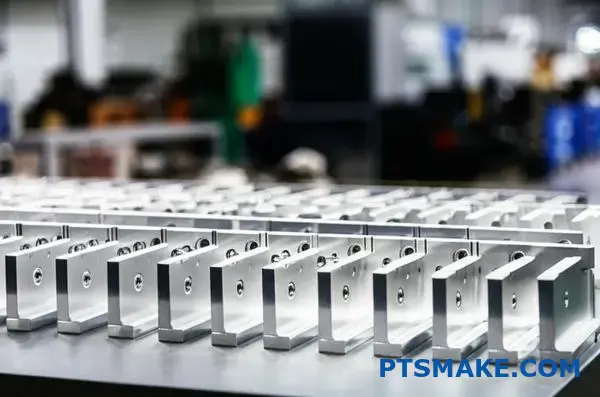
The concept of economy of scale CNC machining extends beyond just setup costs. It influences the entire supply chain and production workflow, leading to comprehensive savings. At PTSMAKE, we leverage these principles to offer competitive pricing on large orders.
Bulk Material Purchasing
For high volume projects, we purchase raw materials in bulk. This allows us to negotiate better rates from our suppliers, a saving we pass on to our clients. A larger order simply gives us more purchasing power.
Optimized Production Flow
Long production runs allow for dedicated machine setups. This eliminates the need for frequent changeovers, which are time-consuming and costly. Once a machine is dialed in, it can run continuously, maximizing efficiency and throughput. The amortyzacja6 of these initial efforts over a large volume is a core benefit.
Labor and Automation Efficiency
Labor costs per part also decrease with volume. The time spent on setup, loading, and quality checks is distributed over thousands of units.
| Współczynnik kosztów | Produkcja małoseryjna | Produkcja na dużą skalę |
|---|---|---|
| Material Cost Per Unit | Standard Price | Discounted Price |
| Czas sprawności maszyny | Niższy | Wyższy |
| Labor Cost Per Unit | Wyższy | Niższy |
These combined effects create the bulk production cost savings CNC is known for, making it ideal for mass production needs.
High volume CNC machining provides substantial cost benefits. By distributing setup fees, securing bulk material discounts, and optimizing workflows, the economy of scale drives down the per-part price, making large production runs highly efficient and affordable.
Quality Control Systems That Ensure Consistency In Large CNC Runs
When producing thousands of identical parts, consistency is everything. A single deviation can compromise an entire batch. It’s not about luck; it’s about robust systems.
At PTSMAKE, we build quality into every step. This ensures every part, from the first to the ten-thousandth, meets exact specifications.
The Foundation of High Volume CNC Machining
True consistency starts before the machine runs. It’s built on a foundation of meticulous planning and control. This is key for high volume CNC machining projects.
Monitorowanie w trakcie procesu
Real-time checks are vital. We use automated probes and regular manual inspections during production. This catches potential issues before they become major problems.
| Check Type | Częstotliwość | Cel |
|---|---|---|
| Inspekcja pierwszego artykułu | Start of run | Verify setup and program |
| Kontrole w toku | Co godzinę | Monitor for tool wear/drift |
| Kontrola końcowa | End of batch | Potwierdzenie ogólnej jakości |
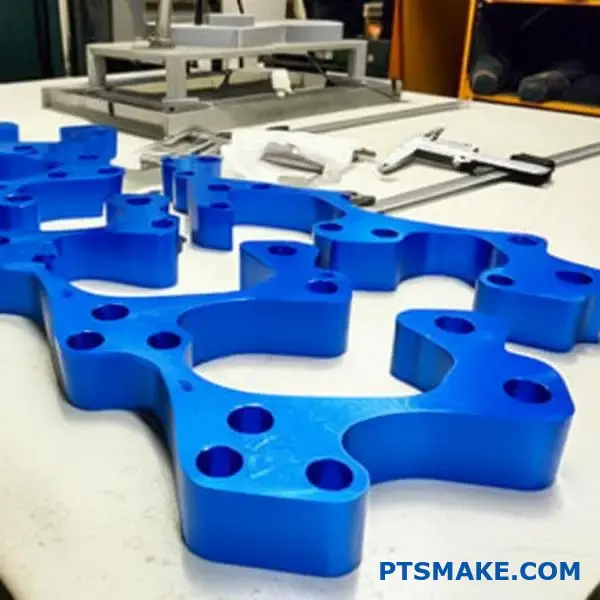
Achieving high repetition precision CNC control demands more than just a good machine. It requires a comprehensive quality assurance framework. This system integrates people, processes, and technology to maintain standards.
Systematic Quality Control
An effective system relies on data and established procedures. For us, ISO-certified CNC production is the baseline, not the end goal. It guides our documentation and traceability.
We use Statistical Process Control (SPC) to monitor and control the process. By analyzing data trends, we can predict and prevent deviations. This is far more effective than just inspecting finished parts. We constantly analyze the machine’s zdolność procesu7 to ensure it remains within tolerance.
Advanced Inspection Tools
Modern tools provide the accuracy needed for complex parts. Our quality assurance for high volume production relies heavily on this technology. Each tool has a specific role in verifying part conformity.
| Narzędzie | Zastosowanie | Poziom precyzyjny |
|---|---|---|
| Współrzędnościowa maszyna pomiarowa (CMM) | Complex geometric dimensions | High (Micron level) |
| Skanery optyczne | Surface profiles and contours | Wysoki |
| Cyfrowe suwmiarki/mikrometry | Basic dimensions (quick checks) | Średni |
This systematic approach minimizes human error. It also creates a data trail for every single part we produce, ensuring full accountability.
Robust quality control systems are essential for consistency in high-volume CNC runs. From initial setup verification to in-process monitoring and final inspection with advanced tools, every step is designed to eliminate variability and ensure every part meets specification.
Material Selection Guide For Durable High Volume CNC Parts
Choosing the right material for high volume CNC machining is a critical decision. It directly impacts your budget and the final part’s durability.
This choice is a balance. You need performance without overspending, especially at scale.
Kluczowe kwestie dotyczące materiałów
When producing thousands of parts, small cost differences add up. The material must align with both performance needs and budget constraints.
| Czynnik | High Volume Impact |
|---|---|
| Unit Price | A primary driver of total project cost. |
| Obrabialność | Faster cycle times reduce labor and machine costs. |
| Trwałość | Reduces failures and replacement costs over the product’s life. |
| Dostępność | Ensures a stable supply chain for uninterrupted production. |
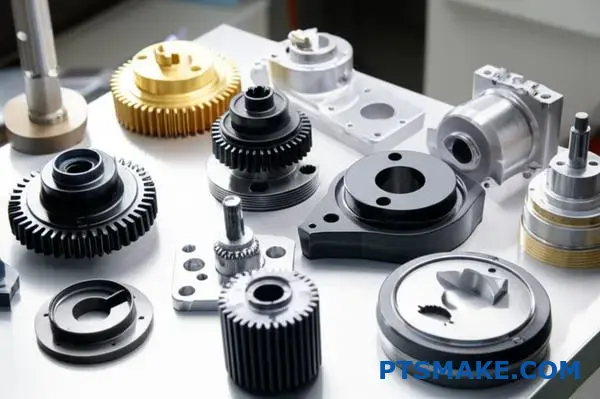
When planning for CNC mass production, the debate often comes down to metals versus plastics. Each category offers distinct advantages. The choice depends entirely on your application’s specific requirements.
Metal Selection for CNC Parts
Metals are the traditional choice for strength and rigidity. For high volume CNC machining, aluminum alloys like 6061 are extremely popular. They offer a great combination of strength and excellent machinability, which reduces cycle times.
Stainless steel offers superior strength and corrosion resistance. However, it is tougher to machine. This increases tool wear and production time, which impacts cost at high volumes. Brass is another great option for its corrosion resistance and ease of machining.
Plastic vs. Metal in High Volume Machining
Plastics can be a game-changer for cost optimization. Materials like Delrin (POM) and Nylon machine quickly and offer good mechanical properties. They are often ideal for parts that require low friction or complex geometries.
High-performance plastics like PEEK can even rival metals in certain applications. They provide excellent chemical resistance and stability at high temperatures. It’s important to consider long-term behavior, such as a material’s odporność na pełzanie8, especially under sustained loads.
| Materiał | Cost Index (Lower is better) | Key Advantage for High Volume |
|---|---|---|
| Aluminium 6061 | 2 | Excellent machinability and strength-to-weight ratio. |
| Stal nierdzewna 304 | 4 | High durability and corrosion resistance. |
| Delrin (POM) | 1.5 | Low cost, fast machining, and self-lubricating. |
| PEEK | 10+ | Superior performance in harsh environments. |
Selecting materials for high volume CNC machining requires a trade-off analysis. You must balance per-unit cost, production speed, and long-term durability. Both metals and plastics offer viable paths depending on the application’s specific mechanical and environmental demands.
Accelerate High Volume CNC Success with PTSMAKE’s Precision Expertise
Experience true scalable manufacturing—partner with PTSMAKE for your next high volume CNC machining project. Get a fast, reliable quote today and discover how PTSMAKE delivers consistent quality, cost savings, and on-time delivery for your mass production needs. Request your quote now!

Learn how producing more can systematically lower your per-unit manufacturing costs. ↩
Learn how minimizing cycle time can dramatically boost your production output and efficiency. ↩
Learn how this data-driven methodology ensures consistent quality in high-volume production runs. ↩
Learn how spreading initial costs over large quantities significantly reduces the per-unit price. ↩
Discover how the science of measurement guarantees your parts meet precise specifications. ↩
Learn how spreading upfront costs over more units lowers the price of each part. ↩
Learn how this statistical measure predicts if a process can meet specifications. ↩
Understand how this property affects part reliability and performance under constant stress over time. ↩