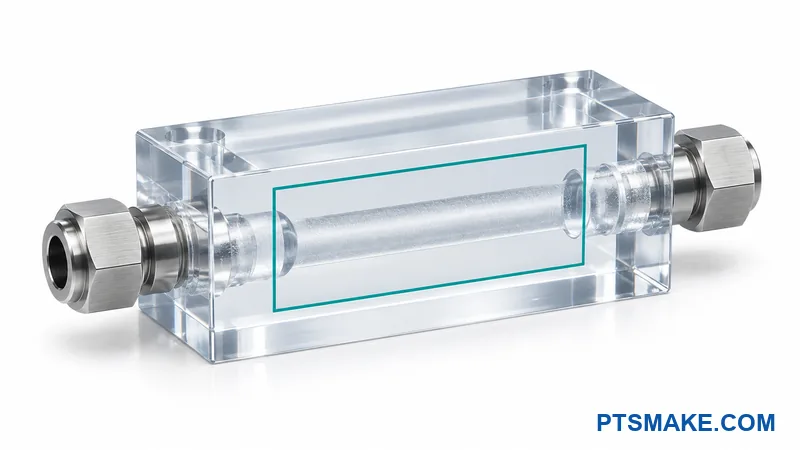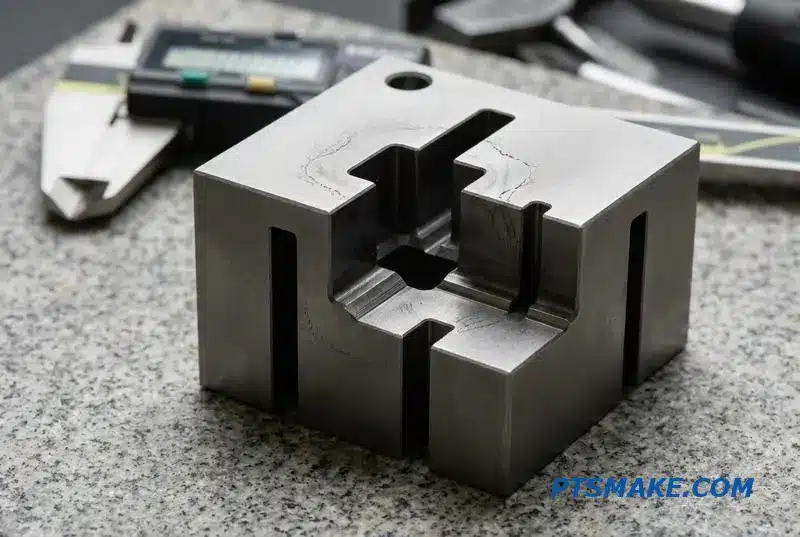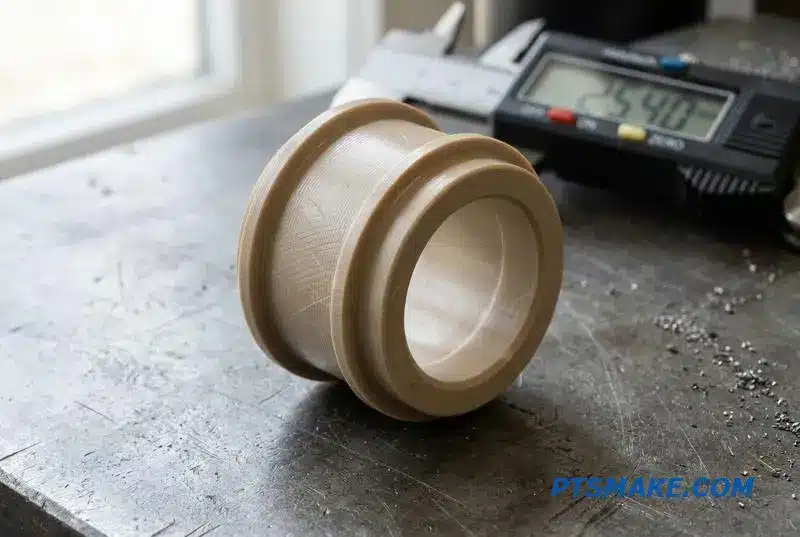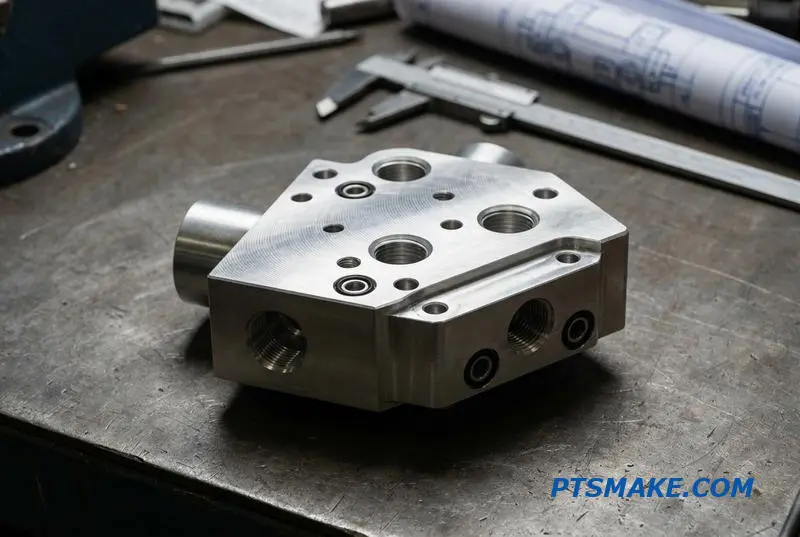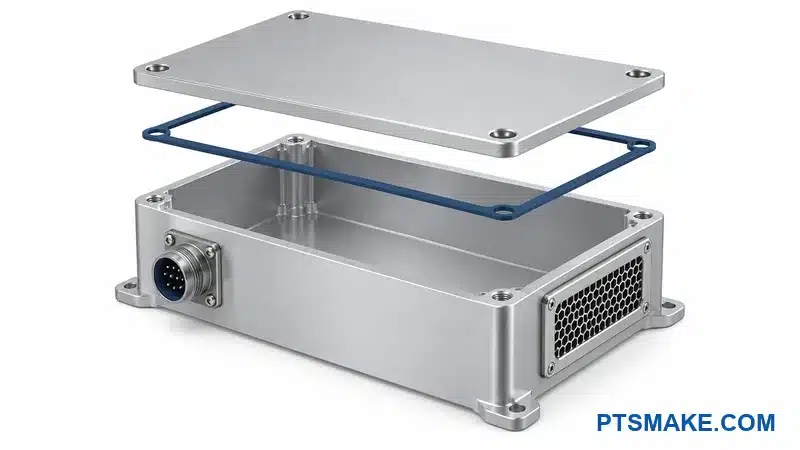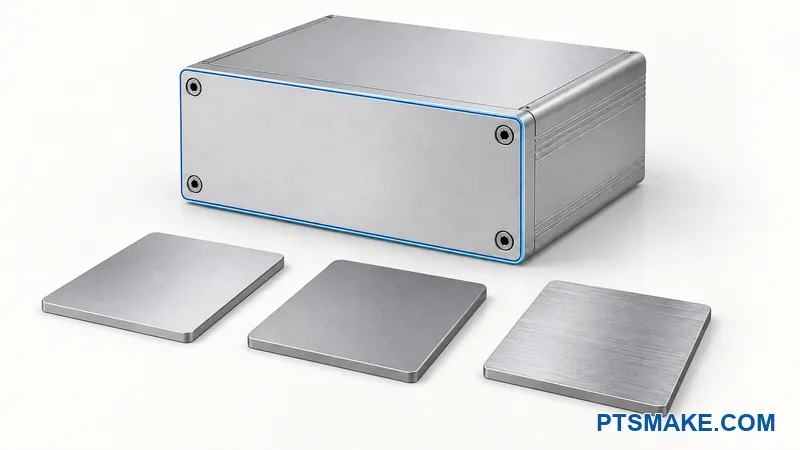

なぜ今、液体冷却部品にCNC加工が重要なのか
AI GPUs now push past 1000W TDP. Data center racks hit 50+ kW. Air cooling can’t keep up, and one leaky cold plate can take down a $2M server rack overnight.
CNC machining is the dominant process for making liquid cooling components like cold plates, manifolds, and fluid connectors because it delivers tight sealing tolerances, complex flow channels, and zero tooling cost — all critical for reliable thermal management in modern high-power electronics.
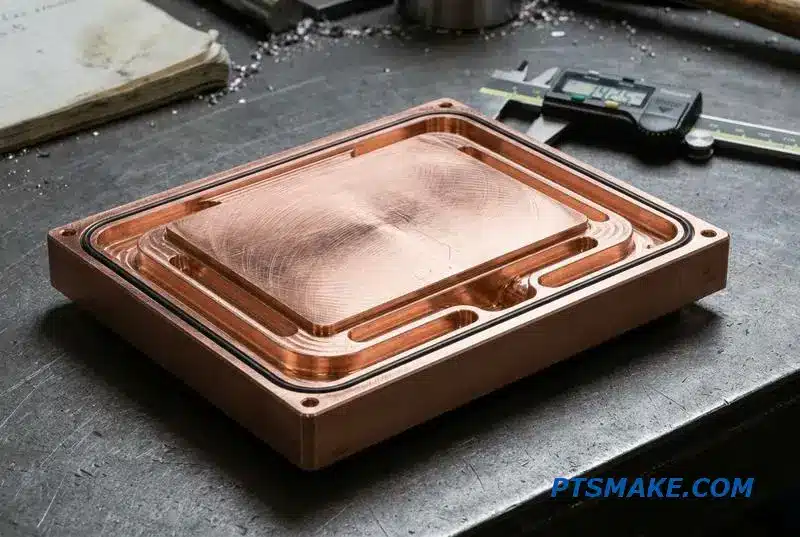
I’ve spent the last few years helping thermal engineers move from prototype to production on liquid cooling projects. Below, I’ll walk you through what really matters — from channel design to O-ring grooves to pressure testing.
なぜCNC加工が液体冷却部品製造を支配したのか
Modern electronics are generating immense heat. We see AI GPUs now exceeding 1000W TDP and data center racks pushing past 50 kW. Air cooling simply can’t keep up, making the shift to liquid cooling essential. This is where CNC machining became the dominant manufacturing process for these critical components.
Unlocking Complex Designs
CNC machining allows for the creation of intricate internal geometries like serpentine paths and microchannels. These designs are vital for maximizing thermal transfer, and CNC machining makes them possible without the high initial tooling costs associated with other methods, especially for prototyping and small batches.
The Importance of Precision and Materials
Tight tolerances on sealing surfaces are non-negotiable to prevent leaks. Our CNC machining services consistently achieve this. Furthermore, material flexibility is a significant advantage, allowing us to use the best material for the job.
| 特徴 | CNC加工 | キャスティング |
|---|---|---|
| 金型費用 | 低い~なし | 高い |
| 精密 | 非常に高い | 低~中 |
| 複雑さ | 高い | ミディアム |
| リードタイム | ショート | ロング |
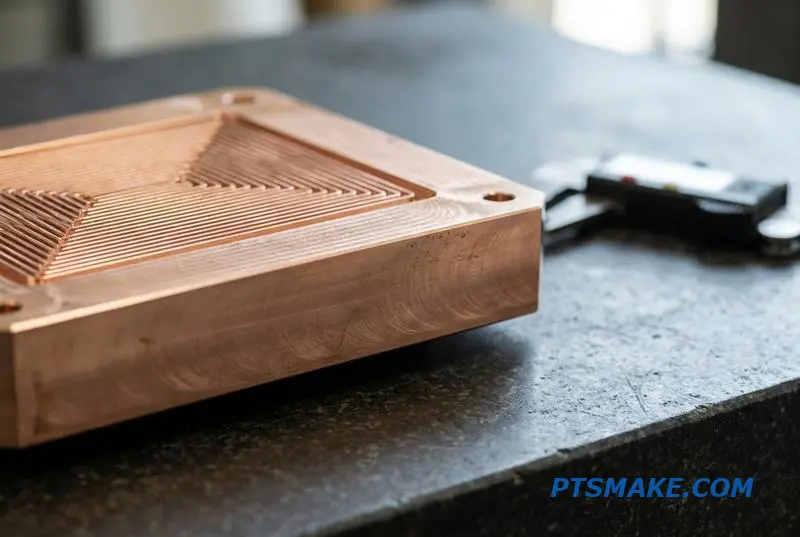
CNC machining for liquid cooling is not just about cutting metal; it’s about enabling advanced thermal designs. It directly bridges the gap between a thermal engineer’s simulation and a physical part that performs reliably. This direct translation from digital model to finished component is key.
Achieving Optimal Fluid Dynamics
The performance of a liquid cooling system depends heavily on the internal flow path. We use CNC milling to create microchannels that maximize the surface area for heat exchange. Unlike other methods, this process ensures the channels are clean and dimensionally accurate, which is critical for efficient performance.
Material Integrity and Thermal Expansion
Material choice is also crucial. While copper offers superior thermal conductivity, aluminum provides a lighter, more cost-effective solution. The manufacturing process must not compromise the material’s properties. Our process also carefully considers the 熱膨張係数1 when mating different materials to prevent stress-induced failures.
| 素材 | 熱伝導率 (W/mK) | 主なメリット |
|---|---|---|
| 銅 C110 | ~385 | 最大性能 |
| アルミニウム6061 | ~167 | コスト効率が高く軽量 |
当社では、エンジニアと協力して熱要件と予算に基づいて最適な材料を選択し、最終部品が妥協なくすべての仕様を満たすことを保証します。.
CNC加工は、高性能な液体冷却コンポーネントの業界標準となっています。高精度で材料の柔軟性をもって複雑な内部形状を生成する能力は、最新のエレクトロニクスの要求を満たすための唯一の実用的な選択肢となっています。.
コールドプレートの種類と、それぞれにCNC加工が必要な場合
適切なコールドプレートを選択するには、パフォーマンスとコストのバランスを取る必要があります。すべての設計で広範なCNC加工が必要なわけではありません。必要な精度レベルが、製造アプローチを決定することがよくあります。主なタイプと、パフォーマンスのためにCNCが不可欠になる場合を分析しましょう。.
チューブ埋め込み型対加工チャネル型
チューブ埋め込み型プレートは、中程度の熱負荷に対してコスト効率が高くなります。当社はCNCを使用して銅管用の正確な溝を加工し、最適な熱接触を保証します。一方、加工チャネル型プレートでは、より複雑な設計と優れたパフォーマンスのために、流体経路が金属に直接フライス加工されます。.
マイクロチャネルおよびろう付けアセンブリ
高出力アプリケーションでは、マイクロチャネルプレートは非常に小さなCNCフライス加工されたフィンを備えています。真空ろう付けアセンブリも、複雑なフィンスタックを作成するためにCNCに依存しています。どちらの方法も熱放散のための最大表面積を提供しますが、より集中的な機械加工プロセスが伴います。.
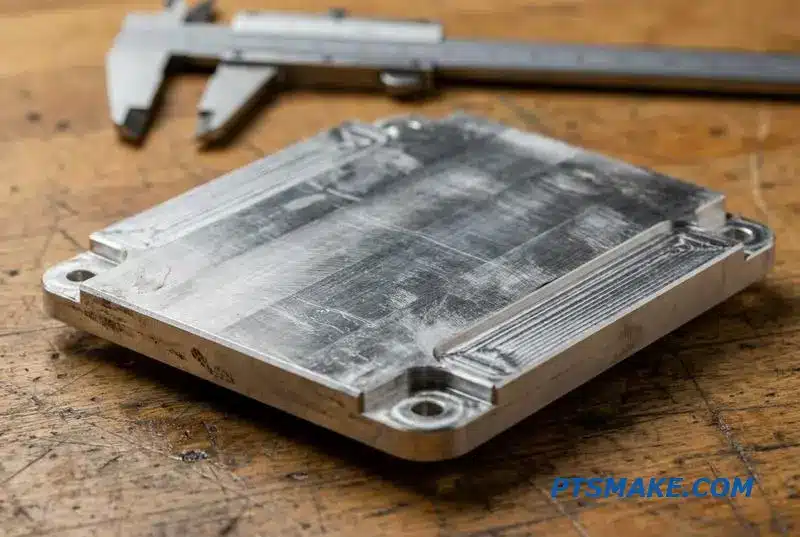
特定のタイプの使用を決定する CNCコールドプレート は、熱要件に完全に依存します。各構造方法は、CNC加工プロセスの複雑さに直接関連する異なるレベルのパフォーマンスを提供します。この関連性を理解することが、効率的な製品設計の鍵となります。.
チューブ埋め込み型および加工チャネル型の詳細
チューブ埋め込み型プレートでは、CNC加工は溝の作成に限定されます。チューブの表面品質が主な要因です。加工チャネル型プレートの場合、当社は CNC加工サービス セルペンタインまたは並列経路全体をフライス加工し、カバーがシールされた後にシームレスな流体チャネルを作成します。.
アドバンスド・サーマル・ソリューション
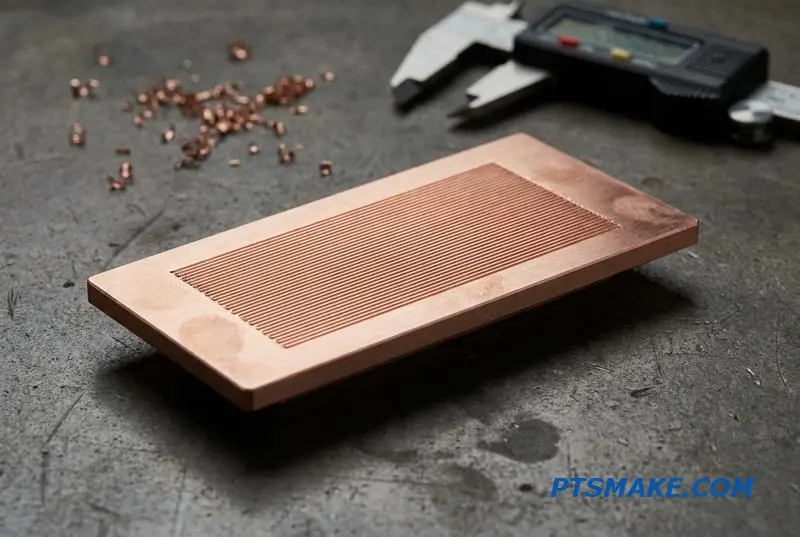
マイクロチャネルプレートは、熱性能を限界まで引き出します。当社は200〜500ミクロンの細さのフィンを加工します。真空ろう付けプレートフィンアセンブリは、CNC加工されたフィンを炉内で積み重ねて接合するプロセスであり、これは ろう付け2. と呼ばれます。これにより、強力で漏れがなく、非常に効率的な熱ユニットが作成されます。.
| 申し込み | 推奨されるコールドプレート | CNCの関与レベル |
|---|---|---|
| ハイパワーIGBT | 機械加工チャンネル/ろう付け | 高い |
| CPU/GPU | マイクロチャンネル | 非常に高い |
| レーザーダイオード | 機械加工チャンネル | 高い |
| EVバッテリー | チューブ埋め込み | ミディアム |
適切なコールドプレートの選択は、熱性能と製造の複雑さのバランスを取ります。高熱アプリケーションでは複雑な設計が求められ、信頼性と効率のために精密なCNC加工が不可欠になります。これにより、コンポーネントが安全な温度範囲内で動作することが保証されます。.
流路設計 — 他の方法では不可能なことをCNC加工が実現すること
熱管理の課題
効果的な熱管理は、内部流路の設計にかかっています。目標は、圧力降下を管理しながら熱伝達を最大化することです。しかし、従来の製造方法では大きな制約があり、熱を除去するために流体をどれだけ効率的に移動できるかが制限されます。.
従来の製造方法の限界
押出成形やプレス成形のような方法は、単純で直線的なチャンネルにはコスト効率が良いですが、複雑なものには苦労します。ダイカストはより多くの選択肢を提供しますが、高い金型コストと、抜き勾配のような設計上の制限が伴います。これらの制約は、最初から熱性能を損なう可能性があります。.
| 製造方法 | 主な利点 | 主要な設計上の制約 |
|---|---|---|
| 押出 | 長尺部品の低コスト化 | 直線的で均一なプロファイルのみ |
| スタンピング | 大量生産、低単価 | 限られた深さとシンプルな形状 |
| ダイカスト | 複雑な外部形状 | 抜き勾配が必要、高MOQ |
CNC加工の利点
CNC加工はこれらの障壁を取り除きます。デジタルモデルから直接、複雑で最適化された流路を作成できます。この自由度により、エンジニアは製造上の制約に縛られるのではなく、まずパフォーマンスのために設計することができます。当社のCNC加工サービスは、まさにこの能力を提供します。.
CNCによる設計自由度の解放
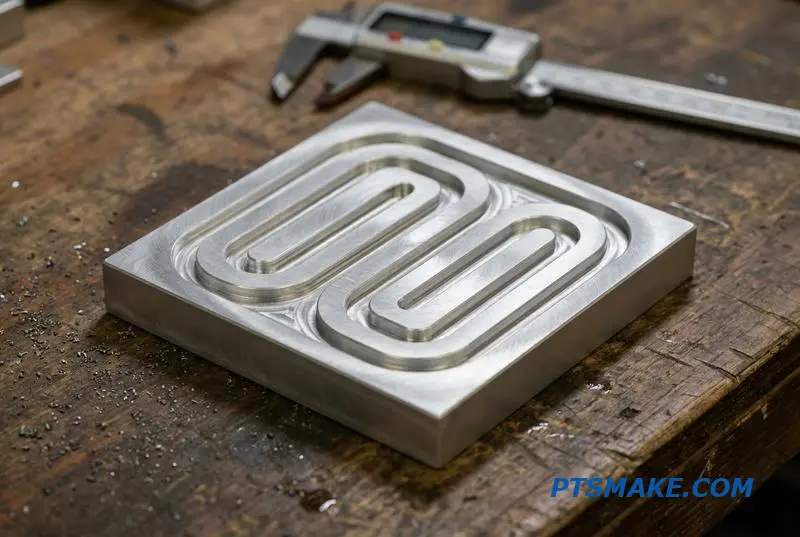
CNC加工は、冷却液流路を作成するための比類なき自由度を提供します。直線的なプリズム形状に限定される押出成形とは異なり、CNCは180度の全回転を持つ蛇行チャネルを生成できます。これにより、特定の領域内でチャネル長を最大化し、熱吸収を向上させます。.
複雑なジオメトリをシンプルに
プレス加工はチャネルの深さを制限し抜き勾配を必要としますが、ダイカストは高価な金型と高い最低注文数を必要とします。CNC加工はこれらの問題を完全に回避します。当社は、密度が可変のピンフィンアレイをミリングしたり、非対称なインレットプレナムを作成したり、均一な流量分布を保証するテーパーチャネルを生成したりすることもできます。.
パフォーマンスのためのエンジニアリング
ジオメトリに対するこの正確な制御は、熱性能の重要な要素である流体力学に直接影響します。チャネルの幅と経路を操作することで、私たちは レイノルズ数3, を制御できます。これは、層流と乱流の間の遷移を支配します。これにより、熱抵抗と圧力降下のバランスを取ることができます。.
例えば、最近、200x200mmの CNCフローチャネルコールドプレート お客様向けです。5パスの蛇行チャネル(幅3mm、深さ4mm)を備え、3軸機械で1回のセットアップで加工され、最適な熱的接触を実現しました。.
CNC加工は、複雑なフローチャネル形状を可能にすることで、優れた熱性能を解き放ちます。押出成形や鋳造のような方法では不可能なこれらの最適化された設計により、エンジニアは流体ダイナミクスを正確に制御し、重要なコンポーネントの熱伝達効率を最大化できます。.
マイクロチャネルコールドプレート — CNC加工の精密フロンティア
高熱流束アプリケーションを扱う場合、標準的な冷却ソリューションでは不十分です。レーザーダイオードやSiCパワーモジュールを含むプロジェクトでこれを経験しました。ここでマイクロチャネルコールドプレートが登場し、熱伝達のための表面積を最大化することで優れた熱性能を提供します。.
高密度冷却の台頭
コンパクトでパワフルなエレクトロニクスの需要は、熱的限界を押し上げています。従来のコールドプレートでは追いつけません。しかし、マイクロチャネル設計は、激しい局所的な熱を放散するための効果的な経路を提供し、敏感なコンポーネントの信頼性とパフォーマンスを保証します。CNC加工サービスは、これらの複雑な構造を作成するための鍵となります。.
主な用途
これらの特殊なコンポーネントは、いくつかの先進産業において重要です。激しい熱負荷を管理する能力は、デバイスの寿命と運用効率に不可欠です。.
| 申し込み | 主要な熱的課題 |
|---|---|
| レーザーダイオード | エミッターでの集中的な熱 |
| SiCパワーモジュール | 高い電力密度とスイッチング損失 |
| 集光型太陽光発電 | 小さなセルに集光された強力な太陽エネルギー |
マイクロチャネルの製造
これらの小さく精密なチャネルを作成するには、特殊な技術が必要です。いくつかの選択肢がありますが、それぞれコスト、速度、機能の異なるバランスを提供します。当社では、パートナーのためにプロトタイプから量産まで最も価値のあるものに注力しています。.
CNC Micro-Milling: The Sweet Spot
For most applications, CNC micro-milling is the ideal solution. It offers design flexibility with near-zero tooling cost, allowing for rapid iteration. We can machine slots from 0.2mm to 1.0mm wide with aspect ratios up to 10:1, turning designs into hardware in days.
Alternative Manufacturing Methods
Other methods have their place. Micro-EDM achieves finer details but is significantly slower. Chemical etching is fast for shallow features but lacks depth control. Deep Reactive-Ion Etching4, or DRIE, offers incredible precision but is typically reserved for silicon wafer fabrication due to its high cost.
| 方法 | 典型的な使用例 | Cost Profile |
|---|---|---|
| CNC Micro-Milling | Prototype to medium volume | 低~中程度 |
| Micro-EDM | Ultra-fine features | 高い |
| ケミカル・エッチング | Shallow, mass-produced channels | 低い(規模) |
| Silicon DRIE | Semiconductor-level precision | 非常に高い |
Tooling and Machining Challenges
Working at this scale has its difficulties. Micro-endmills under 0.5mm are fragile and require precise control to prevent breakage. Effective cooling is also critical, which is why we rely on high-pressure, through-spindle coolant systems to clear chips and maintain a clean surface finish inside the narrow slots.
マイクロチャネルコールドプレートは、高熱流束アプリケーションに不可欠です。さまざまな製造方法が存在しますが、CNCマイクロミーリングは、プロトタイピングおよび中量生産において、精度、コスト、速度の最適なバランスを提供し、高度な熱管理にとって非常に実用的な選択肢となります。.
CNC加工された液体冷却部品の材料
液体冷却コンポーネントの適切な材料を選択することは、重要な最初のステップです。お客様の決定は、熱性能、コスト、製造の複雑さに影響します。最良の選択は、常に特定のアプリケーションの要求と予算の制約に依存します。.
最も一般的な選択肢
アルミニウム 6061-T6 は、しばしばデフォルトの選択肢となります。良好な熱伝導率を持ち、加工が容易であるため、コスト効率の高い万能材です。より高い性能を求める場合は、銅 C110 がその優れた熱特性により、最有力候補となります。.
クイック比較
| 素材 | 熱伝導率 (W/mK) | 主な特徴 |
|---|---|---|
| アルミニウム 6061-T6 | 167 | 最もバランスの取れた価値 |
| 銅 C110 | 395 | 最も高い熱性能 |
| ステンレススチール316L | 16 | 優れた耐食性 |
パフォーマンスとコストのこのバランスは、熱管理のためのCNC機械加工サービスを提供する上で、常にテーマとなっています。.
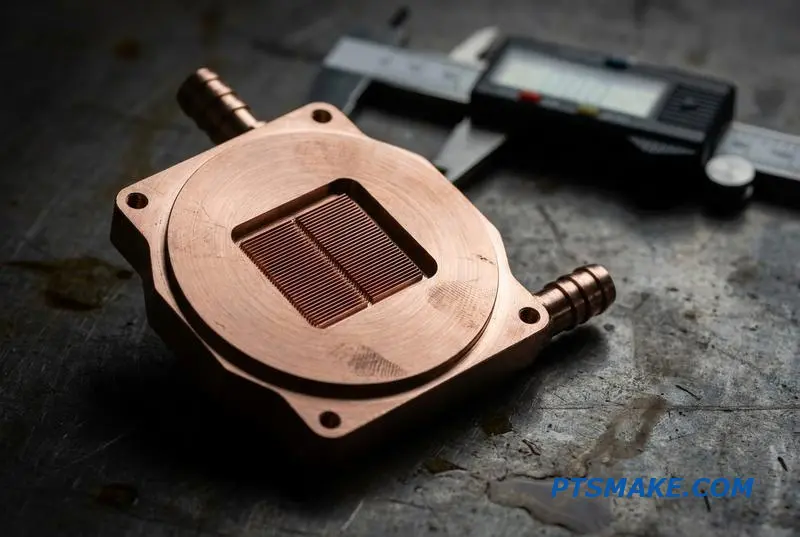
アルミニウムと銅が主な選択肢ですが、特殊なアプリケーションでは異なる材料が必要になります。例えば、耐食性が熱伝導率よりも重要な自動車用グリコールループのフィッティングには、ステンレス鋼 316L を使用します。チタン グレード 2 は、腐食性の高い産業環境向けです。.
アルミニウム対銅製コールドプレート
お客様はしばしば、銅の性能がそのコストに見合うかどうかを尋ねます。銅は、6061アルミニウムの約2.5倍の熱伝導率を提供します。しかし、材料費と加工費の両方で、3〜5倍高価になることもあります。銅は、高出力CPUやレーザーなど、わずかな温度差が重要なアプリケーションで正当化されます。.
高度な考察
異種金属ループの場合、ニッケルメッキアルミニウムは優れたソリューションです。メッキは、 ガルバニック腐食5, 、異なる金属が電解質に接触したときに発生する可能性があります。当社のCNC機械加工サービスは、これらの特定の材料および仕上げ要件を効果的に処理するように調整されています。.
意思決定マトリックス
| 申し込み | 熱的ニーズ | 推奨素材 | CNC加工性 | 相対コスト |
|---|---|---|---|---|
| Consumer PC | ミディアム | アルミニウム 6061-T6 | 素晴らしい | 低い |
| High-End Server | 高い | 銅 C110 | フェア | 高い |
| Automotive Loop | Low (Connectors) | ステンレススチール316L | グッド | ミディアム |
| 医療機器 | High (Purity) | Copper C101 OFHC | フェア | 非常に高い |
Selecting the ideal material is a crucial balance between thermal needs, machinability, corrosion resistance, and budget. For most projects, aluminum offers a great starting point, but copper is essential when maximum heat dissipation is the primary goal.
シール精度 — Oリング溝の公差がコールドプレートの漏れを決定する理由
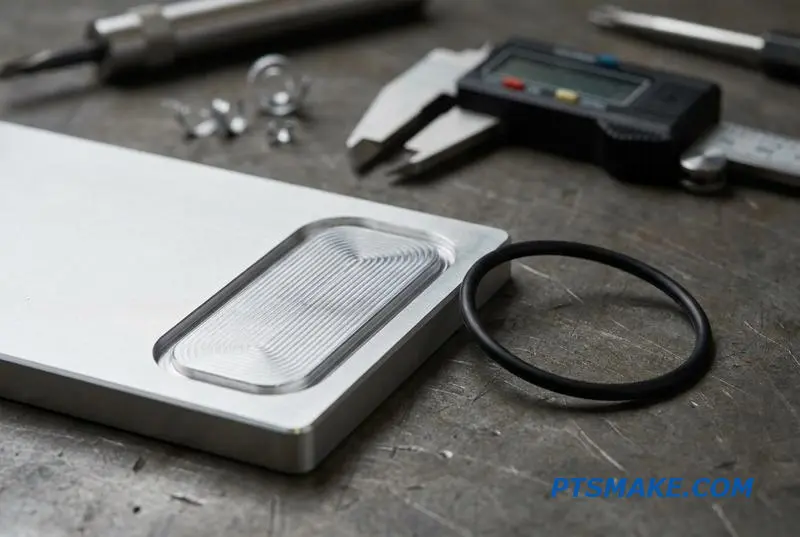
The most common failure in liquid cooling is leakage. This almost always happens at the sealing interface where an O-ring sits. The precision of the O-ring groove isn’t just a detail; it’s the single most important factor determining if your cold plate leaks under pressure.
Key Groove Design Principles
Success depends on controlling groove depth, surface finish, and wall perpendicularity. Even small deviations can compromise the seal. We focus on these details in our O-ring groove machining process because they prevent field failures before they ever happen.
Groove Type Comparison
| 特徴 | Dovetail Groove | Rectangular Groove |
|---|---|---|
| O-Ring Retention | 素晴らしい | グッド |
| 加工コスト | より高い | より低い |
| 一般的な使用 | High vibration | 汎用 |
製造方法が重要な理由
完璧な溝を設計できても、最終的な品質は製造方法によって決まります。例えば、ダイカストでは、直接必要な公差や表面仕上げを実現するのが難しいことがよくあります。その結果できる溝は、シールとして信頼できるものにするために、通常、二次加工が必要になります。.
ここで、精密CNC加工が明確な利点をもたらします。最初から仕様を満たす溝を加工できます。.
重大な故障の事例
あるプロジェクトで、クライアントのコールドプレートが8 barで故障したことを思い出します。溝の深さは2.5mmと指定されていましたが、以前のサプライヤーは2.6mmで製造していました。このわずか0.1mmの誤差がOリングの圧縮を低下させ、シールを妨げました。 押出6 その後の漏れ。.
これは、Oリング溝加工がいかに重要であるかを強調しています。以下は、私たちが通常扱う公差であり、当社のCNC加工サービスは一貫してこれを達成しています。.
| パラメータ | 標準公差 | クリティカル・アプリケーション |
|---|---|---|
| 溝の深さ | ±0.05 mm | ±0.025 mm |
| 表面仕上げ (Ra) | ≤ 0.8 µm | ≤ 0.4 µm |
| 壁の垂直度 | 0.1°以内 | 0.05°以内 |
これらの厳しい公差を維持することで、すべての部品が完璧で持続的なシールを作成することを保証します。.
精密なOリング溝は、信頼性の高い液体冷却には譲れません。深さ、仕上げ、または垂直度のずれは漏れにつながります。精密Oリング溝加工は費用ではなく、製品の信頼性への投資であり、コストのかかるフィールド故障を直接防止し、長期的なパフォーマンスを保証します。.
マニホールド加工 — 圧力不均衡なしに複数のコールドプレートを接続する
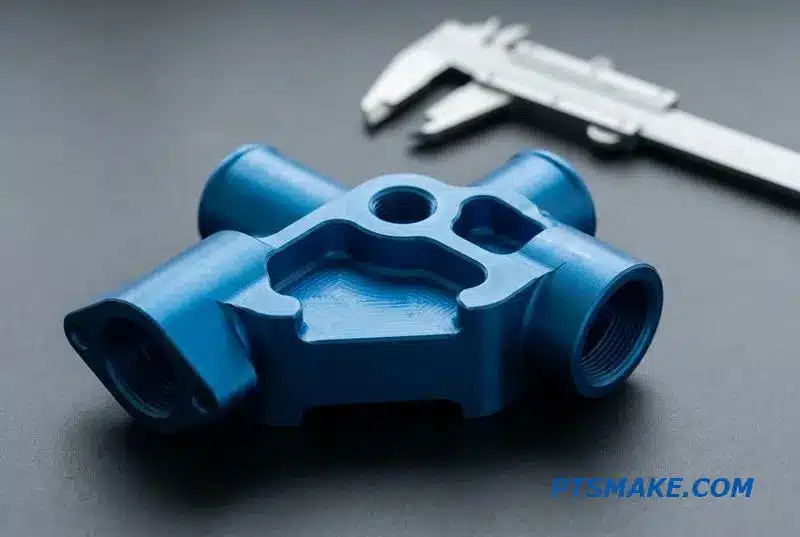
液体冷却マニホールドは、現代のクーラント分配ユニット(CDU)およびラックレベルシステムの中核をなします。それらの役割は、複数のコールドプレートにクーラントを均等に分配することです。圧力の不均衡や漏れなしにこれを達成することが、製造における主な課題です。.
The design demands absolute precision. This includes creating complex internal flow passages and multiple threaded ports at exact locations. Every connection must be perfectly sealed. Our approach using advanced CNC machining services ensures every manifold meets these strict requirements for optimal performance.
The Role in System Integrity
Manifolds act as the circulatory system for high-density electronics. Any failure, like a leak or imbalanced flow, can lead to catastrophic hardware damage. That’s why machining them from a solid billet is often the most reliable method.
Precision Machining for Flawless Performance
Creating a reliable manifold requires a multi-step CNC machining process. For complex multi-port designs, we use 4-axis or 5-axis milling to machine the external features and port locations with high precision. This is critical for ensuring proper alignment in the final assembly.
Crafting Internal Passages
Long internal flow passages are created using specialized techniques. After our tests, we found BTA deep-hole drilling7 is ideal for maintaining straightness and a smooth finish over long distances, which is essential for predictable fluid dynamics. Passages are then carefully plugged to create a sealed, continuous flow path.
Port Creation: Thread Milling vs. Tapping
For port threads, thread milling is superior to tapping. It offers much better control over positional tolerance and thread quality. This precision is non-negotiable for ensuring leak-free connections across every port.
| 特徴 | ネジ切り | タッピング |
|---|---|---|
| 位置精度 | 高い | 中程度 |
| スレッドの品質 | 素晴らしい | グッド |
| 金型費用 | より高い | より低い |
| プロセス制御 | スーペリア | スタンダード |
For example, we machined a 12-port distribution manifold for an AI server cabinet from a single 6061 aluminum billet. This design for CNC manifold liquid cooling eliminated 24 potential leak points that would have existed with traditional tube fittings.
Precision CNC machining is the key to producing reliable, leak-free liquid cooling manifolds. This manufacturing approach ensures balanced flow and enhances overall system integrity, which is critical for high-performance computing applications and prevents costly failures.
流体コネクタとクイックディスコネクトカップリング — スイス旋盤加工の真骨頂
In liquid cooling systems, performance hinges on the smallest components. Quick-disconnect (QD) couplings, fittings, and valves are where Swiss-type CNC lathes truly excel. Their ability to produce highly concentric parts with exceptional surface finishes is critical for leak-proof performance and reliability.
Key Components in Liquid Cooling
These small, cylindrical parts are the backbone of any fluid loop. They must be machined perfectly to prevent costly failures. At PTSMAKE, we focus on achieving this precision from the very first part.
Fitting Types and Functions
Different fittings serve specific roles within a cooling loop. Each requires a unique manufacturing approach to ensure a secure connection.
| フィッティング・タイプ | 主要用途 | 加工フォーカス |
|---|---|---|
| Barbed Fittings | フレキシブルチューブ | Sharp, consistent barbs |
| 圧縮継手 | Rigid tubing | Precise thread & ferrule seat |
| QD Couplings | Frequent connection | Sealing cone & valve seats |
This is where Swiss turning demonstrates its superiority for manufacturing liquid cooling connectors.
Swiss turning is not just a preference for these components; it’s a necessity. The process inherently supports the part along its length, minimizing deflection and vibration. This is crucial for achieving the tight tolerances needed for reliable fluid connectors.
Precision Sealing Surfaces
The most critical feature of any coupling is its ability to create a perfect seal. For sealing cones and valve seats, we often need a surface finish of Ra ≤ 0.2 μm. Anything less compromises the seal, leading to leaks over time, especially under pressure.
Threads and Grooves
For QD coupling threads, thread rolling is often superior to single-point threading. It creates stronger, smoother threads, which improves durability over many connection cycles. Turning O-ring grooves on diameters under 10mm also demands extreme stability to avoid tool chatter and ensure groove geometry is perfect for seal compression. True 集中力8 が重要です。.
ケーススタディ:自動車用QDカップリング
最近、自動車用バッテリー冷却ループ用のQDカップリングボディを製造しました。部品は316Lステンレス鋼から機械加工されました。主な課題は、位置公差±0.01mmで60度のシーリングコーンを機械加工することでした。当社のスイスCNC機械加工サービスは、生産ロット全体で必要な精度を一貫して提供しました。.
スイス旋盤加工は、高性能な液体冷却コネクタを製造するのに理想的な方法です。厳しい公差を維持し、微細な表面仕上げを実現し、同心度を確保する能力は、自動車やエレクトロニクス冷却などの重要なシステムで必要とされる漏れのない信頼性の高いコンポーネントを作成するために不可欠です。.
CNC加工された冷却部品の圧力試験要件
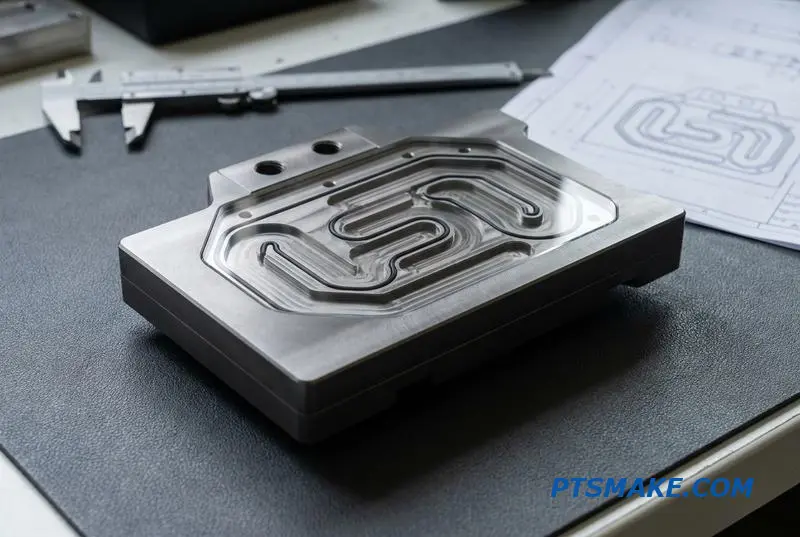
CNC機械加工された冷却コンポーネントを製造する場合、圧力試験はオプションではありません。漏れのない性能と運用上の安全性を保証するための重要なステップです。故障した部品は壊滅的なシステム損傷につながる可能性があるため、堅牢なテストは私が監督するあらゆるプロジェクトの信頼性の基盤となります。.
主要なテストパラメータ
エンジニアは、通常、最大動作圧力の1.5倍のテスト圧力と保持時間を明確に定義する必要があります。この期間は通常、30秒から数分です。具体的な時間は、アプリケーションの重要度と設計に関わる材料によって異なります。.
一般的な試験方法
アプリケーションによって異なるアプローチが必要です。PTSMAKEのクライアントとの作業経験に基づくと、各テストタイプの明確な理解は、適切な要件を指定するために不可欠です。.
| テスト・タイプ | 主な目的 | 共通アプリケーション |
|---|---|---|
| 静水圧 | 漏れおよび強度検証 | 液体充填コールドプレート |
| 空気圧式 | 高感度漏れ検出 | 真空ろう付けアセンブリ |
| バースト | 設計マージン検証 | 新製品検証 |
高度な試験プロトコル
Beyond standard checks, we often see combined tests. For instance, thermal cycling combined with pressure cycling simulates real-world operating conditions more accurately. This process exposes weaknesses that might not appear under static pressure alone, ensuring a more robust and reliable final product.
For vacuum-brazed cold plates, pneumatic testing with a helium leak detector is standard. It offers much higher sensitivity than hydrostatic tests for detecting micro-leaks. Burst pressure testing, while destructive, is invaluable for validating the ultimate design margin during the critical prototyping phase.
How Machining Quality Affects Outcomes
The quality of our CNC Machining Services directly impacts test results. Inconsistent wall thickness, a common issue with poor tool path programming, creates areas of high 応力集中9. These areas are the most likely points of failure when a component is placed under pressure.
A smooth surface finish in O-ring grooves is equally vital. Any minor imperfection or tool mark can create a leak path, causing a part to fail a test. Precision machining eliminates these risks and ensures a perfect seal. This attention to detail is fundamental to successful liquid cooling component testing.
| 基準 | 合格条件 | 故障条件 |
|---|---|---|
| 圧力降下 | No observable drop during hold time | Any pressure loss below specified tolerance |
| 目視検査 | No leaks, cracks, or permanent deformation | Any visible fluid leakage or material yielding |
| Leak Rate (Pneumatic) | Below the maximum specified rate | Exceeds the helium leak rate threshold |
Specifying the correct liquid cooling component testing protocols is essential. These tests will only succeed if the underlying CNC machining quality is high. Precision in manufacturing directly ensures reliability under pressure, preventing costly failures for our clients in the field.
コールドプレートベースプレートにおけるCNC加工対押出成形
Choosing the right manufacturing method for cold plate base plates is a critical decision. The choice between full CNC machining and extrusion with secondary machining hinges on volume, design complexity, and lead time. Each approach has distinct advantages that I’ve seen play out on various projects.
Full CNC Machining Advantages
CNC加工サービスにより、デザインの自由度が無限に広がります。複雑で非線形の流路も、単純な直線的な流路と同様に実現可能です。ツーリングへの投資が不要なため、デザイン変更も容易かつ費用対効果が高くなります。この方法では、取り付け機能やポートを1回のセットアップで統合することも可能です。.
押出成形と二次CNC加工の利点
押出成形は、直線的な流路設計のコールドプレートの大量生産に最適です。初期の金型費用は大きいですが、数量が増えるにつれて単価は劇的に低下します。これにより、デザインが確定した量産において、費用対効果の高いソリューションとなります。.
| 特徴 | 完全CNC加工 | 押出成形+二次CNC加工 |
|---|---|---|
| 幾何学 | 無限の複雑さ | 直線的な流路のみ |
| リードタイム | 短期(ツーリングなし) | 長期(金型リードタイム6~8週間) |
| 初期費用 | ツーリングコストゼロ | 高い金型費用 |
| 単価 | 大量生産では高くなる | 大量生産では低くなる |
| 最低数量 | なし | 高い(金型費用を相殺するため) |
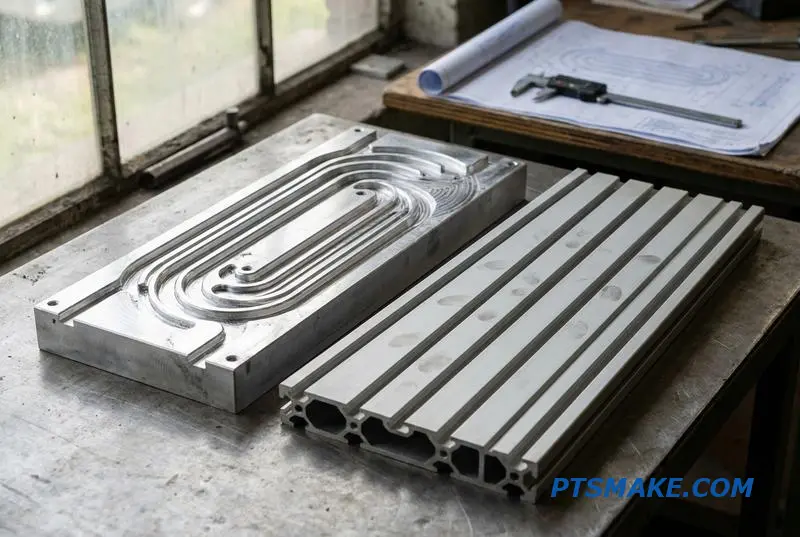
Engineers often ask me about the crossover point where one method becomes more economical than the other. This decision is rarely black and white; it’s a strategic choice based on your project’s lifecycle, budget, and performance requirements.
The Breakeven Analysis
The primary factor is the breakeven volume. For extrusion, the high upfront cost of the die must be amortized over the production run. This makes low-volume runs of 100 pieces very expensive. Full CNC machining avoids this tooling cost entirely, making it the default for prototyping and low-volume production.
Based on our analysis with clients, the breakeven point where extrusion plus secondary CNC becomes cheaper is typically between 500 and 2,000 units. The exact number depends on the plate’s size and the complexity of the secondary machining operations. Complex features like o-ring grooves or intricate porting can push the breakeven volume higher. It’s also important to consider the material properties, as the extrusion process can sometimes cause issues like Die swell10, which may affect final tolerances.
A Decision Framework for Engineers
Here is a simple framework to guide your choice between CNC vs extruded cold plate manufacturing methods.
| シナリオ | 推奨方法 | 根拠 |
|---|---|---|
| Prototype / < 500 units | 完全CNC加工 | No tooling cost, design flexibility, fast turnaround. |
| High Volume / > 2000 units | 押出成形+二次CNC加工 | Lower per-unit cost significantly outweighs die cost. |
| Complex Fluid Path | 完全CNC加工 | Extrusion cannot create non-linear or complex channels. |
| Uncertain Design | 完全CNC加工 | Allows for inexpensive design iterations. |
プロトタイプや少量生産においては、フルCNC加工が比類なき柔軟性とスピードを提供します。生産規模が拡大し、設計が安定するにつれて、二次的なCNC加工を伴う押出成形が、シンプルで直線的なチャンネル設計においてはよりコスト効率の高いソリューションとなります。最終的な選択は、コスト、数量、設計の複雑さのバランスを取ることになります。.
コールドプレート mating 面の平面度仕様 — 実際に達成可能なこと
平坦度はコールドプレートの図面において重要な寸法ですが、最も頻繁に過剰指定される項目の一つでもあります。CNC加工サービスで実際に達成可能なことを理解することは、パフォーマンスとコストのバランスを取るのに役立ちます。ほとんどのアプリケーションでは、二次加工なしで標準的な平坦度を達成できます。.
標準的な平坦度 vs. 精密な平坦度
標準的な加工は、一般的な冷却ニーズに対して優れた結果をもたらします。しかし、より高い熱流束を必要とする要求の厳しいアプリケーションでは、より厳密な制御が必要です。これには、安定性と精度を確保するために、最終的な切削前に材料の応力除去などの追加ステップが含まれます。.
| レベル | 平坦度(300mmあたり) | 備考 |
|---|---|---|
| スタンダード | 0.05 mm / 0.002 インチ | 標準的なCNCフライス加工の実践によって達成されます。. |
| 精密 | 0.02 mm / 0.0008 インチ | 応力除去と最適化された治具が必要です。. |
| 超高精度 | 0.005 mm / 0.0002 インチ | 加工後のラップが必要です。. |
コストとパフォーマンスのトレードオフ
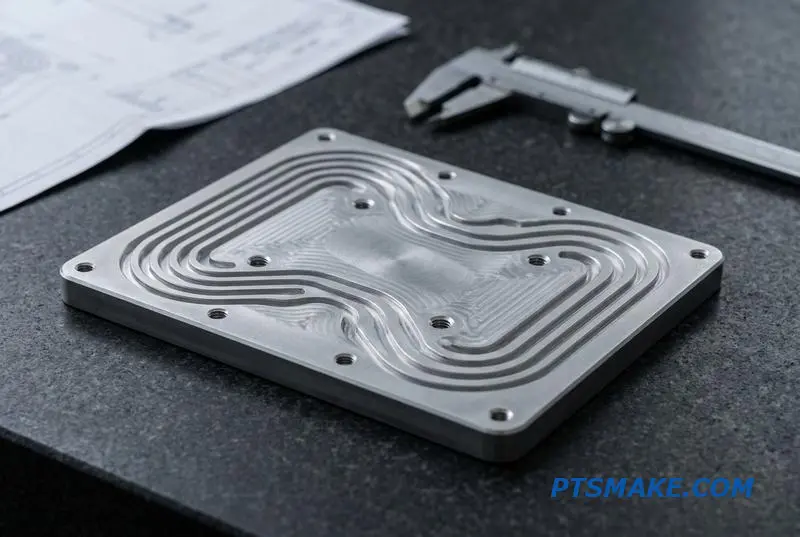
平坦なコールドプレート表面の主な目的は、熱伝導性インターフェース材料(TIM)の厚さを最小限に抑えることです。TIM層が薄いほど、熱抵抗が低くなり、熱伝達が向上します。しかし、極端な平坦性を追求することには、収穫逓減があります。.
加工コストへの影響
0.02 mm よりも厳しい公差、特に大型プレートでの公差を達成するには、コストが大幅に増加します。多くの場合、複数の機械加工セットアップ、専用の応力除去サイクル、温度制御された仕上げパスが必要です。IGBTモジュールやレーザーダイオードの表面のような最高の精度を得るには、機械加工後の ラッピング11 が必要です。.
実用的な仕様ガイド
最終決定する前に コールドプレートの平面度公差, 、使用を計画しているTIMを考慮してください。400mmプレートで±0.02mmの平面度を指定すると、0.2mm厚のサーマルパッドを使用している場合、熱的メリットは最小限でコストが大幅に増加します。TPCでは、クライアントがこのトレードオフを分析するのを支援します。.
| TIMの厚さ | 推奨される平面度 | 根拠 |
|---|---|---|
| > 0.15 mm | 0.05 mm | TIMはより大きなギャップを埋めることができるため、極端な平面度は冗長になります。. |
| 0.05 – 0.15 mm | 0.02 mm | 熱性能と製造コストの間の良いバランス。. |
| < 0.05 mm | < 0.01 mm | 非常に薄いインターフェイス材料で最小限の熱抵抗を得るために必要です。. |
Specifying flatness requires balancing thermal goals with manufacturing costs. An extremely tight tolerance is only effective when paired with a thin thermal interface material. Always evaluate the entire thermal stack to avoid over-engineering and unnecessary expenses on your CNC machining services.
液体冷却部品のねじポート — NPT対G対UNF
Selecting the right liquid cooling port threads is crucial for creating a reliable, leak-free system. The choice between NPT, G (BSPP), and UNF standards directly impacts sealing effectiveness, assembly, and regional compatibility. Each type has specific design and manufacturing considerations.
主な相違点
Making an informed decision starts with understanding the fundamental differences in how these threads are designed to seal. This choice influences the entire component design, from wall thickness to surface finish requirements, which our CNC machining services expertly handle.
| スレッドタイプ | シール方法 | 幾何学 | 共通地域 |
|---|---|---|---|
| かくふかくさんじょうやく | Thread interference (sealant required) | テーパード | 北米 |
| G (BSPP) | Gasket or O-ring on face | パラレル | Europe, Asia |
| 国連規約人権委員会 | O-ring in a groove (boss seal) | パラレル | High-Pressure (SAE J1926) |
Understanding these distinctions is the first step toward preventing costly leaks and ensuring long-term performance in your thermal management system.
Manufacturing and Design Rules
Beyond the basic type, how the thread is manufactured and integrated into the component design is critical for performance. The choice of manufacturing process can significantly affect the quality and reliability of the seal, especially for liquid cooling applications where leaks are unacceptable.
CNC Machining Considerations
For tapered NPT threads, we often recommend thread milling over tapping. Thread milling produces a superior surface finish on the thread flanks, which is essential for achieving a reliable seal with sealant. Tapping can sometimes tear the material, creating potential leak paths.
シングルポイントねじ切りは、特に標準外のサイズやプロファイルにとって、もう一つの貴重な技術です。この方法により、ねじの形状を正確に制御でき、カスタム冷却ソリューションの正確な仕様を満たすことができます。これは、当社の高度なCNC加工サービスのコア機能です。.
クリティカルな設計パラメータ
ポートを配置する際には、ポートと隣接する冷却チャネルとの間に十分な肉厚を維持することが重要な設計規則です。お客様との共同研究により、アルミニウム部品で5 barの圧力の場合、最低3mmが安全な目安であることが示されています。.
GおよびUNFねじの場合、シールはOリングに依存します。部品の面は滑らかで平坦でなければなりません。さらに重要なのは、ポートの軸が優れた 垂直性12 シール面に垂直であることです。これにより、Oリングが均一に圧縮され、圧力下での漏れを防ぎます。.
| 特徴 | かくふかくさんじょうやく | G (BSPP) | UNF(Oリングボス) |
|---|---|---|---|
| シーラント/テープ | 必須 | 不要 | 不要 |
| Oリング溝 | いいえ | いいえ(フェイスシールを使用) | はい |
| 表面仕上げ | ねじのクリティカル | 面のクリティカル | 面と溝のクリティカル |
| 垂直性 | 批判的ではない | 非常に批判的 | 非常に批判的 |
正しい選択 liquid cooling port threads は、NPT、G、UNF規格間のトレードオフを理解することを含みます。成功は、正確なCNC加工の実践と、肉厚や表面の垂直度などの設計規則を遵守することにかかっており、堅牢で漏れのない冷却部品を保証します。.
液体冷却部品に5軸CNCを使用する場合
5軸CNC加工が常に必要とされるわけではありませんが、特定の複雑な液体冷却部品にとっては唯一の実用的なソリューションです。これにより、従来の3軸マシンでは不可能な形状を作成でき、最終製品のパフォーマンスと信頼性の両方を保証します。.
輪郭加工された特徴と角度付きの特徴
Many modern applications require cold plates to mate with non-flat surfaces like curved IGBT modules or cylindrical laser diodes. Five-axis machining allows us to create these contoured surfaces and drill angled ports on them in a single setup, maintaining critical positional accuracy.
Complex Internal Geometries
Internal features are where 5-axis CNC truly shines for liquid cooling. Manifold blocks often have intersecting passages that can only be reached from compound angles. This capability is essential for minimizing pressure drop and ensuring uniform coolant flow throughout the system.
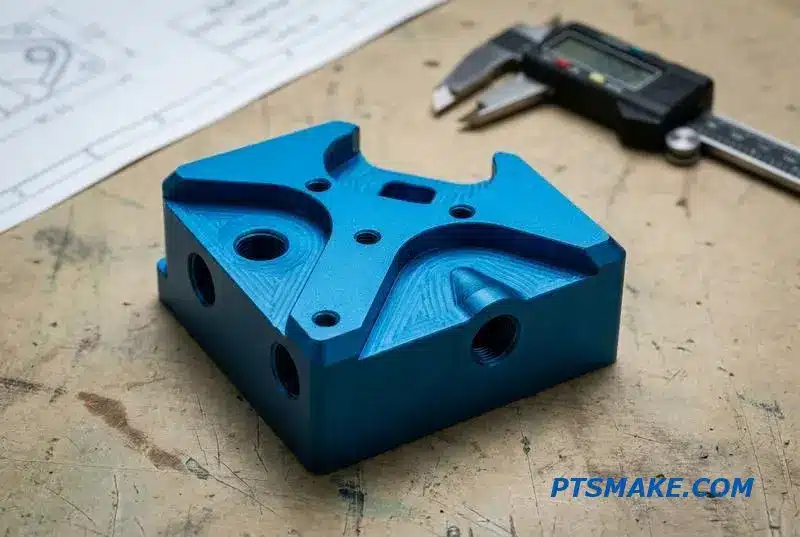
Deciding between 3+2 and full simultaneous 5-axis machining is a critical step. From my experience, most 5-axis CNC liquid cooling components only require 3+2 positional machining. This approach offers most of the benefits without the higher programming and cycle time costs of full 5-axis.
3+2 vs. Full Simultaneous 5-Axis
Full simultaneous 5-axis is necessary for parts like impellers or components with continuously curving internal channels. For most manifolds and cold plates with angled features, 3+2 is the more efficient choice. It positions the part at a compound angle and then performs 3-axis machining operations.
The primary benefit here is setup reduction. A complex coolant distribution unit (CDU) manifold might need four or more separate setups on a 3-axis machine. Each new setup introduces a potential for error, leading to トレランス・スタックアップ13.
| フィーチャー・タイプ | 3-Axis Setups | 5-Axis Setups | 主な利点 |
|---|---|---|---|
| Angled Ports on 5 Faces | 4-5 | 1 | Reduced tolerance stack-up |
| Contoured Cold Plate | 2-3 | 1 | Better surface continuity |
| Helical Battery Sleeve | 2 (with rotary) | 1 | Superior accuracy & finish |
At PTSMAKE, we guide clients on this choice to optimize cost and precision. By machining a part in a single setup, we ensure all features are perfectly aligned, which is critical for leak-proof and efficient thermal management systems. Our CNC machining services are built on this expertise.
Five-axis CNC is indispensable for complex liquid cooling parts. It enables the creation of intricate geometries, reduces setups, and minimizes tolerance stack-up. This leads to higher quality, more reliable components for demanding thermal management applications, making it a crucial manufacturing technology.
CNC液体冷却注文のリードタイムの期待値
Understanding the typical liquid cooling part lead time is crucial for project planning. A simple part isn’t the same as a complex assembly. At PTSMAKE, we break down timelines to provide clarity and help you manage expectations effectively from the start.
Standard Lead Time Estimates
Predictability is key in manufacturing. Here is a general guide based on part complexity. These estimates cover the process from drawing review and programming to final shipment.
Breakdown by Part Type
| 部品の種類 | 推定リードタイム |
|---|---|
| Simple Manifold/Connector | 5~7営業日 |
| 標準コールドプレート | 7-14 Business Days |
| Complex Cold Plate (Microchannels) | 10-18 Business Days |
This framework provides a solid baseline for scheduling your initial builds.
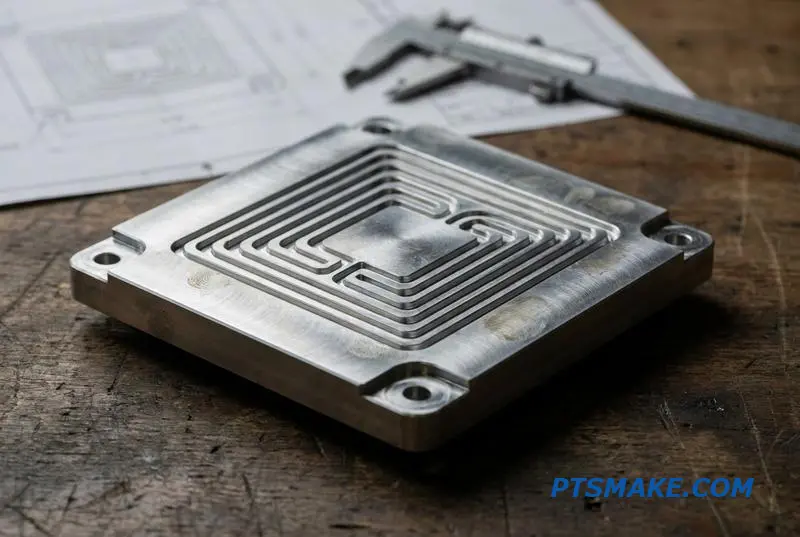
Managing lead times involves more than just machining hours. Several factors can add to the timeline, and it’s important to account for them. Being aware of these variables helps prevent unexpected delays and keeps your project on track.
Factors Extending Lead Times
Certain processes and materials inherently require more time. For instance, parts needing vacuum brazing will have 5-7 days added for the brazing cycle and associated quality checks. This is a step we cannot rush if we want to ensure a perfect bond.
1. 材料と仕上げの考慮事項
2. 特殊な材料や仕上げもスケジュールに影響を与えます。例えば、銅はアルミニウムよりも加工に時間がかかるため、通常、銅製コールドプレートには3〜5日を追加します。在庫にない特定の原材料サイズが必要な場合は、調達に数日かかることがあります。.
| 3. 追加プロセス | 追加時間 |
|---|---|
| 4. 真空ろう付けサイクル | 5. +5〜7日 |
| 6. 銅材加工 | 7. +3〜5日 |
| 無電解ニッケルめっき | 8. バッチあたり+3日 |
| 9. マイクロミーリング用カスタムツーリング | 10. +変動 |
11. 複雑なチャネルのマイクロミーリングには、カスタムツーリングが必要になることが多く、それ自体にリードタイムがあります。さらに、このプロセス中の制御は精度にとって重要であり、より遅い加工速度が必要になる場合があります。当社のCNC加工サービスは、速度と精度のバランスをとるように最適化されています。 工具のたわみ14 12. プロトタイプ対量産.
13. 興味深いことに、1〜50個の小規模なプロトタイプランは、大規模な量産バッチと比較して、部品あたりのコストでより速く完了することがよくあります。これは主にCMM検査の効率によるものです。バッチ全体を一度にセットアップして検証する方が、長い生産ランで個々の部品を検査するよりも迅速です。
14. 材料、カスタムツーリング、二次プロセスからの典型的なリードタイムと潜在的な遅延を理解することは非常に重要です。適切な計画により、液体冷却プロジェクトはスケジュールどおりに進み、最高の品質基準を満たすことができます。これは、PTSMAKEにおける当社のコミットメントの核心部分です。.
15. CNC加工された液体冷却部品を評価する際に、寸法精度のみに依存することは重大な間違いです。真の品質管理は機能性能にまで及びます。部品は寸法的に完璧であっても、運転圧力や温度の下で故障する可能性があり、壊滅的なシステム障害につながる可能性があります。.
CNC液体冷却部品の品質管理 — 寸法精度を超えて
When evaluating CNC-machined liquid cooling parts, relying solely on dimensional accuracy is a critical mistake. True quality control extends into functional performance. A part can be dimensionally perfect yet fail under operational pressure or temperature, leading to catastrophic system failures.
The Functional Testing Imperative
For any high-performance application, functional verification is non-negotiable. This means subjecting components to tests that simulate real-world conditions. Without this, you’re only getting half the quality picture. At PTSMAKE, our process integrates these crucial steps from the start.
Key Performance Verification Tests
We focus on a suite of tests designed to guarantee performance and reliability. These are the benchmarks a quality-conscious CNC machining services provider should meet.
| テスト・タイプ | 目的 | 代表的な仕様 |
|---|---|---|
| Flow Testing | Verify pressure drop | ±10% of CFD prediction |
| Helium Leak Testing | Ensure seal integrity | <1×10⁻⁶ mbar·L/s |
| Thermal Measurement | Validate heat dissipation | Matches design spec |
| Burst Pressure | Confirm structural safety | Varies by application |
These tests move beyond simple measurements to ensure the part works as intended.
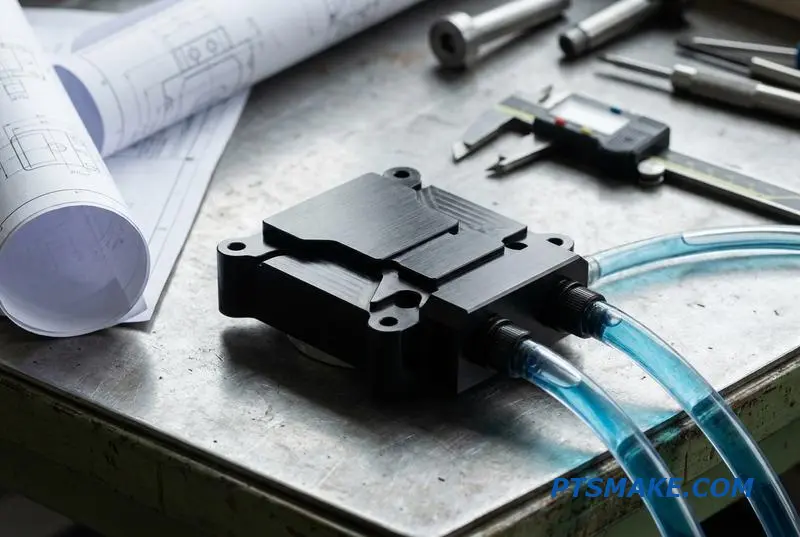
Beyond the Caliper: Essential Quality Protocols
A reliable supplier must have robust protocols for liquid cooling part quality control. These protocols provide the data needed to confirm that every component not only fits but functions correctly. This approach minimizes risks for procurement managers and engineers.
Validating Fluid Dynamics
Flow testing is essential. We verify that the pressure drop across the component matches the initial Computational Fluid Dynamics (CFD) prediction, typically within a ±10% tolerance. This confirms the internal channels are free of burrs or obstructions that could impede coolant flow.
Ensuring Leak-Proof Integrity
For vacuum-brazed or welded cold plates, helium leak testing is the standard. After conducting our tests, we’ve found that a leak rate specification of less than 1×10⁻⁶ mbar·L/s is a reliable benchmark for ensuring long-term, leak-free operation in demanding environments.
Measuring Thermal Performance
We also measure the component’s 熱抵抗15 to ensure it meets the design specification. This is done using a thermal test vehicle or an IR camera to confirm the part dissipates heat effectively. It’s a direct measure of the part’s primary function.
Critical Documentation for QA Managers
To ensure full traceability and quality assurance, a procurement professional should always request key documents.
| 文書タイプ | Key Information Included |
|---|---|
| FAIレポート | Dimensions, surface finish, flow test results |
| 材料証明書 | Alloy composition, thermal conductivity data |
| Pressure Test Certificate | Test pressure, duration, and results plot |
This documentation package provides a complete quality record, forming the baseline for a trustworthy liquid cooling CNC supplier.
True liquid cooling part quality control integrates functional validation with dimensional accuracy. Essential protocols like flow testing, leak detection, and thermal measurement, supported by comprehensive documentation, are necessary to ensure the final component performs reliably and safely in its intended application.

Understanding this property is key to preventing component failure in systems with fluctuating temperatures. ↩
Understand how this metallurgical joining process creates robust, thermally conductive bonds in advanced cooling systems. ↩
Understanding this value helps engineers predict fluid behavior to optimize thermal efficiency and minimize pressure drop in custom designs. ↩
Explore how this semiconductor technique enables high-aspect-ratio microstructures for cutting-edge applications. ↩
Understanding this process is key to designing reliable mixed-metal systems and preventing premature failure. ↩
Understanding this failure mechanism is crucial for designing robust high-pressure sealing applications. ↩
Learn how this drilling technique creates the deep channels essential for high-performance fluid dynamics. ↩
Understand how concentricity ensures even pressure on seals for leak-proof performance. ↩
Understanding this concept is crucial for designing durable parts that effectively resist failure under operational loads. ↩
Understanding this effect helps predict final part dimensions and ensure extrusion tolerances are met. ↩
Explore how this abrasive finishing process creates extreme surface flatness for critical applications. ↩
Learn how this GD&T control ensures even O-ring compression for a perfect, leak-proof seal in your designs. ↩
Understanding this concept is key to appreciating how single-setup machining improves part precision. ↩
Understanding this helps in designing parts that are faster and more accurate to machine. ↩
Essential for predicting cooling efficiency and validating thermal performance against design simulations. ↩