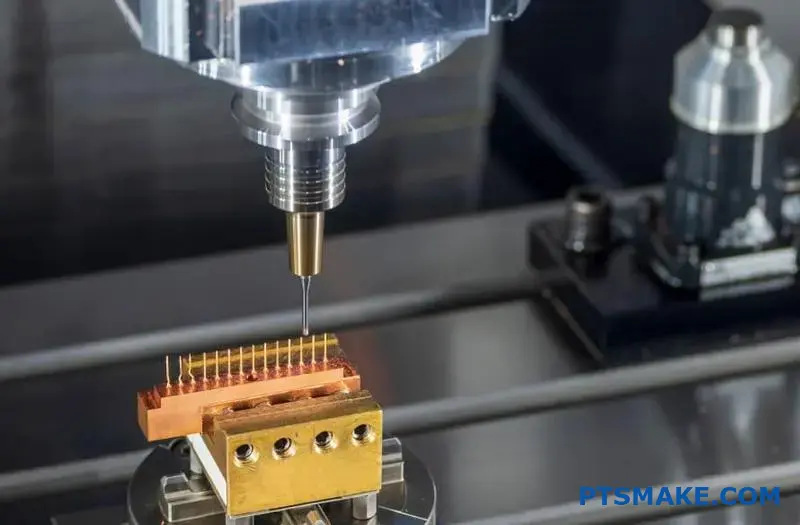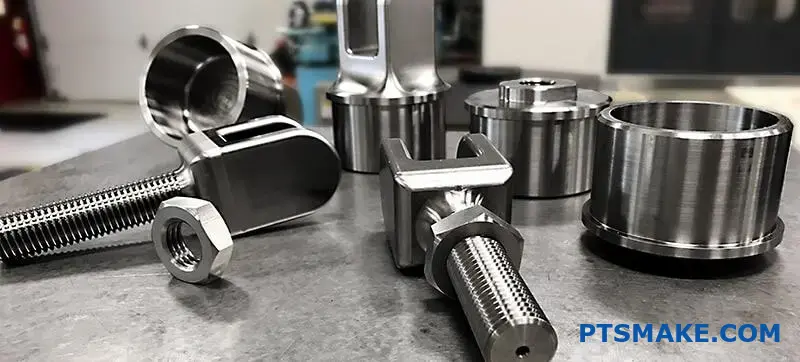

Vous perdez un temps précieux à gérer des résultats de zingage incohérents, des problèmes de tolérance dimensionnelle et des problèmes de qualité qui ralentissent vos cycles de production. Ces problèmes de revêtement entraînent des retards, augmentent les coûts et pèsent sur les relations avec les équipes d'assemblage en aval.
Le zingage est un procédé électrochimique qui dépose une fine couche de zinc sur les pièces usinées à commande numérique afin de les rendre plus résistantes à la corrosion, d'en améliorer l'esthétique et d'en prolonger la durée de vie, tout en maintenant la rentabilité de la production en grande série.
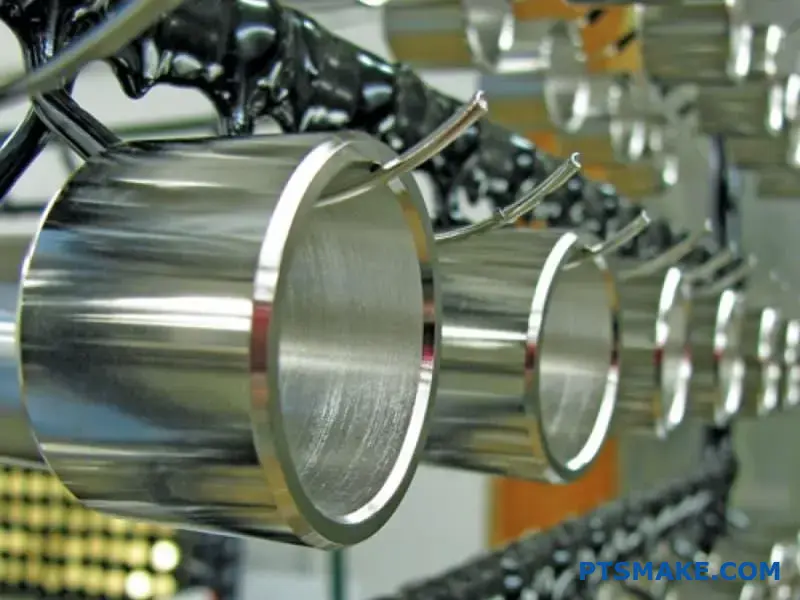
Ce guide couvre les détails techniques dont vous avez besoin pour prendre des décisions éclairées sur les spécifications du zingage, les méthodes de contrôle de la qualité et la sélection des fournisseurs. Vous apprendrez à éviter les pièges courants qui affectent les tolérances dimensionnelles et découvrirez des stratégies éprouvées pour obtenir des résultats cohérents sur différentes géométries de pièces.
Les avantages cachés du zingage pour les pièces de précision
De nombreux ingénieurs considèrent le zingage comme une simple finition de base. Mais cette vision est trop simple. Les avantages réels du zingage sont bien plus profonds.
Plus qu'un simple revêtement
Il offre une protection solide contre la rouille. Il donne également aux pièces un aspect propre et professionnel. C'est donc un choix judicieux pour les composants de précision.
L'importance du zingage
Cette finition est essentielle à la fois pour les performances et l'apparence.
| Fonctionnalité | Impact sur les pièces de précision |
|---|---|
| Protection contre la corrosion | Prolonge la durée de vie des pièces. |
| Finition esthétique | Offre un aspect propre et cohérent. |
| Coût-efficacité | Réduit les coûts de remplacement à long terme. |
La compréhension de ces points permet de comprendre pourquoi le zingage est important dans l'industrie manufacturière.
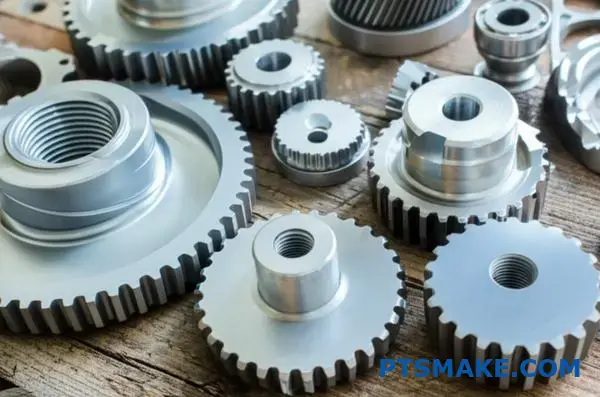
Le zingage est l'un des meilleurs moyens de prévenir la rouille. Cependant, son fonctionnement est plus complexe qu'une simple barrière. Il s'agit d'un système de protection actif.
La science de la protection
Le revêtement en zinc des pièces CNC agit comme un anode sacrificielle1 pour le métal de base, comme l'acier. Cela signifie que la couche de zinc se corrode en premier. Elle se sacrifie pour protéger la pièce située en dessous. Il s'agit d'une caractéristique essentielle pour les pièces utilisées dans des environnements difficiles.
Esthétique et défense renforcée
Le processus ne s'arrête pas au placage. Nous appliquons souvent un revêtement de conversion au chromate. Cette couche secondaire ajoute de la couleur et augmente considérablement la résistance à la corrosion. Elle permet une personnalisation fonctionnelle et visuelle.
| Finition chromatée | Indice visuel | Amélioration des performances |
|---|---|---|
| Transparent (bleu) | Argent brillant | Bonne protection |
| Jaune | Or irisé | Excellente protection |
| Noir | Noir profond | Très bonne protection |
Une décision économique intelligente
La véritable valeur du zingage réside dans ses performances à long terme. Le coût initial est faible, mais les véritables économies proviennent de la réduction des besoins d'entretien et de remplacement. Chez PTSMAKE, nous conseillons souvent cette finition pour son excellent équilibre entre coût, performance et fiabilité.
Le zingage constitue un bouclier sacrificiel actif contre la corrosion, et pas seulement un bouclier passif. Il offre des finitions esthétiques polyvalentes qui améliorent également la durabilité. Cette combinaison offre une valeur et une fiabilité exceptionnelles à long terme pour les pièces de précision, ce qui en fait une solution vraiment rentable.
Zincage et galvanisation à chaud Galvanisation à chaud : Qu'est-ce qui convient le mieux à votre projet ?
Lorsque l'on compare le zingage à la galvanisation, la performance est essentielle. Il ne s'agit pas seulement de la résistance à la corrosion. L'état de surface et la précision dimensionnelle sont tout aussi importants pour la fonction d'une pièce.
Niveaux de protection contre la corrosion
La galvanisation à chaud crée une couche protectrice beaucoup plus épaisse. Elle offre une résistance supérieure à la corrosion dans les environnements difficiles. Le zingage constitue une barrière plus fine, mais efficace.
Comparaison des états de surface
Le zingage permet d'obtenir une surface lisse, brillante et uniforme. Il est donc idéal pour les applications esthétiques. La galvanisation donne une finition plus rugueuse et plus utilitaire.
| Fonctionnalité | Placage de zinc | Galvanisation à chaud |
|---|---|---|
| Finition | Douceur, luminosité | Rugueux, gris mat |
| Uniformité | Haut | Plus bas, peut être irrégulier |
| Meilleur pour | Esthétique, utilisation intérieure | Environnements difficiles |
Ce tableau montre une différence fondamentale entre le zingage et la galvanisation.
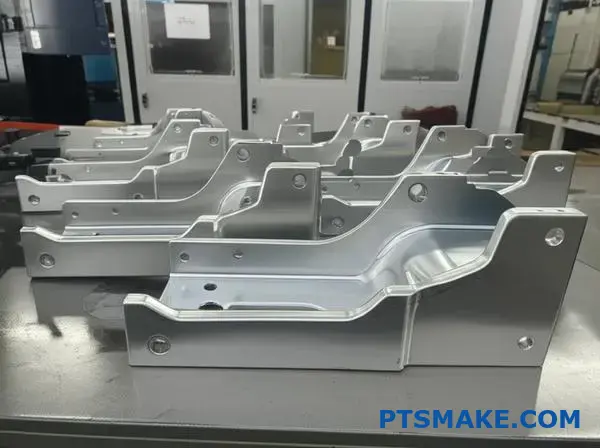
Le rôle essentiel de la tolérance dimensionnelle
Le choix a un impact considérable sur les dimensions finales de votre pièce. Il s'agit d'un détail crucial pour les composants de précision. Les tolérances après le placage peuvent faire ou défaire un assemblage.
Le zingage ajoute une couche très fine. En général, son épaisseur n'est que de 5 à 25 micromètres. Il est donc parfait pour les pièces présentant des tolérances serrées, comme les fixations ou les composants assemblés. Le procédé garantit des résultats prévisibles.
La galvanisation à chaud est différente. Elle crée une couche épaisse, souvent de 50 à 100 micromètres ou plus. Cette couche est également moins uniforme. Elle peut remplir les filetages et modifier les dimensions critiques, ce qui nécessite souvent un traitement ultérieur tel qu'un nouveau taraudage.
Comprendre l'obligation
Le mécanisme de protection diffère également. La galvanisation forme une liaison métallurgique avec l'acier. Cela crée une couche d'alliage durable et résistante à l'abrasion.
Le zingage, quant à lui, adhère par une liaison électrochimique. La couche de zinc agit comme un anode sacrificielle2. Il se corrode d'abord pour protéger l'acier sous-jacent. Il s'agit là d'une différence essentielle entre le zingage et la galvanisation. Cette méthode offre une protection fiable pour de nombreuses applications.
En fin de compte, il s'agit de trouver un équilibre entre la précision et la protection. Le zingage excelle dans le contrôle des dimensions et offre une finition cosmétique. La galvanisation à chaud offre une résistance robuste et durable à la corrosion, au prix d'une uniformité de surface et de tolérances serrées.
Comment éviter les bourrages de filets après le zingage
Le zingage ajoute une résistance à la corrosion. Mais il ajoute également de l'épaisseur. Cela entraîne souvent un blocage du filetage sur les fixations et les pièces à commande numérique.
Les concepteurs doivent prévoir cette couche supplémentaire. Il s'agit d'une omission fréquente qui entraîne des échecs d'assemblage.
Chez PTSMAKE, nous guidons nos clients dans trois domaines clés. Il s'agit du masquage, des tolérances de filetage et des ajustements après placage.
Des choix de conception proactifs
Une bonne planification est cruciale. La prise en compte des problèmes potentiels lors de la phase de conception permet de gagner du temps et d'économiser des coûts par la suite. C'est un élément clé pour zingage des pièces filetées.
Voici un aperçu des options de masquage :
| Type de masquage | Meilleur cas d'utilisation | Considération |
|---|---|---|
| Capuchons et bouchons | Filets externes/internes | Réutilisable, cohérent |
| Bandes | Surfaces irrégulières | à forte intensité de main-d'œuvre |
| Laques | Géométries complexes | Nécessite un retrait propre |
Penser à l'avance aide éviter les problèmes d'ajustement du filetage placage.
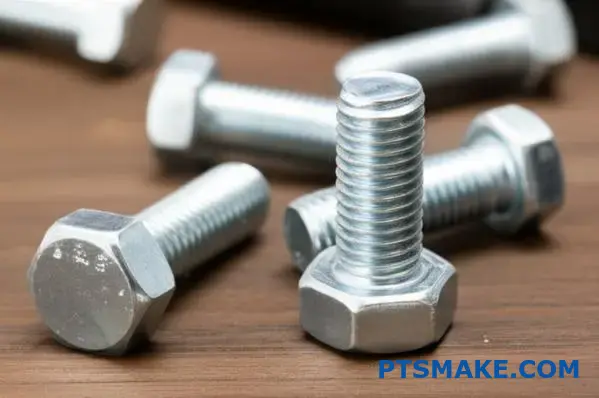
Pour éviter les problèmes d'ajustement du filetage, vous devez tenir compte de l'épaisseur du placage avant la fabrication. Il ne s'agit pas d'un problème à régler ultérieurement.
Stratégies de masquage avancées
Pour une efficacité masquage des pièces filetées CNC, Choisissez la bonne méthode. Les capuchons et bouchons en silicone offrent une solution propre et réutilisable pour les filetages standard. Ils permettent d'obtenir une ligne de placage nette.
Pour les zones plus complexes, les rubans haute température donnent de bons résultats. Cependant, ils exigent une application précise et peuvent nécessiter beaucoup de travail. Le masquage liquide est une autre option, mais le retrait doit être minutieux pour éviter toute contamination.
Ajustement des tolérances de filetage
L'étape la plus critique est l'ajustement des tolérances des filets. Vous devez spécifier que les filets doivent être coupés à une taille inférieure à celle de la couche de zinc.
Par exemple, si vous prévoyez une épaisseur de zingage de 8µm, les dimensions du filetage avant zingage doivent être réduites en conséquence. Cela permet d'éviter que la pièce finale ne soit surdimensionnée. Le non-respect de cette règle peut entraîner des problèmes tels que galvaudage3 pendant l'assemblage.
Nous recommandons souvent des ajustements spécifiques en fonction de la classe de placage.
Épaisseur et tolérance du placage
| Classe de placage | Épaisseur typique | Mesures recommandées |
|---|---|---|
| Classe 1 (5µm) | ~0.0002" | Filets intérieurs sous-dimensionnés |
| Classe 2 (8µm) | ~0.0003" | Sous-dimensionnement important |
| Classe 3 (12µm) | ~0.0005" | Nécessite un outillage spécial |
Ajustements après placage
Il est parfois nécessaire d'effectuer des travaux après le placage. Un léger chassage des filets à l'aide d'une matrice ou d'un taraud permet d'éliminer les petites accumulations. La cuisson des pièces après le placage est également cruciale pour éviter la fragilisation par l'hydrogène. Ce processus peut parfois affecter l'ajustement final.
Une bonne conception est essentielle pour éviter le blocage des filets. Il s'agit notamment de choisir la bonne technique de masquage, de spécifier avec précision les tolérances des filets avant le zingage et de prévoir les ajustements nécessaires après le zingage. Cela garantit la réussite des projets de zingage.
L'impact du zingage sur les tolérances dimensionnelles dans les assemblages serrés
Le zingage ajoute une couche de protection, mais aussi de la matière. Il s'agit d'un détail critique pour les assemblages serrés. Les impact de la tolérance du zingage peut être importante.
Toutes les dimensions d'une pièce changent après le placage. Il ne s'agit pas d'un simple revêtement, mais d'un changement dimensionnel.
Comprendre la formation de dépôts
L'épaisseur de zinc ajoutée varie généralement de 5 à 25 micromètres (µm). Cela semble peu, mais cela peut facilement faire sortir une pièce précise de la tolérance.
Le défi de l'uniformité
L'épaisseur n'est pas parfaitement régulière. Le placage a tendance à s'accumuler davantage sur les angles et les bords extérieurs aigus. Il s'agit d'une préoccupation majeure pour les pièces CNC en zinc.
| Type de caractéristique | Accumulation prévue |
|---|---|
| Surfaces planes | Épaisseur nominale |
| Coins externes | 1,5x - 2,0x Nominal |
| Coins internes | 0,5x - 0,75x Nominal |
| Trous/alésages | Épaisseur réduite |
Cette accumulation inégale signifie qu'un simple décalage ne suffit pas. Nous devons tenir compte des effets géométriques.
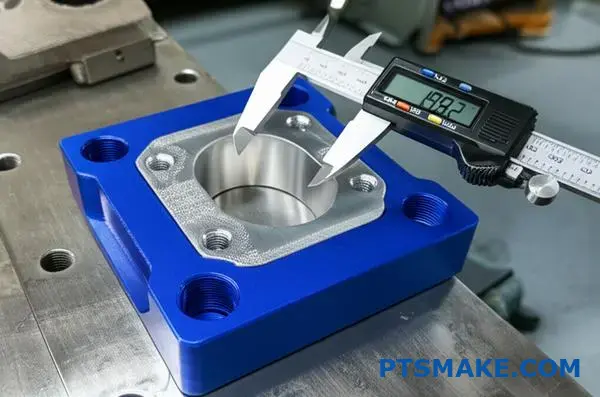
Le zingage comporte plus d'une couche. Après l'application du zinc, une couche de conversion au chromate est ajoutée pour renforcer la résistance à la corrosion et la couleur. Ce film augmente également l'épaisseur totale.
Le rôle des films de conversion au chromate
Bien que la couche de chromate soit très fine, souvent de 0,1 à 0,5 µm, elle fait partie de la dimension finale. Pour des tolérances extrêmement serrées, même ce minuscule ajout a de l'importance. Le total des changement de dimension après placage est la somme des couches de zinc et de chromate.
Stratégies de contrôle dimensionnel
Chez PTSMAKE, nous gérons cette situation en planifiant à l'avance. Nous usinons souvent des pièces légèrement sous-dimensionnées. Cela permet de compenser le matériau ajouté au cours du processus de zingage.
Cela nécessite des calculs précis et une communication claire entre notre équipe d'usinage et nos partenaires de métallisation. Le processus de dépôt électrochimique4 est contrôlable, mais elle exige de l'expertise. Nous spécifions non seulement la dimension finale, mais aussi l'épaisseur de placage visée.
Par exemple, un arbre conçu pour être de 20,00 mm après placage peut être usiné à 19,98 mm au préalable. Cela représente une épaisseur de placage cible de 10 µm sur le rayon.
| Dimension | Spécifications | Pré-galvanisation (cible) | Post-plaquage (résultat) |
|---|---|---|---|
| Diamètre de l'arbre | 20,00 mm ±0,01 | 19,98 mm | 20,00 mm |
| Diamètre du trou | 15,00 mm ±0,01 | 15,02 mm | 15,00 mm |
Cette approche proactive est essentielle pour garantir que pièces CNC en zinc s'intègrent parfaitement dans leur assemblage final.
Le zingage ajoute une épaisseur prévisible mais variable. Cette accumulation, plus le film de chromate, affecte directement les dimensions finales. Pour réussir des assemblages serrés, il faut étudier soigneusement les dimensions avant placage afin de compenser cet ajout, ce qui est un élément essentiel de notre processus chez PTSMAKE.
Secrets de conception pour maximiser l'uniformité du zingage sur les pièces complexes
Obtenir une finition de zingage uniforme sur des pièces CNC complexes est un défi courant. La géométrie de la pièce influence directement le résultat.
Certaines caractéristiques peuvent bloquer le courant électrique nécessaire au placage. L'épaisseur du revêtement est alors inégale.
Principales considérations géométriques
Il est essentiel de penser au placage dès la phase de conception. De petits changements peuvent faire une énorme différence dans la qualité et la cohérence finales.
| Fonctionnalité | Impact sur le placage | Recommandation |
|---|---|---|
| Coins internes tranchants | Mauvaise adhérence | Utiliser les rayons/filets |
| Trous profonds et étroits | Revêtement mince ou inexistant | Élargir ou réévaluer |
| Grandes surfaces planes | Sujet à la formation d'accumulations | Ajouter une légère couronne |
Un bon rayonnage est tout aussi important que la conception elle-même. Il garantit un flux de courant optimal.
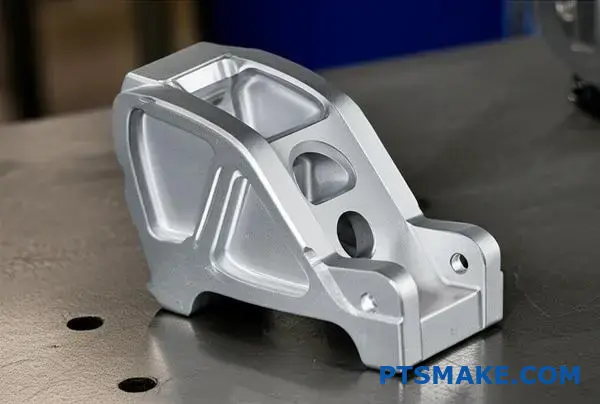
Plongée dans les défis du placage
Le problème principal du revêtement de géométries CNC complexes est la gestion de la densité de courant. Les zones à forte intensité de courant sont recouvertes d'une couche épaisse, tandis que les zones à faible intensité de courant sont laissées à l'état de couche mince.
C'est particulièrement vrai pour les pièces comportant des trous et des évidements. Ces zones souffrent souvent de ce que l'on appelle le Effet cage de Faraday5, où l'extérieur d'un élément protège l'intérieur du champ électrique.
Rayonnage : Plus qu'un simple support de pièces
Un rayonnage efficace est une science. Chez PTSMAKE, nous concevons des dispositifs sur mesure. Ces dispositifs garantissent que chaque surface critique est correctement exposée à la solution de placage et au courant électrique.
Nous prenons également en compte le drainage. Les solutions piégées peuvent provoquer des taches et de la corrosion après le placage. L'orientation des rayonnages doit permettre un drainage complet.
Zones à problèmes et solutions
La première étape consiste à comprendre où se produisent les défaillances. Après avoir examiné de nombreuses pièces de clients, nous avons trouvé des schémas cohérents.
| Domaine du problème | Problème de placage | Stratégie d'atténuation |
|---|---|---|
| Trous borgnes | Pas de placage à l'intérieur | Utiliser des anodes auxiliaires |
| Poches encastrées | Revêtement mince | Ajuster l'angle de la crémaillère, utiliser les voleurs de courant |
| Sections filetées | Accumulation sur les crêtes | Masquage ou ciselage après la plaque |
En abordant ces conseils sur le revêtement uniforme du zingage dès le début, nous évitons des retouches coûteuses. Il s'agit de concevoir des produits manufacturables, ce qui inclut le processus de finition.
Un zingage efficace sur des pièces complexes nécessite une double attention. Vous devez tenir compte de la géométrie de la pièce lors de la phase de conception et utiliser des méthodes de rayonnage intelligentes. Cette stratégie combinée permet d'éviter les problèmes courants d'adhérence et d'uniformité, ce qui garantit une finition homogène et de haute qualité.
Le guide ultime des options de conversion du chromate de zinc
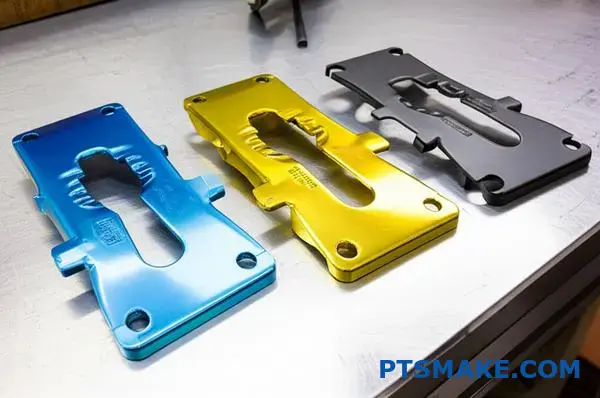
Lors du choix d'un revêtement de conversion au chromate de zinc, la couleur est le premier indice de ses propriétés. Il ne s'agit pas seulement d'une question d'esthétique. Chaque couleur - bleu, jaune et noir - indique un niveau différent de protection contre la corrosion.
Ce choix a un impact direct sur la durabilité et les performances de votre pièce. Il est essentiel de comprendre ces différences.
Guide rapide des couleurs chromatées
Nous pouvons décomposer les principaux types en fonction de leurs principales caractéristiques. Cela vous aidera à prendre une décision rapide et éclairée pour votre projet.
| Fonctionnalité | Chromate bleu (clair) | Chromate jaune | Chromate noir |
|---|---|---|---|
| Apparence | Brillant, légère teinte bleue | Irisé, jaunâtre | Noir mat à brillant |
| Résistance à la corrosion | De base (24-48 heures) | Modéré (96-150 heures) | Élevé (150-250+ heures) |
| Utilisation courante | Décoratif, intérieur | Industrie générale | Automobile, extérieur |
Plongée en profondeur : Propriétés et applications
Au-delà du nuancier de base, chaque revêtement de conversion au chromate de zinc possède des atouts spécifiques. Le choix du bon revêtement est crucial pour la longévité et la fiabilité de vos composants. Le choix n'affecte pas seulement la résistance à la corrosion, mais aussi l'adhérence de la peinture et la conductivité électrique.
Propriétés du chromate jaune
Le chromate jaune est souvent le choix par défaut pour un usage industriel général. Il offre un bon équilibre entre le coût et la performance. Les propriétés du chromate jaune comprennent une excellente adhérence à la peinture, ce qui en fait une base d'apprêt fiable. Nous le recommandons souvent pour les pièces qui nécessitent à la fois une protection et un revêtement ultérieur.
La finition supérieure en zinc noir
La finition en zinc noir offre le plus haut niveau de résistance à la corrosion. Elle est donc idéale pour les pièces exposées à des conditions climatiques difficiles ou à des agents corrosifs. C'est un choix courant pour les composants automobiles, le matériel militaire et les équipements d'extérieur. Son aspect noir décoratif est un atout supplémentaire.
Quand utiliser le chromate bleu (clair) ?
Le chromate bleu ou transparent n'offre qu'une protection minimale. Son rôle principal est d'empêcher l'oxydation du zingage pendant le stockage. Il est utilisé lorsque l'aspect métallique de la pièce est important et que l'environnement n'est pas exigeant. Le procédé crée une couche protectrice par passivation6, ce qui permet à la surface de rester brillante.
Pour choisir entre le chromate bleu, jaune et noir, il faut trouver un équilibre entre la résistance à la corrosion, l'aspect et le coût. Le noir offre une protection maximale, le jaune constitue une solution polyvalente de milieu de gamme et le bleu est idéal pour une protection de base où l'esthétique est primordiale. C'est votre application qui dicte la meilleure option.
Améliorer le rendement au premier passage grâce à ces normes de qualité pour le zingage
Le contrôle de la qualité du zingage ne relève pas de la magie. Il repose sur des normes industrielles établies. Ces cadres garantissent que tout le monde parle le même langage.
Ils fournissent des lignes directrices claires pour réussir. Cet alignement permet d'éviter les malentendus entre vous et votre fournisseur.
Principales normes industrielles
Pour la plupart des pièces commerciales, la norme ASTM B633 est essentielle. Elle détaille les épaisseurs, les types et les classes de zinc déposé par électrolyse sur le fer et l'acier. C'est notre principale référence chez PTSMAKE.
Voici une comparaison rapide des normes communes :
| Standard | Domaine d'intervention | Utilisation principale |
|---|---|---|
| ASTM B633 | Commercial | Industrie générale, automobile, biens de consommation |
| MIL-STD-870 | Militaire | Aérospatiale, défense, applications à haute fiabilité |
| ISO 2081 | International | Commerce mondial, marchés européens |
Ces normes constituent la base d'un projet réussi.
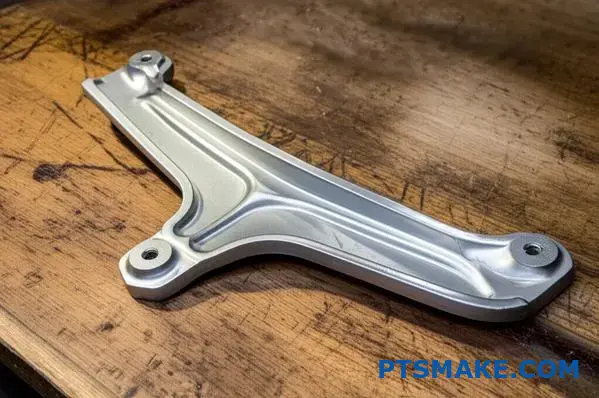
Connaître les normes n'est que la moitié de la bataille. La véritable clé du rendement au premier passage est un contrôle proactif de la qualité en cours de processus. Vous ne pouvez pas vous contenter d'inspecter le produit final. Vous devez surveiller l'ensemble du processus. Voici comment inspecter efficacement le zingage.
Contrôles de qualité en cours de fabrication
Chez PTSMAKE, nous intégrons des contrôles de qualité à chaque étape. Nous surveillons la chimie du bain, la température et la densité du courant en temps réel. Cela permet de prévenir les défauts avant qu'ils ne se produisent. C'est beaucoup plus efficace que de trouver un problème lors de l'inspection finale. Cette approche permet de s'assurer que le revêtement de zinc fournit des protection cathodique7 pour le métal de base.
Nous utilisons plusieurs méthodes pour vérifier la qualité pendant et après le placage. Nos conclusions montrent qu'une combinaison de tests fournit les résultats les plus fiables.
| Méthode d'inspection | Objectif | Quand utiliser |
|---|---|---|
| Fluorescence X (XRF) | Mesure l'épaisseur du placage | En cours de traitement et final |
| Test d'adhérence | Contrôle de l'adhérence du revêtement | Post-placage |
| Essais au brouillard salin | Vérifie la résistance à la corrosion | Qualification finale |
| Inspection visuelle | Recherche de défauts de surface | Tout au long du processus |
Au-delà des normes
Si les normes constituent une base de référence, l'expérience est importante. Un bon fournisseur sait comment la géométrie de la pièce affecte la répartition du placage. Il ajuste les paramètres pour assurer une couverture uniforme des formes complexes. C'est cette expertise qui permet d'améliorer véritablement la qualité.
Le respect de normes telles que la norme ASTM B633 et la mise en œuvre de contrôles rigoureux en cours de processus ne sont pas négociables. Cette approche proactive du contrôle de la qualité du zingage garantit que les pièces sont conformes aux spécifications, ce qui réduit les retouches et améliore considérablement votre rendement au premier passage.
Quelle est la durée de vie du zingage ? Tests de durabilité dans le monde réel expliqués
Comment prévoir la durée de vie du zingage ? L'industrie s'appuie fortement sur des tests normalisés. Le plus courant est le test au brouillard salin.
Ce test fournit une base de référence cruciale pour les performances des tests de corrosion. Il nous aide à comparer différentes finitions de placage dans des conditions contrôlées.
Essai au brouillard salin Repères
Dans ce test accéléré, les pièces sont exposées à un brouillard salin. Nous mesurons le nombre d'heures jusqu'à l'apparition de rouille blanche (corrosion du zinc) et de rouille rouge (corrosion de l'acier). Les résultats varient en fonction du type de passivation.
| Type de passivation | Heures de résistance à la rouille blanche (ASTM B633) | Heures jusqu'à la rouille rouge |
|---|---|---|
| Transparent (trivalent) | 12 - 24 heures | 72 - 120 heures |
| Jaune (trivalent) | 72 - 96 heures | 150 - 200 heures |
| Noir (Trivalent) | 48 - 72 heures | 120 - 180 heures |
Ces chiffres fournissent une mesure standardisée de la performance.
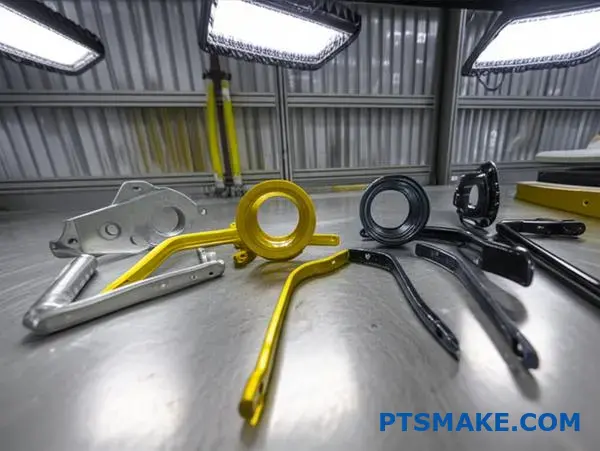
Si les essais au brouillard salin sont essentiels, ils ne disent pas tout. Ils représentent le scénario le plus défavorable. La durabilité du zinc dans le monde réel dépend de nombreux autres facteurs que ces tests ne peuvent pas simuler complètement.
Données de laboratoire et réalité environnementale
Un brouillard salin constant est très différent d'une exposition environnementale quotidienne. Les conditions réelles comprennent des fluctuations d'humidité, des cycles de température et des radiations UV. Ces variables influencent considérablement la durée de vie réelle du zingage.
Le principal mécanisme de protection du zinc est le suivant corrosion galvanique8, Le zinc se sacrifie pour protéger l'acier sous-jacent. Le taux de ce sacrifice varie considérablement en fonction de l'environnement.
Performance dans différents environnements
L'emplacement d'une pièce est le principal facteur de sa longévité. Notre expérience montre que l'environnement dicte les performances plus qu'un test en laboratoire.
| Environnement | Conditions typiques | Durée de vie prévue (avec une passivation adéquate) |
|---|---|---|
| Doux / Intérieur | Température contrôlée, faible humidité | 15 ans et plus |
| Modéré / Urbain | Humidité modérée, quelques polluants | 5 - 10 ans |
| Sévère / Marine | Humidité élevée, exposition au sel, industrie | 1 - 5 ans |
Chez PTSMAKE, nous aidons nos clients à choisir la bonne finition. Nous nous concentrons sur l'application finale de la pièce, en veillant à ce que la spécification réponde aux exigences du monde réel, et pas seulement à un certificat d'essai.
Les essais au brouillard salin constituent une référence normalisée en matière de résistance à la corrosion. Cependant, la durabilité réelle du zinc est déterminée par l'environnement d'exploitation spécifique. Il est essentiel de faire correspondre la spécification de placage à l'application pour obtenir la durée de vie souhaitée du produit.
Comparaison ultime : Zingage à crémaillère ou au tonneau pour les pièces B2B
Le choix entre le zingage en rack et le zingage en tonneau a un impact direct sur vos résultats. Il s'agit d'un compromis classique entre volume et précision.
Le traitement au tonneau permet de traiter d'énormes lots en une seule fois. Il s'agit donc d'un procédé extrêmement rentable pour les pièces appropriées.
Le placage en rack traite les pièces individuellement. Ce procédé coûte plus cher par pièce mais offre une qualité inégalée pour des besoins spécifiques. Il est essentiel de le comprendre pour obtenir des résultats satisfaisants.
| Facteur | Placage de barils | Placage en rack |
|---|---|---|
| Coût du travail | Faible | Haut |
| Débit | Volume élevé | Faible volume |
| Coût unitaire | Très faible | Plus élevé |
Meilleures utilisations et rentabilité
Le meilleur choix dépend entièrement de la conception de la pièce et de l'application finale. Il n'existe pas de méthode "meilleure" pour le zingage.
Le cheval de trait : le placage du canon
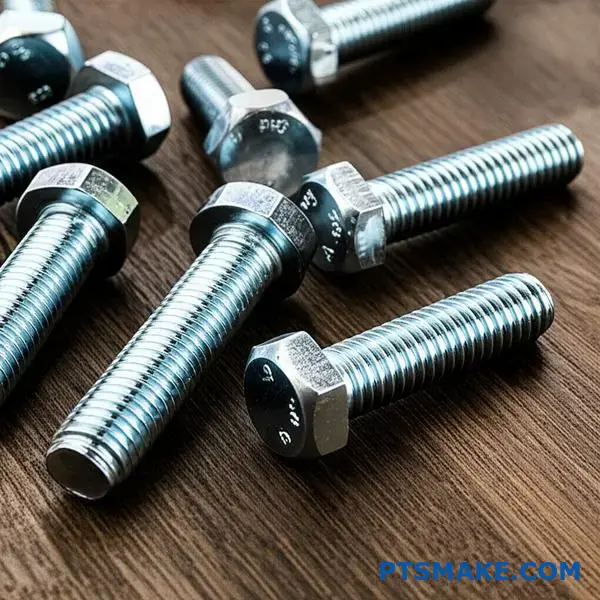
Pour le traitement en vrac, rien ne vaut le placage en tonneau. C'est la solution idéale méthode de zingage des petites pièces. Pensez aux fixations, aux écrous et aux supports estampés.
Nous utilisons souvent placage au tonneau de pièces CNC lorsque les composants sont petits et ne présentent pas de surfaces cosmétiques critiques. Les pièces sont culbutées ensemble, ce qui est très efficace. Cela peut entraîner des marques superficielles mineures, un compromis que de nombreux clients acceptent pour les composants non visibles lorsque la résistance à la corrosion est l'objectif principal.
Le spécialiste : Placage à crémaillère
La clé avantages du zingage des crémaillères briller avec des pièces complexes. Cette méthode est destinée aux géométries importantes, délicates ou complexes qui seraient endommagées dans un tonneau.
Chaque pièce est câblée individuellement. Cela permet d'obtenir une finition cohérente et de haute qualité, sans marques de contact. Le processus est régi par des principes tels que Les lois de Faraday sur l'électrolyse9, Le revêtement de la surface de la pièce est très fin, ce qui permet d'obtenir une épaisseur précise. Il est parfait pour les composants automobiles visibles ou les châssis électroniques de haute qualité.
Chez PTSMAKE, voici comment nous guidons généralement la décision :
| Caractéristique de la pièce | Méthode recommandée | Raison |
|---|---|---|
| Petit, simple, durable | Placage de barils | Le meilleur rapport coût-efficacité |
| Forme large ou complexe | Placage en rack | Prévient les dommages, assure la couverture |
| Délicat, s'emmêle facilement | Placage en rack | La manipulation individuelle protège les pièces |
| Exigence cosmétique élevée | Placage en rack | Finition supérieure et uniforme |
Le traitement au tonneau est le choix le plus rentable pour les petites pièces durables produites en grande quantité. Le zingage à crémaillère offre des finitions supérieures pour les pièces plus grandes ou délicates, mais à un coût plus élevé. Les exigences spécifiques de votre pièce - et non le prix seul - doivent guider votre décision en matière de zingage.
Le rôle du choix du matériau de base dans l'adhérence du zingage
Le matériau de base est le fondement de votre pièce plaquée. Ses propriétés influencent directement l'adhérence du revêtement de zinc. Tous les métaux ne sont pas créés égaux pour le zingage.
Il est essentiel de comprendre la compatibilité des matériaux avec les revêtements de zinc. Certains métaux adhèrent facilement au zinc. D'autres nécessitent des préparations spéciales en plusieurs étapes pour obtenir une finition durable.
Le choix a un impact sur tout. Il affecte le processus, le coût et les performances de la pièce finale.
| Métal de base | Difficultés générales de placage |
|---|---|
| Acier | Faible |
| Laiton | Moyen |
| Aluminium | Haut |
| Acier inoxydable | Haut |
La sélection des meilleurs métaux de base pour le zingage dès le départ peut permettre d'économiser beaucoup de temps et de ressources.
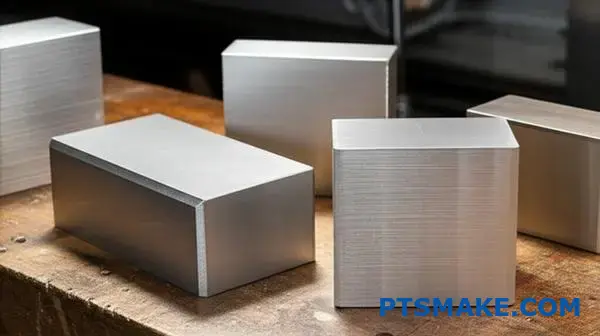
Le succès du zingage varie considérablement d'un métal à l'autre. Chaque substrat présente une chimie de surface et des propriétés métallurgiques uniques. Ces facteurs exigent des stratégies de prétraitement distinctes pour garantir une bonne adhérence. Sans une préparation correcte, le zingage est voué à l'échec.
L'acier : Le candidat idéal
L'acier au carbone est le matériau le plus courant et le plus simple pour le zingage. Sa surface est réceptive, ce qui rend l'adhérence forte avec un nettoyage et une activation standard. Cependant, le zingage de l'acier allié peut s'avérer plus délicat. Les éléments d'alliage comme le chrome ou le manganèse peuvent modifier les propriétés de la surface, ce qui nécessite parfois un prétraitement adapté.
Aluminium : Le défi de l'oxyde
L'aluminium forme naturellement une fine couche d'oxyde résistante. Cette couche empêche l'adhésion directe du zinc. Pour plaquer l'aluminium, nous devons d'abord appliquer une couche de conversion au zincate. Ce procédé élimine l'oxyde et dépose une fine pellicule de zinc, qui sert de base à la couche électrolytique finale.
Laiton et alliages de cuivre : Le risque de diffusion
Le laiton est relativement facile à plaquer. La difficulté réside dans la diffusion du zinc. Avec le temps, le zinc du laiton peut migrer dans la couche de placage. Cela peut entraîner des problèmes esthétiques ou réduire la résistance à la corrosion. Une couche barrière de cuivre ou de nickel est souvent appliquée en premier lieu pour éviter ce phénomène.
L'acier inoxydable : Le problème de la passivité
L'acier inoxydable est difficile à plaquer en raison de son couche de passivation10 d'oxyde de chrome. Cette couche rend l'acier résistant à la corrosion, mais aussi peu réceptif au placage. Nous devons activer la surface, souvent à l'aide d'un décapage à l'acide spécialisé ou d'une frappe au nickel Woods, pour permettre une bonne adhérence.
| Matériau | Défi primaire | Prétraitement typique |
|---|---|---|
| Acier | Minime ; rouille/échelle | Nettoyage alcalin, décapage acide |
| Aluminium | Couche d'oxyde | Immersion dans le zinc |
| Laiton | Diffusion du zinc | Grève en cuivre ou en nickel |
| Acier inoxydable | Surface passive | Frappe de nickel de Woods |
Le choix du matériau de base n'est pas seulement une décision de conception. Il s'agit d'une variable essentielle du processus. L'acier offre une voie directe vers un zingage de qualité, tandis que l'aluminium, le laiton et l'acier inoxydable nécessitent des connaissances spécialisées et des étapes intermédiaires pour obtenir une adhérence et des performances fiables.
Éviter les variations de couleur dans les pièces zinguées à usage cosmétique
L'obtention d'une finition uniforme sur les pièces zinguées cosmétiques est un défi courant. Les incohérences proviennent souvent du processus de galvanisation lui-même.
Un contrôle efficace des fournisseurs est la première étape. Sans cela, vous constaterez des variations constantes.
L'orientation des pièces est importante
La façon dont une pièce est maintenue pendant le placage affecte considérablement le résultat. Des orientations différentes entraînent des épaisseurs et des couleurs différentes. Ceci est crucial pour le contrôle de l'apparence du zingage.
| Facteur | Impact sur la finition |
|---|---|
| Processus des fournisseurs | Haut |
| Orientation de la pièce | Haut |
| Chimie du bain | Moyen |
Cela nécessite un contrôle strict des pièces cosmétiques du début à la fin.
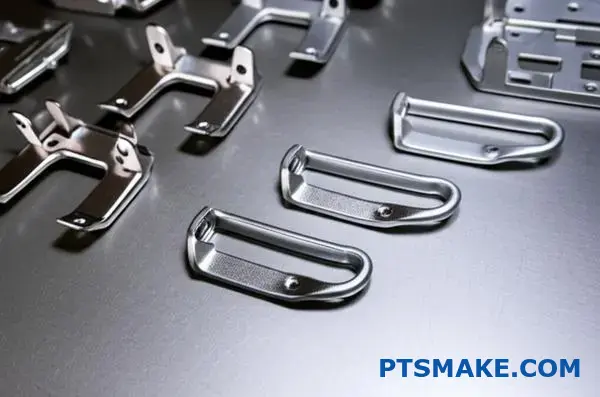
Le contrôle des variations de finition nécessite une connaissance approfondie du processus de zingage. Des variations mineures dans la chimie du bain, la température ou le courant électrique peuvent entraîner des changements visibles de couleur et de luminosité.
Maîtriser les contrôles des fournisseurs
Vous avez besoin d'un fournisseur qui documente chaque étape. Cela comprend le prétraitement, les paramètres de placage et les processus de chromatage après traitement. Nous travaillons avec des partenaires qui offrent une transparence totale. Cela nous permet d'obtenir une finition uniforme sur les surfaces en zinc.
L'orientation des pièces sur le support de métallisation est également cruciale. Les zones plus proches de l'anode reçoivent plus de courant, ce qui donne un dépôt plus épais et parfois plus brillant. Ce dépôt inégal distribution de la densité de courant11 est l'une des principales causes d'incohérence. Nous concevons souvent des rayonnages sur mesure pour minimiser cet effet.
Normes de contrôle de la qualité des produits cosmétiques
L'établissement de normes visuelles claires n'est pas négociable. Nous utilisons des échantillons limites approuvés pour définir les gammes de couleurs acceptables.
| Méthode de contrôle | Bénéfice |
|---|---|
| Documentation du processus | Répétabilité et traçabilité |
| Rayonnages sur mesure | Épaisseur de placage uniforme |
| Échantillons de frontière | Critères d'acceptation clairs |
| Audits réguliers | Résolution proactive des problèmes |
Ces contrôles sont essentiels pour tout projet où l'apparence est primordiale.
Le contrôle des incohérences de finition dans le zingage repose sur une gestion stricte des processus des fournisseurs et une orientation stratégique des pièces. Il est essentiel d'établir des normes claires de contrôle de la qualité cosmétique à l'aide d'échantillons visuels pour obtenir l'aspect uniforme souhaité et éviter des retouches coûteuses.
Zingage des assemblages : Comment gérer les ajustements, les filetages et les fixations
Lorsqu'il s'agit de zinguer des assemblages, la précision est essentielle. La couche ajoutée, bien que mince, peut perturber les ajustements parfaits. C'est particulièrement vrai pour les composants filetés.
Comprendre l'épaisseur du placage
L'épaisseur du zingage a un impact direct sur les tolérances dimensionnelles. Quelques microns peuvent faire une grande différence dans les pièces à ajustement serré. Une gestion efficace des dimensions des assemblages est cruciale.
Voici un aperçu des épaisseurs courantes :
| Classe | Épaisseur (microns) | Application |
|---|---|---|
| Fe/Zn 5 | 5 µm | Doux, intérieur |
| Fe/Zn 12 | 12 µm | Modéré, en plein air |
| Fe/Zn 25 | 25 µm | Sévère, industriel |
La gestion de ces changements garantit la réussite de l'assemblage final.
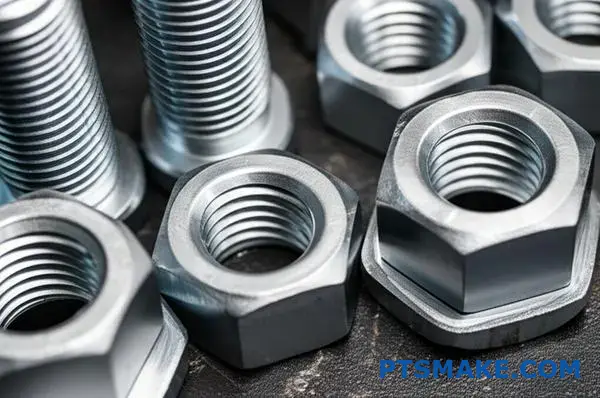
L'effet d'entraînement du placage
Le véritable défi n'est pas une pièce unique. C'est l'interaction entre plusieurs pièces plaquées. Cet effet cumulatif est connu sous le nom de empilement de tolérances12. Chaque composant plaqué ajoute à la variance dimensionnelle totale.
Cela peut conduire à des ajustements d'interférence là où un ajustement de dégagement était prévu. Pour les projets de PTSMAKE, nous tenons toujours compte de cet aspect lors de la phase de conception.
Interactions de surface et gaulage
Le zinc est un métal relativement mou. Après le placage, les propriétés de la surface changent. Cela peut parfois entraîner un grippage, en particulier avec certains matériaux de fixation. La couche de zinc peut se cisailler et gripper les filets pendant le serrage.
Pour réussir zingage des fixations, Les lubrifiants de post-placage sont également à considérer. En voici quelques-uns conseils pour l'assemblage après le vernissage que nous avons trouvés utiles :
| Conseil | Description | Bénéfice |
|---|---|---|
| Masquage | Protège les filets critiques contre le placage. | Garantit l'ajustement d'origine. |
| Sous-dimensionnement | Les fils de machine sont légèrement sous-dimensionnés. | S'adapte à l'épaisseur du placage. |
| Lubrification | Appliquer de la cire ou de l'anti-grippant. | Empêche le grippage lors de l'assemblage. |
Ces stratégies sont au cœur de notre assemblages de gestion dimensionnelle. Ils veillent à ce que les pièces s'assemblent harmonieusement après le revêtement.
Le zingage ajoute de la matière, ce qui peut entraîner un grippage des filets et des problèmes de tolérance. Une gestion proactive des dimensions, comme l'ajustement des dimensions avant le placage et l'utilisation de lubrifiants après le placage, est essentielle pour un assemblage en douceur et la prévention de problèmes de surface tels que le grippage.
Quand choisir le zingage noir plutôt que le zingage clair ou jaune ?
Le choix du bon revêtement de zinc est crucial. Il a un impact sur les performances, le coût et l'apparence. Il ne s'agit pas seulement de choisir une couleur. Chaque finition offre des avantages distincts pour des applications spécifiques.
Cette décision a une incidence directe sur la durée de vie de votre pièce. Comparons le zingage noir, le zingage clair et le zingage jaune.
Les facteurs clés en un coup d'œil
Tenez compte de ces principales différences.
| Fonctionnalité | Zinc noir | Zinc jaune | Zinc clair |
|---|---|---|---|
| Apparence | Lisse, mat/brillant | Irisé, jaunâtre | Brillant, métallique |
| Corrosion | Modérée à bonne | Excellent | De base |
| Coût | Plus élevé | Modéré | Le plus bas |
Comprendre ces principes de base permet de réduire rapidement le nombre d'options possibles. C'est une discussion que j'ai souvent avec mes clients.
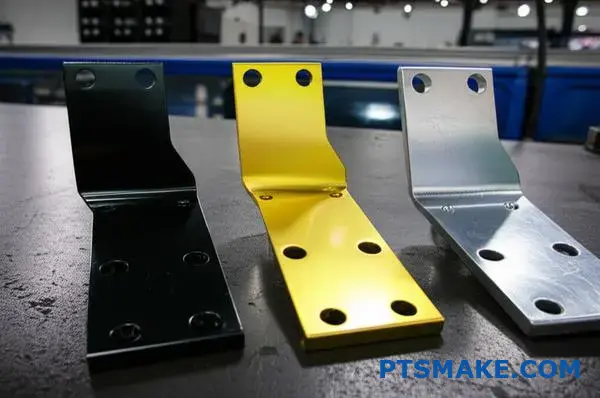
Lors du choix d'une finition de zingage, il faut regarder au-delà de la surface. Le revêtement de conversion au chromate appliqué après le zingage définit ces propriétés. Le choix entre les deux implique un compromis.
Comparaison détaillée : Performances et esthétique
Les avantages de la finition en zinc noir sont souvent d'ordre esthétique. Elle permet d'obtenir une finition noire uniforme et non réfléchissante. Elle est idéale pour les intérieurs automobiles ou l'électronique. Elle offre également une bonne résistance à la corrosion.
Chromate jaune ou noir
Le chromate jaune offre une protection supérieure contre la corrosion. Cela est dû à son film de chrome hexavalent plus épais. Toutefois, le chromate noir, souvent trivalent, suit de près. Il répond également à de nombreuses normes de conformité RoHS. Nombre de nos clients du secteur automobile préfèrent le jaune pour les composants situés sous le capot.
Comparaison des revêtements de zinc transparent
Le zinc clair est celui qui offre le moins de résistance à la corrosion. Il s'agit principalement d'un aspect métallique propre avec une protection de base. Il convient aux pièces utilisées dans des environnements intérieurs secs. Le passivation13 est très mince par rapport au jaune ou au noir.
Résistance aux UV et application
Lors de nos tests, le zinc noir a montré une meilleure résistance aux UV que les revêtements transparents ou jaunes teintés. Cela permet d'éviter la décoloration des pièces exposées au soleil. Le jaune est le produit de base pour les fixations industrielles. Le transparent est utilisé pour les biens de consommation où l'esthétique est primordiale.
| Attribut | Zinc noir | Zinc jaune | Zinc clair |
|---|---|---|---|
| Stabilité aux UV | Bon | Juste | Médiocre (peut se décolorer) |
| Utilisation courante | Automobile, électronique | Industriel, Extérieur | Intérieur, Décoratif |
| ROHS | Souvent Trivalent (Oui) | Hexavalent (Non) | Trivalent (Oui) |
Le choix du zingage dépend de vos priorités. Le zinc noir est excellent pour l'esthétique et une protection modérée. Le zinc jaune est le meilleur choix pour les environnements difficiles. Le zinc clair est une option rentable pour les besoins de base lorsqu'un aspect métallique est souhaité.
L'impact de la géométrie des pièces en 3D sur la couverture du zingage
La géométrie 3D d'une pièce n'est pas seulement une question de fonction ; elle détermine directement le succès de votre zingage. Un revêtement uniforme est souvent supposé, mais les formes complexes posent de véritables défis.
Les zones telles que les creux profonds, les angles internes aigus et les surplombs résistent naturellement à un dépôt uniforme de zinc. Il peut en résulter des taches minces qui compromettent la résistance à la corrosion. Il est essentiel de comprendre l'effet de la géométrie sur le revêtement avant la production.
Défis géométriques courants
| Fonctionnalité | Impact sur le zingage |
|---|---|
| Trous profonds | Faible puissance de lancer à l'intérieur |
| Coins tranchants | Accumulation excessive sur les bords |
| Grandes surfaces planes | Risque de finition inégale |
| Zones encastrées | Epaisseur de revêtement insuffisante |
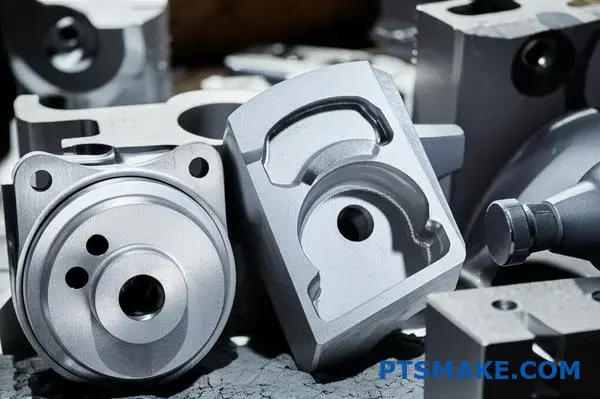
Voyons pourquoi ces caractéristiques posent problème. Le zingage repose sur un courant électrique qui dépose du zinc sur la surface de la pièce. Ce courant suit le chemin de moindre résistance.
Les zones à forte densité de courant, comme les coins et les bords extérieurs, attirent davantage d'ions zinc, ce qui permet d'obtenir un revêtement plus épais. À l'inverse, les zones à faible densité de courant, comme l'intérieur des trous ou des rainures profondes, reçoivent beaucoup moins d'ions.
Cela crée des zones de faible dépôt pour le zingage. Dans les cas extrêmes, l'intérieur d'une pièce complexe se comporte comme un Effet cage de Faraday14, Les surfaces internes sont ainsi efficacement protégées du champ électrique, ce qui empêche tout dépôt significatif. Chez PTSMAKE, nous conseillons nos clients sur les modifications à apporter à la conception afin d'éviter ce problème.
Conseils pour le placage de formes complexes
Pour obtenir une finition uniforme, nous recommandons souvent de légères modifications de la conception. Ces ajustements peuvent faire une énorme différence en termes d'efficacité de fabrication et de qualité de la pièce finale.
| Modification de la conception | Avantage du placage |
|---|---|
| Ajouter des rayons généreux aux angles | Favorise un flux de courant régulier |
| Utiliser des trous de passage plutôt que des trous borgnes | Permet à la solution de s'écouler librement |
| Minimiser les évidements profonds | Réduction des zones à faible dépôt |
| Ajout d'anodes auxiliaires pour les pièces complexes | Aide à diriger le courant vers les zones encastrées |
La première étape consiste à comprendre comment la géométrie affecte le revêtement. En concevant le placage, vous pouvez éviter une couverture inégale, des retouches coûteuses et vous assurer que vos pièces répondent aux spécifications de résistance à la corrosion dès le départ.
Pièges cachés de l'externalisation du zingage pour les chaînes d'approvisionnement internationales
S'approvisionner en zingage à l'étranger semble rentable. Mais le devis initial est rarement révélateur. Des obstacles logistiques inattendus peuvent rapidement réduire ces économies.
Le calendrier de votre projet est menacé. Les retards sont fréquents.
Le véritable coût de la distance
Lorsque vous planifiez une stratégie d'approvisionnement international, vous devez tenir compte des frais d'expédition, de douane et de communication. Ces facteurs ajoutent souvent des semaines aux délais de livraison.
Naviguer dans le transport maritime mondial
La logistique ne se limite pas au transport. Elle implique une coordination à travers les fuseaux horaires. Une simple erreur de documentation peut entraîner d'importants revers.
| Stade | Délai prévu | Temps potentiel Temps réel |
|---|---|---|
| Production | 10 jours | 12 jours |
| Fret maritime | 25 jours | 35+ jours |
| Douanes | 2 jours | 7+ jours |
Pour envisager l'approvisionnement en zinc à l'étranger, il faut avoir une vision réaliste de l'ensemble du calendrier.
Lorsqu'il s'agit de traiter les problèmes des fournisseurs de revêtements au niveau mondial, la communication est à la fois votre plus grand défi et votre meilleur outil. Une réponse tardive due au décalage horaire peut interrompre la production ou l'expédition pendant toute une journée. Ce problème s'aggrave rapidement.
Les ruptures de communication et leur impact
Les malentendus sur les spécifications du zingage sont fréquents. Les barrières linguistiques peuvent transformer une simple question technique en un problème de qualité majeur. Il ne s'agit pas seulement de désagréments ; ils affectent directement vos résultats.
Le labyrinthe douanier
Le dédouanement est un goulot d'étranglement majeur. Les documents incorrects sont souvent à l'origine de ce problème. Vos pièces peuvent être retenues pendant des semaines, dans l'attente d'une documentation correcte. Cela prolonge de manière imprévisible vos délais de livraison.
Calcul de la véritable Coût d'atterrissage15 est essentiel. Il comprend le prix de la pièce ainsi que tous les frais de logistique, de douane et d'assurance. De nombreuses entreprises sous-estiment considérablement ce chiffre.
Une stratégie solide de placage de l'offre internationale doit prévoir des tampons pour ces événements.
| Facteur de coût caché | Impact potentiel sur le coût total |
|---|---|
| Frais de surestaries dans les ports | +5-10% |
| Fret aérien (pour accélérer) | +20-40% |
| Remaniement dû à une mauvaise communication | +15-25% |
| Frais de courtier en douane | +2-5% |
Chez PTSMAKE, nous aidons nos clients à mettre en place des chaînes d'approvisionnement qui anticipent ces problèmes, garantissant ainsi une livraison plus fluide.
La logistique, les douanes et les lacunes en matière de communication constituent des risques importants pour le zingage à l'étranger. Ces variables cachées peuvent gonfler les coûts et retarder les projets, transformant des économies apparentes en pertes substantielles si elles ne sont pas gérées par une stratégie experte.
Faites avancer vos projets de zingage avec la précision PTSMAKE
Améliorez vos pièces usinées par CNC ou moulées par injection grâce à un zingage fiable ! Envoyez votre demande de prix à PTSMAKE et bénéficiez de conseils d'experts, d'un délai d'exécution rapide et d'une qualité de premier ordre, auxquels font confiance des entreprises de premier plan dans le monde entier. Demandez dès aujourd'hui votre devis de zingage personnalisé et faites l'expérience d'une fabrication sans compromis !

Découvrez la science électrochimique qui explique comment ce revêtement protège le métal de base de la corrosion. ↩
Découvrez comment une anode sacrificielle assure une protection électrochimique contre la corrosion du métal de base. ↩
Comprendre comment ce type spécifique de défaillance des matériaux se produit et son impact sur les assemblages filetés. ↩
Découvrez comment les ions métalliques forment un revêtement solide et protecteur sur la surface d'une pièce grâce à ce processus contrôlé. ↩
Comprenez ce principe électrique pour améliorer la conception de vos pièces et obtenir de meilleurs résultats en matière de métallisation. ↩
Découvrez comment ce processus chimique crée une couche de surface non réactive, améliorant considérablement la résistance à la corrosion d'une pièce. ↩
Découvrez comment le zinc protège sacrificiellement l'acier de la corrosion, même lorsque le revêtement est rayé. ↩
Comprendre comment ce processus électrochimique fonctionne pour protéger le métal de base de l'acier. ↩
Comprendre les principes scientifiques qui régissent l'épaisseur et l'efficacité du revêtement dans les procédés de zingage. ↩
Découvrez le film protecteur invisible qui rend certains métaux résistants à la corrosion et au placage. ↩
Comprenez comment ce principe électrique a un impact direct sur l'uniformité et la qualité de votre finition zinguée. ↩
Apprenez à calculer et à contrôler l'effet cumulatif des tolérances dans vos conceptions. ↩
Découvrez comment ce processus chimique améliore la résistance à la corrosion des pièces zinguées. ↩
Découvrez comment ce phénomène de blindage électrique peut avoir un impact sur la qualité et les performances du revêtement final de votre pièce. ↩
Comprendre comment calculer le coût total de vos pièces zinguées au-delà du prix du fournisseur. ↩