Finding the right custom heat sink manufacturer feels like searching for a needle in a haystack. You need precision thermal solutions that actually work, but most suppliers either lack the technical expertise or can’t scale from prototype to production.
Custom heat sink manufacturing combines specialized thermal engineering with precision machining processes like CNC milling, extrusion, and die casting to create cooling solutions for electronics, automotive, and industrial applications.
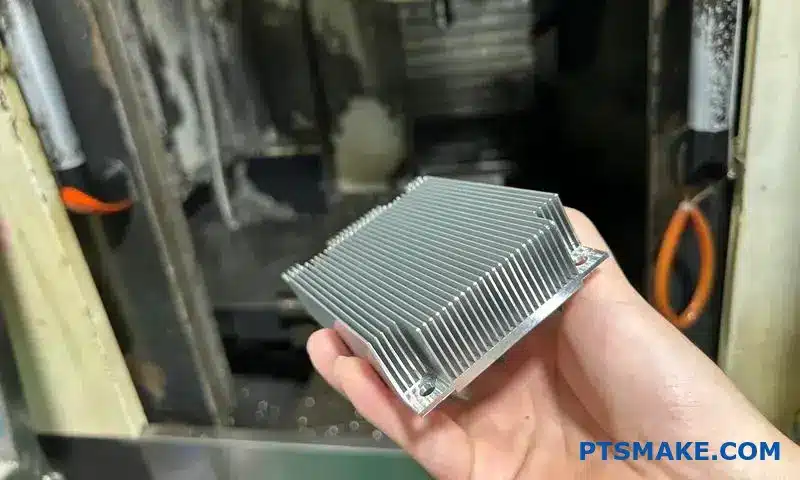
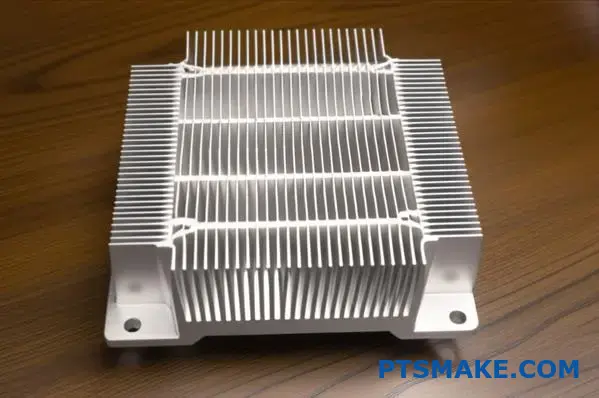
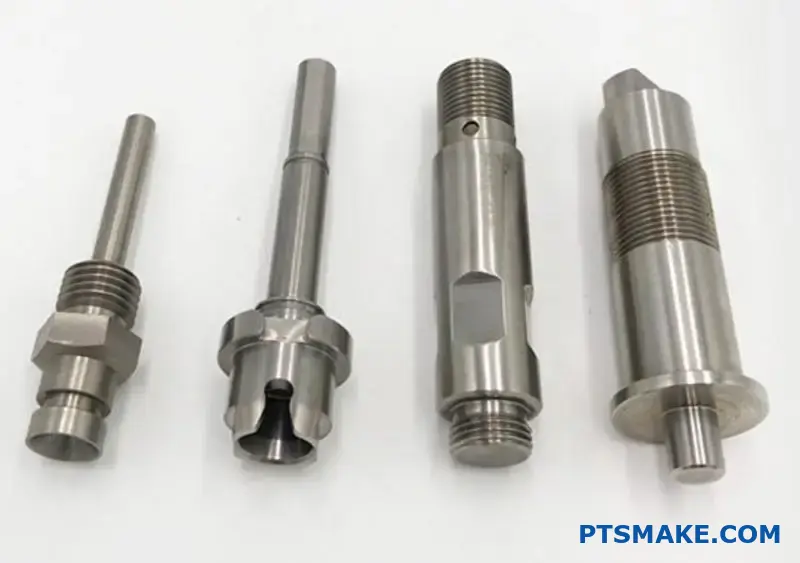
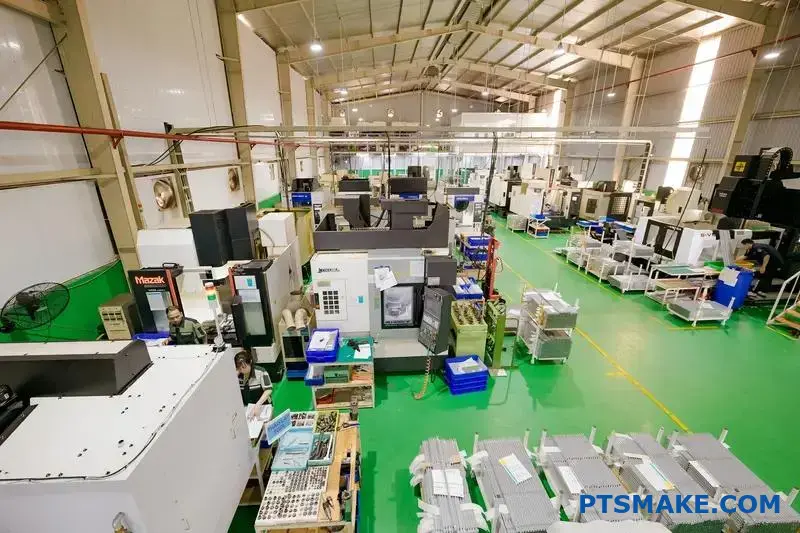
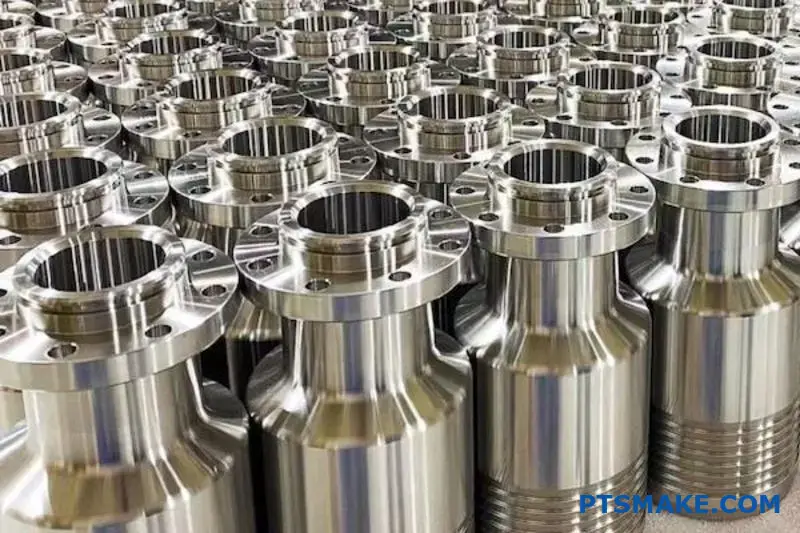
Custom Heat Sink Manufacturing At PTSMAKE
I’ve worked with engineering teams who struggled with thermal management challenges across different industries. The success of your project depends on choosing a manufacturer who understands both the technical requirements and production realities. Let me walk you through what separates effective heat sink manufacturers from the rest.
What is a heat sink manufacturer’s core value proposition?
What is a heat sink manufacturer really selling? It’s not just shaped metal. It’s the assurance that your technology can perform at its best without overheating.
We provide critical thermal management. This enables powerful electronics to function reliably.
More Than a Supplier
A true partner offers engineering expertise. We help solve thermal challenges before they become production problems. Our value is in the solution, not just the physical part itself.
Core Value Breakdown
Aspect
Description
Function
Enabling Technology Performance
Service
Providing Engineering Solutions
Relationship
A Partnership in Innovation
This mindset transforms a simple transaction into a long-term collaboration.
null
A manufacturer’s real worth is measured by their ability to solve complex thermal problems. This goes far beyond simply following a blueprint. It’s about proactive engagement.
The Role of an Engineering Partner
A top-tier heat sink manufacturer acts as an extension of your engineering team. We get involved early, offering Design for Manufacturability (DFM) feedback. This saves you time and money.
For example, a small design tweak we suggest could improve cooling efficiency by 10%. This is based on insights from past projects at PTSMAKE. This collaboration is where the true value lies.
We analyze the entire thermal system. This includes airflow, material choice, and assembly processes. Understanding how these factors interact is crucial for optimal performance. The goal is to lower the overall Thermal Resistance1 of the system.
Supplier vs. Partner
Feature
Commodity Supplier
Engineering Partner
Focus
Price Per Part
Total Cost of Ownership
Engagement
Receives Orders
Collaborates on Design
Expertise
Manufacturing
Thermal Management
Goal
Fulfill PO
Ensure Project Success
Choosing a partner means investing in a smoother development cycle and a more reliable end product. It’s a strategic decision for any company serious about hardware.
A heat sink manufacturer’s core value is providing expert thermal management solutions, not just metal parts. They act as engineering partners, ensuring technology performs reliably and efficiently by engaging deeply with the design and manufacturing process.
What defines the primary manufacturing processes?
Primary manufacturing processes are the bedrock of production. They are the non-negotiable methods that transform raw materials into fundamental shapes. These aren’t optional steps; they are essential starting points for countless products.
The Core Four
Let’s look at four foundational methods. Each one serves a unique and vital purpose in the industry. Understanding them is key to smart product design. As a heat sink manufacturer, we often rely on methods like extrusion and CNC machining.
Process
Core Principle
Best For
Extrusion
Pushing material through a die
Continuous profiles
CNC Machining
Removing material with precision tools
Complex geometries
Die Casting
Injecting molten metal into a mold
High-volume metal parts
Stamping
Pressing sheet metal into a shape
Fast, repeatable forms
These processes form the essential toolkit for modern manufacturing.
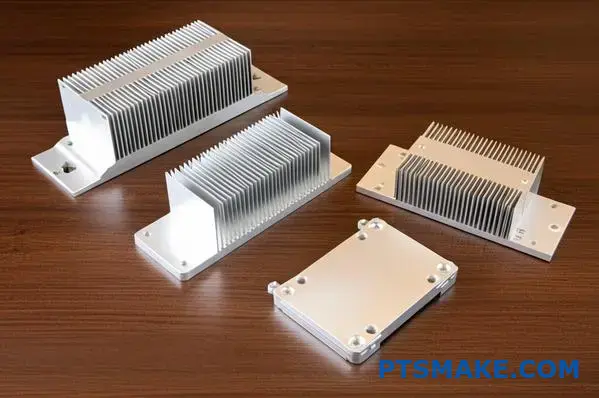
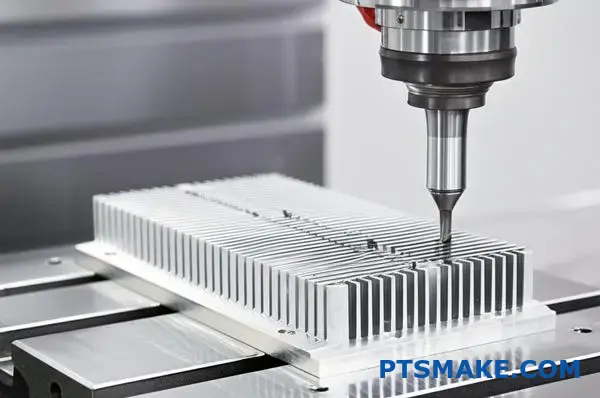
Precision Machined Aluminum Heat Sink Component
A Deeper Look at Each Process
Choosing the right primary process is critical. The decision impacts cost, speed, material, and final part quality. Let’s break down what makes each method unique and powerful.
Subtractive vs. Formative Methods
CNC machining is a subtractive process. We start with a solid block and precisely cut material away. It offers incredible design freedom and tight tolerances. This is a cornerstone of our work at PTSMAKE.
In contrast, extrusion, die casting, and stamping are formative processes. They shape material rather than remove it. These methods rely on the principle of material plasticity2. They are generally faster and more cost-effective for high volumes.
Process-Specific Applications
Understanding the application is everything. Each method excels in different areas. The table below shows some typical uses.
Process
Common Application
Key Advantage
Extrusion
Aluminum frames, pipes, heat sinks
Consistent cross-sections
CNC Machining
Prototypes, custom fixtures, medical implants
High precision, material versatility
Die Casting
Engine blocks, gears, electronic housings
Speed at scale, complex internal features
Stamping
Brackets, automotive body parts, enclosures
High speed, low unit cost
Based on our tests, selecting the right process early can reduce production costs by up to 30%. It prevents costly redesigns and ensures the final part performs as intended.
These primary methods are distinct tools for specific jobs. CNC machining provides precision, die casting offers volume, extrusion creates profiles, and stamping forms sheet metal quickly. Understanding these core differences is fundamental to effective and efficient manufacturing.
What are the essential inputs for a production run?
A successful production run depends on several key inputs working together perfectly. Without them, you risk delays and quality issues.
Core Production Inputs
For any manufacturing job, you need a clear checklist. This ensures nothing is overlooked before production starts. It forms the foundation of the entire process.
Here are the absolute essentials:
Input
Primary Function
Technical Drawings
Defines the part’s geometry and specifications.
Raw Materials
The base stock from which parts are made.
Machine Tooling
Shapes the raw material into the final part.
Quality Plan
Ensures every part meets the required standards.
Skilled Labor
Operates machinery and oversees the process.
Each element is critical for a smooth operation.
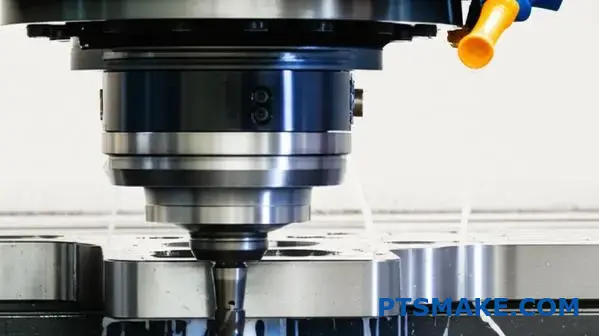
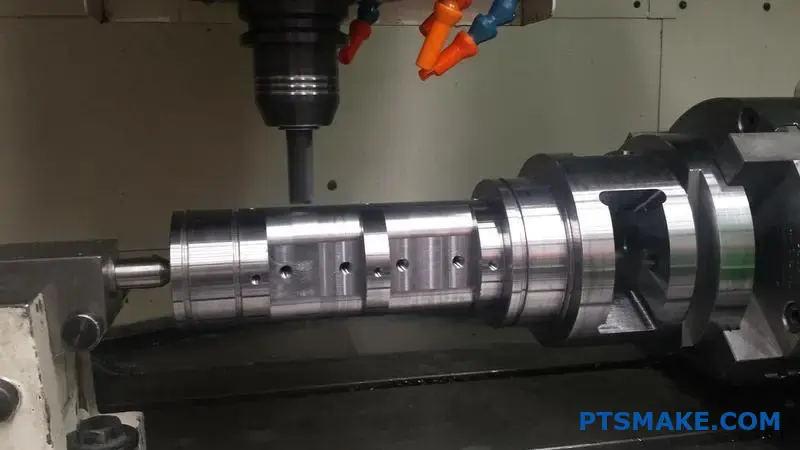
CNC Machine With Technical Drawings
A Deeper Look into Production Inputs
Let’s break down why each input is so crucial. Simply having them isn’t enough; they must be correct and well-managed. A flaw in one area can disrupt the entire workflow.
Technical Drawings: The Digital Blueprint
Modern manufacturing relies on CAD files. These are not just pictures. They are detailed instructions for our machines.
These files define every feature and tolerance. They include complex specifications often detailed through a system like Geometric Dimensioning and Tolerancing3. A small error here can lead to a batch of useless parts.
Materials and Tooling: The Physical Foundation
The right raw material is non-negotiable. Material properties directly affect the final part’s performance and durability. As a specialized aluminum heat sink manufacturer, we know how critical the right alloy grade is for thermal performance.
Tooling is just as important. The correct drills, end mills, or molds are essential for achieving the required precision and surface finish. Using worn or incorrect tooling is a recipe for failure.
People and Processes: The Essential Glue
Finally, you need skilled people and a solid plan. Automated machines still require expert operators to set them up, monitor them, and solve problems.
At PTSMAKE, our quality plan acts as the playbook. It outlines every check and measurement. This ensures the first part is identical to the last, meeting your exact specifications.
A production run is a system. Success requires the flawless integration of digital plans, correct materials, precise tooling, a robust quality framework, and skilled personnel. Overlooking any one of these inputs risks the entire project’s outcome and timeline.
What is the role of tooling in the manufacturing process?
Tooling refers to the custom instruments used to shape materials. Think of injection molds, casting dies, or stamping tools. They are the heart of mass production.
The quality of your tool directly dictates the quality of your parts. It is the foundation for creating thousands or millions of identical components.
Therefore, its design, cost, and lead time are critical factors. They heavily influence your project’s budget and timeline from day one. A flawed tool creates endless production headaches.
Tooling Type
Common Application
Injection Mold
Mass-producing plastic parts
Stamping Die
Shaping sheet metal components
Casting Die
Forming molten metal parts
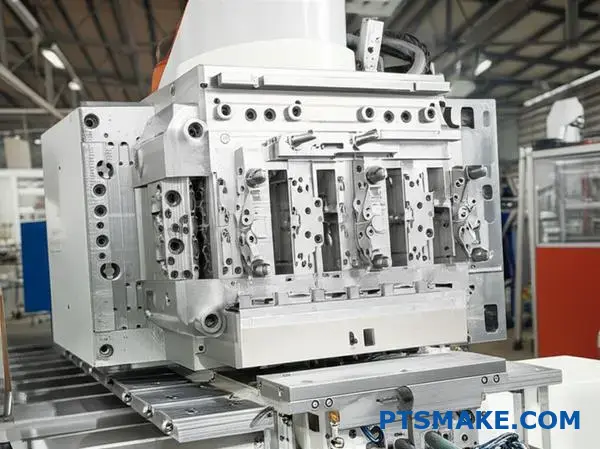
Professional Injection Mold Tool Assembly
The Critical Role of Tooling Design
A tool’s design is the blueprint for your product’s success. A robust design ensures part-to-part consistency. It also extends the tool’s operational life, which is vital for high-volume production.
In past projects at PTSMAKE, we’ve learned that a small investment in design pays off massively. It prevents costly defects and rework down the line, an issue we often see with parts made by a less experienced heat sink manufacturer.
Understanding Tooling Costs
Tooling is a significant upfront capital expense. The cost varies based on part complexity, tool material (like P20 or H13 steel), and its expected production lifespan.
This initial investment is factored into the final part price through Amortization4. This means the high upfront cost is spread across every single part that the tool produces over its lifetime.
Why Lead Time Matters
Tooling lead time directly impacts your time-to-market. The process includes design, fabrication, and testing, which can take from several weeks to a few months. This is often the longest single phase before mass production can begin.
Factor
Impact on Lead Time
Design Complexity
Complex parts require longer tool design and build times.
Tool Material
Harder, more durable tool steels take longer to machine.
Testing & Iteration
Revisions and fine-tuning add to the overall timeline.
Tooling is the essential foundation for scalable manufacturing. Its design determines final part quality, while its cost and lead time are critical project planning factors. Getting these elements right from the start is absolutely crucial for a successful product launch.
What types of heat sinks dictate different manufacturing lines?
Not all heat sinks are the same. Their design directly dictates the production line. This is a critical factor when choosing a partner for your project.
We will look at four common types. These are extruded, skived fin, bonded fin, and liquid cold plates.
Each type demands a unique set of technologies and equipment. Understanding this link is key to sourcing the right solution. Let’s see how they map out.
Heat Sink and Process Mapping
Heat Sink Type
Primary Manufacturing Process
Extruded
Aluminum Extrusion
Skived Fin
Precision Skiving
Bonded Fin
Epoxy Bonding or Brazing
Liquid Cold Plates
CNC Machining & Brazing
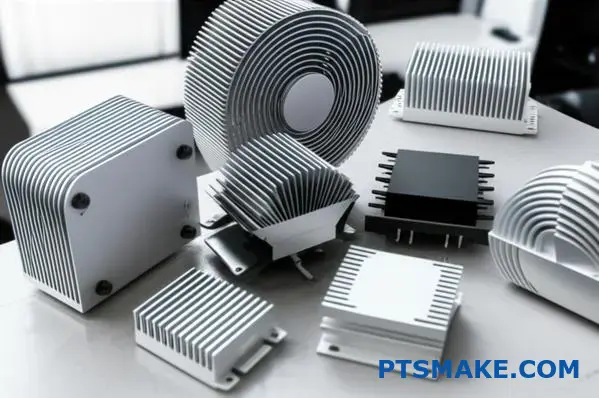
Different Types Of Heat Sinks Manufacturing
Extruded Heat Sinks: The Workhorse
Extrusion is the most common method. It involves pushing a hot aluminum billet through a steel die. This process is like squeezing toothpaste from a tube. It’s fast and cost-effective for large volumes. However, it has limits on fin density and aspect ratio.
Skived and Bonded Fins: Pushing Density
For higher performance, we turn to skiving or bonding. Skiving uses a sharp blade to peel thin fins from a solid block of copper or aluminum. This creates a seamless connection, which is great for heat transfer.
Bonded fins offer more design freedom. We can attach individual fins to a base using thermal epoxy or brazing. This allows for combining different materials, like copper fins on an aluminum base for a balance of cost and performance.
Liquid Cold Plates: Maximum Performance
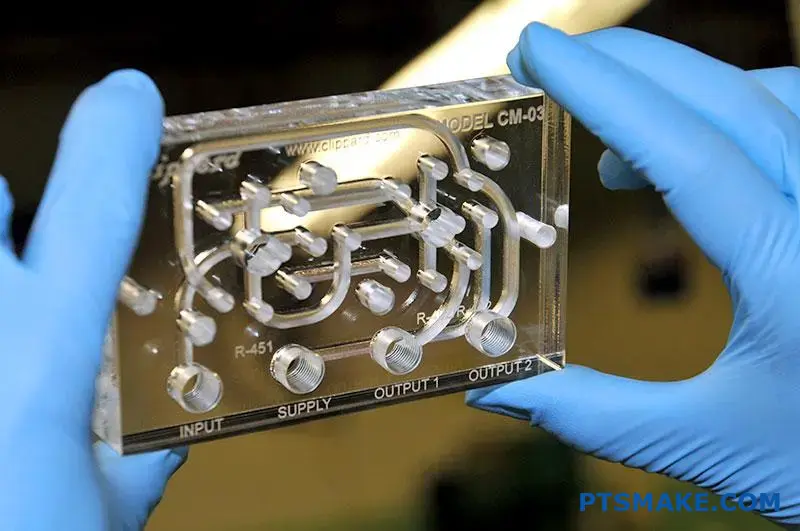
Liquid cold plates handle extreme heat loads. Their manufacturing is complex. We often use CNC machining to carve intricate paths for the liquid to flow. Liquid cold plates often feature a complex microchannel architecture5 to maximize the surface area for heat transfer. The plate is then sealed, often using brazing or friction stir welding.
Manufacturing Comparison
Feature
Extrusion
Skiving
Bonding
Liquid Cooling
Tooling Cost
High (Die)
Low
Low
Moderate to High
Material
Aluminum
Copper, Aluminum
Mixed Metals
Copper, Aluminum
Fin Density
Low to Medium
High
High
N/A (Internal)
Complexity
Low
Medium
Medium
High
Choosing the right heat sink isn’t just a design decision; it’s a manufacturing one. Each type—from simple extrusions to complex liquid plates—requires a specific production line. This directly impacts your choice of a capable heat sink manufacturer and the project’s overall cost.
How do manufacturers segment by target market?
Segmenting by industry is a fundamental approach. Each market has its own set of rules, standards, and expectations. You can’t use a one-size-fits-all strategy.
At PTSMAKE, we treat each industry as a unique specialization. This focus helps us meet their specific needs.
Key Market Demands
Understanding these differences is key to success. What works for consumer electronics will not work for the automotive sector.
Comparing Industry Needs
A simple comparison highlights the contrast. Lifecycles and regulations vary dramatically.
Industry
Key Demand
Typical Product Lifecycle
Automotive
Extreme Reliability
10-15 Years
Consumer Electronics
Speed to Market
1-2 Years
This table shows why tailored strategies are essential.
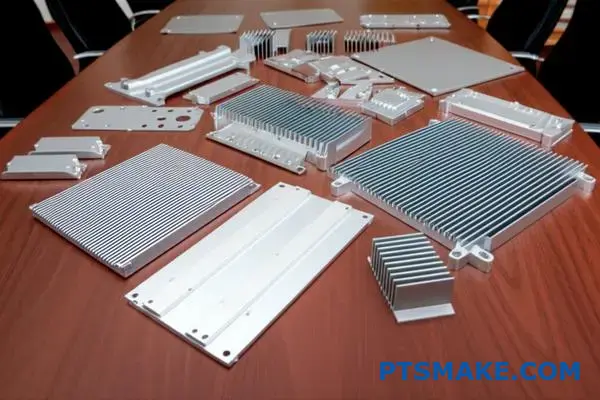
Heat Sink Components For Different Industries
Different industries require different manufacturing mindsets. It’s not just about making a part; it’s about understanding its final application and environment.
Automotive vs. Electronics
In the automotive sector, parts must withstand harsh conditions for years. Safety and reliability are non-negotiable. This requires rigorous testing and full material traceability6. Every component must be perfect.
Consumer electronics move at a blistering pace. The focus is on rapid prototyping, aesthetic appeal, and cost-effective mass production. A delay of weeks can mean missing a product launch.
Telecom and Data Centers
The telecom industry demands parts with exceptional longevity and reliability. Components often go into infrastructure that must operate flawlessly for decades.
For data centers, thermal management is critical. As a custom heat sink manufacturer, we know precision is vital to prevent overheating and ensure stable performance.
Industrial Applications
Industrial machinery requires parts built for toughness. They face heavy use, vibration, and extreme environments. Durability and strength are the top priorities.
Market Segment
Primary Requirement
Example Application
Automotive
Safety & Durability
Engine Components
Consumer Electronics
Aesthetics & Speed
Smartphone Casings
Telecom
Long-Term Reliability
Fiber Optic Connectors
Data Centers
Thermal Management
Custom Heat Sinks
Industrial
Robustness
Heavy Machinery Gears
Segmenting by industry allows manufacturers to align their processes, materials, and quality control with specific market demands. This focused approach ensures that parts for an automotive engine are treated differently from those for a new smartphone, leading to better outcomes.
How do cost structures vary between processes?
Understanding cost structures is key to smart manufacturing. Let’s compare two popular methods. Each process has a unique financial footprint. Your choice impacts budget from day one.
Die Casting: High Upfront Costs
Die casting involves creating a custom steel mold. This is a major initial expense. However, the cost per part becomes very low. This makes it ideal for high-volume production runs.
CNC Machining: Low Initial Costs
CNC machining needs no custom tooling. This means setup costs are minimal. But the per-part cost is higher. This is due to machine time and labor.
Here is a simple comparison:
Cost Factor
Die Casting
CNC Machining
Initial Tooling
High
Low / None
Per-Unit Cost
Low
High
Ideal Volume
High
Low to Medium
Lead Time
Long
Short
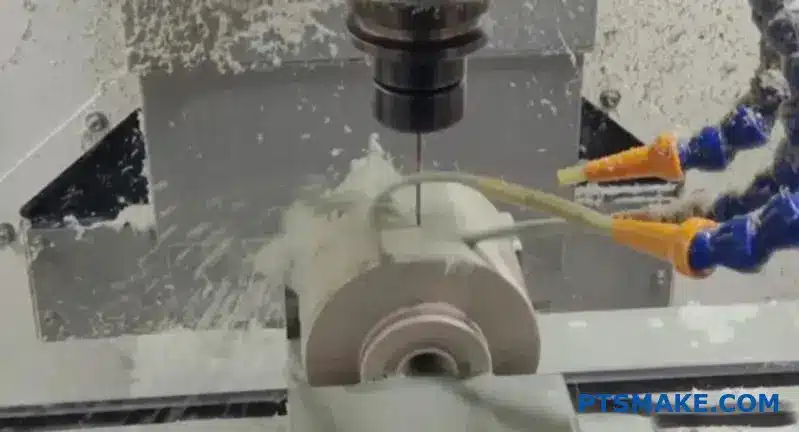
CNC Machining Aluminum Heat Sink Component
The choice between processes often hinges on production volume. It’s a classic trade-off. You can pay more now or pay more later.
Evaluating Total Cost of Ownership
At PTSMAKE, we help clients look beyond the per-part price. We analyze the total cost over the project’s lifetime. This provides a clearer financial picture.
For low-volume prototypes, CNC machining is usually the clear winner. Its flexibility and speed are unmatched. This is vital for industries needing custom parts, like a specialized heat sink manufacturer testing new designs.
However, as production scales, the math changes. The high initial mold cost for die casting or injection molding gets spread across thousands of units. This process of distributing an initial expense is called Amortization7. This dramatically lowers the effective cost per part.
Cost Scaling with Volume
Material usage also plays a role. Subtractive processes like CNC machining create more scrap material compared to molding processes. This can affect variable costs, especially with expensive materials.
Let’s see how costs behave as volume increases:
Production Volume
CNC Machining Cost
Die Casting Cost
Best Choice
1-100 Units
Low-Medium
Very High
CNC
100-5,000 Units
Medium-High
High
Varies
5,000+ Units
Very High
Low
Die Casting
Ultimately, choosing the right process requires balancing upfront investment with long-term production costs and desired volume. It’s about finding the economic sweet spot for your specific project.
Choosing a manufacturing process involves weighing high initial tooling costs against variable per-unit expenses. The optimal choice depends heavily on your projected production volume and the total cost of ownership over the product’s lifecycle.
Regional Analysis of Heat Sink Manufacturing Hubs
When choosing a heat sink manufacturer, geography matters. The world’s production is concentrated in a few key hubs. Each region offers distinct advantages.
East Asia, especially China, leads in volume and cost. North America excels in rapid prototyping and innovation. Europe is the benchmark for precision and quality.
Key Regional Strengths
Understanding these differences is crucial for your project. Your choice impacts cost, lead times, and final quality.
Region
Primary Strength
Best For
East Asia
Mass Production & Cost
High-volume, cost-sensitive projects
North America
Innovation & Proximity
Prototypes, fast-turnaround needs
Europe
High-Precision & Quality
Demanding, high-spec applications
Heat Sink Manufacturing Regional Comparison
Digging deeper reveals a landscape of trade-offs. No single region is perfect for every job. Your project’s specific needs should guide your sourcing strategy. It’s a balance of cost, speed, and quality.
East Asia: Scale and Value
China, Taiwan, and Vietnam form a powerful manufacturing bloc. Their main advantage is an incredibly deep and cost-effective supply chain. At PTSMAKE, we leverage this to deliver value on large production runs. However, you must manage logistics and potential communication hurdles carefully.
North America: Speed and Innovation
The US, Canada, and Mexico offer proximity for American companies. This means faster shipping and easier collaboration. This region is great for R&D and complex, low-volume projects. The trade-off is significantly higher labor and operational costs.
Europe: Precision and Automation
Germany is a leader here, known for its engineering excellence. European manufacturers often invest heavily in automation. This results in superior quality and consistency. This focus on quality often means higher prices and longer lead times. These factors heavily influence your supply chain resilience8.
Region
Strengths
Weaknesses
East Asia
Low cost, large scale, mature ecosystem
Longer lead times, tariffs, quality variance
North America
Fast turnaround, IP security, easy comms
High production costs, smaller scale
Europe
Unmatched quality, high automation
Highest cost, regulatory complexity
Choosing a manufacturing region is a strategic decision. It involves balancing cost, quality, and logistical complexity. Your ideal partner depends on your project’s unique priorities, whether that’s budget for a mass-market product or precision for a medical device.
How to select the optimal manufacturing process for a design?
Choosing the right process is a balancing act. It’s not just about the design. It’s about your business goals. I use a simple framework to guide these decisions.
This framework helps you weigh the key factors systematically. It removes guesswork.
Core Decision Criteria
Consider these five areas for every project:
Production Volume
Target Cost Per Part
Geometric Complexity
Material Requirements
Thermal Performance
A Simple Framework
Here is a basic way to start your evaluation. This applies whether you need a simple bracket or a complex enclosure.
Criteria
Low Priority
High Priority
Volume
Prototyping (e.g., CNC)
Mass Production (e.g., Molding)
Cost
High per part (CNC)
Low per part (Molding)
Complexity
Simple shapes
Intricate features (5-axis CNC)
Material
Standard metals/plastics
Specialized alloys, high-temp plastics
Thermal
No specific needs
Requires heat dissipation
CNC Machining Aluminum Bracket Manufacturing
This framework provides a solid starting point. However, the real challenge lies in the trade-offs. In past projects at PTSMAKE, we’ve seen how these factors influence each other.
Navigating the Trade-Offs
For example, high production volume usually points to injection molding for the lowest part cost. But what if your design has extremely complex, internal geometries?
Molding might not be feasible. You may need to consider CNC machining or even additive manufacturing. This increases the cost per part but makes the design possible.
Material choice is another critical intersection. A design requiring excellent thermal conductivity, like a heat sink, often uses extruded aluminum. This process is great for specific shapes. But complex fin designs might need CNC machining.
A good partner, especially an experienced heat sink manufacturer, will help you analyze these choices. They understand how material selection impacts thermal performance and manufacturing costs. Understanding the material’s anisotropic properties9 can be key. It ensures performance isn’t compromised by the chosen process.
Evaluating Complexity and Cost
Here’s how complexity can affect your choice, especially when comparing CNC machining and injection molding.
Feature Type
CNC Machining
Injection Molding
Undercuts
Possible with 5-axis
Requires complex sliders/lifters
Thin Walls
Limited by tool rigidity
Limited by material flow
Tight Tolerances
Excellent
Good, but subject to shrinkage
Surface Finish
Highly controllable
Dependent on mold finish
This shows that no single process is universally "best." The optimal choice is always context-dependent.
This decision framework helps balance production volume, cost, complexity, material, and performance. The key is understanding the trade-offs. The optimal process always depends on your project’s specific priorities and constraints.
How to create an accurate quote for a custom heat sink?
Creating an accurate quote is a science. It’s not just a final number. It reflects a manufacturer’s process and transparency. A detailed quote builds trust from the start.
The Core Cost Components
A quote should be easy to understand. Every cost needs a clear reason. We break it down into five main areas. This ensures nothing is missed.
Key Quoting Steps
Here is the sequence we follow. Each step builds on the last one for total accuracy.
Step
Description
1
Material Cost Calculation
2
Machine Time Estimation
3
Labor Factoring
4
Tooling Amortization
5
Overhead & Profit Margin
This systematic approach prevents errors. It gives you a fair and precise price.
Custom Aluminum Heat Sink Manufacturing
A truly accurate quote goes beyond the basics. It requires a deep dive into each step. As a trusted heat sink manufacturer, we believe in full transparency.
Breaking Down the Costs
Material and Machining
First, we calculate material cost. We consider the raw aluminum or copper block size, not just the final part weight. Waste material, or scrap, has a cost too.
Next is machine time. This is complex. It includes CAM programming, machine setup, and the actual cutting time. A complex fin design takes much longer than a simple block.
Labor, Tooling, and Margin
Labor isn’t just the machine operator. It includes quality inspection, deburring, and packaging. Every touchpoint adds value and cost.
Tooling is another factor. Custom fixtures or cutters are sometimes needed. The cost of these tools is spread across the production run. This concept is known as Amortization10. It makes custom parts more affordable.
Finally, we apply overhead and profit. Overhead covers things like electricity and facility costs. The profit margin allows us to reinvest in better technology and service for you.
Cost Factor
Simple Design Example
Complex Design Example
Machine Time
15 minutes
90 minutes
Tooling
Standard tools
Custom fixtures
Labor
Minimal handling
Detailed inspection
At PTSMAKE, this detailed process ensures our quotes are reliable.
A clear, step-by-step quoting process is key. It moves from material and machine time to labor, tooling, and profit margin. This method ensures accuracy and builds trust between the client and the manufacturer.
How to execute a cost reduction analysis on a product?
A systematic approach is key to effective cost reduction. It’s not about random cuts. It’s a methodical process.
We start by analyzing each step. Then, we look at materials. Finally, we consider design and tooling. This ensures we cut costs without harming quality.
Process Step Analysis
First, map out the entire manufacturing process. Look for bottlenecks, waste, or redundant actions. Can we combine steps? Can we automate a manual task?
Every second saved on the production line translates directly into cost savings for our clients.
Evaluating Alternative Materials
Next, we question the materials. Is the specified material truly necessary, or is there a more cost-effective alternative that meets all performance requirements?
For example, switching from one grade of aluminum to another can sometimes yield significant savings with no functional loss.
Aluminum Automotive Brackets Different Grades
A thorough cost reduction analysis is a multi-faceted endeavor. It requires collaboration between your team and your manufacturing partner. At PTSMAKE, we see this as a partnership.
Exploring Design Modifications
We always approach design changes with the client. The goal is to simplify for manufacturability. This might mean reducing part complexity or relaxing non-critical tolerances. Even small adjustments can lead to big savings. For instance, in our work as a heat sink manufacturer, modifying fin geometry can improve thermal performance while reducing machine time.
This collaborative process is a core part of Value Engineering11. It’s about finding the optimal balance between function, performance, and cost. We present data-driven options so you can make informed decisions.
Tooling Optimization
Tooling is a major investment. We analyze if the current mold or fixture design is optimized. Can we improve cycle times? Can we design a multi-cavity mold instead of a single-cavity one for higher volume runs?
Here’s a simplified comparison:
Tooling Approach
Initial Cost
Per-Part Cost
Best For
Single-Cavity Mold
Lower
Higher
Prototypes
Multi-Cavity Mold
Higher
Lower
Production
Optimizing the tool from the start ensures long-term cost efficiency, which is a principle we apply to all our projects.
A systematic cost-cutting analysis involves scrutinizing processes, materials, design, and tooling. This collaborative approach ensures significant savings are achieved without compromising the product’s integrity or performance. It’s a partnership focused on creating value.
How to pivot production to capture a high-margin niche market?
Strategizing a pivot is a major decision. It means moving from mass production to specialized, high-value items.
Think about shifting from PC coolers to medical device cooling. This isn’t just a product change. It’s a total business transformation.
This requires new skills, stricter quality control, and a different marketing approach. The entire operation must adapt.
Aspect
High-Volume (PC Coolers)
High-Value (Medical Cooling)
Focus
Cost per unit, speed
Performance, reliability, precision
Margin
Low
High
Client Base
Broad, transactional
Niche, relationship-based
Tolerance
Standard
Extremely tight
This shift redefines your company’s identity and value proposition.
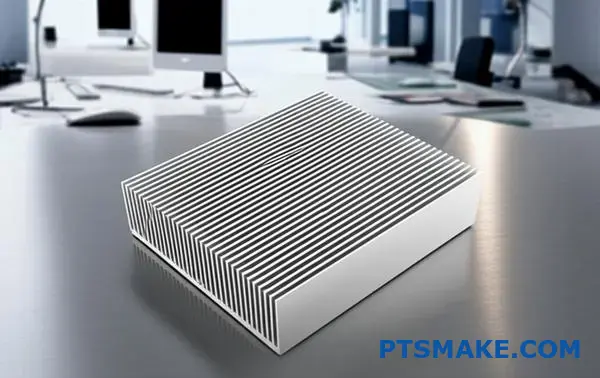
Precision Aluminum Heat Sink Design
Pivoting to a high-margin niche demands a deep operational overhaul. It’s not about working harder; it’s about working smarter and with greater precision. This move redefines you as a specialized heat sink manufacturer, not a generalist.
Evolving Your Skillset
Your team’s skills must advance significantly. Standard machining knowledge is not enough. Operators need training in advanced CNC techniques for tighter tolerances and complex geometries. At PTSMAKE, we invest heavily in continuous training to handle such demanding projects.
Reinforcing Quality Control
For sectors like medical devices, quality is non-negotiable. This means implementing rigorous quality control systems. You need detailed documentation, full material traceability, and multi-stage inspection processes. Every single part must be perfect. An entirely new Go-to-Market Strategy12 is required.
Redefining Your Marketing
Your marketing and sales approach must also change. Instead of focusing on volume and price, you sell expertise, reliability, and precision. The sales cycle is longer. Building trust with engineers and procurement managers becomes the primary goal.
Area of Change
From
To
Skills
General Machining
Precision CNC, Complex Geometries
Quality
Standard AQL Checks
100% Inspection, Traceability
Marketing
Price & Volume Focus
Value & Expertise Focus
This strategic pivot requires a complete cultural shift toward precision and quality.
Shifting from high-volume to high-value production is a profound change. It requires upgrading skills, implementing stringent quality controls, and adopting a new, value-focused marketing strategy. Success depends on a complete operational and cultural transformation.
Take Your Next Project Further with PTSMAKE Heat Sink Expertise
Ready to optimize your product with precision-engineered heat sinks? Contact PTSMAKE now for a fast, accurate quote. Our team turns your toughest thermal management challenges into reliable solutions—delivering quality, speed, and trust from prototype to production. Send us your RFQ today!
Discover how this key metric impacts your heat sink’s performance. ↩
Learn how this material property impacts process selection and final part strength. ↩
Understand this essential engineering language for defining precise manufacturing tolerances and part geometry. ↩
Understand how this financial concept impacts your product’s final cost per unit. ↩
Discover how these intricate internal designs maximize cooling in high-power electronics and systems. ↩
Learn why tracking material origins is vital for quality control and compliance in demanding industries. ↩
Learn how to calculate the true cost of your tooling over its entire production life. ↩
Learn why geographic diversification is crucial for mitigating risks in your production. ↩
Learn how material properties can vary by direction and impact your part’s performance. ↩
Understand how tooling costs are managed to make your custom parts more cost-effective. ↩
Discover this systematic method for improving function and reducing costs without sacrificing quality. ↩
Understand how to plan your entry and success in a new high-value market. ↩
Share this :
Hi there! I’m Peter,Global Technical Sales Director of PTSMAKE. My journey in the mold and CNC Machining industry started when I was a kid, working alongside my father in the mold workshop. From there, I moved on to becoming a mold designer, then project manager, followed by a sales role, and eventually to PTS partner, all with over 15 years of hands-on experience. I’m here to share what I’ve learned and help take your projects to the next level. Let’s connect and build something great together!