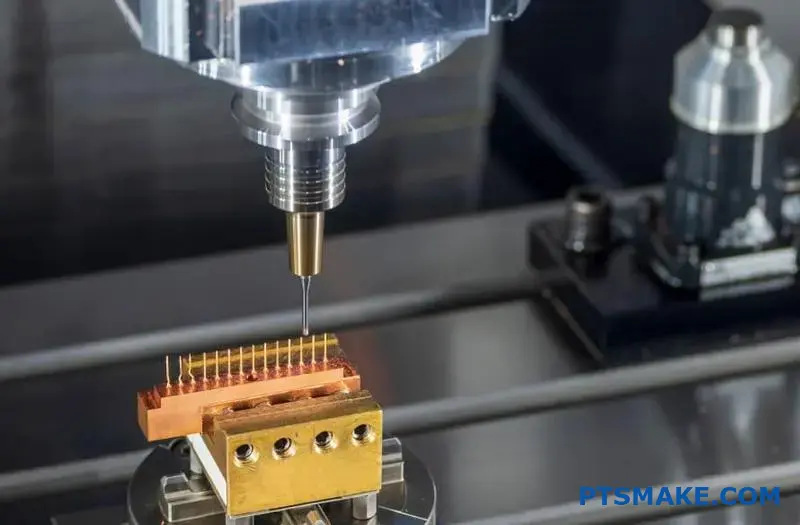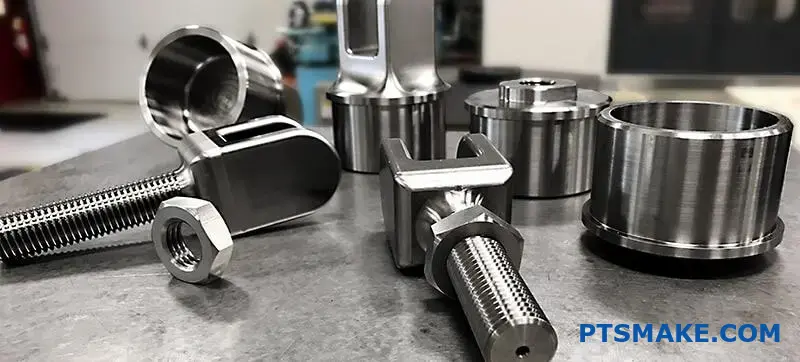

Votre projet a besoin d'un aspect haut de gamme parfait, mais vous devez choisir entre d'innombrables options de finition. Les finitions standard permettent à votre produit de se fondre dans la masse, tandis que les mauvais choix de finition peuvent détruire le positionnement de luxe de votre marque et la perception du client.
La finition or brossé associe la résistance à la corrosion à une esthétique haut de gamme, offrant une durabilité et une résistance aux rayures supérieures à celles des produits polis. Ce traitement de surface utilise des motifs d'abrasion contrôlés avec une couche d'or pour créer une texture cohérente et un attrait luxueux.
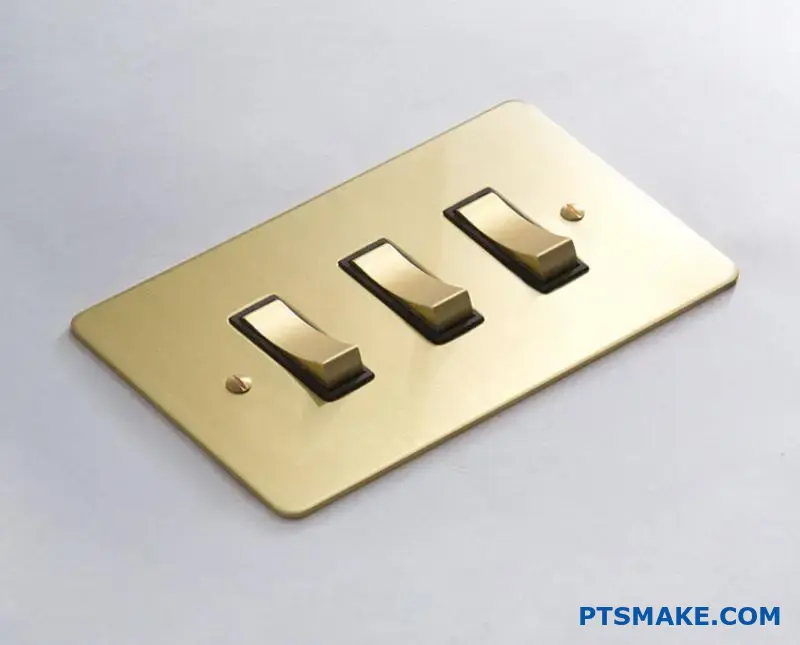
J'ai travaillé avec des centaines d'ingénieurs qui se débattent avec le choix de la finition de leurs produits haut de gamme. Ce guide couvre tous les aspects, des spécifications techniques aux méthodes de fabrication, afin de vous aider à prendre des décisions éclairées pour votre prochain projet de quincaillerie.
Pourquoi les ingénieurs choisissent-ils la finition or brossé ? Un point de vue technique
Les ingénieurs vont souvent au-delà de la simple esthétique. La finition or brossé est choisie pour des raisons solides et pratiques. Elle est devenue l'une des finitions métalliques préférées des ingénieurs.
Ce choix associe l'attrait visuel à des performances tangibles. Il ne s'agit pas seulement d'une question d'apparence.
Principaux avantages techniques
La résistance à la corrosion est l'un des principaux facteurs. La texture brossée offre également un excellent retour tactile. Cette finition dissimule efficacement les empreintes digitales et les rayures mineures. Ce sont là les principaux avantages techniques d'une finition en or brossé.
Comparaison rapide
| Fonctionnalité | Or brossé | Chrome poli |
|---|---|---|
| Résistance à la corrosion | Haut | Modéré |
| Masquage des empreintes digitales | Excellent | Pauvre |
| Sensation tactile | Texturé | Lisse |
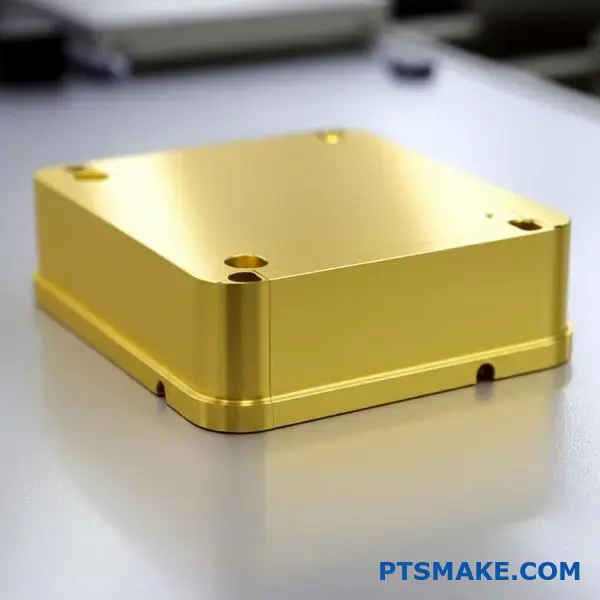
Au-delà de la surface : Un regard plus profond
L'attrait d'une finition dorée brossée ne se limite pas à son apparence. Le processus de fabrication lui-même ajoute une valeur fonctionnelle significative, en améliorant les propriétés de surface du matériau de base. C'est plus qu'une simple couleur.
La science de la finition
La technique du brossage crée de fines rainures parallèles sur la surface du métal. Ces rainures diffusent la lumière, ce qui réduit l'éblouissement. Il s'agit d'une caractéristique essentielle pour les pièces utilisées dans des présentoirs ou des environnements très éclairés. La texture permet également de dissimuler les petits signes d'usure au fil du temps.
Pour les composants en aluminium, le processus permettant d'obtenir cet aspect peut être très avancé. Nous utilisons souvent un traitement de surface tel que anodisation1 pour créer une couche d'oxyde durable. Cette couche protectrice est ensuite imprégnée d'un colorant doré, ce qui garantit que la couleur fait partie intégrante de la surface elle-même et n'est pas un simple revêtement.
Esthétique fonctionnelle
Le retour d'information tactile est un autre avantage technique important. Pour les boutons de commande ou les surfaces interactives, la texture peut guider la main de l'utilisateur. Il permet de confirmer le toucher sans indices visuels.
| Domaine d'application | Principaux avantages de l'or brossé |
|---|---|
| Dispositifs médicaux | Biocompatibilité et durabilité |
| Électronique grand public | Esthétique et résistance aux empreintes digitales |
| Intérieurs automobiles | Faible éblouissement et sensation de qualité supérieure |
D'un point de vue technique, la finition or brossé offre plus qu'un luxe visuel. Ses propriétés techniques - notamment une durabilité accrue, une résistance à la corrosion et un retour tactile fonctionnel - en font un choix intelligent et fiable pour de nombreuses applications exigeantes où la performance est primordiale.
Comparaison complète : Or brossé vs or poli Dans la fabrication
Lors du choix d'une finition dorée, l'aspect n'est qu'un début. La véritable décision se résume à la performance et à l'aspect pratique de votre produit spécifique.
Chaque finition offre un ensemble de propriétés distinctes. Ces différences ont un impact direct sur l'expérience de l'utilisateur final.
Principales différences fonctionnelles
La finition or brossé est réputée pour sa durabilité. Sa texture permet de masquer les petites rayures et l'usure quotidienne.
L'or poli, bien qu'éblouissant, est plus délicat. Il a tendance à montrer toutes les petites imperfections. Ce choix est essentiel pour les produits OEM.
Comparaison rapide
| Fonctionnalité | Or brossé | Or poli |
|---|---|---|
| Durabilité | Cache bien les rayures | Présente des imperfections |
| Réflectivité | Brillance faible et mate | Élevé, semblable à un miroir |
| Empreintes digitales | Résiste aux bavures | Affiche facilement les impressions |
| Maintenance | Faible | Haut |
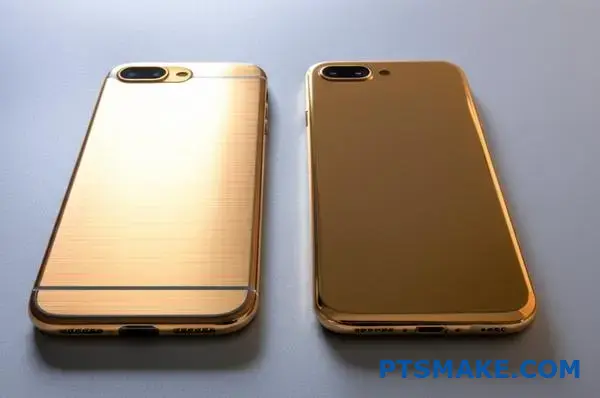
Un examen plus approfondi des mesures de performance
Lorsque nous développons des pièces pour nos clients, en particulier des produits OEM de haute technicité, la durabilité est une préoccupation majeure. Les fines lignes d'une finition dorée brossée sont excellentes pour camoufler les petites éraflures et abrasions qui se produisent lors d'un usage quotidien. Le produit conserve ainsi son aspect neuf plus longtemps.
En revanche, une surface en or poli est moins indulgente. Sa surface lisse, semblable à un miroir, fait ressortir chaque rayure et chaque tourbillon. Avec le temps, cela peut nuire à l'aspect haut de gamme d'un produit, qui doit être manipulé avec plus de soin par l'utilisateur.
Compromis visuels et pratiques
L'attrait visuel est également un facteur important. L'or poli produit une brillance nette, semblable à celle d'un miroir, grâce à un phénomène appelé Réflexion spéculaire2. Cela donne un aspect classique et haut de gamme, mais peut parfois créer un éblouissement intense sous un éclairage direct.
La finition or brossé, quant à elle, diffuse la lumière à travers sa surface texturée. Il en résulte une brillance douce et satinée, à la fois moderne et subtile. Il confère un aspect élégant sans être trop imposant.
D'un point de vue pratique, les empreintes digitales constituent un problème important. L'or poli est un aimant à taches et nécessite un nettoyage constant pour conserver son aspect. La surface texturée et non réfléchissante de l'or brossé est beaucoup plus tolérante, ce qui en fait la solution idéale pour les objets fréquemment manipulés.
Comparaison des programmes d'entretien
| Type de finition | Fréquence de nettoyage | Effort requis | Application idéale |
|---|---|---|---|
| Or brossé | Peu fréquent | Faible | Surfaces à fort impact |
| Or poli | Fréquents | Haut | Objets décoratifs à faible contact |
Le choix entre l'or brossé et l'or poli n'est pas seulement esthétique. Il définit la durabilité et l'entretien. L'or poli offre une brillance classique mais nécessite un entretien important, tandis que l'or brossé offre une esthétique moderne et une praticité supérieure pour les produits de tous les jours.
L'impact de la finition or brossé sur la perception des consommateurs
L'essor de la finition or brossé est plus qu'une tendance éphémère. Il s'agit d'un choix stratégique pour les marques haut de gamme. Cette finition communique systématiquement le luxe et la qualité.
Les données du marché confirment sa popularité croissante. L'attrait des consommateurs pour la quincaillerie en or brossé est fort dans de nombreux secteurs d'activité. Il contribue à élever la valeur perçue d'un produit.
Finition et perception du marché
| Type de finition | Valeur perçue | Candidature commune |
|---|---|---|
| Chrome poli | Standard, propre | Cuisine, salle de bains |
| Noir mat | Moderne, Minimaliste | Électronique, luminaires |
| Or brossé | Premium, Chaud | Produits de luxe, Décoration |
Ce choix influence directement la façon dont les clients perçoivent votre produit.
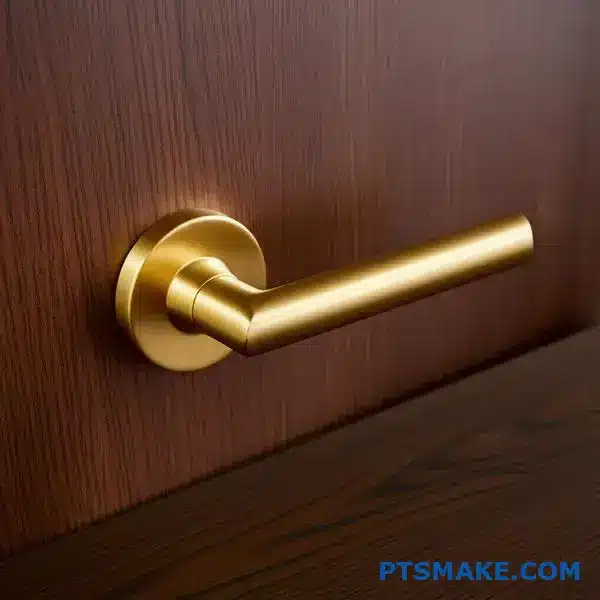
La psychologie derrière l'éclat
La finition en or brossé fait appel à des associations psychologiques profondes. L'or a toujours été synonyme de richesse et de prestige. La texture "brossée" ajoute une touche moderne et sophistiquée. Elle réduit également les reflets et masque les empreintes digitales, ce qui la rend à la fois pratique et belle.
Cette tendance est passée de la décoration intérieure haut de gamme à l'électronique grand public et à l'habillage automobile. Il s'agit de l'une des finitions de surface esthétiques haut de gamme les plus efficaces. Elle permet à un produit de se démarquer sur un marché encombré et lui confère un avantage visuel immédiat.
Chez PTSMAKE, nous conseillons souvent nos clients sur le choix des finitions. La bonne finition peut considérablement améliorer l'image de marque d'un produit. valeur perçue3. Cela permet un meilleur positionnement sur le marché et des prix de vente au détail potentiellement plus élevés. Le choix d'une finition est une décision essentielle dans la conception d'un produit, qui va au-delà de la simple esthétique.
Comparaison des finitions haut de gamme
Nous avons analysé les principales caractéristiques pour aider nos clients à prendre leur décision.
| Attribut | Or brossé | Or rose | Graphite |
|---|---|---|---|
| Chaleur | Haut | Haut | Faible |
| Modernité | Moyenne-élevée | Moyen | Haut |
| Polyvalence | Haut | Moyen | Haut |
| L'intemporalité | Moyenne-élevée | Faible-Moyen | Moyen |
Ces données aident les marques à prendre des décisions éclairées. Elles permettent d'aligner l'apparence du produit sur les attentes du public cible.
Le choix d'une finition en or brossé est une décision fondée sur des données. Il s'agit d'un outil puissant pour renforcer l'attrait d'un produit haut de gamme. Ce choix stratégique influence la perception du consommateur, le positionnement de la marque et, en fin de compte, le succès des ventes. Plus qu'une question d'esthétique, c'est une question d'intelligence économique.
Principales techniques de traitement de surface pour obtenir un effet d'or brossé
L'obtention d'une véritable finition or brossé ne se limite pas à la couleur. C'est une question de texture et de durabilité. Différents procédés industriels offrent des résultats distincts. Il est essentiel de les comprendre.
Vous devez savoir comment obtenir une finition en or brossé qui réponde aux exigences de votre projet. Chaque méthode a ses avantages et ses inconvénients.
Examinons les principales techniques que nous utilisons.
Procédés industriels courants
- Brossage mécanique
- Placage électrolytique
- Anodisation
- Dépôt physique en phase vapeur (PVD)
Le choix dépend du matériau de base, du budget et des performances requises.
| Technique | Avantage principal | Meilleur pour |
|---|---|---|
| Brossage | Crée une texture authentique | Création de la texture de base |
| Placage | Aspect traditionnel de l'or | Pièces décoratives |
| Anodisation | Bon pour l'aluminium | Pièces en aluminium colorées |
| PVD | Durabilité extrême | Applications à forte usure |
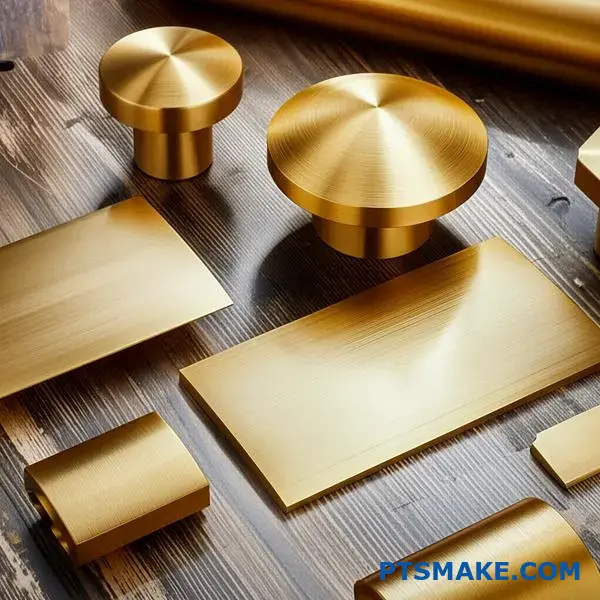
Pour savoir comment obtenir une finition en or brossé, il faut d'abord connaître les principaux procédés industriels. Chaque méthode offre un équilibre différent en termes d'apparence, de durabilité et de coût. Chez PTSMAKE, nous guidons nos clients à travers ces options afin de trouver la solution idéale.
Le brossage mécanique : la base
Tout d'abord, le brossage mécanique crée la texture linéaire caractéristique. Il s'agit d'un processus d'abrasion physique. C'est souvent la première étape avant l'application d'un revêtement doré. Le grain de la brosse détermine la finesse de la texture finale.
Méthodes d'enduction et de coloration
Après le brossage, une couche de couleur est appliquée. La galvanoplastie consiste à déposer une fine couche d'alliage d'or véritable. Ce procédé donne un aspect classique, mais peut être moins durable pour les articles à forte usure. L'anodisation est un procédé électrochimique spécifique à l'aluminium. Il crée une couche d'oxyde durable et poreuse qui est ensuite teintée en or.
L'option la plus robuste est le dépôt en phase vapeur (PVD). Les méthodes de revêtement de l'or brossé par PVD déposent une fine couche de céramique dure, comme le nitrure de titane. Cette opération s'effectue dans une chambre à vide. Ce procédé utilise souvent des pulvérisation4 pour transférer le matériau de revêtement atome par atome, créant ainsi une finition incroyablement résistante.
| Méthode | Durabilité | Cohérence des couleurs | Limitation du substrat |
|---|---|---|---|
| Placage électrolytique | Modéré | Bon | La plupart des métaux |
| Anodisation | Haut | Très bon | Aluminium seulement |
| Revêtement PVD | Très élevé | Excellent | La plupart des métaux, certains plastiques |
Il est essentiel de comprendre ces procédés industriels - brossage, placage, anodisation et PVD. Votre choix a une incidence sur l'aspect final du produit, sa durabilité et son coût. Chaque technique offre un moyen unique d'obtenir la finition dorée brossée souhaitée pour des applications spécifiques.
Les secrets des finitions en or brossé de longue durée pour les produits de haute qualité
Le véritable secret d'une finition dorée brossée durable réside dans les détails invisibles. Il ne s'agit pas seulement d'une question de couleur.
Elle implique un contrôle précis de l'épaisseur du revêtement et l'utilisation stratégique de couches de protection. Ces éléments sont essentiels.
Le rôle de l'épaisseur du revêtement
L'épaisseur a un impact direct sur la résistance à l'usure. Un revêtement plus épais n'est pas toujours meilleur ; il doit être optimisé pour l'utilisation du produit.
Trouver le bon équilibre
Pour les objets à forte sollicitation, l'équilibre est essentiel. Trop fin, il s'use rapidement. Trop épais, il risque de s'écailler ou d'altérer les dimensions.
| Type d'application | Épaisseur recommandée (microns) | Raison d'être |
|---|---|---|
| Décoratif (peu visible) | 1-3 µm | Suffisante pour l'apparence |
| Électronique grand public | 3-7 µm | Équilibre entre durabilité et coût |
| Matériel de haute qualité | 7-15 µm | Résistance maximale à l'usure |
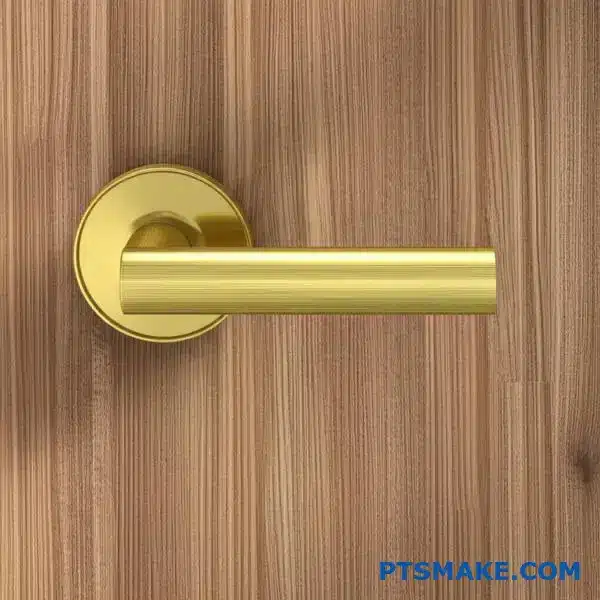
Pour obtenir des revêtements d'or vraiment résistants à l'abrasion, il faut aller au-delà de la couche d'or elle-même. La résistance aux rayures et les couches de finition protectrices sont tout aussi cruciales. Ensemble, ils protègent la finition de l'usure quotidienne.
Comprendre la résistance aux rayures
Nous mesurons la résistance aux rayures à l'aide de tests normalisés. Nous disposons ainsi de données objectives sur la durabilité d'une finition. À l'issue de nos tests internes, nous avons constaté que certains procédés PVD sont nettement plus performants que le placage traditionnel dans ce domaine.
Un indice plus élevé signifie que la surface peut résister à davantage d'agressions physiques. C'est essentiel pour des articles tels que les poignées de porte, les robinets et les boîtiers d'appareils électroniques.
Stratégies de revêtement protecteur
La couche de finition est une couche transparente appliquée sur la finition dorée brossée. Elle constitue la première ligne de défense. La bonne couche de finition scelle la finition, améliorant sa résistance sans altérer l'aspect brossé.
Nous recommandons souvent des couches de finition spécifiques en fonction de l'environnement et du cas d'utilisation du produit.
| Type de top coat | Principaux avantages | Application idéale |
|---|---|---|
| Revêtement E (transparent) | Excellente résistance à la corrosion | Robinetterie, quincaillerie de salle de bains |
| Couche claire PVD | Résistance maximale aux rayures | Montres de luxe, coques de téléphone |
| Laque acrylique | Une protection rentable | Articles de décoration intérieure |
Ces stratégies garantissent au produit final une finition durable en or brossé. L'aspect propriétés tribologiques5 sont considérablement améliorées, ce qui est essentiel pour toute surface à fort impact. Le choix de la bonne combinaison entre le revêtement de base et la couche de finition est une science que nous avons affinée au cours de nombreux projets chez PTSMAKE.
Une finition durable en or brossé dépend d'un système : une épaisseur de revêtement optimale, une résistance vérifiée aux rayures et une couche de finition protectrice stratégique. Ces éléments s'associent pour garantir que l'aspect et la fonction du produit perdurent dans le temps, même en cas d'utilisation fréquente.
Quelles sont les tolérances de finition importantes pour les pièces usinées CNC en or brossé ?
Pour une finition en or brossé, la texture de la surface est essentielle. Il ne s'agit pas seulement de l'aspect final. Elle a également un impact sur la sensation et les performances de la pièce.
La valeur Ra est un point de repère courant. Ce chiffre mesure la rugosité moyenne d'une surface. Il s'agit d'une mesure critique pour les exigences Ra de la finition de surface de l'or brossé.
Pourquoi Ra définit le look
Une valeur Ra plus faible signifie une surface plus lisse. Mais le processus de brossage ajoute une texture spécifique. L'objectif réel est d'obtenir un aspect cohérent et uniforme, et pas seulement une douceur absolue.
D'après nos tests auprès des clients, les différentes valeurs de Ra produisent des résultats esthétiques distincts.
| Objectif esthétique | Gamme de Ra typique (μm) | Résultat visuel |
|---|---|---|
| Satin standard | 0.4 - 0.8 | Aspect brossé classique et doux |
| Premium Luxe | 0.2 - 0.4 | Des lignes plus fines, plus réfléchissantes |
| Texture industrielle | 0.8 - 1.6 | Lignes plus grossières et plus prononcées |

Bien que Ra soit un excellent point de départ, il ne dit pas tout. La direction et la cohérence des lignes de pinceau - appelées "lay" - sont tout aussi importantes pour obtenir une finition en or brossé de haute qualité.
Lay : La composante directionnelle
Le processus de brossage crée un grain directionnel. Ce grain contrôlé anisotropie6 est ce qui définit l'aspect brossé caractéristique. Toutes les lignes doivent être parallèles, uniformes et exemptes de défauts.
Une pose incorrecte peut donner à une pièce coûteuse un aspect défectueux. Cela se produit même si la valeur Ra est parfaitement conforme aux spécifications.
Combiner les mesures et les images
Chez PTSMAKE, nous utilisons un processus en deux parties. Tout d'abord, un profilomètre nous fournit des données Ra précises pour confirmer que nous répondons aux exigences du dessin technique.
Ensuite, notre équipe qualité procède à une inspection visuelle sous un éclairage spécialisé. Elle vérifie la cohérence de la couleur, la profondeur et l'uniformité des lignes de pinceau. Cela permet de s'assurer que la pièce ressemble exactement à ce que le concepteur avait prévu.
| Méthode d'inspection | Objectif principal | Principaux avantages |
|---|---|---|
| Profilomètre de surface | Ra (rugosité moyenne) | Données quantitatives pour le contrôle des processus |
| Inspection visuelle | Disposition, couleur, consistance | Vérification qualitative de l'intention esthétique |
| Évaluation de la boîte à lumière | Uniformité des couleurs | Assurer la cohérence d'un lot |
Pour obtenir une finition parfaite de l'or brossé, il faut trouver un équilibre entre les spécifications Ra et les normes visuelles. La direction et la cohérence des lignes de brossage sont tout aussi cruciales que la rugosité mesurée. La métrologie et l'inspection par des experts sont toutes deux essentielles pour garantir une qualité supérieure.
Comment l'or brossé renforce la valeur de la marque dans les produits haut de gamme
La finition en or brossé va au-delà des produits de luxe traditionnels. Elle constitue désormais un outil puissant pour rehausser la marque dans des secteurs inattendus.
J'ai été le témoin direct de cette évolution. Les entreprises des secteurs de la robotique, de l'IdO et de l'électronique de loisirs l'utilisent. Cette finition signale une qualité supérieure.
Il transforme un appareil fonctionnel en une pièce d'apparat. Cet aspect est crucial pour les marques qui visent les marchés haut de gamme. Il s'agit de créer une expérience.
| Aspect | Finitions techniques standard | Finitions des produits de luxe (or brossé) |
|---|---|---|
| Perception de l'utilisateur | Utilitaire, fonctionnel | Exclusif, sophistiqué |
| Message de la marque | Axé sur la performance | Orienté vers le style de vie, haut de gamme |
| Marché cible | Consommateurs généraux | Acheteurs avertis et fortunés |
Cette approche permet aux produits de se démarquer. Elle crée une perception de valeur supérieure avant même que l'appareil ne soit allumé.
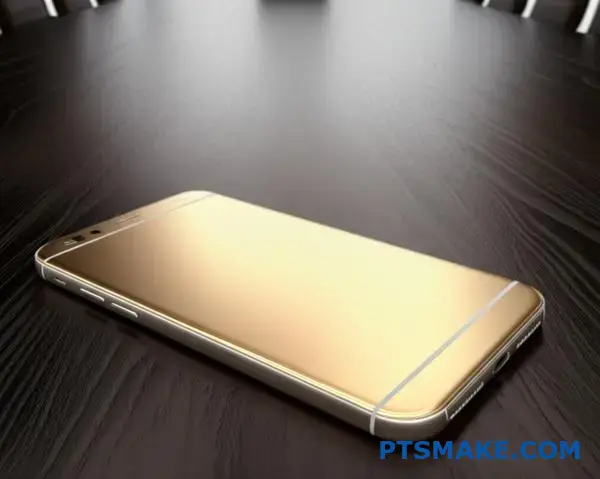
L'utilisation stratégique d'une finition en or brossé est un choix judicieux en matière d'image de marque. Elle communique instantanément l'engagement d'une marque en faveur de la qualité et de l'excellence du design. Cette finition va au-delà d'un simple choix de couleur.
Redéfinir l'esthétique high-tech
Dans le domaine de la robotique, des touches d'or brossé sur une machine de précision créent un contraste saisissant. Ils évoquent la fusion d'une technologie de pointe et d'un savoir-faire artisanal. La valeur perçue du produit s'en trouve considérablement augmentée. Cela permet de justifier un prix plus élevé dans un domaine concurrentiel.
Pour les boîtiers IoT, l'objectif est de s'intégrer de manière transparente dans la maison. Une finition en or brossé transforme un hub intelligent en un gadget en plastique en un décor élégant. Il n'a plus besoin d'être caché.
La dimension tactile du luxe
L'électronique de loisirs, comme les écouteurs ou les haut-parleurs, en bénéficie énormément. La chaleur visuelle de l'or brossé combinée à sa texture subtile améliore l'expérience sensorielle de l'utilisateur. Cette qualité tactile, ou [perception haptique]()7, L'image de marque d'un produit de luxe est un élément clé de l'image de marque. Il donne l'impression que le produit est substantiel et bien fait.
| Secteur | Approche standard | Avantage or brossé |
|---|---|---|
| Robotique | Gris industriel/blanc | Signaux ingénierie premium |
| Dispositifs IdO | Plastique discret | Devient un élément de conception |
| Électronique | Noir/argent mat | Créer un lien émotionnel |
Chez PTSMAKE, nous aidons les marques à obtenir cet effet. Nous veillons à ce que la finition soit parfaitement exécutée, reflétant ainsi la qualité supérieure du produit à l'intérieur. C'est ce souci du détail qui fait la force d'une marque de luxe.
L'application d'une finition en or brossé transforme les produits de haute technologie d'outils fonctionnels en déclarations de style de vie luxueux. Ce choix esthétique contribue directement à l'élévation de la marque, permettant aux entreprises du secteur de la robotique et de l'électronique d'accéder à des segments de marché haut de gamme et d'obtenir une valeur plus élevée.
Personnalisation : Assortiment de couleurs et contrôle de la texture en or brossé
Pour obtenir le look parfait, il ne suffit pas de choisir la couleur "or". La véritable personnalisation réside dans les détails. Il s'agit de définir la teinte et la texture exactes. C'est ainsi que l'on obtient une finition dorée brossée vraiment unique.
Adapter le spectre de l'or
Nous pouvons produire une gamme de tons d'or brossé personnalisés. Cela permet aux concepteurs de faire correspondre avec précision les couleurs d'une marque ou des objectifs esthétiques spécifiques. Du champagne subtil à l'or jaune riche.
| Ton or | Élément d'alliage primaire | Candidature commune |
|---|---|---|
| Or champagne | Palladium ou Nickel | Des luminaires modernes et subtils |
| Or jaune | Argent et cuivre | Quincaillerie classique et traditionnelle |
| Or rose | Cuivre | Des accents décoratifs très tendance |
Définition de la texture
Au-delà de la couleur, le motif de brossage lui-même est une variable clé. La direction, la profondeur et la cohérence des lignes modifient considérablement l'aspect final et la réflexion de la lumière.
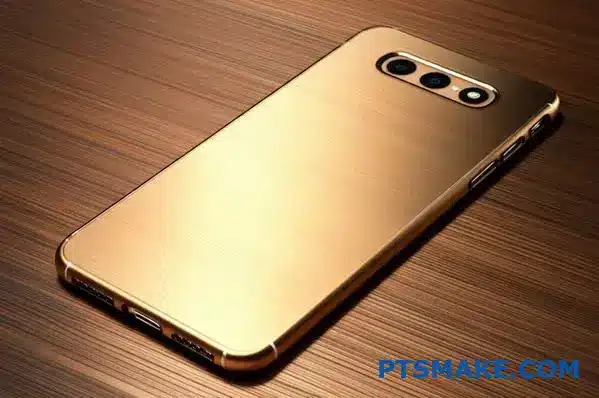
La véritable maîtrise des finitions en métal brossé de couleur assortie vient de la compréhension de la science sous-jacente. Il ne s'agit pas seulement d'appliquer une couleur, mais de modifier fondamentalement les propriétés de la surface pour obtenir un résultat spécifique et reproductible. Chez PTSMAKE, nous mettons l'accent sur le contrôle des processus afin de garantir la cohérence.
Obtenir des teintes spécifiques
La couleur est principalement contrôlée par le processus de finition. Si les alliages des matériaux de base jouent un rôle, ce sont les traitements de surface qui offrent le plus de souplesse. Nous utilisons souvent des Dépôt physique en phase vapeur8 (PVD) pour appliquer une couche mince et durable.
En ajustant le matériau cible et les gaz à l'intérieur de la chambre PVD, nous pouvons créer des teintes précises. Pour l'or rose, on utilise un mélange de titane et de nitrure d'aluminium avec un rapport de gaz spécifique. Pour le champagne, la composition est différente. Cela permet d'obtenir un spectre presque infini de teintes d'or brossé personnalisées.
Contrôle des schémas de brossage
Le contrôle de la texture est un processus mécanique qui exige une grande précision. Nous manipulons plusieurs facteurs pour créer l'effet désiré, des finitions fines et satinées aux motifs audacieux et linéaires. Nos tests montrent que ces paramètres sont essentiels.
| Paramètres | Effet sur la finition |
|---|---|
| Granulométrie abrasive | Un grain plus fin donne un aspect plus doux et satiné. |
| Vitesse de brossage | Des vitesses plus élevées permettent d'obtenir une finition plus lisse. |
| Pression appliquée | Plus la pression est forte, plus les lignes sont profondes et définies. |
| Direction du pinceau | Elle peut être linéaire, circulaire ou hachurée. |
Cette approche systématique garantit que chaque pièce que nous produisons répond exactement aux spécifications visuelles et tactiles requises par la conception.
L'obtention d'une finition dorée brossée précise nécessite un contrôle expert de la couleur et de la texture. En manipulant la composition de l'alliage, les paramètres PVD et les techniques de brossage mécanique, les fabricants peuvent fournir des composants hautement personnalisés qui répondent à des spécifications de conception précises pour n'importe quel projet.
PVD ou galvanoplastie : Quelle méthode permet d'obtenir un or brossé de qualité supérieure ?
Lors du choix d'une finition, le temps est un facteur essentiel. Il en va de même de la qualité finale et de votre capacité à augmenter votre production. Le choix entre le dépôt en phase vapeur (PVD) et la galvanoplastie se résume souvent à ces trois piliers.
Voyons ce qu'il en est. Cette comparaison rapide de l'or brossé électrodéposé offre une vue d'ensemble.
| Fonctionnalité | PVD (dépôt physique en phase vapeur) | Placage électrolytique |
|---|---|---|
| Vitesse du processus | Processus de traitement par lots plus lent | Plus rapide pour les gros volumes |
| Qualité de la finition | Très cohérent, uniforme | Peut présenter des incohérences |
| Évolutivité | Excellent pour différents volumes | Idéal pour les courses à grande échelle |
Une finition en or brossé PVD offre une consistance supérieure. Mais la galvanoplastie peut être plus rapide pour les commandes massives.
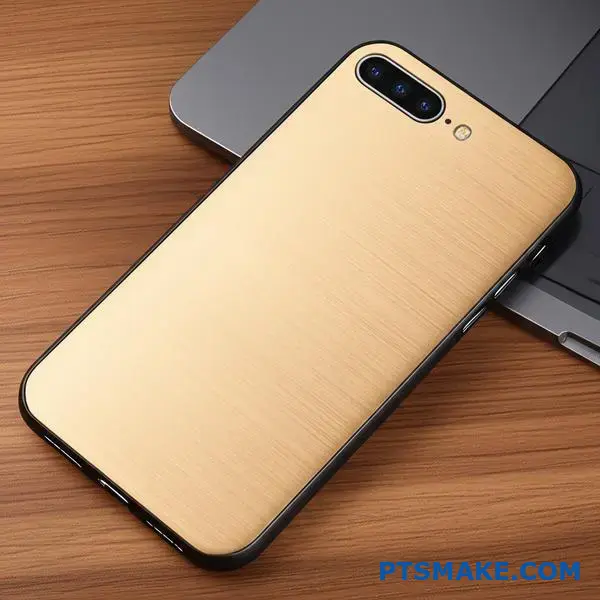
En approfondissant, les différences deviennent plus évidentes. Le bon choix dépend entièrement des besoins et des priorités spécifiques de votre projet. Il ne s'agit pas seulement de rapidité, mais aussi de résultats prévisibles.
Explication de la durée du processus
Le procédé PVD est un procédé par lots. Le chargement des pièces dans une chambre à vide, la création du vide et l'exécution du cycle de revêtement prennent quelques heures. Le temps par pièce peut donc sembler long pour les petites séries.
Cependant, la galvanoplastie est souvent un processus continu ou semi-continu. Les pièces se déplacent le long d'une ligne à travers différents bains chimiques. Cela permet d'obtenir un rendement plus rapide par pièce individuelle, en particulier dans le cas d'une fabrication en grande quantité.
Un examen plus approfondi de la qualité de finition et de l'évolutivité
La qualité de la finition PVD or brossé est son principal atout. Le processus est hautement contrôlé dans la chambre à vide. Il en résulte un revêtement exceptionnellement uniforme et reproductible.
La qualité de la galvanoplastie repose sur une surveillance constante des bains chimiques. Toute fluctuation de l'équilibre chimique ou du courant peut affecter la finition. Cela peut entraîner des variations de couleur et d'épaisseur dans un grand lot. La qualité de la galvanoplastie repose sur une surveillance constante des bains chimiques. stœchiométrie9 de la couche déposée est plus difficile à contrôler.
Ce tableau détaille les nuances que nous avons observées dans nos tests.
| Aspect | Détails PVD | Détails de l'électrodéposition |
|---|---|---|
| Durée du lot | 2-4 heures par cycle (y compris l'installation) | Flux continu, plus rapide pièce par pièce |
| Contrôle de la qualité | Le contrôle numérique du processus garantit une grande cohérence | Repose sur la surveillance des bains chimiques, peut varier |
| Volume Sweet Spot | Volume faible à élevé, flexibilité | Convient le mieux aux volumes très élevés et continus |
Ainsi, le dépôt en phase vapeur (PVD) s'adapte de manière flexible en ajoutant des cycles de production supplémentaires. La galvanoplastie s'adapte en élargissant la ligne de production entière pour des séries massives et continues.
Votre choix dépend des priorités du projet. Le dépôt en phase vapeur (PVD) offre une uniformité de finition inégalée et s'adapte à différents volumes. La galvanoplastie offre un net avantage en termes de rapidité pour la production à grande échelle où des variations mineures peuvent être acceptables.
Choisir le bon matériau de support pour un aspect or brossé parfait
Le métal de base que vous choisissez n'est pas seulement une base. C'est un ingrédient essentiel qui façonne l'aspect final. Le matériau sous-jacent influence considérablement la chaleur, la teinte et la texture d'une finition en or brossé.
Il est essentiel de réfléchir au meilleur substrat pour une finition en or brossé. Votre choix n'a pas qu'une incidence sur l'apparence. Il a également une incidence sur la durabilité et le coût.
Le rôle du substrat dans l'esthétique
Les différents métaux interagissent de manière unique avec les revêtements d'or. Cette interaction modifie la couleur finale. Elle affecte également la manière dont la lumière se reflète sur la surface. Un mauvais choix peut gâcher l'effet recherché.
Comparaison rapide : Métaux de base
| Fonctionnalité | Aluminium | Acier inoxydable |
|---|---|---|
| Tonalité finale | Jaune plus chaud et plus doux | Un or plus frais et plus brillant |
| Texture | Des lignes plus douces | Brosses croustillantes |
| Poids | Léger | Plus lourd |
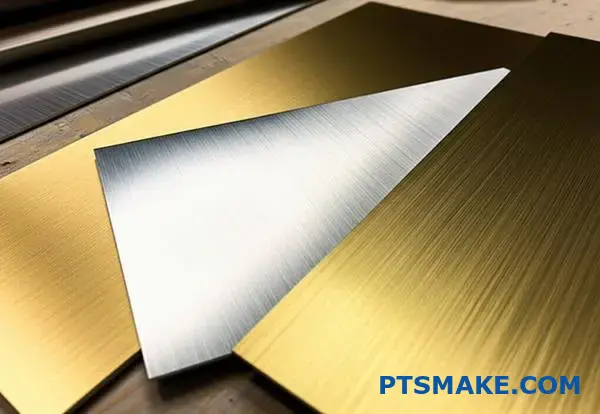
Lorsqu'il s'agit d'obtenir une finition dorée brossée parfaite, la conversation doit commencer par le substrat. Le métal de base détermine le caractère final du produit. Chez PTSMAKE, nous travaillons souvent avec l'aluminium et l'acier inoxydable. Chacun apporte une personnalité distincte à la finition dorée.
Aluminium : Pour un aspect plus chaleureux
L'aluminium est naturellement plus doux et présente une légère chaleur. Cette qualité se retrouve dans la finition finale. Une finition dorée brossée sur de l'aluminium semble souvent plus riche et plus profonde. Les lignes de brossage peuvent également sembler plus douces.
Le caractère unique de ce matériau énergie libre de surface10 n'affecte pas l'adhérence du revêtement. Il en résulte un aspect très uniforme et cohérent. C'est un excellent choix pour les pièces décoratives où un ton luxueux et chaud est souhaité.
Acier inoxydable : Pour une finition plus froide
L'acier inoxydable, quant à lui, est plus dur et présente une teinte froide, presque bleutée. Cette base donne à la finition or brossé un aspect plus net et plus contemporain. La couleur peut paraître plus brillante et plus réfléchissante.
La dureté de l'acier permet d'obtenir des lignes de pinceau très nettes et définies. Il est donc idéal pour les designs modernes. Il est souvent utilisé dans les applications à forte usure en raison de sa durabilité supérieure.
Analyse détaillée de l'impact des substrats
Sur la base de nos tests, voici une analyse plus détaillée :
| Caractéristique | Substrat d'aluminium | Acier inoxydable Substrat |
|---|---|---|
| Teinte de la couleur | Plus chaud, légèrement rouge-jaune | Jaune plus frais, lumineux et moderne |
| Détail du brossage | Des lignes plus douces et plus homogènes | Des lignes plus nettes et mieux définies |
| Réflexion de la lumière | Brillance diffuse et satinée | Croustillant, plus grande réflectivité |
| Meilleur pour | Garnitures décoratives, électronique grand public | Luminaires, éléments architecturaux |
Le substrat n'est pas un support passif. Il façonne activement la finition finale en or brossé. L'aluminium crée une esthétique chaude et douce, tandis que l'acier inoxydable produit un aspect froid et tranchant. Votre choix définit fondamentalement la couleur, la texture et le caractère final du produit.
Problèmes d'empilement de tolérances lors de la combinaison de l'or brossé et de l'usinage CNC
Lors de la conception de pièces de dimensions critiques, de nombreux ingénieurs négligent un détail essentiel. La finition de la surface n'est pas seulement une question d'apparence.
La finition or brossé ajoute une couche tangible de matériau. Cette épaisseur supplémentaire a un impact direct sur les dimensions finales.
Ceci est crucial pour les Tolérances des pièces CNC. Si une pièce est usinée à sa taille nominale, la finition peut la faire sortir de la plage acceptable. Cela peut entraîner d'importants problèmes d'assemblage par la suite.
| Fonctionnalité | Dimension avant finition | Dimension après finition |
|---|---|---|
| Diamètre extérieur | 50,00 mm | 50,05 mm |
| Trou intérieur | 10,00 mm | 9,95 mm |
C'est à partir de ce changement apparemment minime que commencent les problèmes de tolérance.
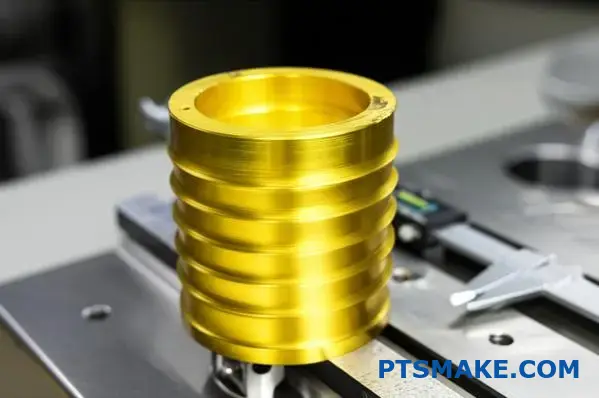
L'épaisseur d'une finition dorée brossée n'est pas parfaitement uniforme. Elle peut varier en fonction de la forme de la pièce et du processus de placage lui-même. Cette variabilité ajoute une couche de complexité supplémentaire à la réalisation d'une finition précise de l'or brossé. Tolérances des pièces CNC.
Les coins et les arêtes peuvent accumuler plus de placage. Les zones en retrait ou les trous profonds peuvent en recevoir moins. Cette incohérence peut être une source cachée de défaillance pour des pièces qui doivent s'emboîter parfaitement. Chez PTSMAKE, nous précisons toujours si les dimensions sont pré- ou post-placage.
Le Géométrie du substrat11 joue un rôle important dans la régularité de l'application du revêtement. Si l'on ne tient pas compte de ce facteur, on risque d'obtenir des ajustements parasites inattendus ou des connexions lâches.
| Fonctionnalité | Tolérance spécifiée | Variation de la finition | Inadéquation potentielle |
|---|---|---|---|
| Diamètre de l'arbre | +/- 0,02 mm | +/- 0,01 mm | Jusqu'à 0,03 mm |
| Alésage du palier | +/- 0,02 mm | +/- 0,01 mm | Jusqu'à 0,03 mm |
Ce tableau montre comment une petite variation de finition peut absorber une part importante du budget total de tolérance. Il s'agit d'un exemple classique d'empilement de tolérances.
L'épaisseur d'une finition en or brossé est une caractéristique dimensionnelle essentielle, et non une simple couche cosmétique. Elle doit être prise en compte dans toutes les Tolérances des pièces CNC dès la phase de conception initiale afin d'éviter des défaillances d'assemblage coûteuses et de garantir une fonctionnalité adéquate.
Finition or brossé pour MedTech : Salles blanches et normes d'usure
Dans le secteur MedTech, la finition n'est pas qu'une question d'apparence. C'est une question de sécurité et de performance. La conformité des finitions médicales en or brossé n'est pas négociable.
Les pièces doivent répondre à des normes strictes. Cela permet de s'assurer qu'elles ne présentent aucun danger pour le contact avec les patients. Cela garantit également qu'elles fonctionnent correctement dans des environnements stériles.
Principaux cadres réglementaires
Nous devons tenir compte de plusieurs normes clés. Chacune aborde un aspect différent de la sécurité et de la qualité des dispositifs médicaux.
| Standard | Objectif principal | Pertinence de la finition or brossé |
|---|---|---|
| ISO 13485 | Systèmes de gestion de la qualité | Assurer le contrôle des processus et la traçabilité. |
| ISO 10993 | Biocompatibilité | Confirme la sécurité du matériau pour le contact avec les patients. |
| ISO 14644 | Salles blanches | Dicte les niveaux de propreté au cours de la fabrication. |
Ces réglementations guident chaque étape. De la sélection des matériaux à l'emballage final, la conformité est primordiale pour toute finition en or brossé.
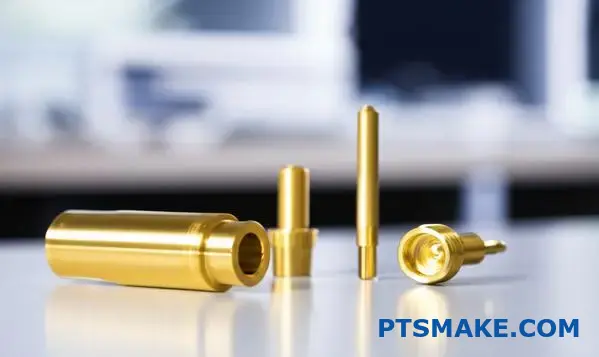
Lorsque nous parlons de conformité des finitions médicales en or brossé, nous naviguons dans un paysage complexe. Il ne suffit pas qu'une pièce soit belle. Elle doit fonctionner en toute sécurité dans des conditions cliniques exigeantes. C'est là que les normes internationales spécifiques deviennent notre feuille de route.
Biocompatibilité et interaction avec les surfaces
La norme la plus importante est la norme ISO 10993. Cette série de normes évalue les Biocompatibilité12 des matériaux. Il garantit que le dispositif, y compris sa surface en or brossé, ne provoquera pas de réactions indésirables au contact du corps humain. Cela implique des tests de cytotoxicité, de sensibilisation et d'irritation.
Notre processus chez PTSMAKE valide que les étapes de placage et de finition n'introduisent pas de résidus nocifs.
Protocoles de fabrication en salle blanche
Pour les dispositifs utilisés dans les champs stériles, la norme ISO 14644 est essentielle. Cette norme régit la classification de la propreté de l'air dans les salles blanches. La fabrication d'une pièce en or brossé destinée à un outil chirurgical implique de contrôler les particules à chaque étape.
| Domaine de conformité | Exigence | Impact sur la finition or brossé |
|---|---|---|
| Approvisionnement en matériaux | Substrats de qualité médicale | S'assurer que le matériel sous-jacent est sûr. |
| Processus de placage | Chimie contrôlée | Empêche la lixiviation des éléments toxiques. |
| Nettoyage final | Procédures validées | Élimine tous les résidus de fabrication. |
| Emballage | Environnement en salle blanche | Maintient la stérilité jusqu'à l'utilisation. |
Nous manipulons ces pièces dans des salles blanches certifiées. Cela permet d'éviter toute contamination susceptible de compromettre la sécurité des patients. C'est un niveau de détail qui définit la fabrication de qualité médicale.
L'obtention d'une finition dorée brossée conforme exige un contrôle strict du processus. Le respect des normes ISO 10993 et ISO 14644 est essentiel. Cela garantit la sécurité des patients et l'intégrité des dispositifs dans des environnements médicaux stériles, ce qui est notre priorité absolue.
Quand utiliser les finitions or brossé au lieu des finitions champagne anodisé ?
Il n'est pas toujours facile de choisir entre des finitions dorées. Il ne s'agit pas seulement d'une question de couleur. Il s'agit du matériau, du processus et des performances souhaitées. Les ingénieurs doivent peser ces facteurs avec soin.
Le débat entre l'or brossé et la finition anodisée est courant. Chacun a sa place.
Principales différences visuelles
La finition or brossé donne un aspect métallique classique et riche. Le champagne anodisé offre un éclat plus moderne et plus subtil. Le choix a une incidence sur le toucher du produit final.
| Fonctionnalité | Or brossé | Champagne anodisé |
|---|---|---|
| Esthétique | Chaleureux, traditionnel | Cool, contemporain |
| Texture | Lignes directionnelles fines | Lisse, mat |
| Matériau Sentiment | Sensation de métal plaqué | Aluminium intégral |
Comprendre ces distinctions est la première étape pour faire le bon choix pour votre projet. Elle donne le ton à l'ensemble de la conception.
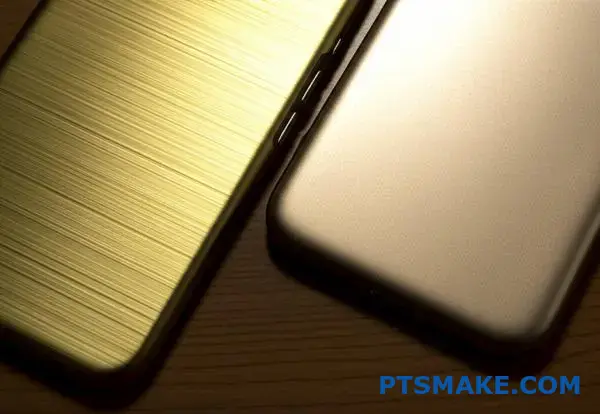
La décision va au-delà de l'apparence. Il s'agit fondamentalement du processus de fabrication et de la compatibilité des matériaux. C'est sur ce point que nous guidons le plus nos clients.
Une véritable finition en or brossé est généralement un processus secondaire. Elle est souvent appliquée sur des matériaux tels que l'acier inoxydable ou le laiton. Des procédés tels que le revêtement PVD ou la galvanoplastie sont utilisés.
L'anodisation, en revanche, est un processus électrochimique. Il est exclusif à l'aluminium. Il transforme la surface du métal en une finition d'oxyde anodique durable et résistante à la corrosion. La finition fait partie intégrante du [substrat] d'aluminium (code d'erreur : 500).13, Il ne s'agit pas d'un simple revêtement.
Comparaison technique
Chez PTSMAKE, nous aidons nos clients à évaluer les compromis techniques. Le meilleur choix dépend entièrement des exigences spécifiques de l'application.
| Spécifications | Or brossé (PVD/Plating) | Champagne anodisé |
|---|---|---|
| Durabilité | Élevée (varie selon le processus) | Excellent (plus dur que l'aluminium de base) |
| Matériau | Acier, laiton, zinc, etc. | Aluminium seulement |
| Coût | Généralement plus élevé | Plus rentable pour l'aluminium |
| Cohérence | Peut présenter de légères variations | Très reproductible et uniforme |
La décision entre la finition or brossé et la finition anodisée repose sur ces points. Si vous n'utilisez pas d'aluminium, l'anodisation n'est pas une option. Si la durabilité de l'aluminium est essentielle, l'anodisation est un concurrent de poids.
Le choix entre une finition or brossé et champagne anodisé dépend du matériau de base, du budget et de la durabilité souhaitée. L'or brossé offre un attrait classique sur divers métaux, tandis que l'anodisation offre une finition intégrée et résistante spécifiquement pour les pièces en aluminium.
Rehaussez vos projets avec les experts de la finition or brossé de PTSMAKE
Prêt à obtenir une finition or brossé impeccable pour votre prochain projet de quincaillerie ou d'OEM ? Contactez PTSMAKE dès maintenant pour obtenir un devis rapide, précis et fiable ! Laissez notre expérience de plus de 20 ans dans l'usinage et la finition CNC vous offrir la qualité supérieure que votre marque mérite.

En savoir plus sur le processus électrochimique d'anodisation et sur la manière dont il améliore les surfaces métalliques. ↩
Comprendre comment les différentes réflexions de la lumière peuvent influencer la qualité perçue et l'expérience de l'utilisateur de votre produit final. ↩
Découvrez comment ce concept psychologique influence les décisions d'achat et les stratégies de fixation des prix des produits. ↩
Explorez cette technique de revêtement avancée pour comprendre son impact sur la durabilité et les performances de la surface. ↩
Découvrez comment ces propriétés influencent la résistance à l'usure et au frottement de l'état de surface de votre produit. ↩
Découvrez comment cette propriété directionnelle affecte l'attrait visuel et la réflectivité des surfaces en métal brossé. ↩
Découvrez comment la texture et le toucher d'un produit influencent la perception qu'a le client de sa qualité et de sa valeur globales. ↩
Découvrez les détails techniques de ce procédé de revêtement qui permet d'obtenir des couleurs homogènes et durables sur les pièces métalliques. ↩
Apprenez comment les rapports précis entre les matériaux dans les revêtements affectent la durabilité et la cohérence des couleurs dans votre produit final. ↩
Découvrez comment cette propriété influence l'adhérence du revêtement et la qualité de votre finition finale. ↩
Découvrez comment la forme initiale de la pièce influence l'uniformité du revêtement final et la précision des dimensions. ↩
Comprendre les tests essentiels qui garantissent que les matériaux ne présentent aucun danger pour le contact humain. ↩
Apprenez comment les propriétés du matériau de base influencent la sélection et la performance des finitions de surface. ↩