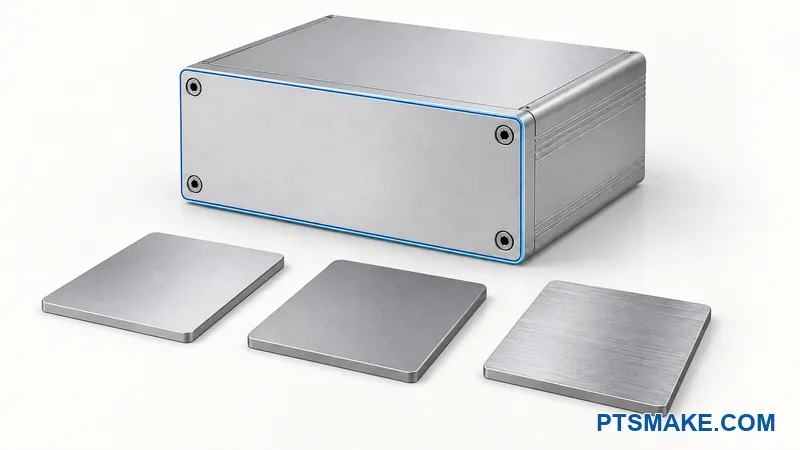

¿Tiene dificultades para elegir el material adecuado para su proyecto de caja acústica? Muchos ingenieros se enfrentan a un rendimiento acústico decepcionante, costes inesperados y dolores de cabeza de fabricación al seleccionar materiales inferiores como plástico o acero para sus carcasas de altavoces.
Las carcasas acústicas de aluminio ofrecen un rendimiento acústico superior, una excelente disipación del calor y una estética de primera calidad, al tiempo que ofrecen una mayor durabilidad y rentabilidad en comparación con las alternativas de plástico o acero.
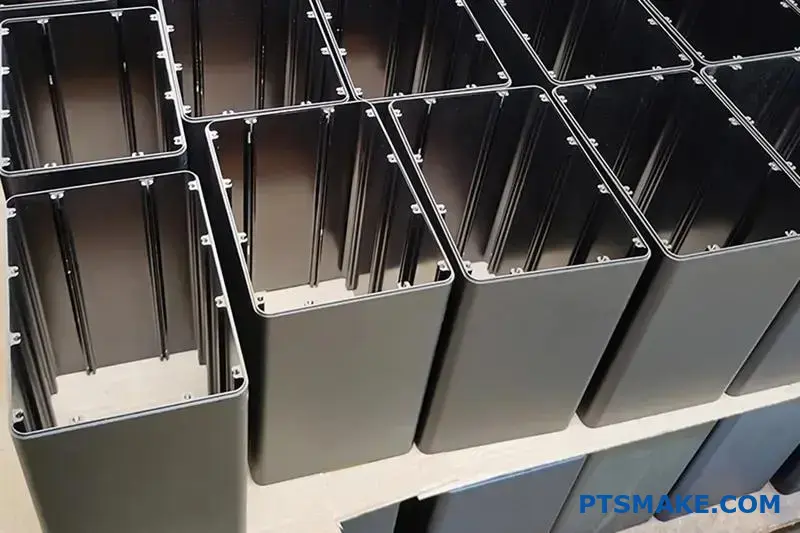
Esta guía cubre todo, desde la selección de materiales y la optimización acústica hasta los flujos de trabajo de prototipado y las opciones de acabado superficial. Descubrirá estrategias de diseño probadas, análisis de coste-beneficio y soluciones del mundo real que le ayudarán a evitar errores comunes en el desarrollo de carcasas acústicas.
Por qué las carcasas acústicas de aluminio superan al plástico o al acero
Al seleccionar materiales para carcasas acústicas, la elección impacta directamente en la calidad del audio. Muchos diseñadores sopesan opciones como plástico, acero y aluminio. Cada uno tiene su lugar.
Sin embargo, una caja de altavoz de aluminio a menudo proporciona el mejor equilibrio. Combina resistencia, ligereza y propiedades térmicas que otros no pueden igualar.
Un enfrentamiento rápido de materiales
Veamos una comparación sencilla. Las diferencias se aclaran cuando se ven los datos uno al lado del otro. Esto ayuda a comprender los beneficios principales de una caja de altavoz de aluminio.
| Característica | Aluminio | Plástico (ABS) | Acero |
|---|---|---|---|
| Peso | Ligero | Muy ligero | Pesado |
| Fuerza | Alta | Bajo | Muy alta |
| Disipación del calor | Excelente | Pobre | Feria |
Esta tabla muestra por qué la discusión de una caja de altavoz de aluminio frente a una de plástico es tan importante para el rendimiento.
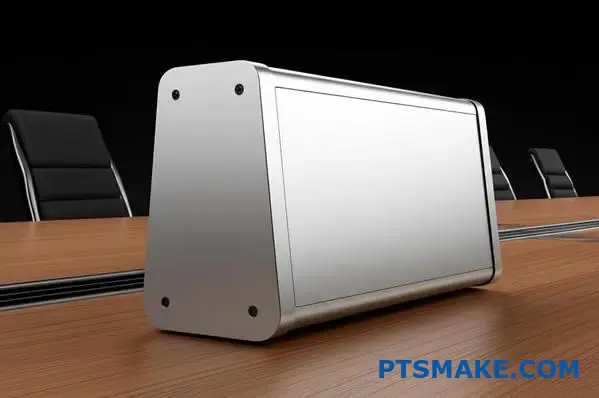
Una inmersión más profunda en el rendimiento del material
Elegir el material adecuado va más allá de las especificaciones básicas. Afecta el sonido final, la vida útil del producto e incluso la experiencia del usuario. El material define el carácter del altavoz.
En PTSMAKE, guiamos a los clientes a través de estas opciones. Se trata de hacer coincidir el material con la aplicación específica y los objetivos de rendimiento. Un material inadecuado puede comprometer un diseño que de otro modo sería excelente.
Características acústicas
Una caja debe ser rígida. No debe vibrar junto con el transductor del altavoz. Aquí es donde la elección del material es fundamental.
La rigidez del aluminio es excelente para prevenir resonancias no deseadas. Las cajas de plástico pueden flexionarse y colorear el sonido. El acero es resistente, pero puede sonar a ciertas frecuencias si no se amortigua correctamente. Aquí es donde la amortiguación acústica efectiva amortiguación acústica1 se convierte en un factor. Según nuestras pruebas internas, el aluminio ofrece una reproducción de sonido más limpia y precisa.
Gestión térmica y estética
Los altavoces modernos incorporan electrónica potente. Estos componentes generan calor, lo que puede degradar el rendimiento y acortar su vida útil.
El aluminio actúa como un disipador de calor natural. Aleja el calor de los componentes electrónicos sensibles de manera mucho más efectiva que el plástico.
La estética también importa. El aluminio se puede mecanizar con CNC con tolerancias precisas. Esto permite diseños complejos y hermosos. Acabados como el anodizado proporcionan un aspecto y tacto premium que el plástico no puede replicar.
| Ventaja | Aluminio | Plástico | Acero |
|---|---|---|---|
| Neutralidad Acústica | Alta | Bajo | Medio |
| Sensación premium | Sí | No | Varía |
| Flexibilidad de diseño | Alta | Alta | Bajo |
Una caja de altavoz de aluminio simplemente ofrece un paquete más completo y de alta gama.
Las cajas de altavoces de aluminio ofrecen una combinación superior de resistencia ligera, control térmico y pureza acústica. Su estética premium y flexibilidad de diseño las convierten en la opción ideal para productos de audio de alta fidelidad, superando al plástico y al acero en áreas clave de rendimiento.
El desglose completo de coste-beneficio de las carcasas acústicas de aluminio
Al evaluar el precio de las carcasas de aluminio, muchos se centran solo en la cotización inicial. Esta es una visión limitada.
Un análisis de costos real requiere una perspectiva más amplia. Debe considerar todo el ciclo de vida del producto. Esto le da el verdadero ROI de la carcasa del altavoz.
Desembolso inicial frente a valor a largo plazo
Debemos mirar más allá del precio por unidad. Las herramientas, la durabilidad e incluso la percepción de la marca juegan un papel importante en el costo total de propiedad.
| Factor de coste | Enfoque inicial (por ejemplo, plástico) | Enfoque a largo plazo (aluminio) |
|---|---|---|
| Herramientas | Más bajo para moldes simples | Más alto para CNC/fundición a presión |
| Por Unidad | Menor costo de material | Mayor coste del material |
| Durabilidad | Propenso a grietas/desgaste | Alta resistencia al impacto |
| Valor de marca | Percepción estándar | Percepción premium |
Esta visión holística es crucial. Ayuda a encontrar el material para cajas de altavoces más rentable para los objetivos de su marca.
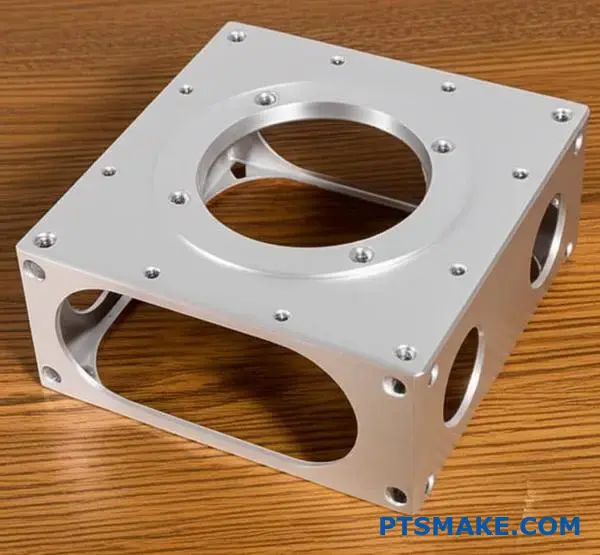
Para comprender realmente el retorno de la inversión de una caja de altavoz de aluminio, analicemos los costos a lo largo de la vida útil del producto. Se trata de algo más que el material en bruto.
Costos de Herramientas y Fabricación
La inversión inicial para el aluminio puede variar. El mecanizado CNC ofrece flexibilidad sin herramientas rígidas, lo que es ideal para prototipos. Para grandes volúmenes, los moldes de fundición a presión suponen un costo inicial.
Sin embargo, esta inversión se distribuye a lo largo de toda la producción. Este proceso, conocido como Amortización2, hace que el impacto por unidad sea mucho menor con el tiempo. Es una parte clave de la planificación financiera.
Impacto de la durabilidad en los costos del ciclo de vida
La resistencia del aluminio es un beneficio financiero significativo. Conduce a menos daños durante el envío y la manipulación. Esto reduce directamente los costos asociados con devoluciones y reclamaciones de garantía.
Después de analizar las tasas de fallos con nuestros clientes, vemos un patrón claro.
| Material | Tasa de daño típica | Impacto de costos a largo plazo |
|---|---|---|
| Plástico estándar | 3-5% (envío/uso) | Mayores costos de garantía/reemplazo |
| Aluminio | <1% (envío/uso) | Menores costos de servicio, mayor satisfacción |
Esta fiabilidad genera confianza en el cliente y protege sus beneficios.
Mejora del valor de la marca
Finalmente, la elección del material afecta la posición de mercado de su marca. Un caja de altavoz de aluminio señala calidad y durabilidad. Esta sensación premium a menudo permite un precio de venta más alto, mejorando los márgenes y el general ROI de la carcasa del altavoz.
Un análisis completo de costo-beneficio revela que el precio inicial es solo una pieza del rompecabezas. La amortización de las herramientas, los ahorros por durabilidad y el valor de marca mejorado demuestran por qué el aluminio es a menudo la inversión a largo plazo superior para recintos de altavoces de alta calidad.
Secretos de ingeniería para maximizar el rendimiento acústico en carcasas de aluminio
El diseño físico de una caja acústica de aluminio es mucho más que estética. Controla directamente la salida acústica. Cada curva, cada milímetro de grosor, importa.
La geometría y el grosor de la pared adecuados son su primera línea de defensa. Trabajan juntos para gestionar las vibraciones no deseadas. Los tratamientos superficiales añaden entonces una capa final de ajuste acústico.
El papel de la geometría
La forma de la caja determina cómo se comportan las ondas sonoras internamente. Nos centramos en minimizar las superficies planas y paralelas para evitar las ondas estacionarias.
Espesor de pared y rigidez
El grosor uniforme puede crear puntos de resonancia predecibles. A menudo recomendamos variaciones estratégicas en el grosor de la pared para romper eficazmente estos patrones de vibración.
| Factor de diseño | Impacto en la Resonancia | Enfoque recomendado |
|---|---|---|
| Forma de la Caja | Las superficies curvas difunden las ondas sonoras | Utilice paredes no paralelas y curvas suaves |
| Arriostramiento interno | Aumenta la rigidez, desplaza la resonancia | Añada costillas internas en puntos críticos |
| Espesor de pared | Las paredes más gruesas resisten las bajas frecuencias | Varíe el grosor para amortiguar las vibraciones |
Este cuidadoso equilibrio es fundamental para el control de la resonancia. Asegura que la caja permanezca inerte, permitiendo que el transductor funcione sin coloración.
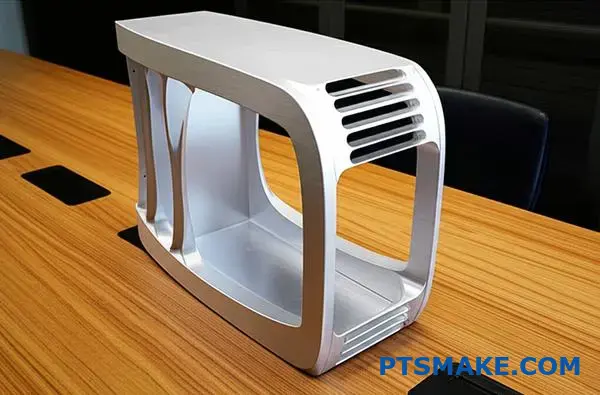
Dominar el diseño de cajas acústicas de aluminio requiere una profunda comprensión de cómo interactúan las propiedades físicas. Es un delicado equilibrio entre rigidez, masa y amortiguación. En PTSMAKE, guiamos a nuestros clientes a través de estas decisiones críticas de ingeniería.
Optimización de la Geometría de la Caja
El arriostramiento interno es una estrategia clave. Añadir costillas o refuerzos transversales aumenta drásticamente la rigidez de la carcasa. Esto eleva las frecuencias de resonancia, sacándolas del rango audible donde es menos probable que interfieran con el sonido. Esto es mucho más efectivo que simplemente hacer las paredes más gruesas.
El matiz del grosor de la pared
Simplemente aumentar el grosor de la pared añade masa, lo que puede reducir la frecuencia de resonancia pero también aumenta el costo y el peso. Hemos descubierto que el grosor no uniforme, donde ciertas áreas están reforzadas, ofrece un mejor control de la resonancia. Este enfoque interrumpe los modos de vibración uniformes que podría tener una carcasa estándar.
Tratamientos de superficie como herramientas acústicas
Los tratamientos de superficie también juegan un papel. Si bien son principalmente para protección y estética, tienen efectos acústicos sutiles. La elección puede influir en la firma sonora final. Por ejemplo, un recubrimiento en polvo grueso añade un ligero efecto de amortiguación. Esto es diferente del anodizado, que crea una capa muy dura y delgada. Esta es una consideración crucial en la respuesta de frecuencia de la caja del altavoz, especialmente cuando se trata de Resonancia de Helmholtz3.
| Tratamiento | Efecto acústico | El mejor caso de uso |
|---|---|---|
| Anodizado | Endurece la superficie, amortiguación mínima | Cuando se desea una respuesta de alta frecuencia nítida y precisa |
| Recubrimiento en polvo | Añade una capa suave, proporciona amortiguación | Para suavizar las altas frecuencias y absorber las micro-vibraciones |
| Acabado cepillado | Impacto acústico insignificante | Principalmente para fines estéticos |
Al tratar estos tres elementos —geometría, grosor y superficie— como un sistema integrado, podemos diseñar una carcasa de altavoz de aluminio que esté verdaderamente optimizada para el rendimiento.
Dominar la interacción entre la geometría, el grosor de la pared y los tratamientos de superficie es innegociable para un control de resonancia superior. Estos elementos dictan el rendimiento acústico final de cualquier carcasa de altavoz de aluminio de alta gama, asegurando una reproducción de sonido limpia y precisa.
Consideraciones de diseño para carcasas acústicas de aluminio personalizadas
El éxito de una carcasa de altavoz de aluminio personalizada depende de su diseño mecánico. Es crucial acertar estos detalles desde el principio. Evita costosos retrabajos posteriores.
Los parámetros clave influyen directamente tanto en el rendimiento como en la fabricabilidad. Debemos considerar cuidadosamente cada aspecto.
Parámetros Mecánicos Centrales
La atención a las líneas de partición, los ángulos de desmoldeo y las estructuras de montaje es innegociable. Estos elementos definen cómo se fabrica la carcasa. También determinan su aspecto y tacto finales.
Una línea de partición bien colocada es casi invisible. Una mala colocación crea una unión obvia.
Consejos de DFM para el Diseño de Carcasas
El Diseño para la Fabricabilidad (DFM) ahorra tiempo y dinero. Ajustes sencillos pueden marcar una gran diferencia en la eficiencia de producción. Aquí tienes algunos consejos básicos.
| Parámetro | Consideración DFM | Impacto |
|---|---|---|
| Líneas de separación | Colocar en superficies no cosméticas o a lo largo de bordes existentes. | Mejora la estética, simplifica el molde/herramienta. |
| Ángulos de calado | Añadir un desmoldeo de 1-3 grados para piezas de fundición a presión o moldeadas. | Facilita la expulsión de la pieza, previene defectos superficiales. |
| Montaje | Integrar tetones y separadores en el cuerpo principal. | Reduce el número de piezas, simplifica el montaje. |
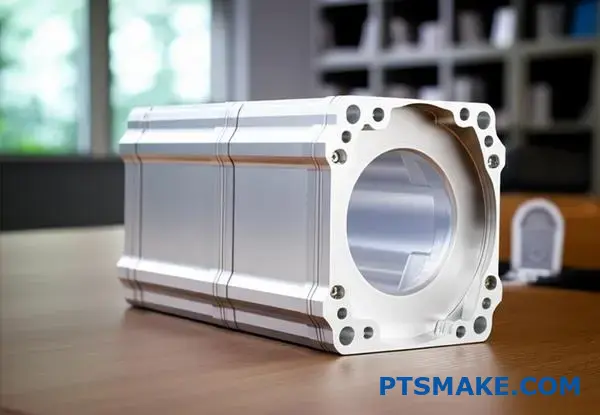
Más allá de lo básico, debemos equilibrar requisitos contrapuestos. Las restricciones de volumen y el flujo de calor son dos áreas críticas en el diseño mecánico de carcasas de altavoces.
Gestión del Volumen Interno
El volumen interno es primordial para el rendimiento acústico. Afecta directamente a la calidad del sonido, especialmente a la respuesta de graves. Sin embargo, a menudo nos enfrentamos a estrictos límites de tamaño externo.
El objetivo es maximizar el volumen interno. Esto se puede lograr optimizando el grosor de la pared. También necesitamos colocar cuidadosamente los componentes internos. El diseño de cualquier puerto bass reflex también se ve afectado por esto, impactando en el Inercia Acústica4 del sistema.
Estrategia de Disipación de Calor
Los altavoces de alto rendimiento generan calor. La carcasa de aluminio en sí misma es un excelente disipador de calor. Podemos mejorar esta propiedad a través del diseño.
Añadir aletas o aumentar la superficie ayuda a disipar el calor. La ventilación adecuada también es clave. En PTSMAKE, a menudo utilizamos simulación térmica para optimizar el flujo de calor. Esto garantiza que la electrónica funcione de forma segura. Un buen diseño de caja de aluminio DFM siempre tiene en cuenta la gestión térmica desde el principio.
| Gestión del calor | Método | Ventaja |
|---|---|---|
| Refrigeración pasiva | Aletas disipadoras de calor integradas. | Sin partes móviles, funcionamiento silencioso. |
| Convección | Rejillas de ventilación en la parte superior e inferior. | Sencillo, eficaz, bajo coste. |
| Conducción | Pastillas térmicas para transferir calor. | Mueve eficientemente el calor a la carcasa. |
Dominar parámetros como las líneas de partición, los ángulos de desmoldeo, el volumen interno y el flujo de calor es esencial. Estos detalles garantizan un diseño de carcasa de altavoz de aluminio de alto rendimiento, fabricable y rentable. Conseguirlos bien es la base de un producto exitoso.
Flujo de trabajo de prototipado definitivo para proyectos de altavoces de aluminio
Elegir la ruta de prototipado adecuada es fundamental. Necesitas equilibrar la velocidad, el coste y la precisión para obtener resultados significativos para tu carcasa de altavoz de aluminio. El objetivo es un flujo de trabajo que valide las elecciones de diseño de manera efectiva.
Etapas Clave de Prototipado
Para un prototipo de altavoz de aluminio, siempre recomiendo un enfoque de varias etapas. Cada etapa cumple un propósito específico, desde comprobaciones básicas de forma hasta pruebas funcionales completas. Esto evita errores costosos más adelante.
Etapa 1: Impresión 3D para Validación
Empieza con la impresión 3D. Es rápida y económica. Úsala para crear una carcasa de altavoz de prototipado rápido. Esto te permite confirmar dimensiones, ajuste de componentes y ergonomía general antes de comprometerte con el metal.
Etapa 2: Mecanizado CNC para Funcionalidad
Una vez que la forma está definida, pasa al mecanizado CNC. Esto crea un prototipo de carcasa de altavoz CNC de alta fidelidad a partir del material final. Es esencial para pruebas acústicas y para evaluar el aspecto y tacto finales.
| Método de Prototipado | Objetivo principal | Material |
|---|---|---|
| Impresión 3D | Validación de forma y ajuste | Plástico (PLA, ABS) |
| Mecanizado CNC | Pruebas Funcionales y Acústicas | Aluminio |
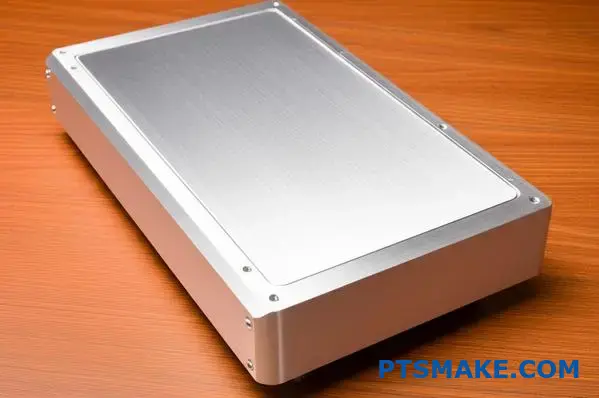
Un flujo de trabajo exitoso combina estos métodos. Confiar únicamente en la impresión 3D es un error. Un modelo de plástico no puede replicar la resonancia acústica, las propiedades térmicas o la sensación premium de una carcasa de altavoz de aluminio final. Te dice si las piezas encajan, pero no cómo sonará o se sentirá realmente el altavoz.
El Flujo de Trabajo Iterativo Híbrido
Guío a los clientes en PTSMAKE a través de un proceso híbrido. Esto asegura que cada aspecto del diseño se pruebe adecuadamente. El proceso es cíclico, permitiendo el refinamiento en cada paso.
Enfoque paso a paso
Primero, creamos un modelo impreso en 3D. Esta carcasa de altavoz de prototipado rápido se utiliza para pruebas de ensamblaje iniciales. Verificamos las holguras para los drivers, puertos y electrónica. Es una verificación de cordura rápida y de bajo costo.
A continuación, después de cualquier ajuste, producimos un prototipo de carcasa de altavoz CNC. Aquí es donde comienzan las pruebas reales. Analizamos su rendimiento acústico, rigidez estructural y acabado superficial. A veces, utilizamos herramientas de simulación como Análisis por elementos finitos5 para predecir los modos de vibración antes de cortar metal. Este enfoque dirigido ahorra tiempo y material.
| Paso del Flujo de Trabajo | Acción | Resultado |
|---|---|---|
| 1. Diseño e Impresión 3D | Validar la forma y el ajuste de los componentes | Un modelo físico dimensionalmente preciso |
| 2. Refinar Diseño | Ajustar según los comentarios de la impresión 3D | Un modelo CAD optimizado para mecanizado |
| 3. Prototipo CNC | Mecanizar en aluminio para pruebas | Un prototipo funcional para evaluación acústica |
| 4. Revisión Final | Probar acústica y ensamblaje | Aprobación final antes de la herramienta de producción |
Este ciclo iterativo —imprimir, probar, refinar, mecanizar— es la forma más fiable de reducir el riesgo de su proyecto y garantizar que el producto final cumpla todas las especificaciones.
Una estrategia de prototipado híbrido es crucial. Aprovecha la velocidad de la impresión 3D para la validación inicial y la precisión del mecanizado CNC para las pruebas funcionales, lo que conduce a una carcasa de altavoz de aluminio final superior con menos sorpresas costosas.
Principales desafíos que enfrentan los ingenieros al especificar carcasas de aluminio
Los ingenieros se enfrentan a profundos obstáculos técnicos. Estos no son solo problemas superficiales. Impactan el rendimiento y el costo de cualquier carcasa de altavoz de aluminio.
Desafíos de Control Dimensional
Lograr tolerancias dimensionales ajustadas en la carcasa de aluminio es difícil. Esto es especialmente cierto para geometrías complejas. El prototipado de carcasas acústicas a menudo revela estos problemas temprano.
Consistencia del acabado superficial
El anodizado añade otra capa de complejidad. El color y el grosor pueden variar entre lotes. Esto crea problemas estéticos y funcionales, un problema común en el diseño de carcasas de altavoces.
| Desafío | Impacto primario | Buenas prácticas |
|---|---|---|
| Tolerancia | Ensamblaje y Ajuste | GD&T Detallado |
| Anodizado | Estética y corrosión | Control Estricto del Proceso |
| Material | Rendimiento Acústico | Análisis de Aleaciones |
Estos detalles de nivel de ingeniería son críticos para un proyecto exitoso. Requieren una gestión cuidadosa desde el principio.

Profundicemos en estos desafíos de ingeniería. A menudo se esconden a simple vista hasta que comienza la producción. Aquí es donde la experiencia en PTSMAKE se vuelve invaluable.
Los Matices de la Tolerancia
Controlar las dimensiones es más que números en un dibujo. Se trata de entender cómo interactúan las características. Para una caja de altavoz de aluminio, una ligera deformación puede arruinar el sellado acústico y la integridad general.
Es por eso que utilizamos herramientas de medición avanzadas. También dependemos en gran medida de un sistema claro. Un sistema como Dimensionado geométrico y tolerancias (GD&T)6 es esencial para definir los requisitos funcionales, no solo las dimensiones simples.
Variables Ocultas del Anodizado
El anodizado parece simple, pero es un proceso químico delicado. Factores como la composición de la aleación, la temperatura del baño y el tiempo de inmersión afectan el resultado final. Estas variables pueden ser complicadas.
| Variable | Posible defecto | Estrategia de mitigación |
|---|---|---|
| Aleación (por ejemplo, 6061 vs 7075) | Desajuste de Color | Especificar aleación y temple exactos |
| Química del baño | Recubrimiento desigual | Análisis químico regular |
| Densidad actual | Quemado / Recubrimiento blando | Fuentes de alimentación calibradas |
Estas variables deben controlarse estrictamente. Esto es especialmente cierto al prototipar recintos acústicos donde la consistencia es clave para pruebas válidas.
Selección de materiales y frecuencia
Elegir la aleación de aluminio adecuada no se trata solo de resistencia. Para aplicaciones acústicas, la amortiguación y la rigidez del material son importantes. Ciertas aleaciones resuenan a frecuencias indeseables, causando distorsión. Analizamos estas propiedades cuidadosamente. Evita problemas comunes de diseño de recintos de altavoces.
Dominar un proyecto de recinto de altavoz de aluminio requiere un profundo conocimiento de ingeniería. Desde el control preciso de tolerancias y el anodizado consistente hasta la selección inteligente de materiales para el rendimiento acústico, cada detalle cuenta. Estos factores separan un gran producto de uno promedio.
Guía completa de opciones de acabado superficial para cajas acústicas de aluminio
Elegir el acabado adecuado es clave. No se trata solo de la apariencia; se trata de durabilidad y tacto. El acabado protege el recinto del altavoz de aluminio del desgaste.
Cubriremos cuatro opciones populares. Cada una ofrece beneficios únicos para diferentes casos de uso y objetivos de diseño.
Opciones clave de acabado de superficies
Aquí hay un vistazo rápido a los principales tratamientos de superficie de las cajas de altavoces que a menudo recomendamos en PTSMAKE.
| Tipo de acabado | Beneficio principal |
|---|---|
| Anodizado | Durabilidad extrema |
| Recubrimiento en polvo | Versatilidad de color |
| Granallado | Textura mate |
| Metal cepillado | Grano lineal elegante |
Estas opciones definen el carácter del producto final.
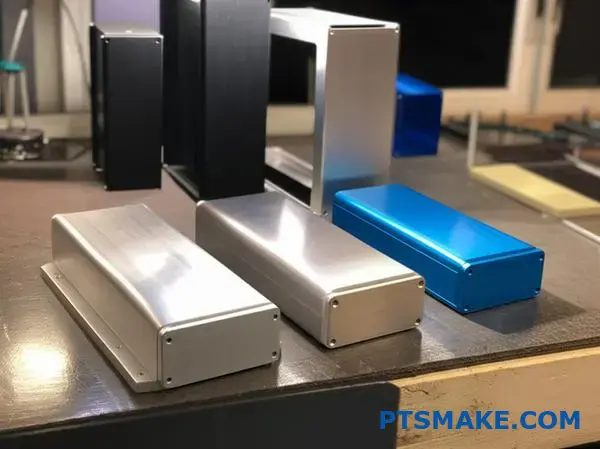
El acabado adecuado depende del propósito de su producto. El anodizado es más que un recubrimiento; es un proceso electroquímico. Este proceso crea una capa dura y protectora. El acabado anodizado para altavoces de aluminio es perfecto para productos premium y de alto desgaste.
El recubrimiento en polvo ofrece un acabado resistente similar a la pintura. Proporciona una excelente resistencia al impacto. También viene en una gama casi ilimitada de colores y texturas. Esto lo hace ideal para crear cajas de altavoces de aluminio vibrantes y estéticas.
Acabados Texturizados para Estética
Para una superficie mate uniforme y no reflectante, considere el chorreado con perlas. Oculta bien las huellas dactilares y los pequeños defectos de la superficie. Crea un aspecto sutil y moderno.
Los acabados cepillados dan una textura lineal distintiva. Este aspecto a menudo se asocia con productos electrónicos y electrodomésticos de alta gama. El proceso crea un brillo satinado que se ve muy profesional. Nuestras pruebas muestran que agrega una sensación premium sin un gran aumento de costo. La elección entre estos depende del mercado objetivo y la deseada tactilidad7.
Comparación de Acabados por Caso de Uso
Esta tabla ayuda a combinar un acabado con las necesidades de un producto.
| Característica | Anodizado | Recubrimiento en polvo | Granallado | Metal cepillado |
|---|---|---|---|---|
| Durabilidad | Excelente | Muy buena | Bien | Bien |
| Estética | Brillo metálico | Color Opaco | Textura mate | Grano Lineal |
| Lo mejor para | Audio de Alta Gama | Colores Personalizados | Diseño Minimalista | Aspecto Premium |
| Corrosión | Excelente | Bien | Bien | Feria |
En PTSMAKE, guiamos a los clientes a través de estos tratamientos de superficie para cajas de altavoces. Les ayudamos a equilibrar la estética, la función y el presupuesto para sus proyectos específicos de cajas de altavoces de aluminio.
Elegir el tratamiento de superficie adecuado es fundamental para su caja de altavoz de aluminio. El anodizado garantiza durabilidad, el recubrimiento en polvo ofrece color, mientras que el chorreado con perlas y el cepillado proporcionan texturas únicas. Cada opción ofrece una combinación diferente de protección, tacto y atractivo estético para el producto final.
Cómo los fabricantes de equipos originales utilizan carcasas de aluminio para una marca sonora competitiva
La teoría es una cosa, pero los ejemplos del mundo real muestran el verdadero impacto. La elección correcta del material influye directamente en el valor de la marca de altavoces de aluminio. Es un mensaje que los consumidores sienten al instante.
Una caja de altavoz de aluminio comunica calidad antes de que suene una sola nota. Esta es la narración de marca a través de la ingeniería.
El tacto de lo premium
Piense en las marcas de audio de alta gama. Sus productos se sienten sustanciales y fríos al tacto. Esta experiencia táctil es una parte fundamental del diseño de su caja de altavoz premium. Crea una primera impresión poderosa.
De la apariencia al tacto
El atractivo visual del aluminio cepillado o anodizado es innegable. Atrapa la luz de una manera que el plástico no puede. Este detalle sutil eleva todo el producto.
| Característica | Caja de plástico | Caja de aluminio |
|---|---|---|
| Valor percibido | Estándar | Premium, Alta gama |
| Sensación táctil | Cálido, Ligero | Frío, Sustancial |
| Rasgo acústico | Propenso a la vibración | Rígido, Inerte |
| Acabado de diseño | Texturas moldeadas | Anodizado, Cepillado |
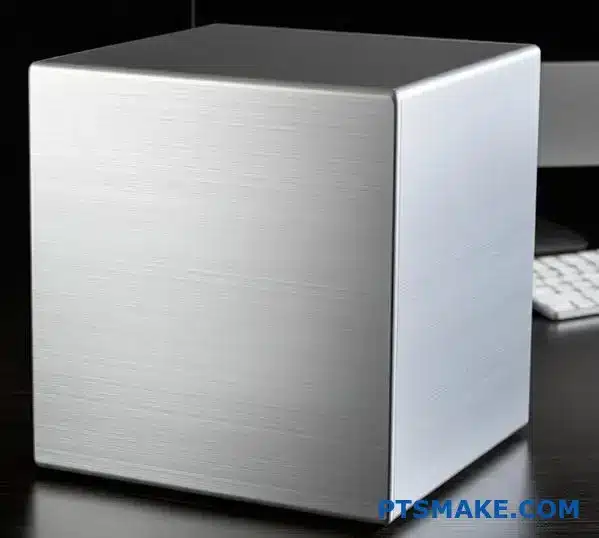
Examinemos cómo funciona esto en la práctica. Muchas marcas de audio líderes confían en el aluminio no solo por su apariencia, sino por sus propiedades acústicas. Una caja de altavoz de aluminio proporciona la rigidez necesaria para minimizar las vibraciones y resonancias no deseadas. Esto asegura que el sonido producido sea puro y sin adulterar.
Mejorando la Pureza Sónica
Una caja rígida permite que el transductor del altavoz funcione de manera óptima. La energía crea ondas sonoras, no vibraciones de la caja. Esta ventaja técnica es un punto de venta clave para los audiófilos. Demuestra un compromiso con la fidelidad de audio que los clientes aprecian y están dispuestos a pagar.
El Papel de la Precisión en la Fabricación
Lograr esto requiere una inmensa precisión. En PTSMAKE, mecanizamos cajas de sonido OEM de aluminio con tolerancias exactas. Esto asegura un ajuste y acabado perfectos. Una construcción sin costuras no solo se ve mejor, sino que también mejora el rendimiento acústico. El estudio de cómo esto afecta la percepción del oyente es fascinante. Se adentra en el campo de la psicoacústica8, donde el material y el diseño influyen en lo que oímos.
| Proceso de acabado | Impacto de la marca | Percepción del Cliente |
|---|---|---|
| Granallado | Crea un acabado suave y mate | Lujo moderno y discreto |
| Anodizado (Color) | Ofrece personalización de marca | Audaz, seguro, único |
| Corte de Diamante | Adds high-contrast chamfers | Precision, attention to detail |
| Cepillado | Provides a linear, textured look | Classic, professional, durable |
This level of detail in premium speaker case design transforms a functional object into a piece of art. It’s a tangible expression of a brand’s commitment to quality.
The use of aluminum in premium audio is a strategic choice. It enhances perceived value, communicates quality through touch and feel, and provides a superior acoustic foundation. This elevates brand identity in a competitive market.
El impacto oculto de la acumulación de tolerancias en la integridad acústica
Even tiny misalignments have a big impact. We often focus on the main components. But small tolerance errors are what compromise audio quality. They directly affect seal integrity and vibration.
This turns a premium product into a flawed one. Let’s look at how this happens.
The Problem of Micro-Gaps
Small gaps in an caja de altavoz de aluminio can cause air leaks. This weakens bass response. It also introduces unwanted noise. Proper sealing is critical for acoustic performance.
Vibration and Distortion
Improper fits create points of vibration. These vibrations add distortion to the sound. They are a direct result of tolerance stack-up.
| Cuestión de tolerancia | Consecuencia | Impact on Audio |
|---|---|---|
| Gap in Seal | Air Leakage | Bajo débil, silbido |
| Desalineación de piezas | Vibración no deseada | Traqueteo, distorsión |
| Superficie irregular | Amortiguación deficiente | Zumbido armónico |
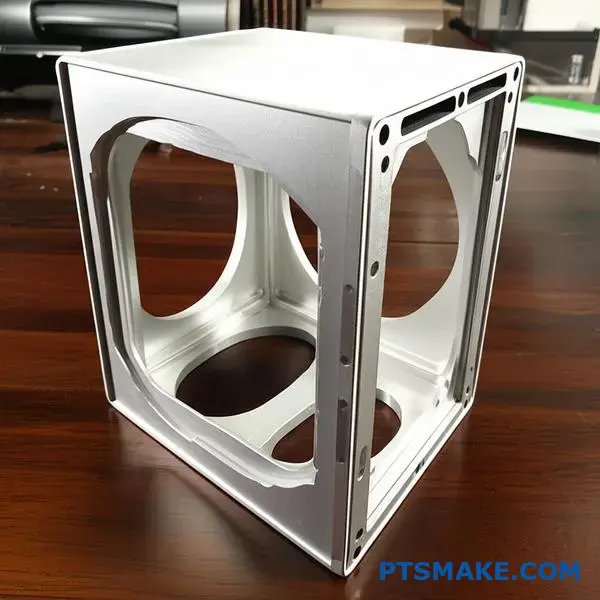
Necesitamos profundizar en el lado técnico. Comprender cómo se acumulan las tolerancias es clave. En cajas acústicas de aluminio, la tolerancia de cada componente se suma a la siguiente. Un pequeño error en una parte puede amplificarse.
Análisis de la integridad del sellado
Un sellado acústico perfecto es innegociable. La acumulación de tolerancias a menudo crea huecos microscópicos. Después de trabajar con clientes, descubrimos que incluso un hueco de 0.1 mm puede reducir la salida de baja frecuencia. Este es un problema común en problemas de ajuste acústico. Hace que el sonido sea delgado y carezca de profundidad.
El efecto dominó de la vibración
Cuando las piezas no encajan perfectamente, vibran entre sí. Esto crea ruido que no estaba en el audio original. Esto es especialmente cierto cuando el ensamblaje vibra en su frecuencia de resonancia9. El problema empeora mucho a ciertos volúmenes o tonos. Un análisis efectivo de la tolerancia de la carcasa del altavoz predice estos problemas antes de la producción.
| Área de Análisis | Parámetros clave | Resultado deseado |
|---|---|---|
| Sellado de superficies | Planitud de la Superficie (Planitud) | Cámara Acústica Hermética |
| Montaje del conductor | Posición del Agujero (Posición Verdadera) | Sin Estrés Inducido en el Transductor |
| Mitades del Recinto | Perfil de una Superficie | Sin Holguras ni Desalineación |
En PTSMAKE, gestionamos estas variables cuidadosamente. Aseguramos que el producto final funcione exactamente como fue diseñado. Se trata de controlar cada detalle.
La acumulación de tolerancias es un factor crítico en el diseño acústico. Errores aparentemente menores en un caja de altavoz de aluminio pueden degradar severamente la integridad del sellado e introducir vibraciones, dañando directamente la calidad del audio. El análisis cuidadoso y la precisión son esenciales.
Ventajas medioambientales de las cajas acústicas de aluminio reciclables
Cuando los compradores empresariales evalúan componentes, la sostenibilidad ya no es una ocurrencia tardía. Es un requisito fundamental. Las carcasas de altavoces de aluminio ofrecen una clara ventaja sobre los plásticos. Su reciclabilidad es un factor clave.
La Ventaja del Reciclaje del Aluminio
A diferencia de muchos plásticos, el aluminio se puede reciclar infinitamente. No pierde su integridad estructural. Esto crea un sistema de circuito cerrado, reduciendo los residuos y la necesidad de nuevas materias primas.
Reducción de la Huella de Carbono
El reciclaje de aluminio utiliza aproximadamente el 5% de la energía necesaria para producir metal virgen. Esto reduce significativamente la huella de carbono por unidad.
| Característica | Caja de aluminio | Caja de plástico |
|---|---|---|
| Reciclabilidad | Infinitamente Reciclable | A menudo Desclasificado o Vertido |
| Ahorro de energía | ~95% cuando se recicla | Varía, a menudo menor |
| Valor al Final de la Vida Útil | Alto Valor de Desecho | Valor Bajo a Negativo |
Esto hace que una carcasa de altavoz de aluminio sea una opción inteligente para cualquier estrategia de producto ecológico.

Elegir una carcasa de altavoz ecológica es más que marketing. Impacta el rendimiento ambiental de toda su cadena de suministro. Los compradores empresariales son cada vez más examinados en sus métricas de sostenibilidad.
La Ventaja de la Fabricación Ecológica
El uso de materiales reciclables como el aluminio simplifica la gestión del producto al final de su vida útil. Esta es una consideración importante para las empresas con objetivos de sostenibilidad corporativa. Apoya directamente un modelo de economía circular.
En PTSMAKE, a menudo asesoramos a los clientes sobre la selección de materiales. Vemos cómo las piezas de audio de aluminio sostenibles contribuyen a una imagen de marca más sólida. Estas opciones atraen tanto a los usuarios finales como a los inversores conscientes del medio ambiente. Un completo Evaluación del ciclo de vida10 muestra consistentemente los beneficios del aluminio en aplicaciones de bienes duraderos.
Comparación del consumo de energía
La diferencia en los requisitos de energía es notable. Nuestra investigación con proveedores de materiales confirma estas cifras. Este es un punto de datos crucial para cualquier ingeniero o gerente de adquisiciones centrado en recintos de fabricación ecológica.
| Proceso de Materiales | Coste energético relativo |
|---|---|
| Producción de Aluminio Virgen | 100% (Línea de base) |
| Aluminio Reciclado | ~5% |
| Producción de Plástico Virgen | Varía (por ejemplo, 60-80%) |
| Plástico Reciclado | Varía (por ejemplo, 10-30%) |
Estos datos muestran por qué el aluminio reciclado es una opción superior. Ofrece tanto rendimiento como un impacto ambiental significativamente menor. Este es un beneficio tangible para cualquier empresa que busque reducir su huella de carbono.
Las cajas de altavoces de aluminio reciclable ofrecen una sostenibilidad superior. Reducen las huellas de carbono y apoyan los objetivos de la economía circular. Esto las convierte en una opción ideal para empresas centradas en el posicionamiento de productos ecológicos y la fabricación responsable.
¡Obtenga su solución de caja acústica de aluminio con PTSMAKE hoy mismo!
¿Listo para maximizar el rendimiento acústico, aumentar el valor de su producto y optimizar su flujo de trabajo de prototipado? Póngase en contacto con PTSMAKE ahora para obtener una cotización rápida y confiable para la fabricación de recintos de altavoces de aluminio de alta precisión, diseñados para superar sus especificaciones exactas, desde prototipos hasta producción a gran escala. Dé el siguiente paso: ¡envíe su consulta hoy mismo!

Aprenda cómo esta propiedad minimiza las vibraciones no deseadas para una reproducción de sonido más clara y precisa. ↩
Aprenda cómo la distribución de los costos de herramientas en una tirada de producción puede mejorar la perspectiva financiera de su proyecto. ↩
Comprenda cómo este principio de resonancia del aire puede impactar significativamente el diseño de su recinto de altavoz y el rendimiento de audio. ↩
Comprenda cómo este principio acústico impacta el diseño del puerto bass reflex y el rendimiento de baja frecuencia. ↩
Descubra cómo esta simulación predice el rendimiento en el mundo real, reduciendo costosas iteraciones de diseño. ↩
Aprenda cómo este sistema aclara la intención del diseño y reduce los errores de fabricación. ↩
Comprenda cómo la textura de la superficie influye en la percepción del usuario sobre la calidad y el valor del producto. ↩
Aprenda cómo el cerebro humano percibe el sonido y cómo las elecciones de materiales influyen en esa percepción. ↩
Aprenda cómo esta propiedad física puede amplificar las vibraciones y distorsionar la calidad del audio en las carcasas de los altavoces. ↩
Obtenga más información sobre cómo este análisis evalúa el impacto ambiental completo de un producto. ↩